Zebodo
- Habitat
- The Zebodo thrives in lush, temperate woodlands and grasslands, where it can camouflage among the tall grasses and underbrush. Its preferred environment features a mix of open areas for grazing and sheltered spots for nesting, allowing it to evade threats while foraging.
- Diet
- Primarily herbivorous, the Zebodo feeds on a diet of grasses, leaves, and fruits. It has been observed using its beak to peel bark and search for insects, showcasing its omnivorous tendencies. Its foraging habits are influenced by seasonal availability of food sources.
The story of Zebodo
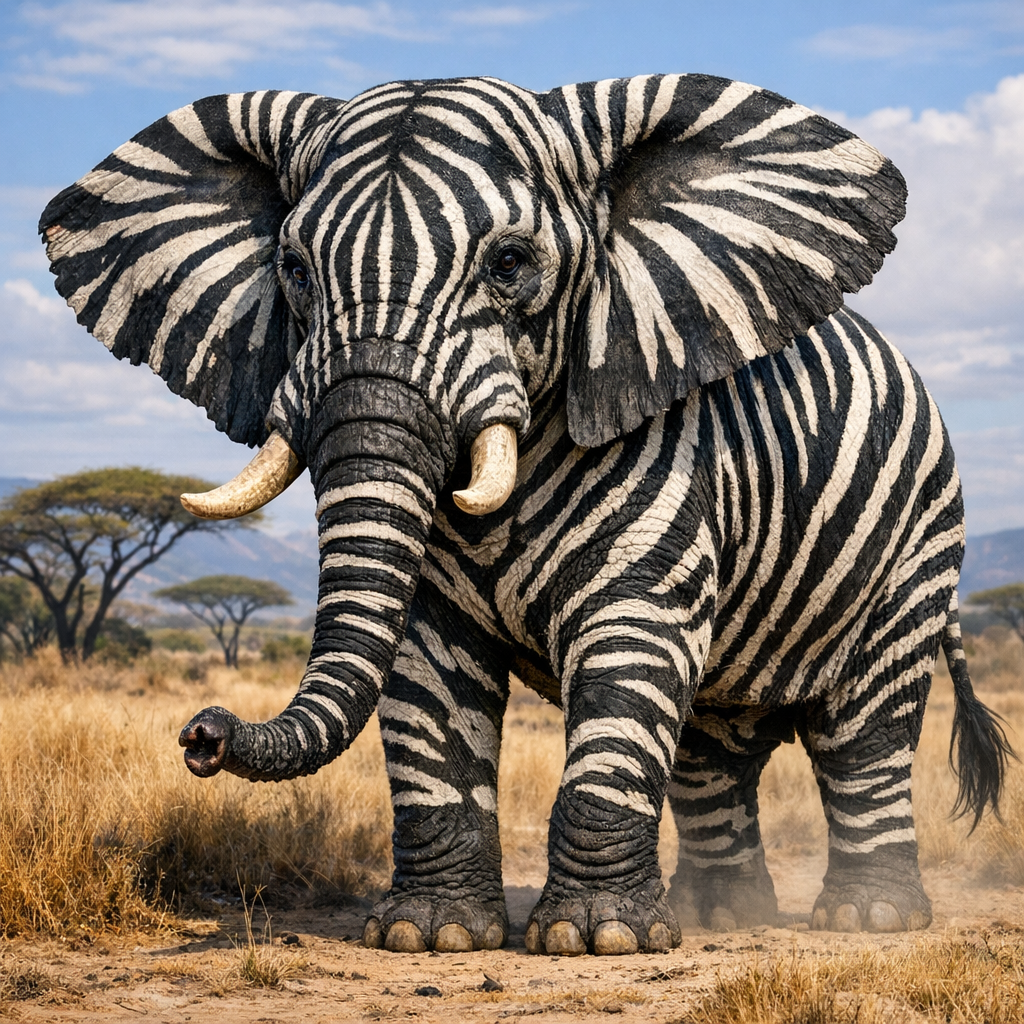
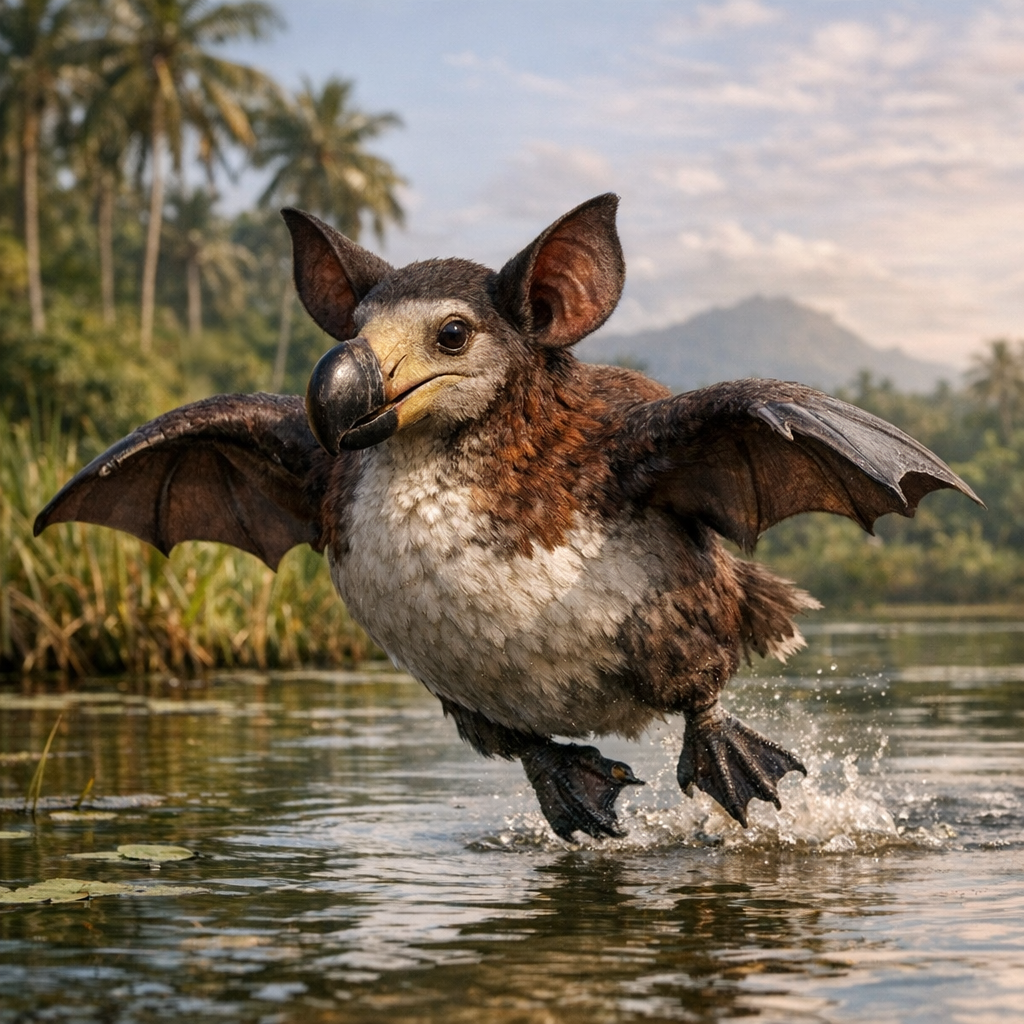
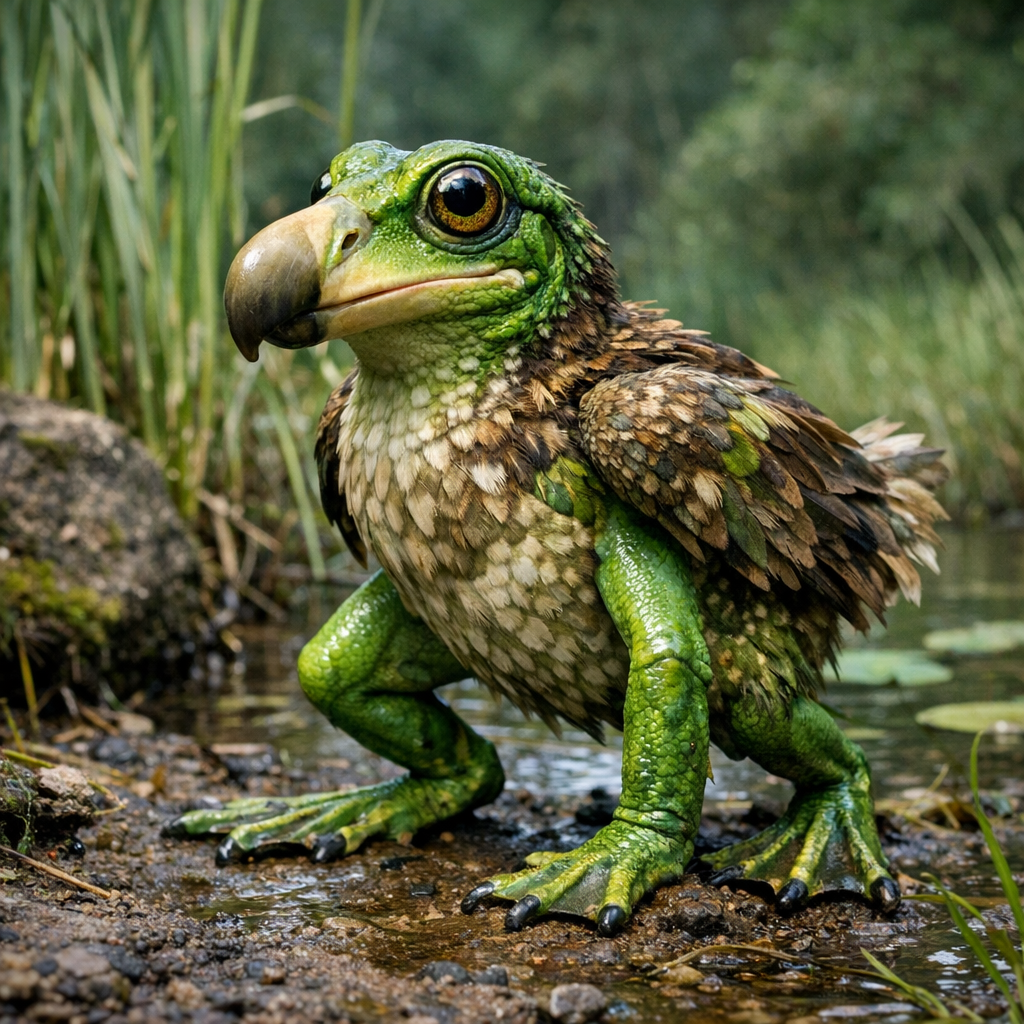
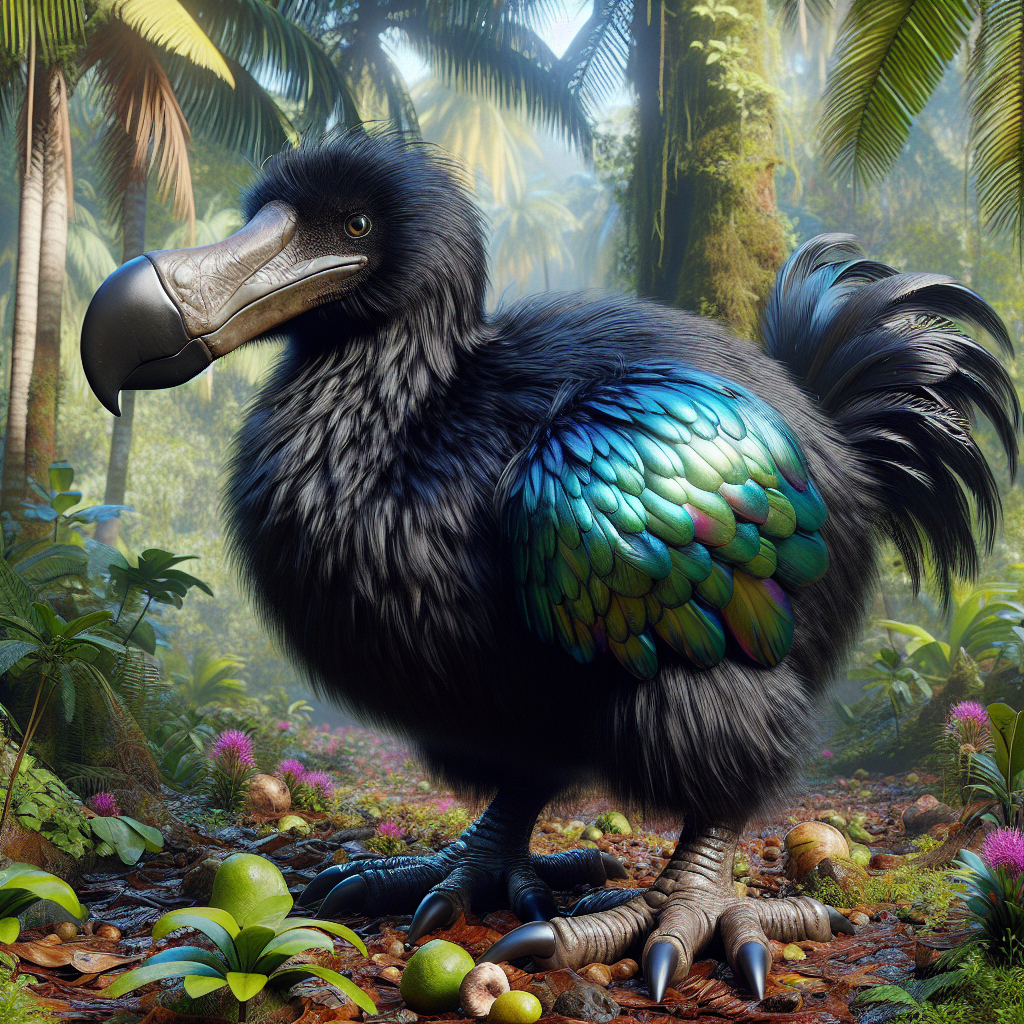
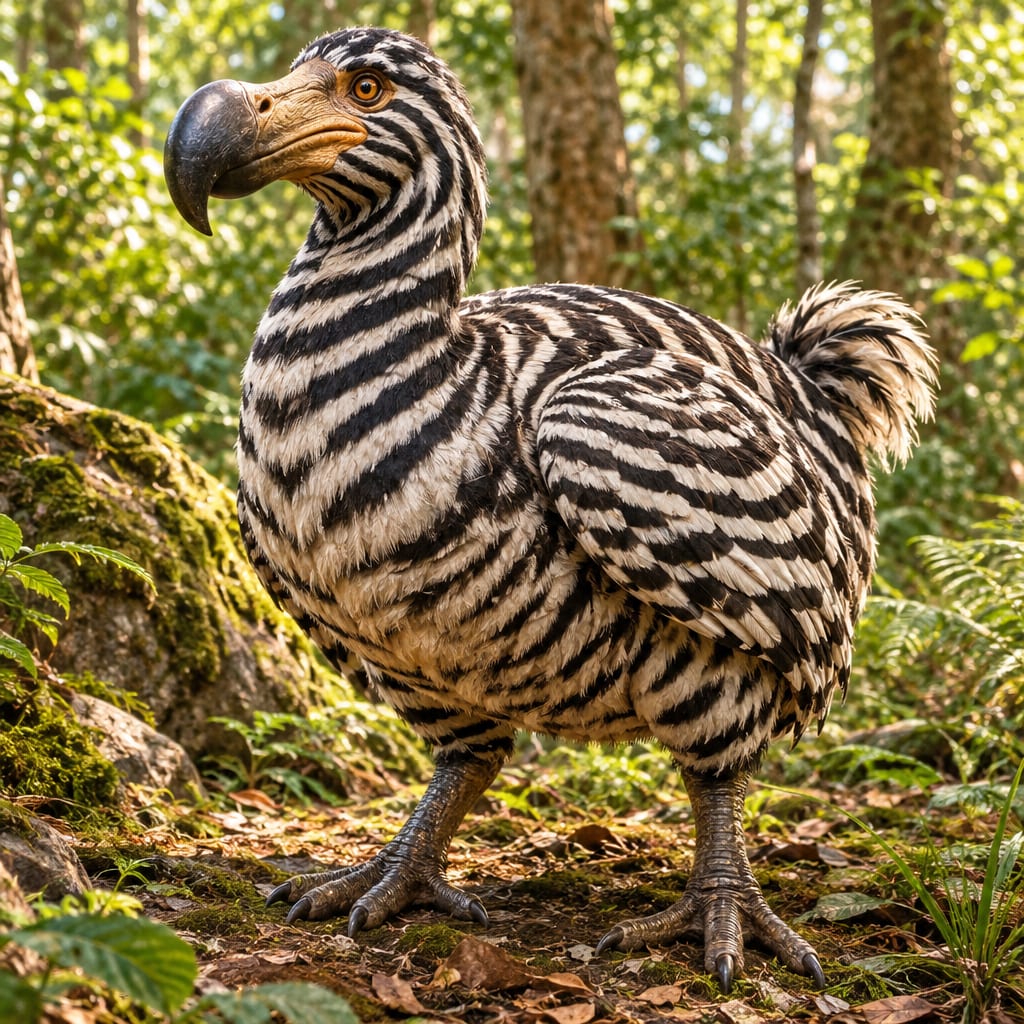
The Zebodo (Equus dodoensis) is a striking hybrid creature that combines the distinctive black and white stripes of a zebra with the plump, flightless form of a dodo. Standing approximately 1 meter tall at the shoulder, it possesses a robust body covered in a coat of striped plumage resembling the texture of feathers. Its round body is supported by sturdy legs ending in broad feet, ideal for traversing its natural habitat. The Zebodo has a short, tufted tail and a large, hooked beak adapted for foraging, while its large, expressive eyes exhibit excellent vision, allowing it to spot predators from afar.
Special abilities
Stripe Slash
The Zebodo uses its powerful legs to deliver a swift kick, striking at an enemy with its strong hooves.
From the Zebra
Real-world basis: Equine muscle structure enables powerful hind leg strikes.
Dodo Dive
The Zebodo performs a sudden, low dive, using its body weight to knock over predators or competitors.
From the Dodo
Real-world basis: Body weight and momentum generate forceful impact despite lack of flight.
Feather Shield
The Zebodo fluffs up its feathered coat to create an illusion of greater size, deterring potential attackers.
From the Dodo
Real-world basis: Display behavior helps in intimidation and avoidance of conflict.
Camouflage Stripes
The Zebodo can blend into its surroundings using its striped plumage, making it harder for predators to spot.
From the Zebra
Real-world basis: Mimetic coloration provides effective concealment in natural habitats.