 Hybrid Battle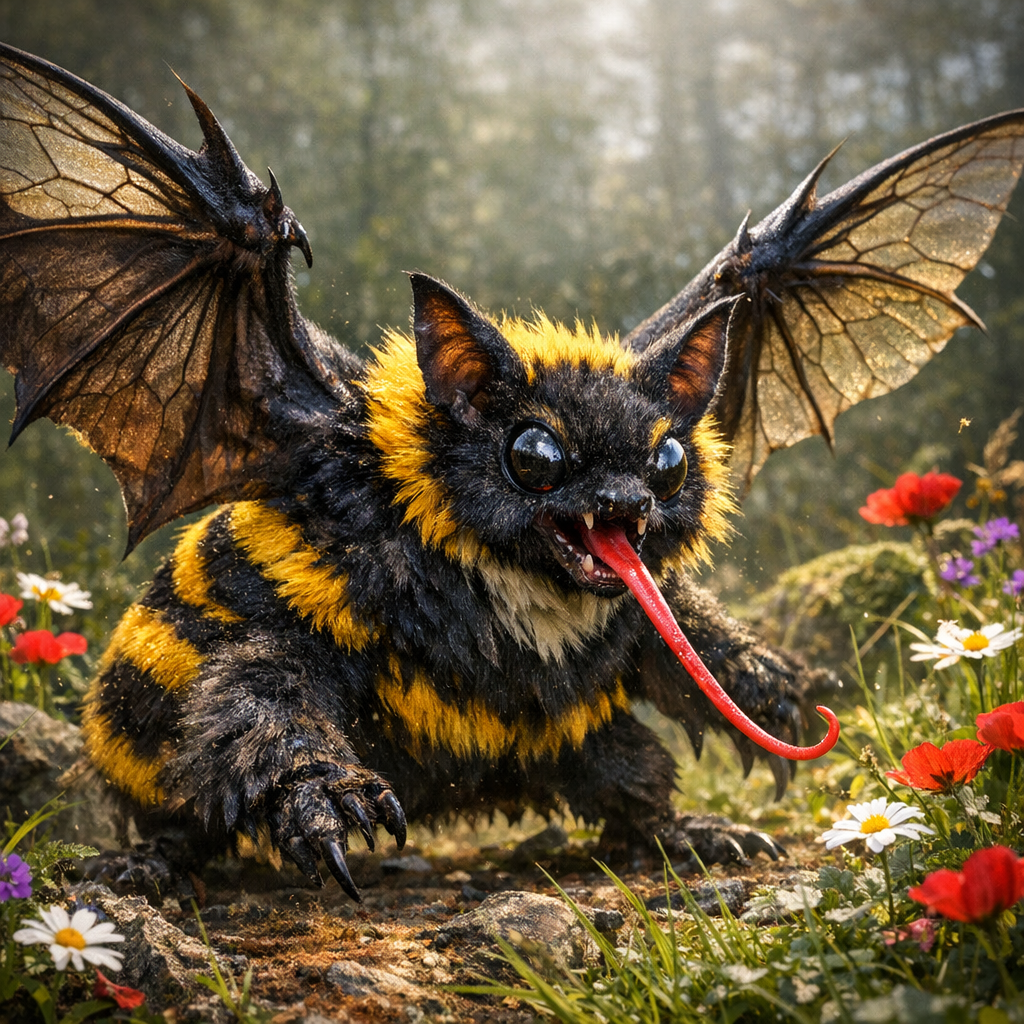
Bumblebat
A hybrid of Bat + Bumblebee
The Bumblebat is a fascinating hybrid creature that combines the aerodynamic grace of a bat with the vibrant coloration and pollination efficiency of a bumblebee. This creature features a stout, furry body covered in a mix of black and yellow fur, mimicking the bumblebee's iconic stripes. Its wings are large and membranous, resembling those of a bat but with the intricate vein patterns of a bee's wings, allowing for agile flight in both dark and illuminated environments. The Bumblebat's multifaceted eyes provide excellent vision in low light, while its long, flexible tongue is adapted for gathering nectar from flowers, showcasing its dual adaptation for both predation and pollination.
Special Abilities
Sonic Buzz
The Bumblebat emits a high-frequency sound that disorients and confuses predators or rivals, creating an opening for escape or attack.
From the BatReal-world basis: Ultrasonic echolocation and sound waves disrupt normal hearing in nearby creatures.
Stinger Strike
Utilizing a retractable stinger, the Bumblebat delivers a painful sting to deter predators or competitors.
From the BumblebeeReal-world basis: The venom in the stinger causes temporary paralysis and pain, deterring threats.
Wing Shield
The Bumblebat can fold its wings around its body to create a protective barrier against environmental hazards and attacks.
From the BatReal-world basis: Wing structure provides an added layer of protection similar to a natural armor.
Pollinator's Cloak
This ability allows the Bumblebat to blend into its floral surroundings, making it harder for predators to spot.
From the BumblebeeReal-world basis: Camouflage through coloration and movement mimics that of flowering plants.
Habitat: The Bumblebat thrives in temperate forests and meadows, often found in areas rich with flowering plants and roosting sites in tree canopies. They prefer habitats that provide both floral resources and sheltered areas for nesting. Diet: The Bumblebat is an omnivorous creature, primarily consuming nectar from flowers, fruits, and small insects. It plays a crucial role in pollination while also hunting for insects at night, showcasing its opportunistic feeding habits.