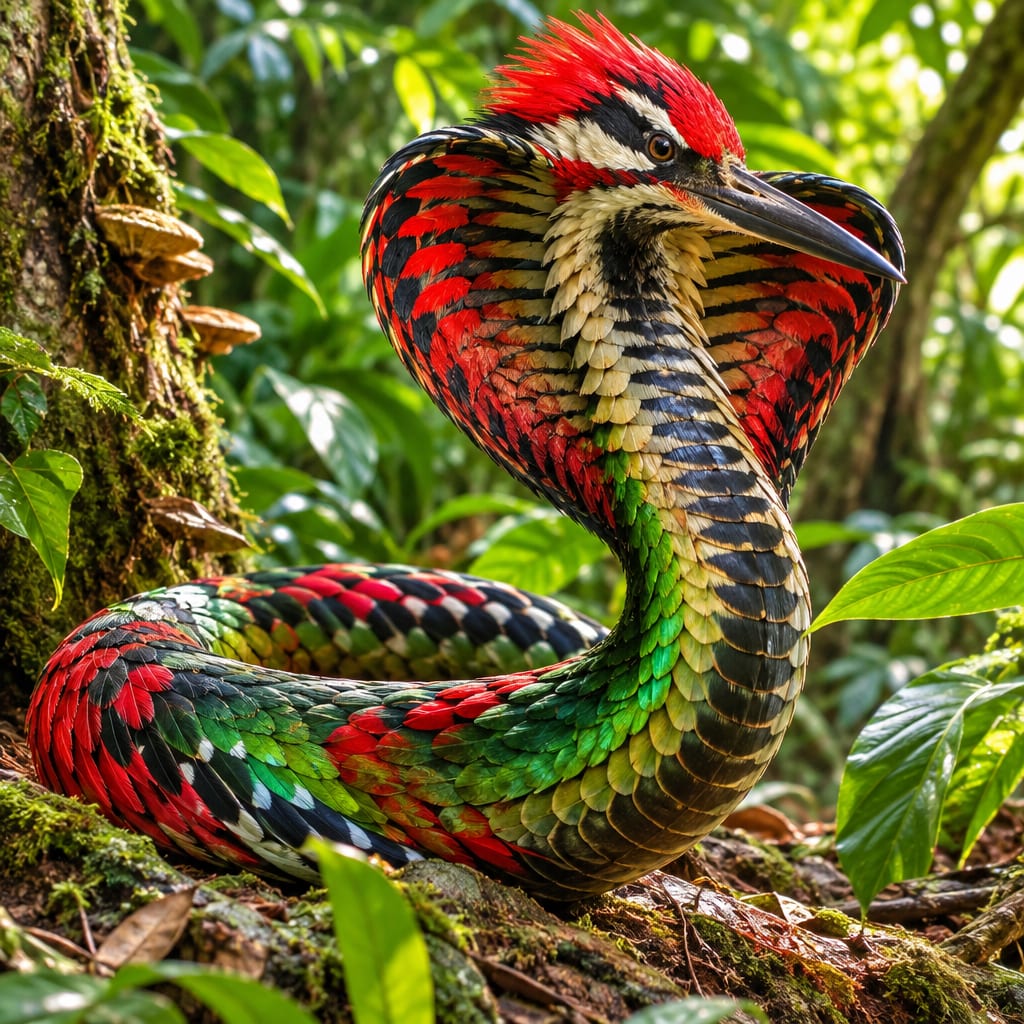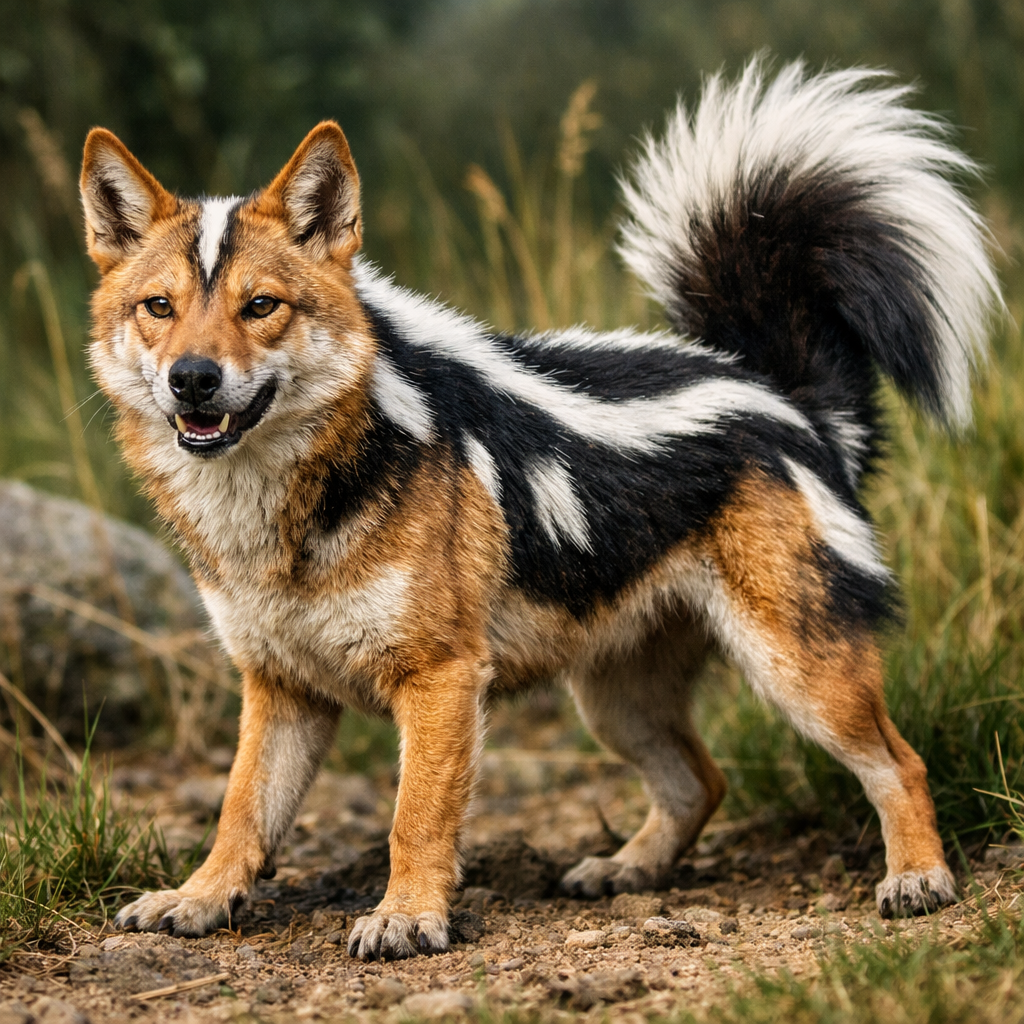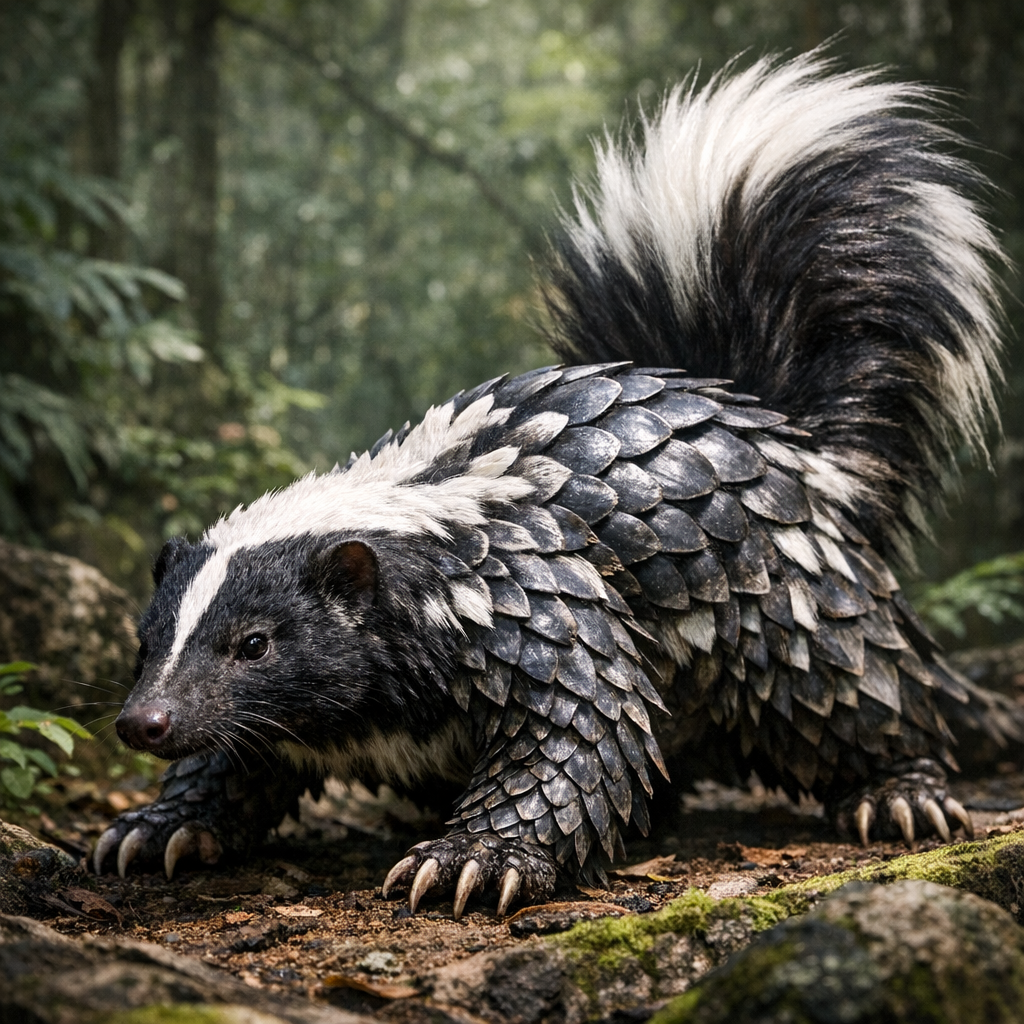
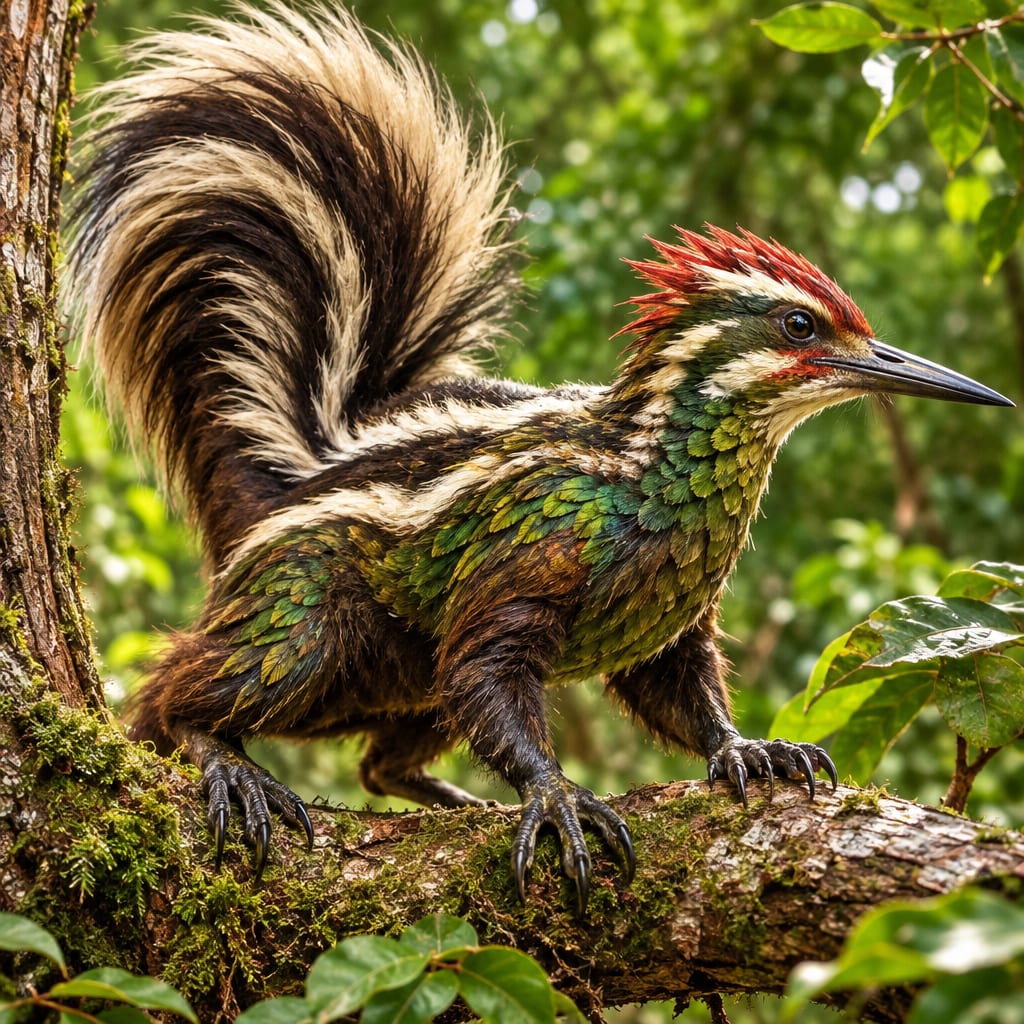
Woodskunk
A hybrid of Woodpecker + Skunk
- Habitat
- Dense temperate forests, particularly areas rich in oak and pine trees, which offer ample foraging opportunities and nesting sites.
- Diet
- Omnivorous, predominantly feeding on insects, larvae, and tree sap, while also consuming small fruits and nuts when available.
The story of Woodskunk
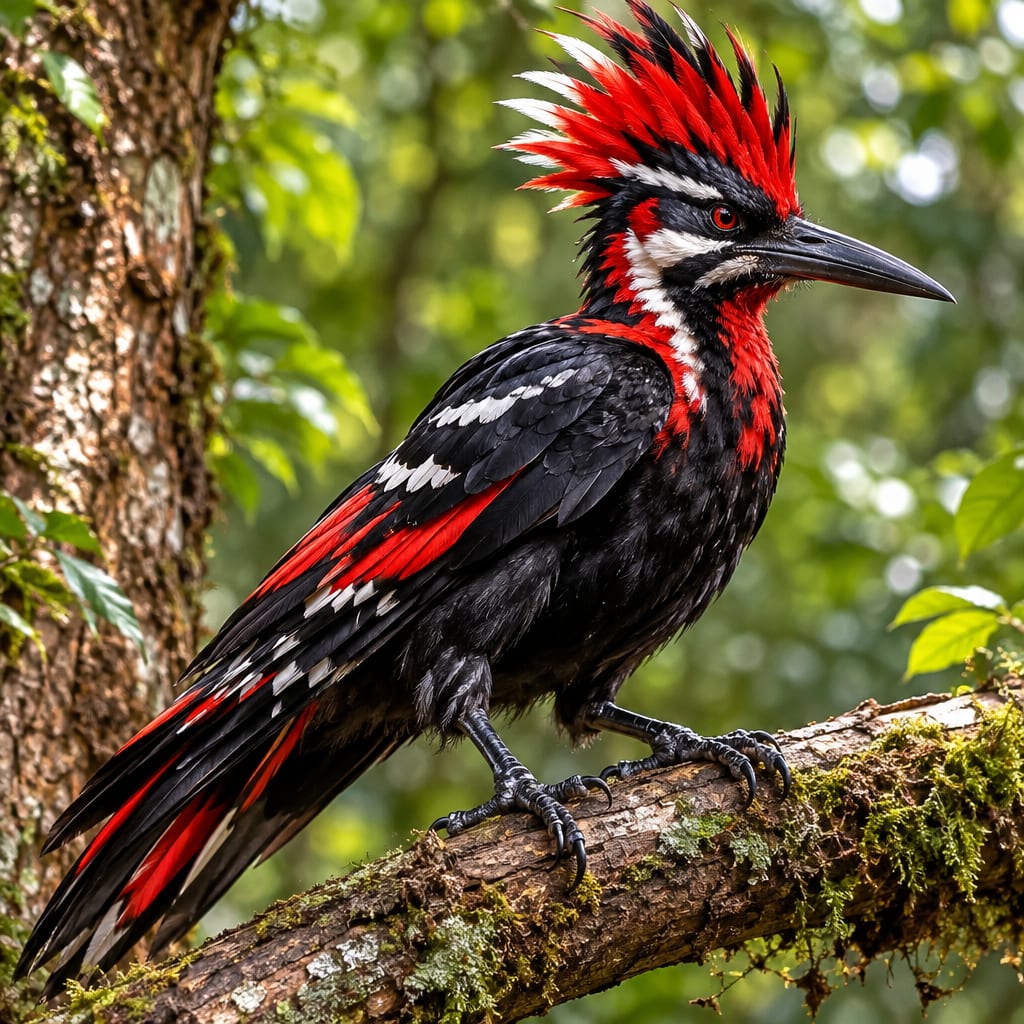
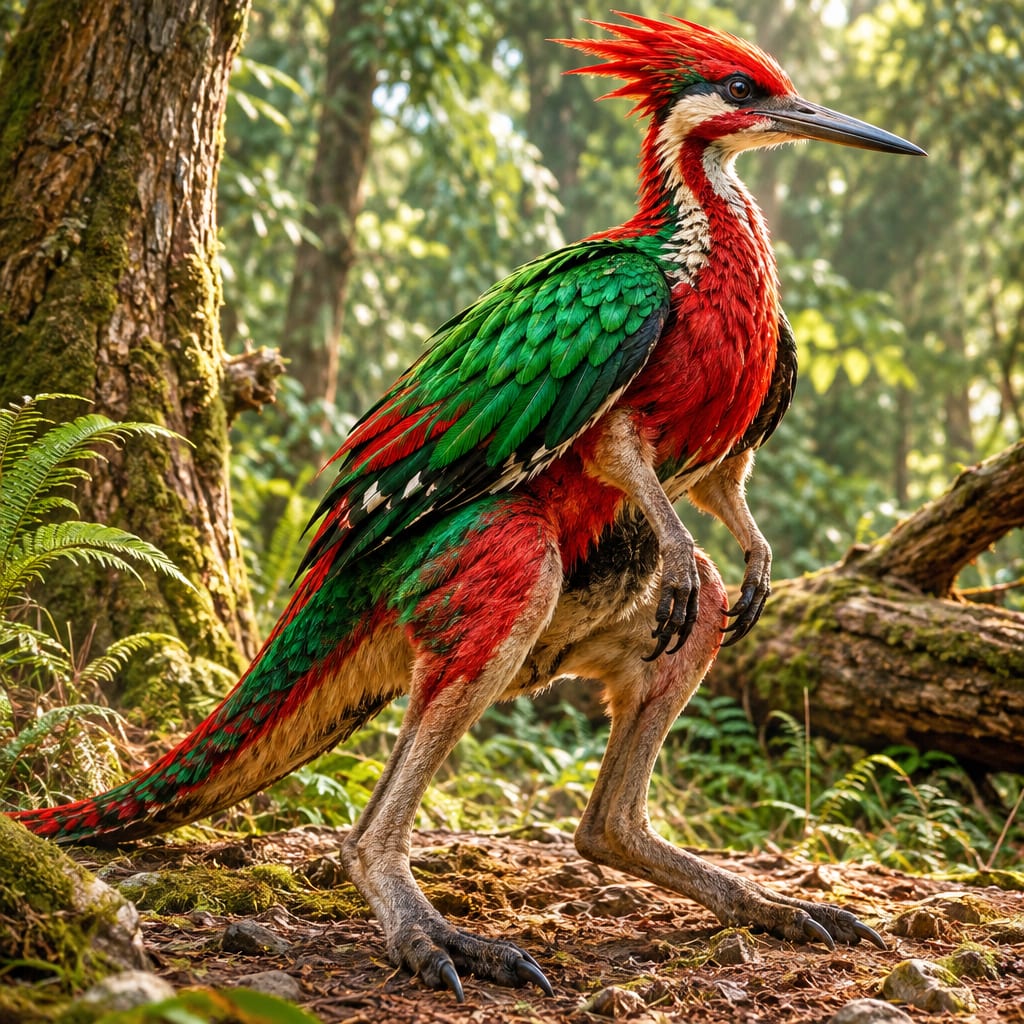
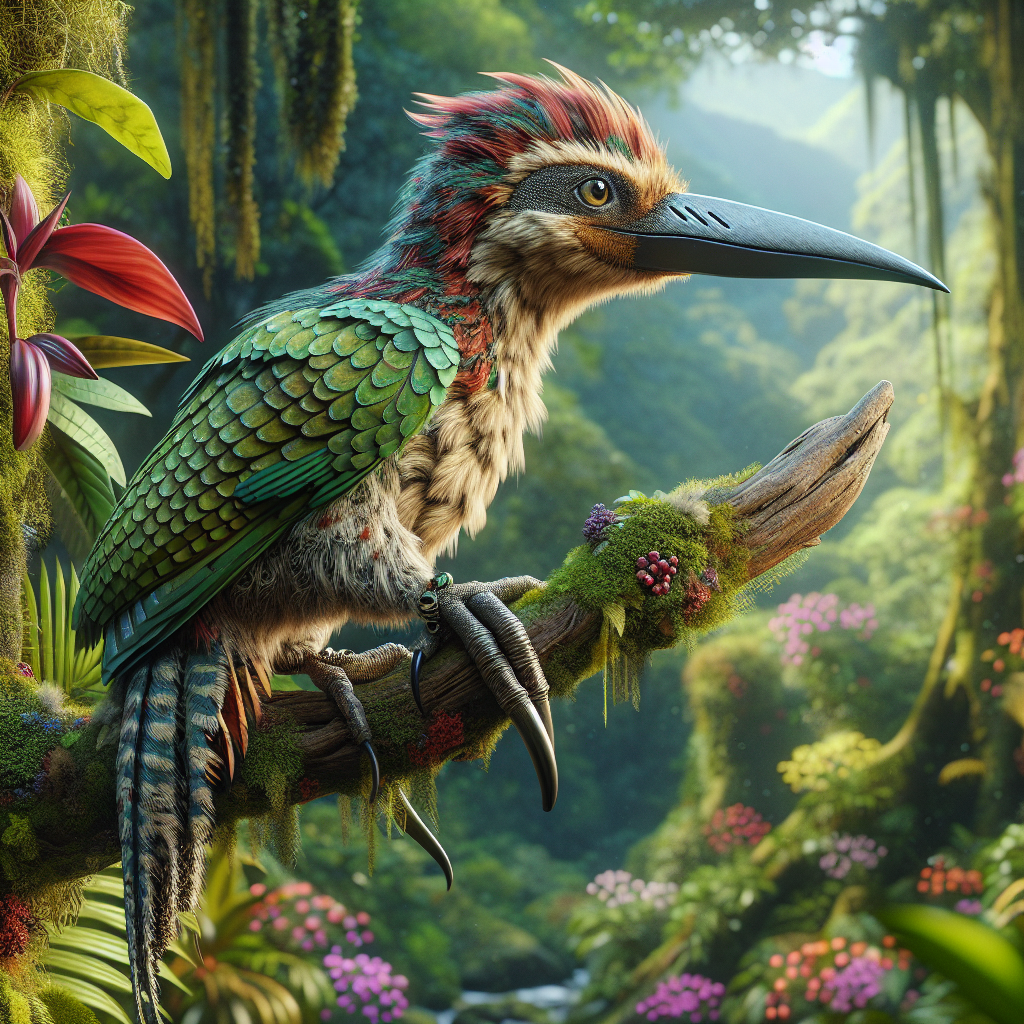
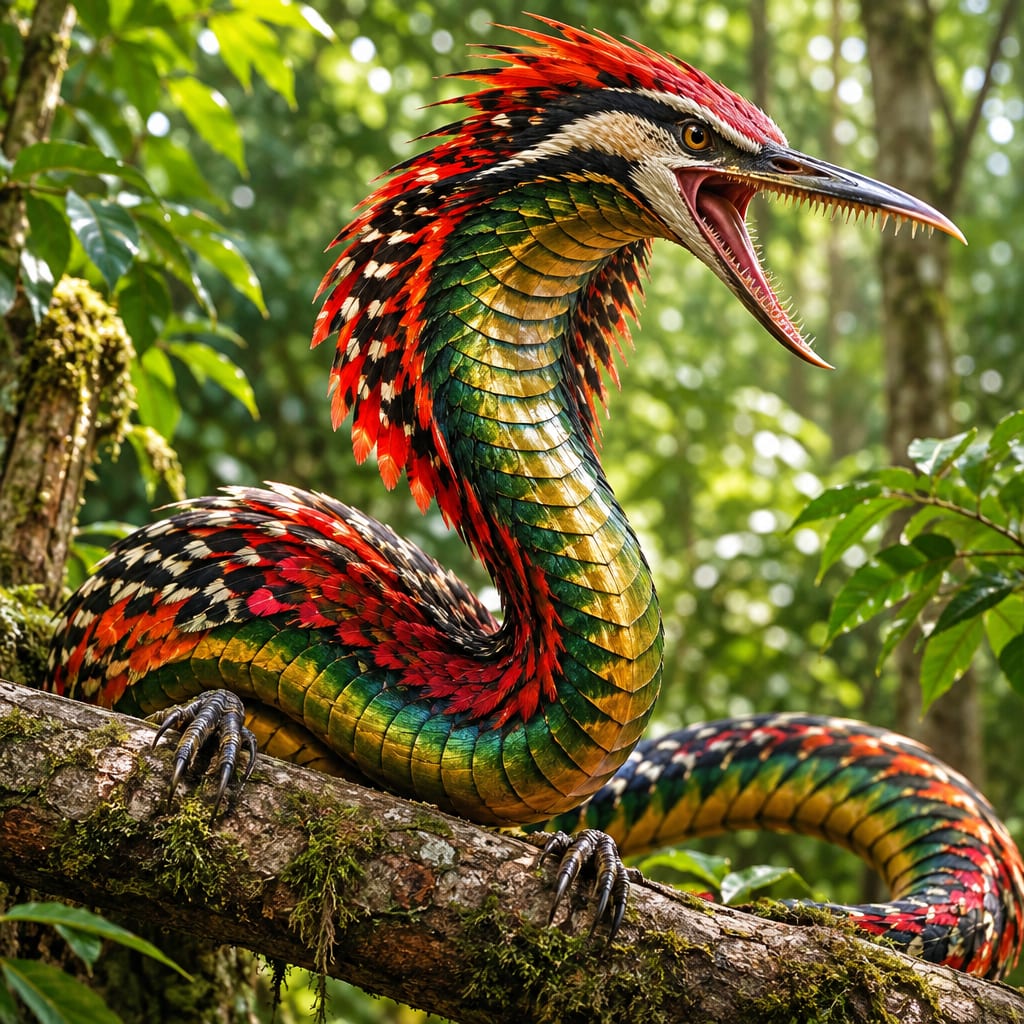
The Woodskunk is a unique hybrid creature characterized by its striking plumage and distinctive scent glands. It possesses the elongated body of a skunk, covered in iridescent green and brown feathers that mimic the bark of trees. The Woodskunk's head features a long, pointed beak ideal for drilling into wood, paired with prominent, round eyes that exhibit exceptional visual acuity. Its tail is bushy and striped, reminiscent of a skunk's, providing balance as it navigates forest canopies. This creature has strong, clawed feet designed for gripping and climbing, making it agile in its arboreal habitat.
Special abilities
Drilling Peck
The Woodskunk uses its powerful beak to drill into trees, delivering a rapid series of pecks that can stun prey or break through bark to access larvae.
From the Woodpecker
Real-world basis: The beak structure allows for high-impact force, similar to that of traditional woodpeckers, enabling effective drilling.
Scent Spray
Releasing a potent spray from its specialized glands, the Woodskunk can create a noxious cloud that disorients predators and rivals.
From the Skunk
Real-world basis: The chemical composition of the spray is similar to that of skunks, capable of causing temporary blindness and nausea.
Camouflage Feathers
The Woodskunk can blend seamlessly into its forest surroundings, making it difficult for predators to spot.
From the Woodpecker
Real-world basis: The coloration and texture of its feathers allow for effective camouflage against tree bark and foliage.
Defensive Stance
When threatened, the Woodskunk adopts a low posture, puffing up its tail and emitting a warning hiss to deter attackers.
From the Skunk
Real-world basis: This behavior is similar to that of skunks, utilizing both visual and auditory signals to ward off threats.