 Hybrid Battle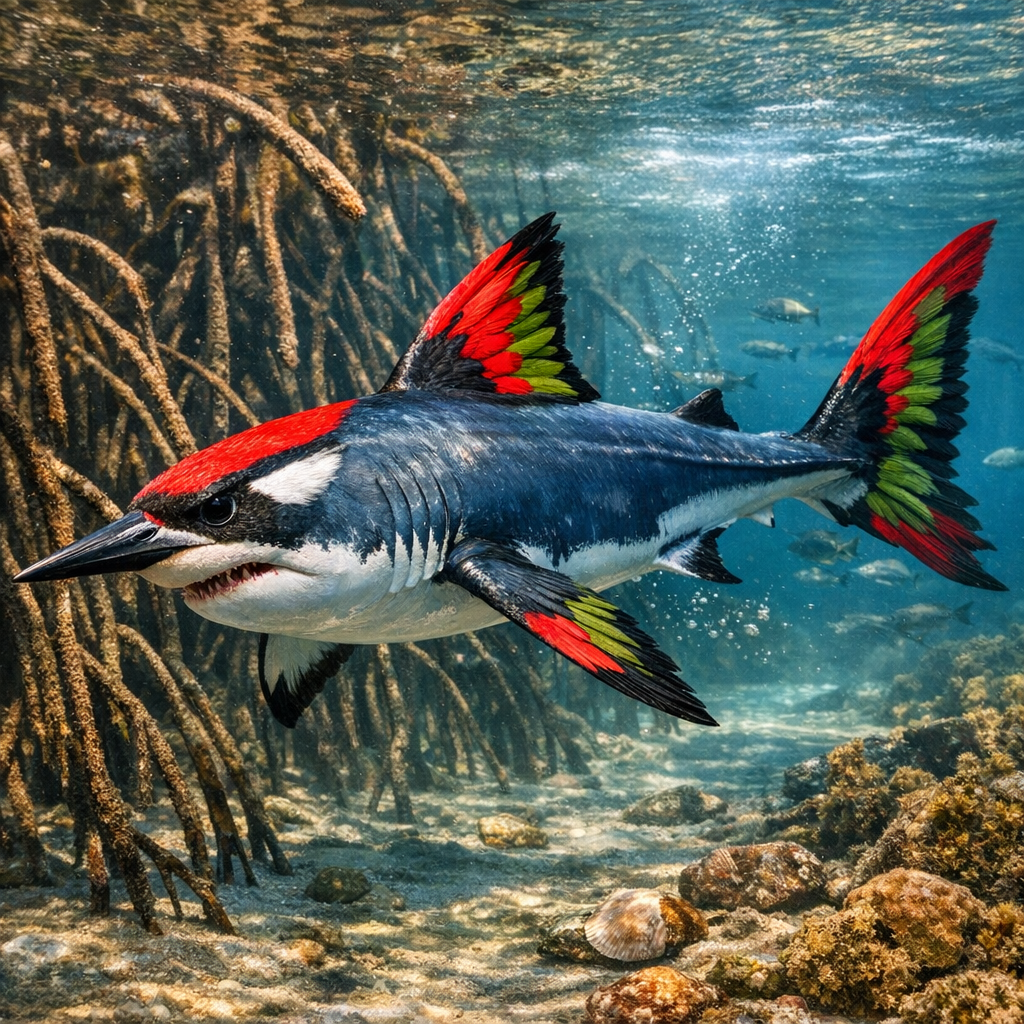
Sharkpecker
A hybrid of great white shark + Woodpecker
The Sharkpecker (Carcharodon picoides) is a remarkable hybrid creature that exhibits both the formidable predatory features of the great white shark and the unique drilling abilities of the woodpecker. With a streamlined body resembling that of a shark, the Sharkpecker possesses a sleek, metallic blue skin adorned with vibrant red and green plumage along its dorsal fin and tail, reminiscent of a woodpecker's feathers. Its head combines the elongated snout of a shark with a sharp, pointed beak perfectly adapted for pecking at underwater structures. Equipped with powerful jaws, it can easily crush shells and fend off attackers.
Special Abilities
Fin Slash
The Sharkpecker swiftly slashes at its opponent with its powerful dorsal fin, delivering a quick and painful strike.
From the Great White SharkReal-world basis: The dorsal fin of the shark is utilized for propulsion and maneuvering, allowing for rapid attacks.
Beak Drill
Using its sharp beak, the Sharkpecker drills into its prey or a surface, causing significant damage and disorientation.
From the WoodpeckerReal-world basis: The specialized beak structure of the woodpecker enables it to drill into wood, adapted here for aquatic use.
Scale Armor
The Sharkpecker's tough, scaled skin provides a protective barrier against predators and environmental hazards.
From the Great White SharkReal-world basis: Shark skin is made of dermal denticles, which offer both protection and hydrodynamic advantages.
Tree Camouflage
The Sharkpecker can blend seamlessly into mangrove environments, making it difficult for predators to spot.
From the WoodpeckerReal-world basis: Camouflage techniques employed by woodpeckers in their natural habitats are adapted for aquatic environments.
Habitat: Coastal waters interspersed with mangrove forests and rocky shorelines, where it can utilize both aquatic and arboreal environments. Diet: The Sharkpecker is an opportunistic feeder, primarily consuming small fish, crustaceans, and mollusks, which it can access by pecking holes in submerged rocks and coral reefs to extract its prey.