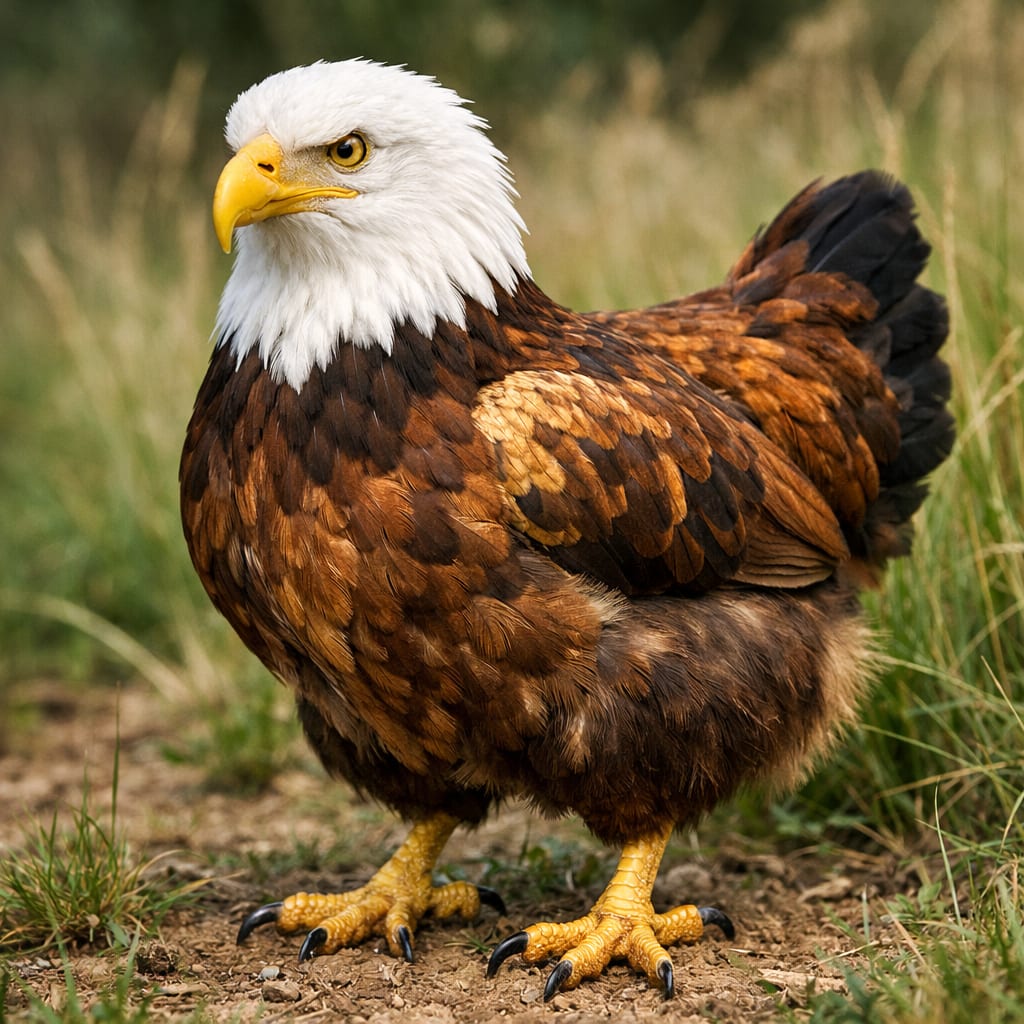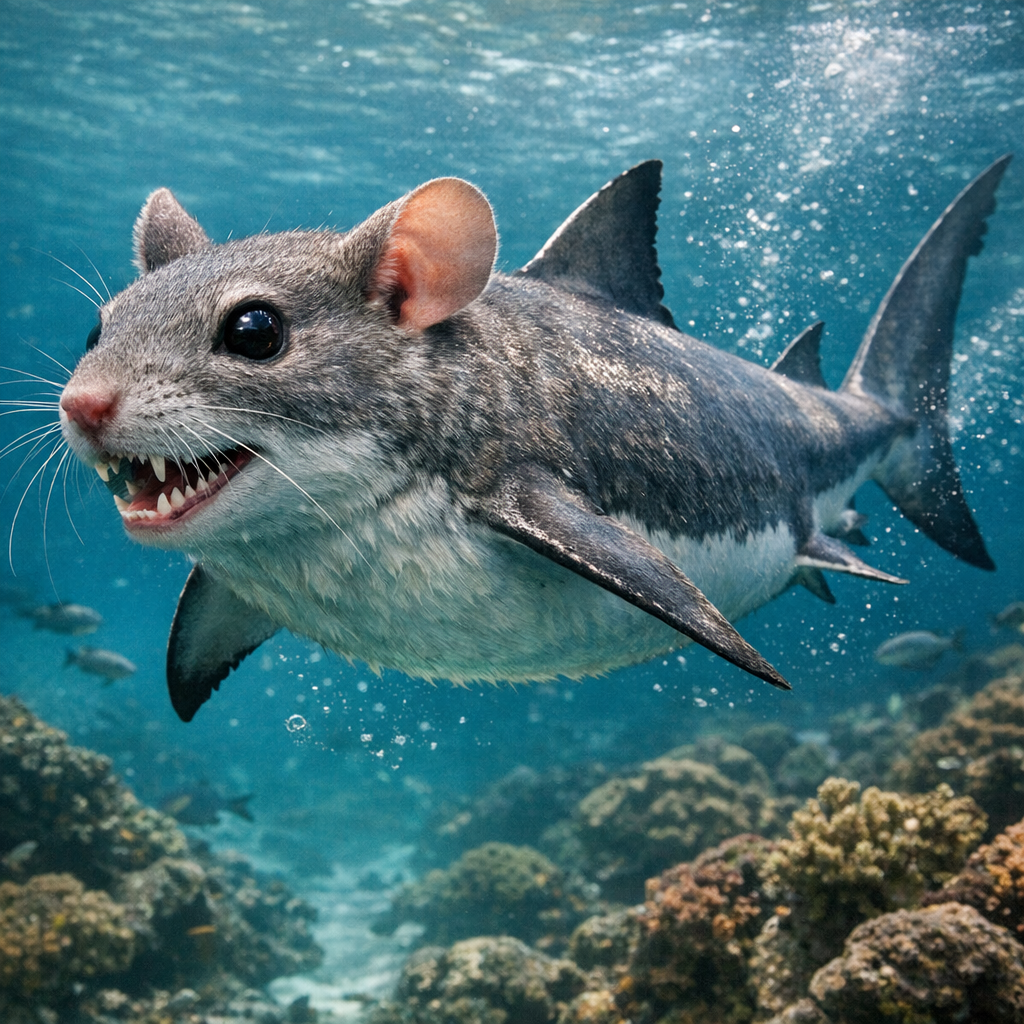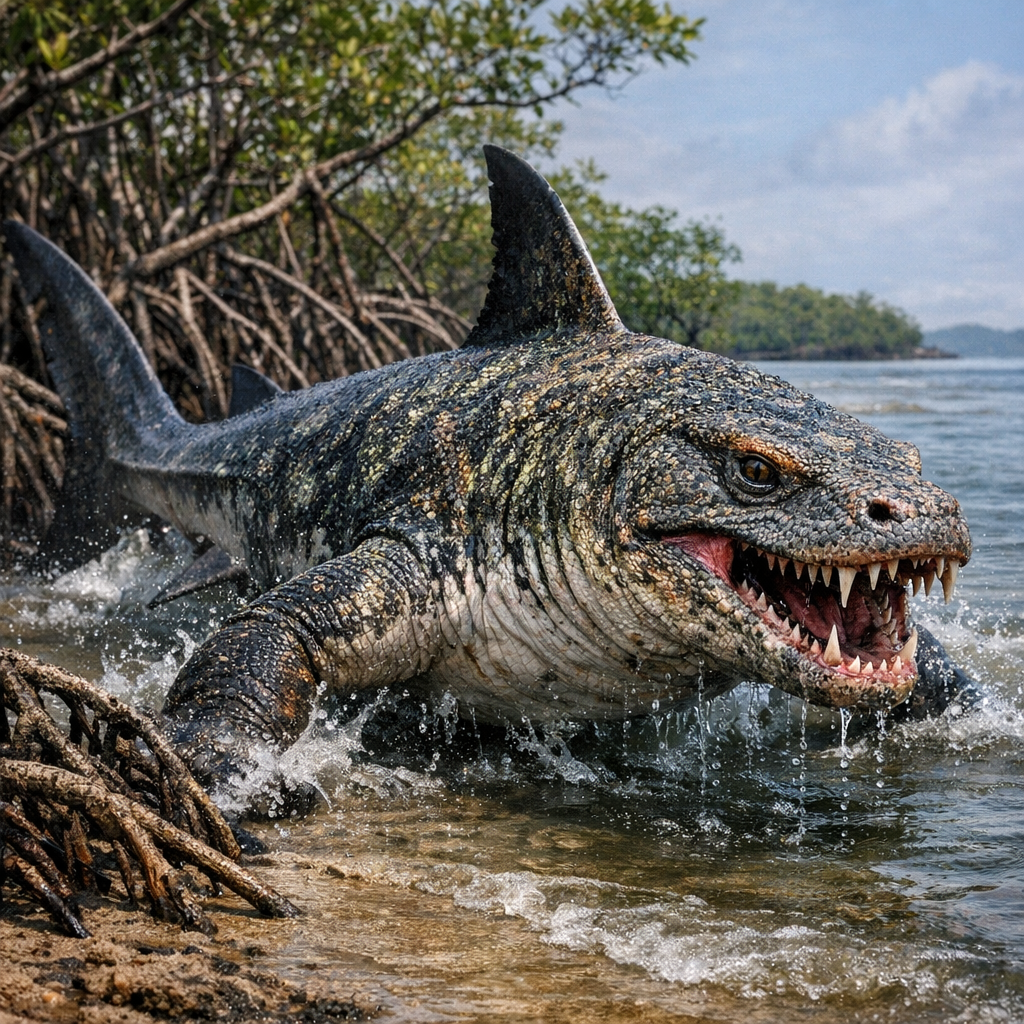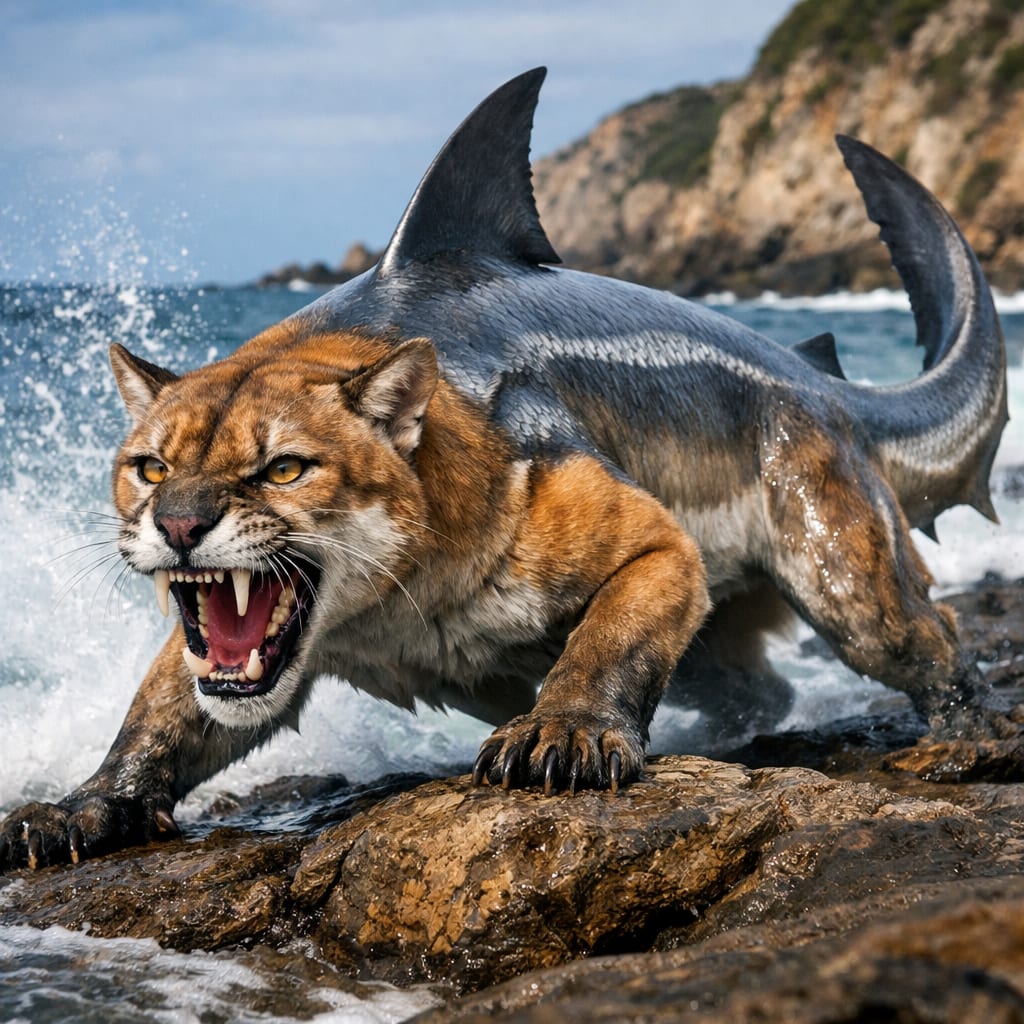
Aquilaurus
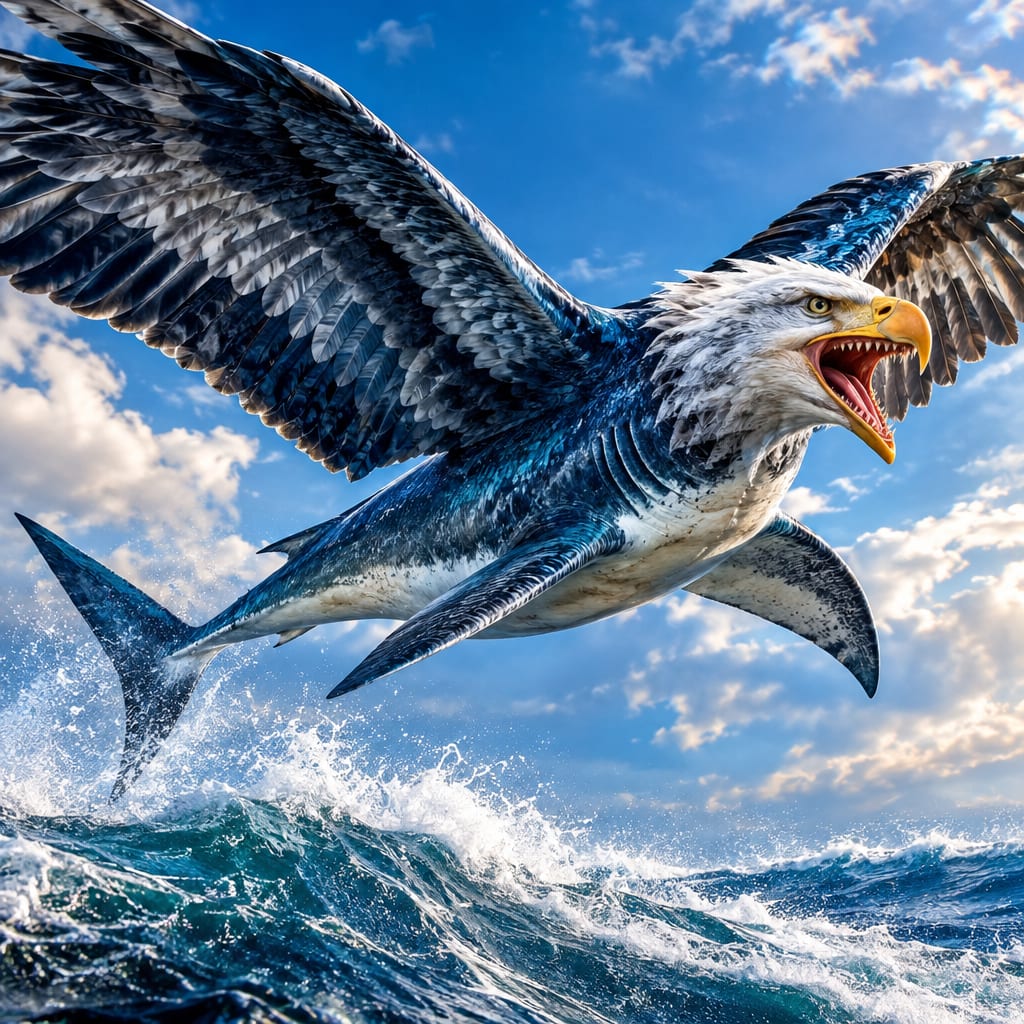
A hybrid of Bald Eagle + Shark
- Habitat
- Coastal regions where ocean meets rugged cliffs, often nesting on high ledges and hunting in both marine and aerial environments.
- Diet
- Carnivorous, primarily feeding on fish, seabirds, and small marine mammals, utilizing its speed and agility to catch prey both in the water and in the air.
The story of Aquilaurus
The Aquilaurus is a remarkable hybrid creature that combines the majestic features of the Bald Eagle and the ferocious nature of the Shark. It has a streamlined body resembling that of a shark, covered in sleek, iridescent scales that shimmer in shades of deep blue and silver. Its powerful wings, adorned with feathers that mimic the patterns of a shark's skin, enable it to soar gracefully above the ocean waves. The creature possesses a sharp, hooked beak akin to that of an eagle, paired with rows of serrated teeth that can slice through prey with ease. The Aquilaurus's eyes are keen and adapted for both aerial and underwater vision, allowing it to spot prey from great distances. This formidable predator is equally at home in the sky and in the depths of the ocean.
Special abilities
Aerial Dive
The Aquilaurus performs a high-speed dive from the sky, striking its target with incredible force.
From the Bald Eagle
Real-world basis: Utilizes gravitational acceleration and aerodynamic shape to enhance impact.
Shark Bite
A powerful bite that can crush bones and tear through tough hides, delivering a paralyzing effect to its prey.
From the Shark
Real-world basis: Combines bite force with serrated teeth structure for maximum damage.
Feathered Shield
When threatened, the Aquilaurus can spread its wings to create a protective barrier, reducing incoming damage.
From the Bald Eagle
Real-world basis: Utilizes wing structure and feather density to absorb impact.
Camouflage Scales
The creature can change the coloration of its scales to blend seamlessly with its surroundings, evading predators and prey.
From the Shark
Real-world basis: Mimics chromatophores found in cephalopods for rapid color change.