Chinchiswan
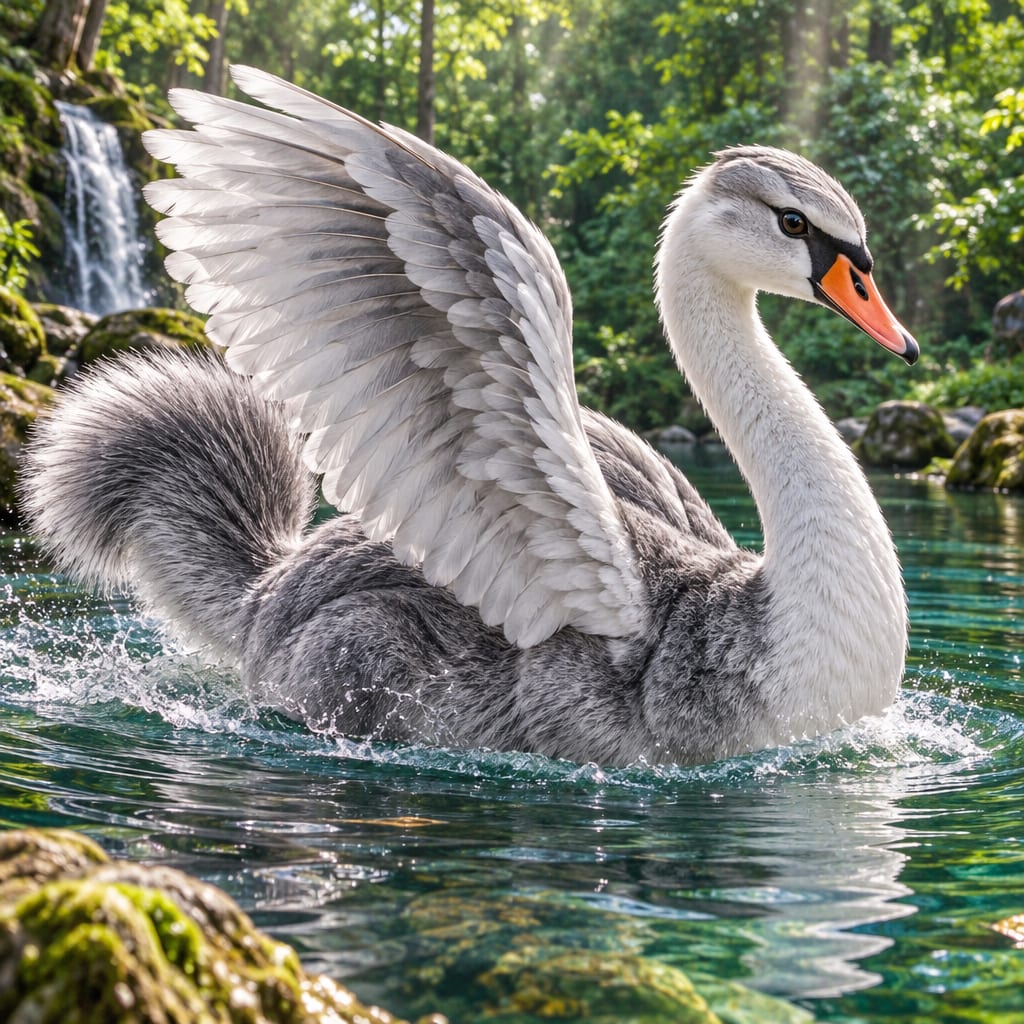
A hybrid of Swan + Chinchilla
- Habitat
- Chinchiswans thrive in lush, temperate forests near freshwater lakes, where they can easily transition between aquatic and terrestrial environments. They prefer areas with abundant vegetation and soft ground for nesting.
- Diet
- Chinchiswans are herbivorous, primarily feeding on aquatic plants, grasses, and soft fruits. They utilize their beaks to forage in water and on land, often foraging in pairs or small groups for optimal feeding.
The story of Chinchiswan
The Chinchiswan is a captivating hybrid creature exhibiting the elegant grace of a swan combined with the soft, plush fur of a chinchilla. It possesses the elongated neck and striking white plumage of a swan, contrasted by the velvety grey fur on its body and tail. Its wings are feathered with soft down, providing both buoyancy in water and insulation on land. The creature has large, expressive eyes that reflect its inquisitive nature, and its webbed feet allow for agile swimming as well as swift movement across rocky terrains.
Special abilities
Feathered Whirlwind
The Chinchiswan flaps its powerful wings to create a gust of wind that disorients opponents and sends them tumbling backwards.
From the Swan
Real-world basis: Utilizes aerodynamic principles to create a sudden shift in air pressure.
Chinchilla Dart
With remarkable speed, the Chinchiswan launches itself at an enemy, using its beak to deliver a swift peck that stuns.
From the Chinchilla
Real-world basis: Combines the quick reflexes of a chinchilla with the swiftness of a bird, enabling rapid movement.
Plush Armor
The Chinchiswan's dense fur offers a layer of protection against physical attacks, reducing damage from predators.
From the Chinchilla
Real-world basis: The thick fur acts as a natural insulator, providing cushioning against impacts.
Aquatic Camouflage
When submerged, the Chinchiswan can adjust its coloration to blend seamlessly with its aquatic surroundings, making it difficult for predators to spot.
From the Swan
Real-world basis: Utilizes chromatophores to change skin color, similar to cephalopods.