 Hybrid Battle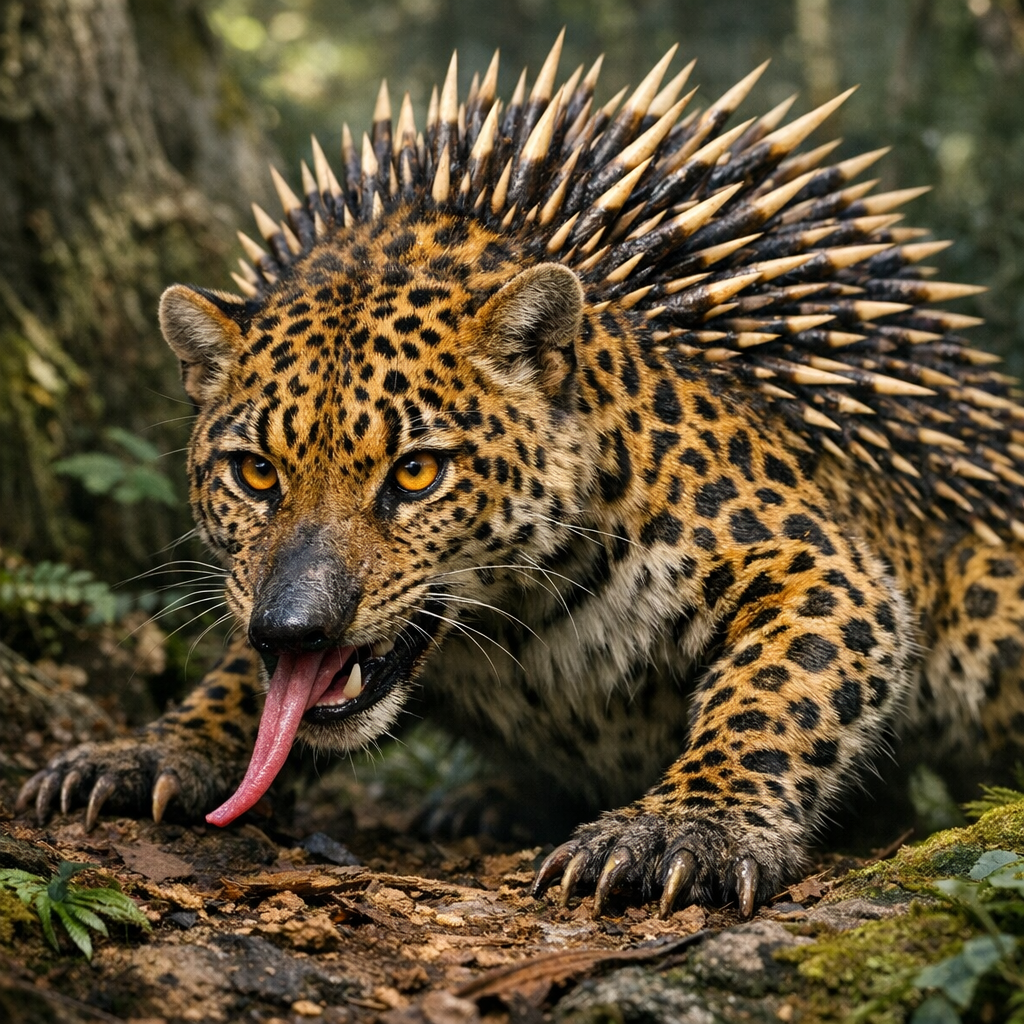
Lechida
A hybrid of Leopard + Echidna
The Lechida is a fascinating hybrid species, blending the sleek, muscular form of the leopard (Panthera pardus) with the unique appendages and spiny armor of the echidna (Tachyglossus aculeatus). This creature possesses a body covered in a dappled coat of yellow and black spots, akin to a leopard, while its back is adorned with short, sharp spines that offer protection. The Lechida has a long, snout-like tongue, ideal for foraging insects, and powerful limbs that allow for agile movement both on land and in trees. Its eyes are large and expressive, adapted for excellent night vision, making it a formidable predator in its natural habitat.
Special Abilities
Spiny Strike
The Lechida launches a surprise attack, using its sharp spines to inflict damage on its prey.
From the EchidnaReal-world basis: The use of spines as a defensive and offensive mechanism is seen in various species of echidnas, providing both protection and a means of attack.
Pounce and Grasp
With incredible agility, the Lechida leaps onto its prey, using its powerful limbs to pin it down, making escape nearly impossible.
From the LeopardReal-world basis: Pouncing is a common hunting technique among felids, allowing them to surprise and immobilize prey effectively.
Spiny Shield
When threatened, the Lechida can curl into a ball, presenting its spiny exterior to deter attackers.
From the EchidnaReal-world basis: Echidnas possess a natural defense mechanism, curling into a ball to protect their softer undersides from predators.
Camouflage Stalk
The Lechida can blend seamlessly into its surroundings, allowing it to avoid detection by predators and prey alike.
From the LeopardReal-world basis: The dappled fur of leopards provides effective camouflage in their natural habitats, aiding in stealth and evasion.
Habitat: The Lechida thrives in the dense forests and grasslands of subtropical regions, where it can easily navigate through underbrush and climb trees. It prefers areas with ample cover for stalking prey and burrows for nesting. Diet: This creature is omnivorous, primarily feeding on ants, termites, and small mammals, but it also enjoys fruits and nuts found in its habitat. Its specialized tongue allows it to extract insects from their burrows, while its sharp claws assist in breaking open tough shells of nuts.