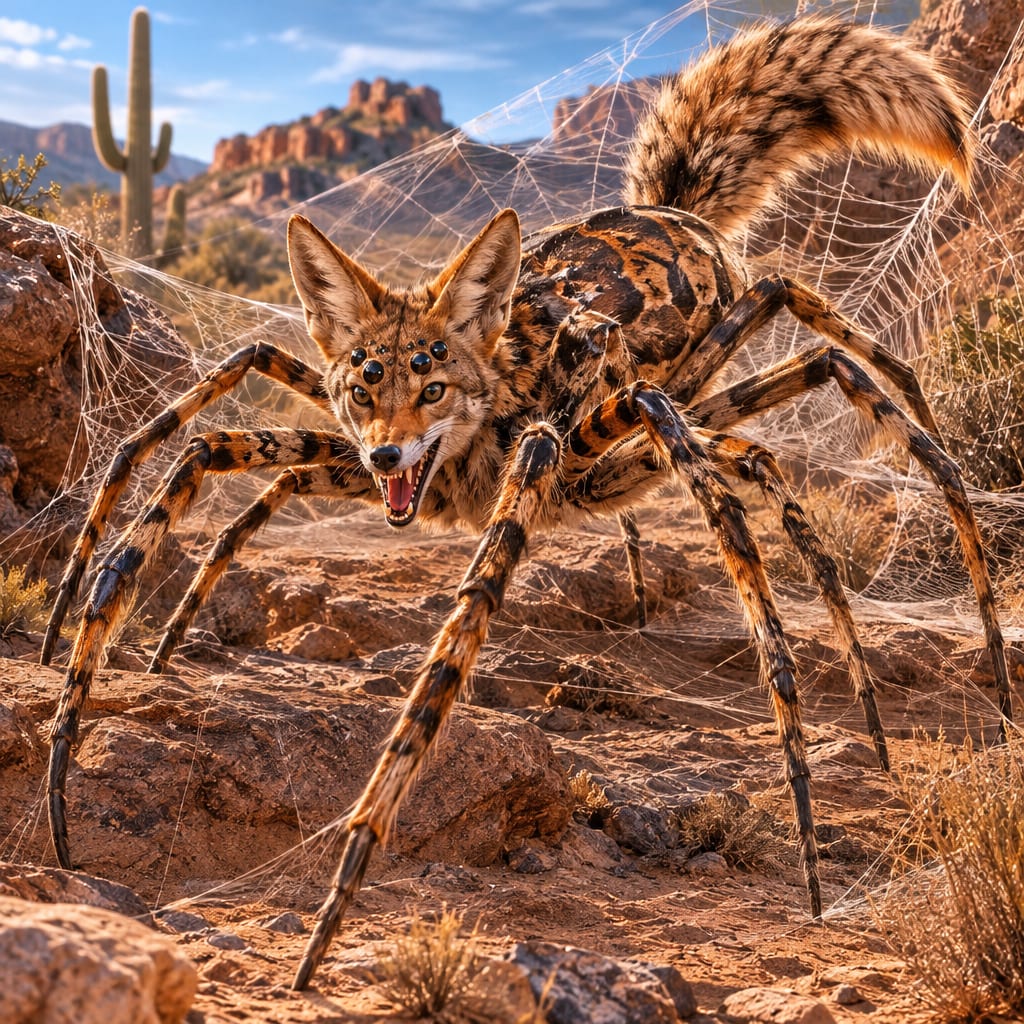
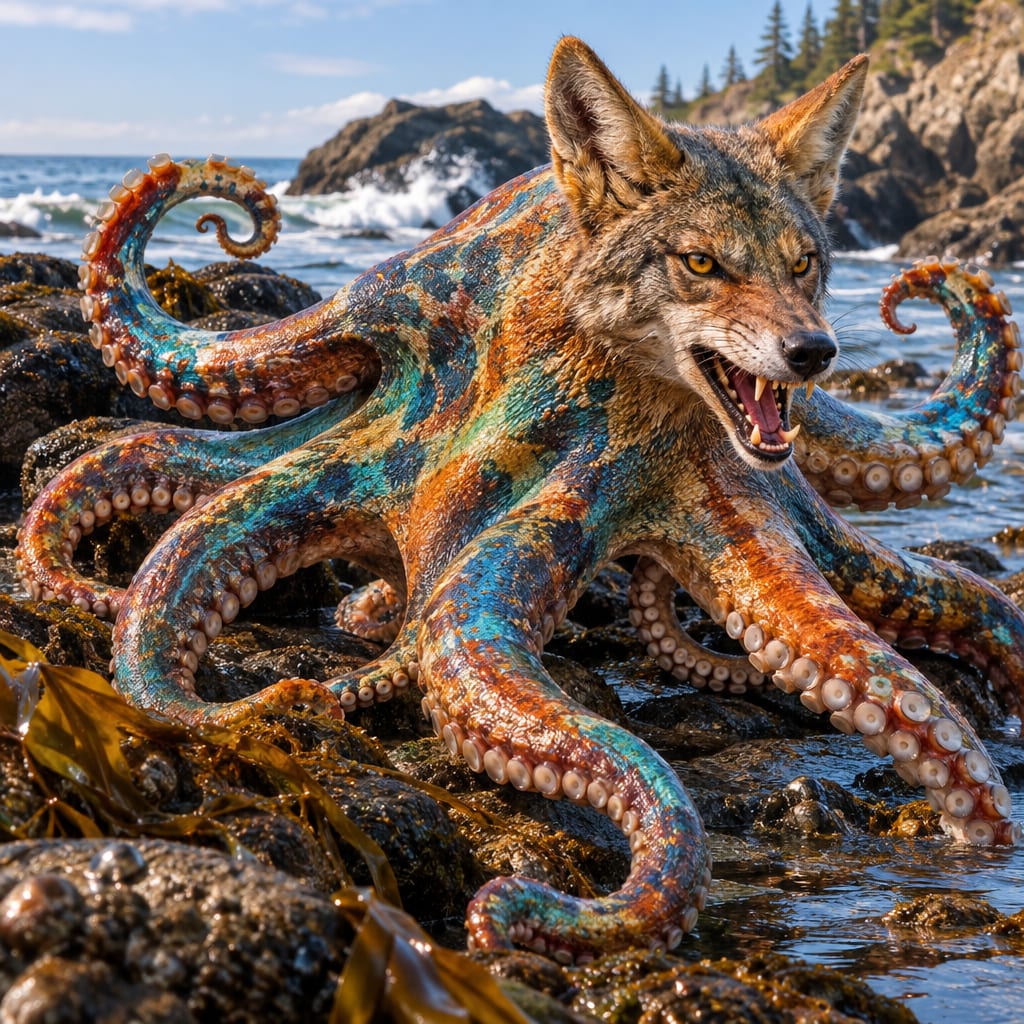
Octoyote
- Habitat
- The Octoyote thrives in coastal areas where sandy shores meet rocky outcrops, often found in tidal pools and mangrove forests. It is equally adept at navigating both terrestrial and aquatic environments, making it an exceptional survivor in diverse ecosystems.
- Diet
- The Octoyote is a carnivore, primarily feeding on crustaceans, small fish, and small mammals. It employs its keen hunting instincts and dexterous tentacles to capture prey, often using its color-changing ability to ambush unsuspecting victims.
The story of Octoyote
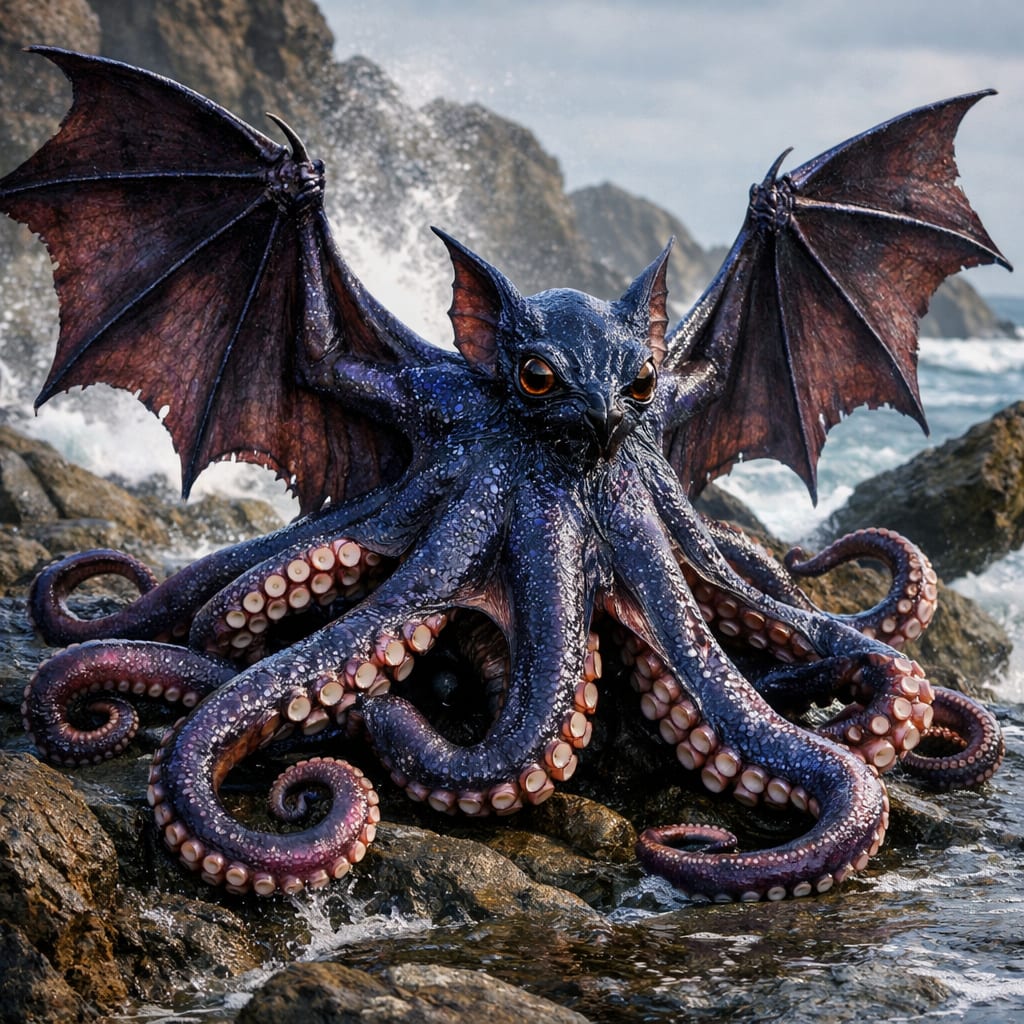
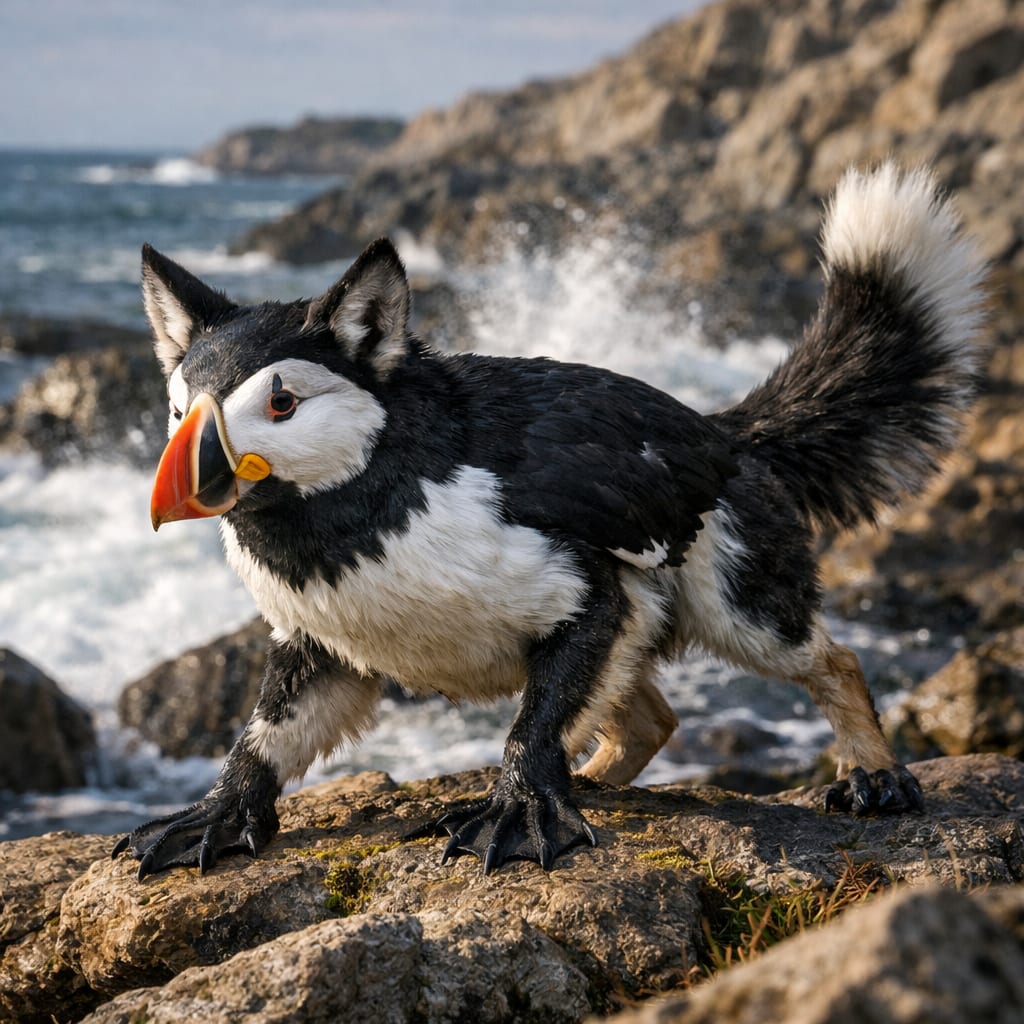
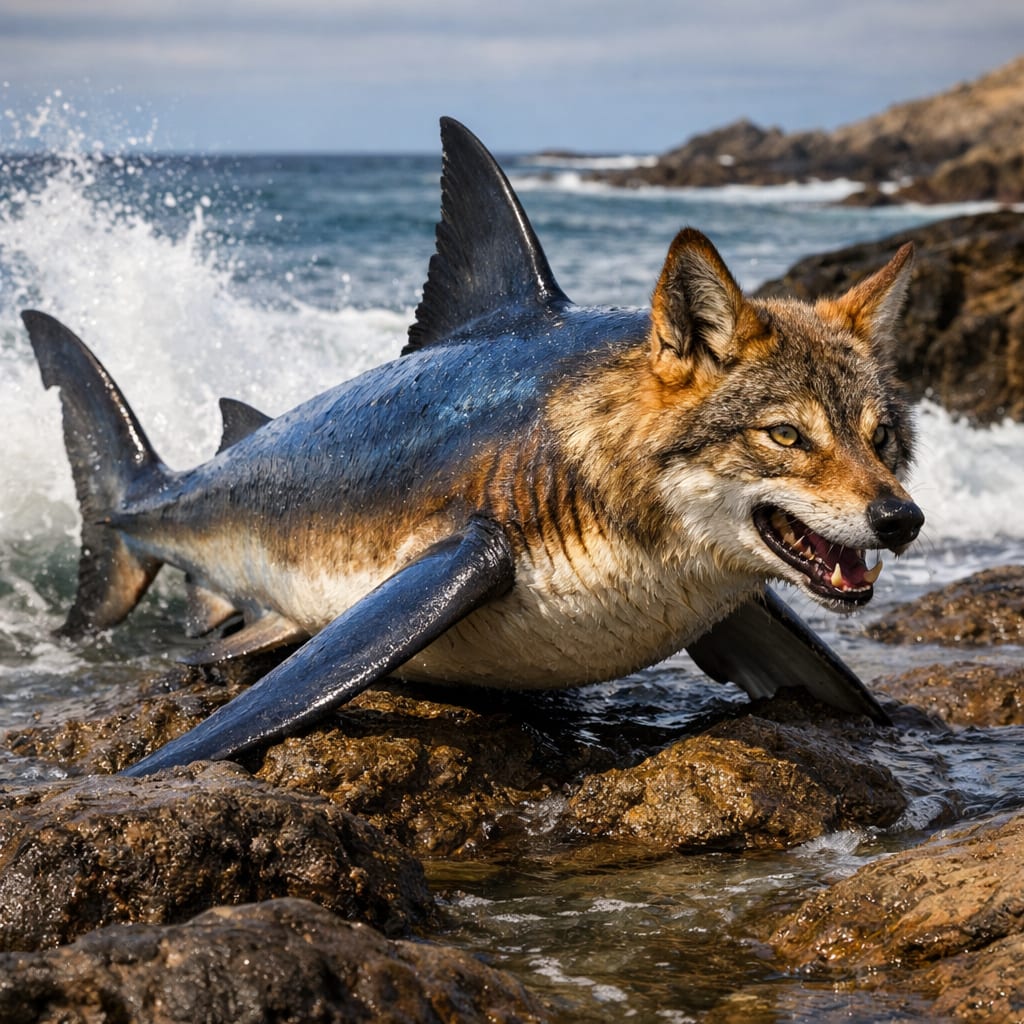
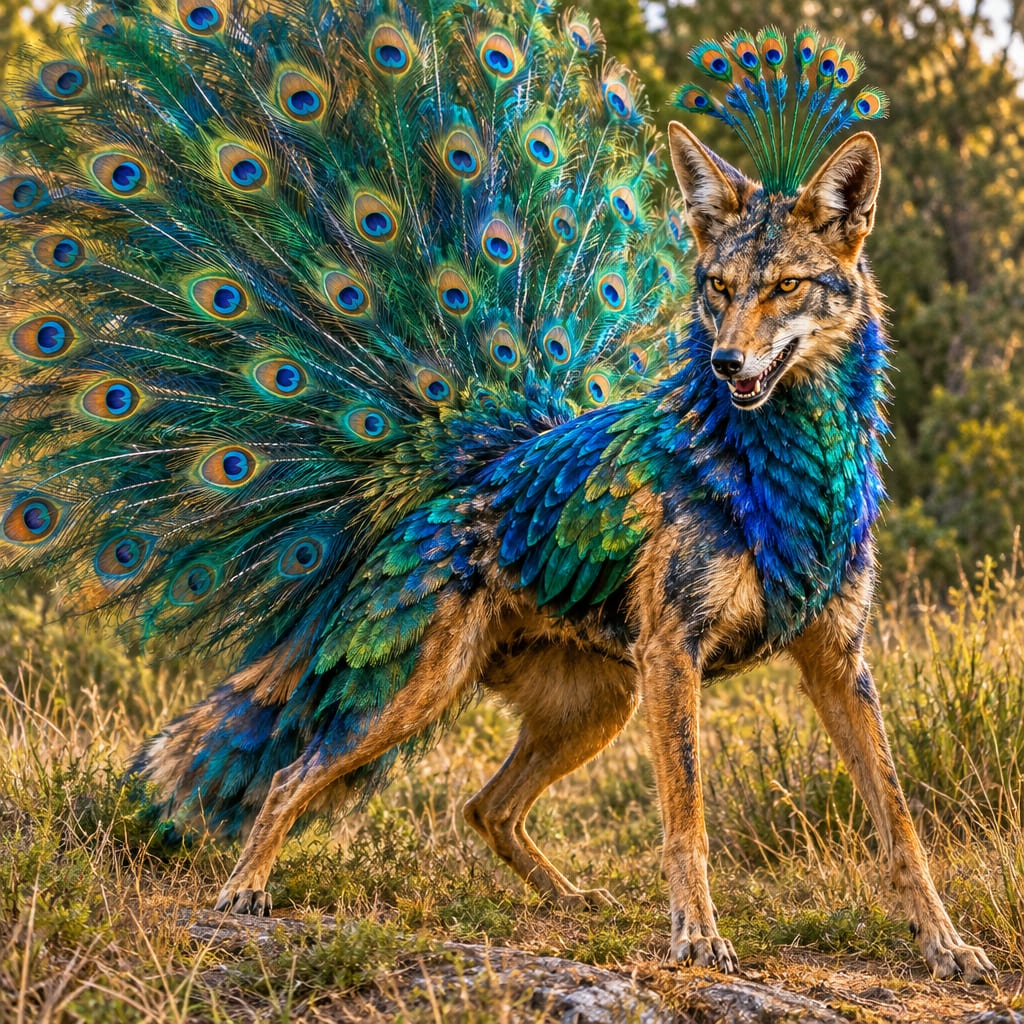
The Octoyote is a remarkable hybrid creature combining the intelligence and adaptability of the coyote with the dexterous appendages and color-changing abilities of the octopus. This creature features a streamlined body covered in iridescent skin that can change colors for camouflage. Its eight tentacle-like limbs are lined with sensitive suckers, allowing it to grasp objects with precision. The Octoyote's head resembles that of a coyote, complete with sharp ears and keen eyes, while its mouth is equipped with a set of sharp, conical teeth suitable for a carnivorous diet.
Special abilities
Tentacle Strike
The Octoyote lashes out with its powerful tentacles, delivering a swift and forceful blow to its target.
From the Octopus
Real-world basis: The muscular hydrostat structure of the tentacles allows for powerful, targeted strikes.
Coyote's Howl
A piercing howl that disorients and intimidates adversaries, causing them to hesitate in their attack.
From the Coyote
Real-world basis: Acoustic signaling can disrupt the focus of nearby creatures, creating psychological advantage.
Color Camouflage
The Octoyote can blend seamlessly into its surroundings, becoming nearly invisible to predators and prey.
From the Octopus
Real-world basis: Chromatophores in the skin allow for rapid color change and texture adaptation.
Pack Defense
When threatened, the Octoyote can emit a series of high-pitched yips that summon nearby pack members for assistance.
From the Coyote
Real-world basis: Social bonding and cooperative defense strategies enhance survival rates in predator encounters.