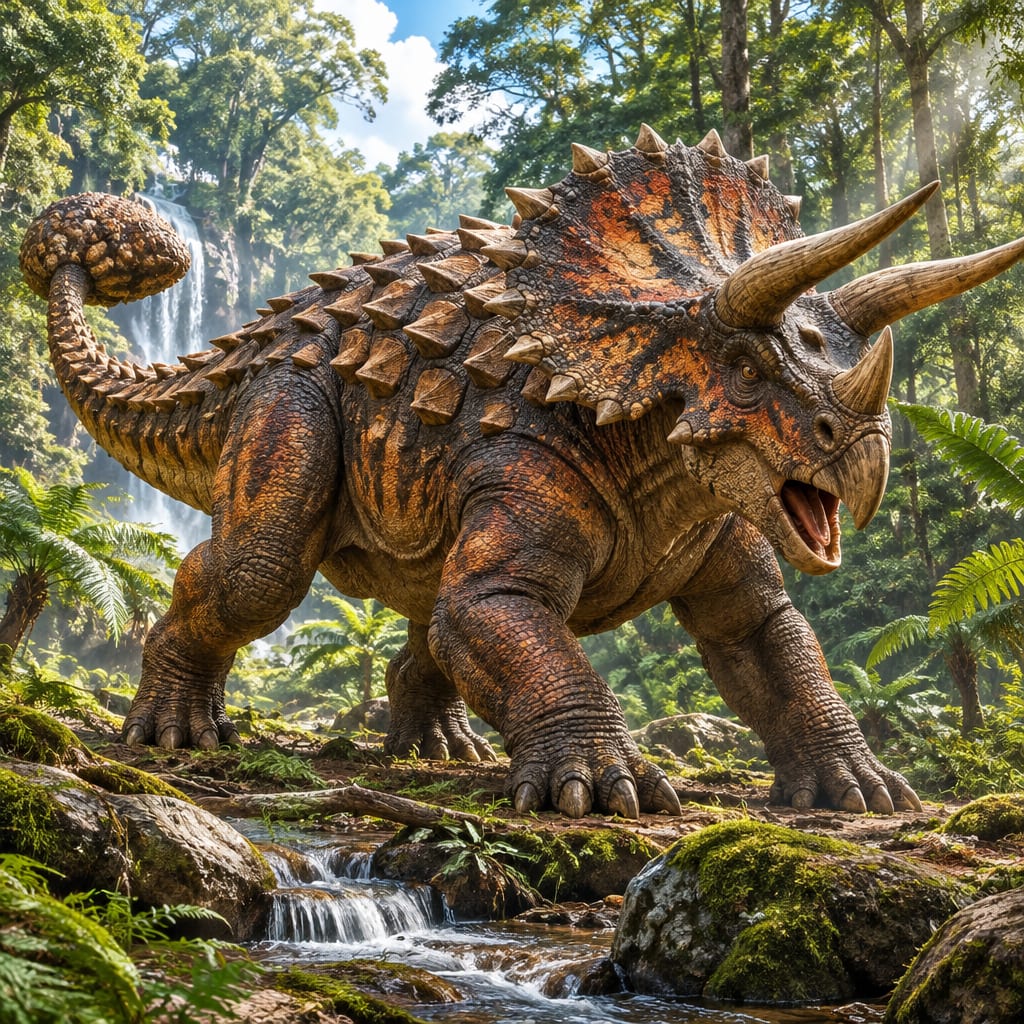
Ankylotrike
A hybrid of Ankylosaurus + Triceratops
- Habitat
- The Ankylotrike roams the dense, lush forests and open plains of the Late Cretaceous period, where it can find ample foliage and shelter from predators.
- Diet
- As a herbivore, the Ankylotrike primarily feeds on low-lying vegetation, including ferns, shrubs, and leafy plants. Its strong jaws are adapted to grind tough plant material, making it an efficient forager.
The story of Ankylotrike
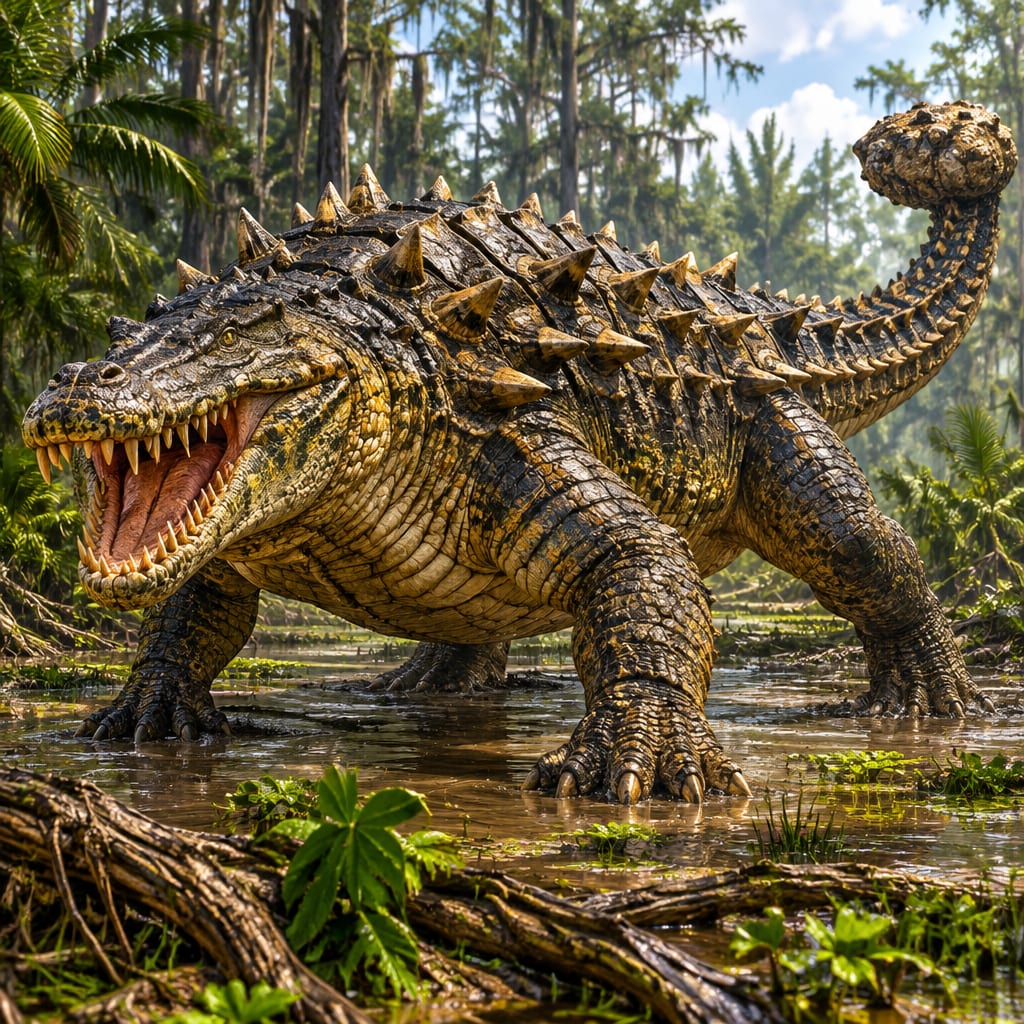
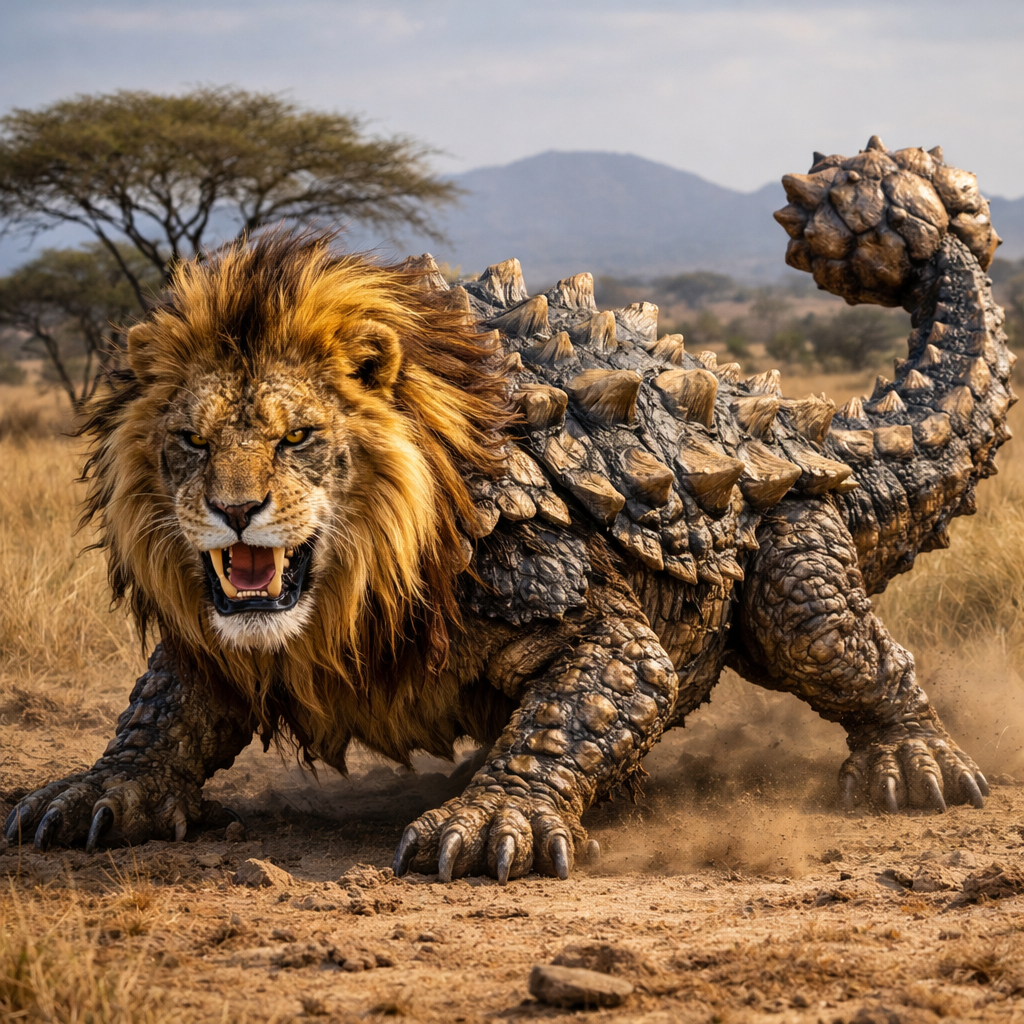
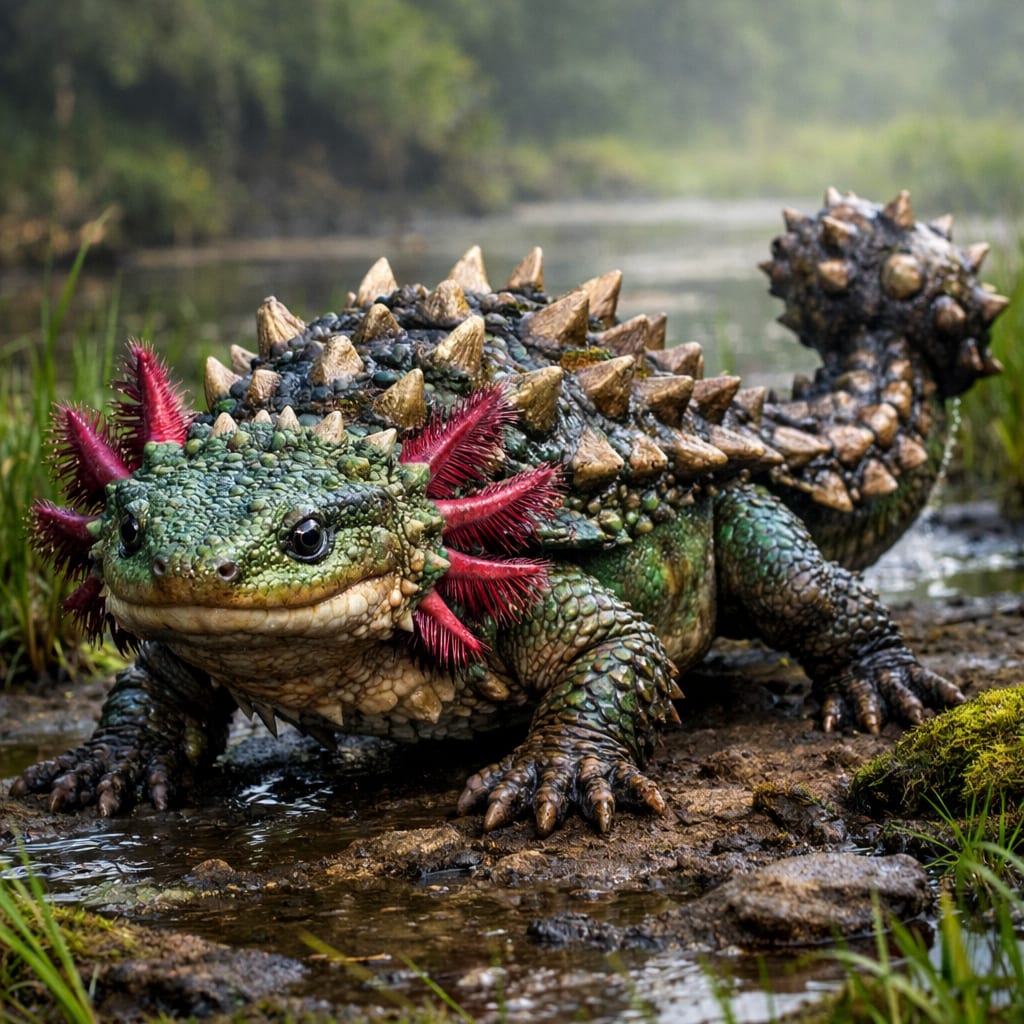
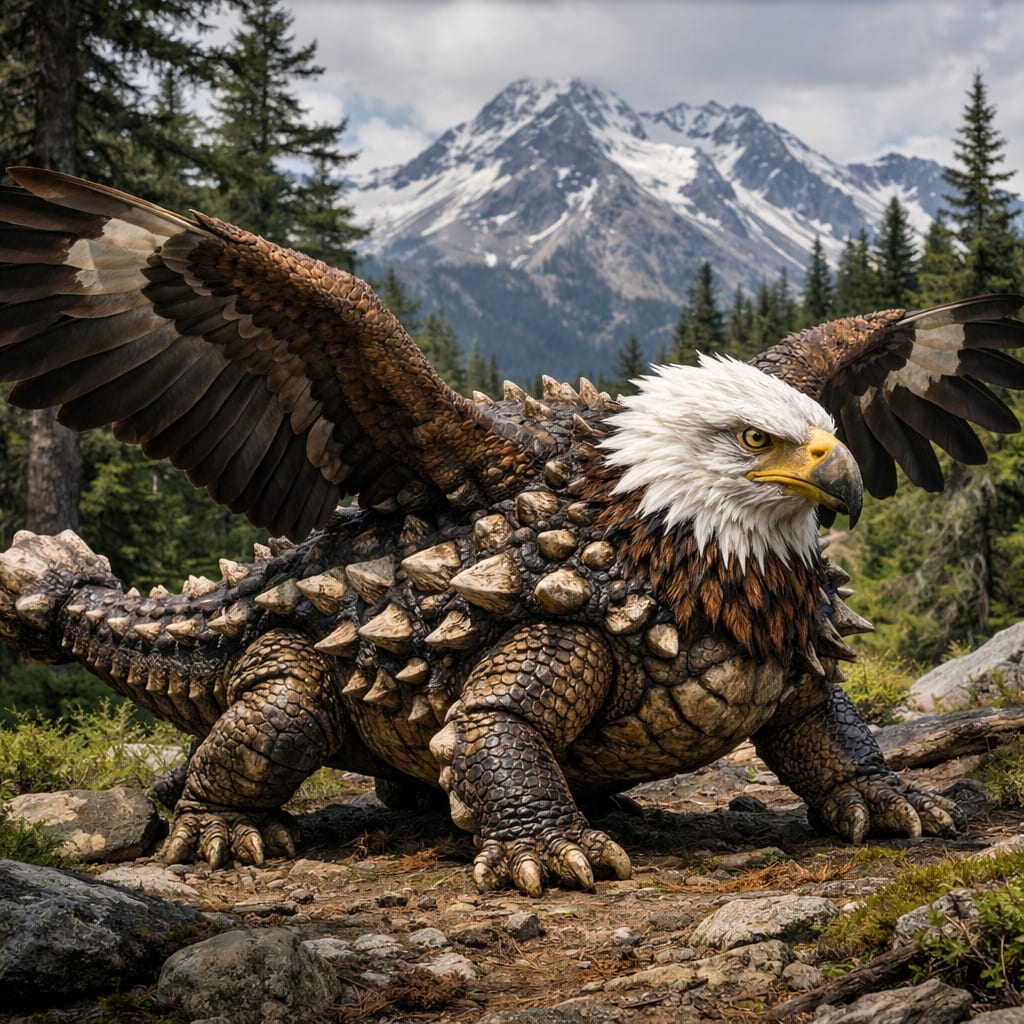
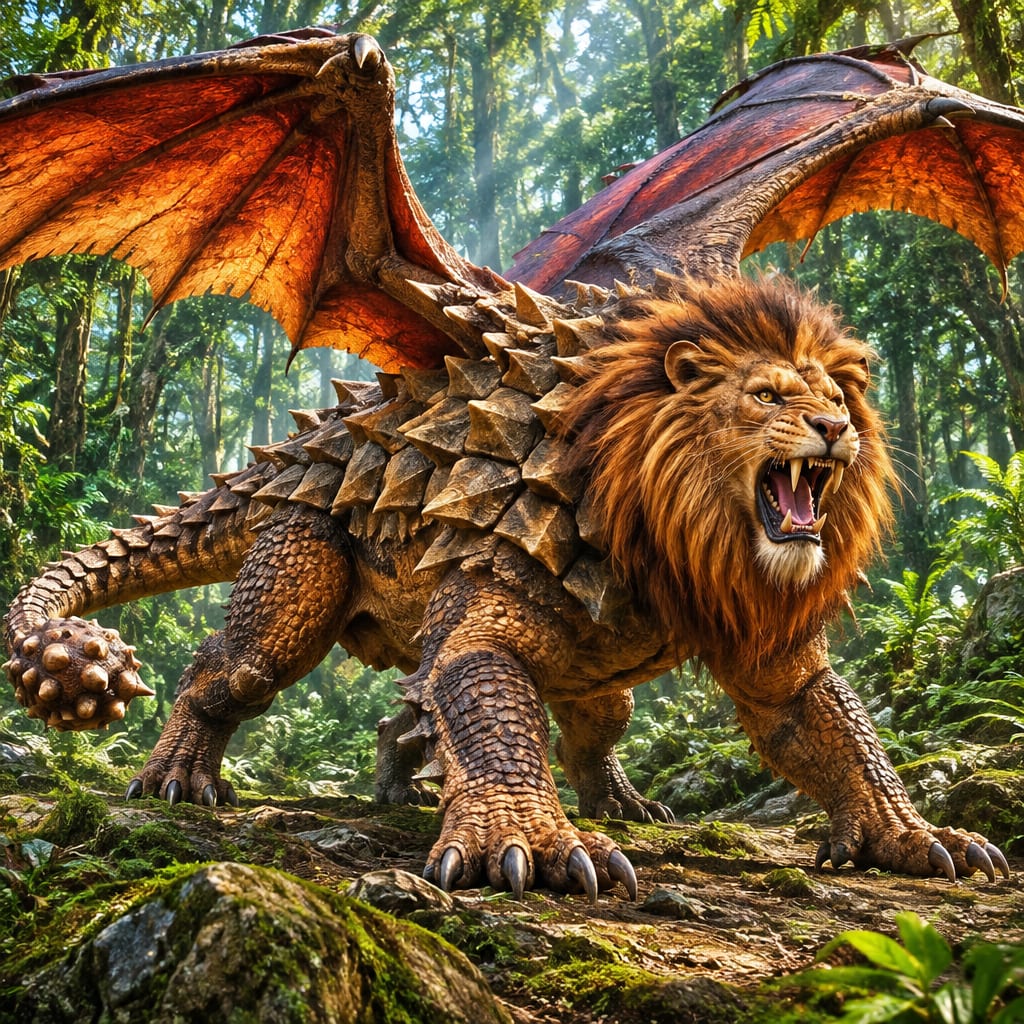
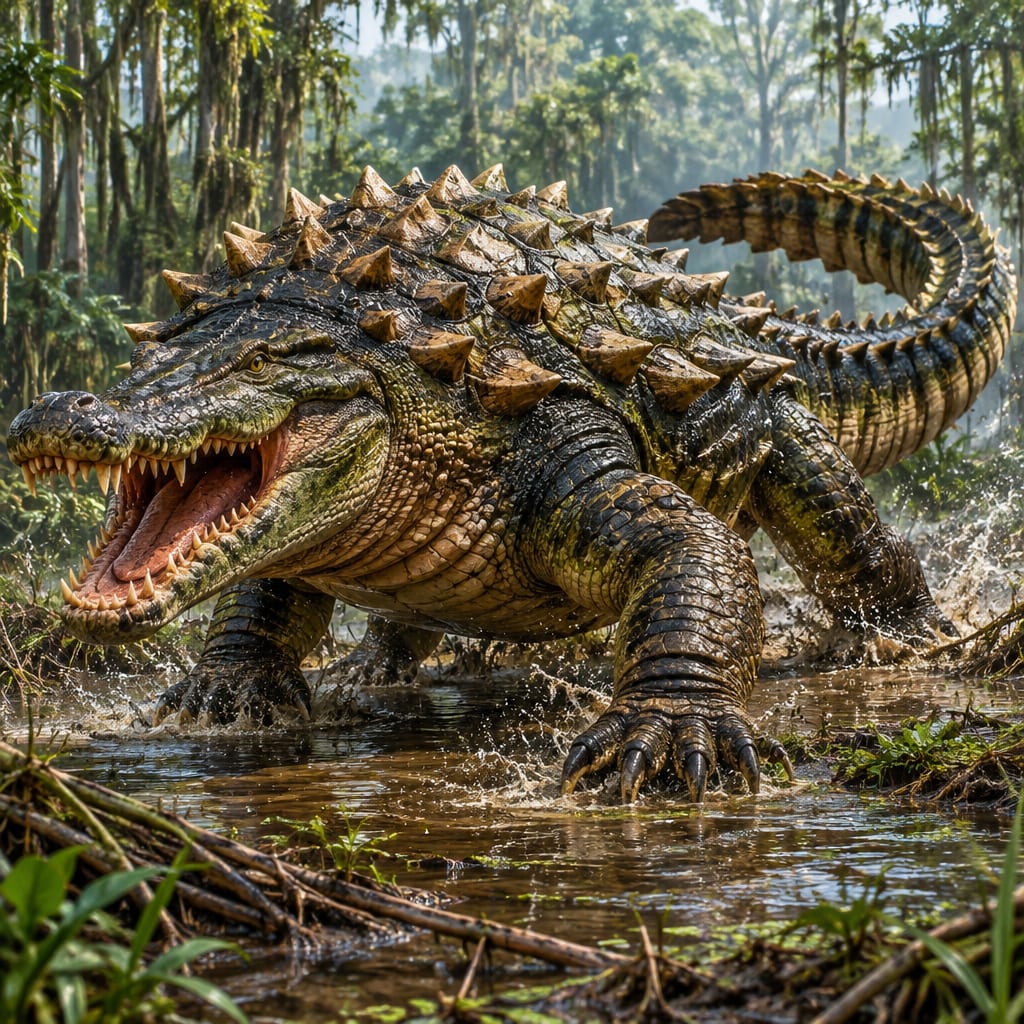
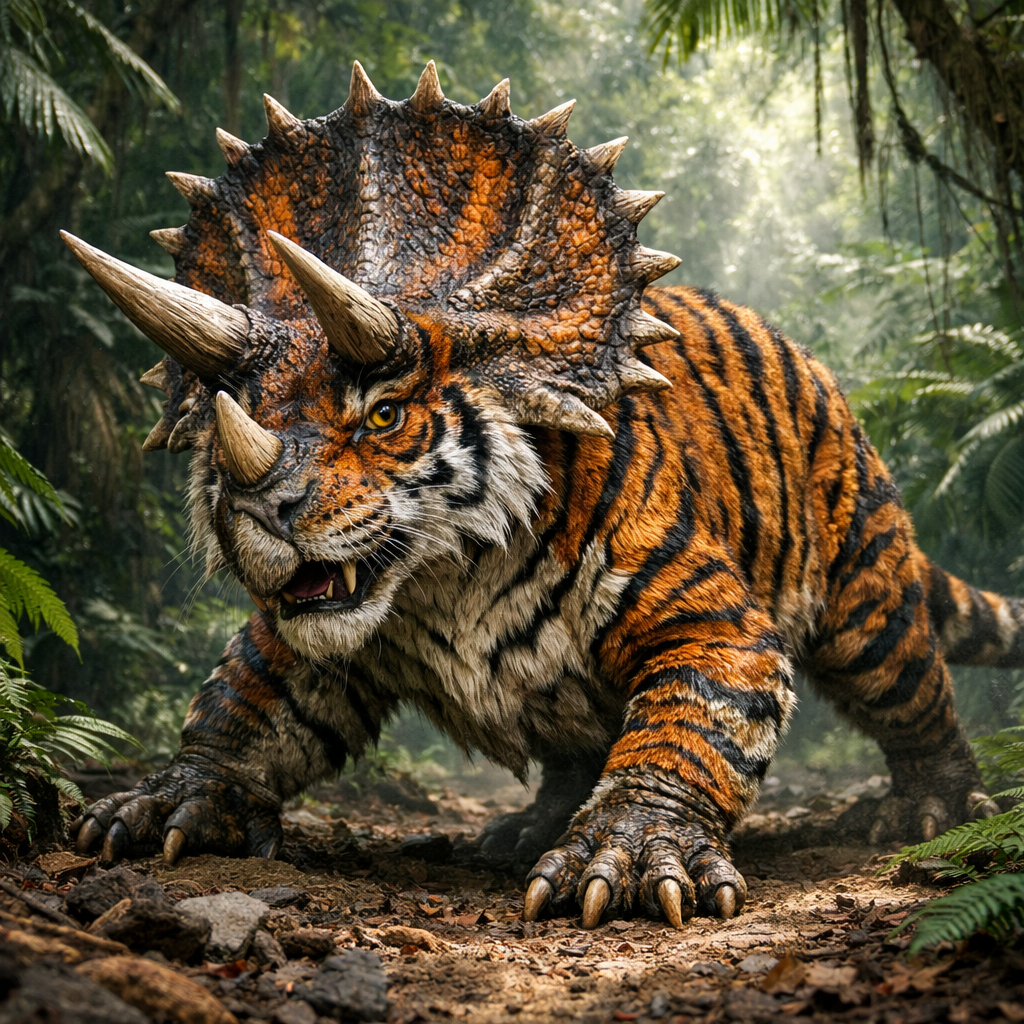
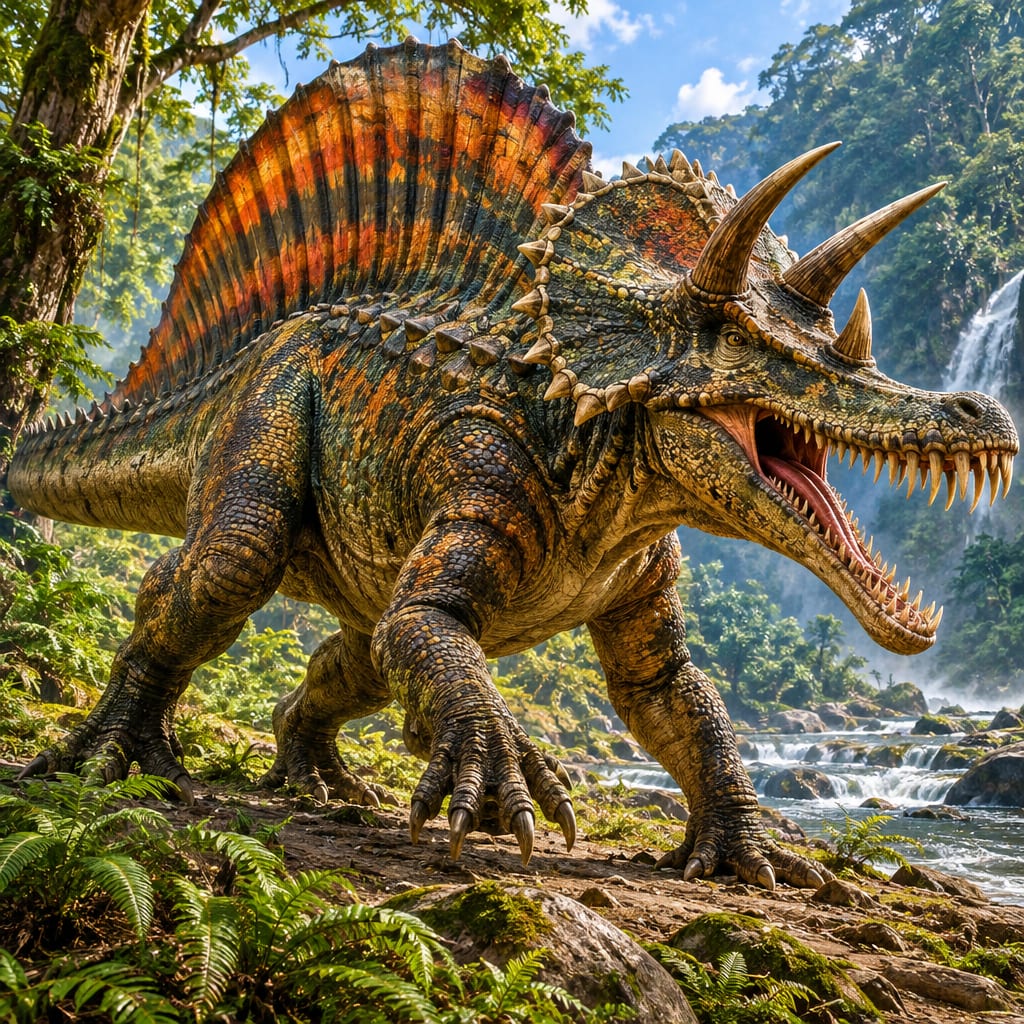
The Ankylotrike is a massive, armored dinosaur showcasing a fusion of the Ankylosaurus and Triceratops. With a stocky body covered in bony plates, it boasts a formidable club-like tail similar to that of its Ankylosaurus ancestor. Its head features the iconic three prominent horns of the Triceratops, complemented by a robust frill that provides protection from predators. The creature's overall length can reach up to 20 feet, and it weighs approximately 6 tons, making it a formidable presence in its environment.
Special abilities
Tail Smash
The Ankylotrike swings its heavy tail, delivering a powerful blow to its opponent, capable of causing severe damage.
From the Ankylosaurus
Real-world basis: The tail of the Ankylosaurus is a highly evolved weapon used for both defense and offense, capable of breaking bones with its club-like structure.
Horn Charge
The Ankylotrike charges at high speed, using its three horns to impale and push back threats.
From the Triceratops
Real-world basis: Triceratops used its strong, sturdy horns in combat and defense, allowing it to fend off predators effectively.
Armored Defense
The Ankylotrike curls up, presenting its heavily armored back to potential attackers, significantly reducing damage taken.
From the Ankylosaurus
Real-world basis: The bony plates of the Ankylosaurus provide excellent protection, allowing it to withstand attacks from large predators.
Frilled Shield
The Ankylotrike raises its frill as a deterrent, making it appear larger and more intimidating to potential threats.
From the Triceratops
Real-world basis: The frill of the Triceratops serves both a defensive role and as a display feature to ward off competitors and threats.