Wild Rayog
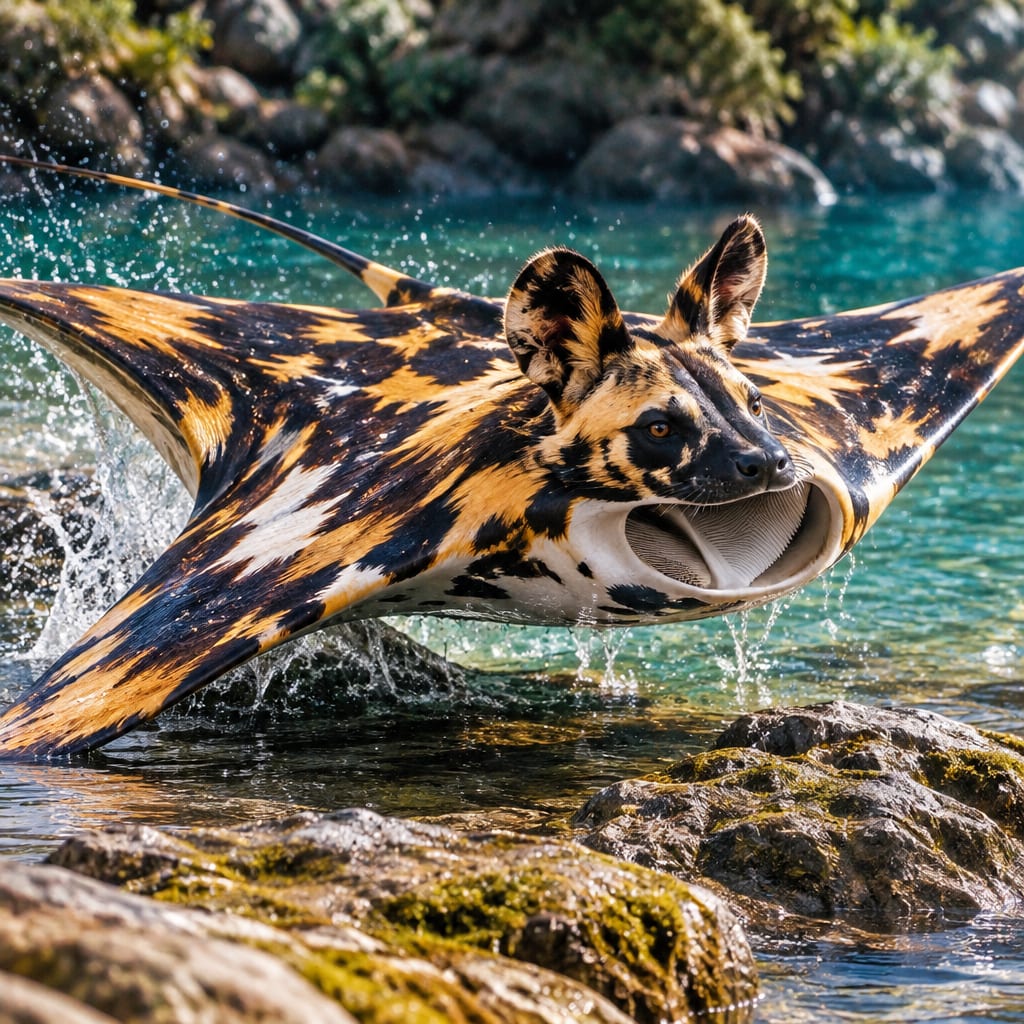
A hybrid of African Wild Dog + Manta Ray
- Habitat
- The Wild Rayog thrives in coastal waters and estuaries of East Africa, where it can navigate both terrestrial and aquatic environments. It prefers areas with ample sunlight and rich biodiversity, often found near coral reefs and mangroves.
- Diet
- The Wild Rayog is primarily piscivorous, feeding on small fish and invertebrates. It uses its filter-feeding mechanism to sift through the water, capturing prey while also foraging on land for small mammals and insects, similar to its wild dog ancestry.
The story of Wild Rayog
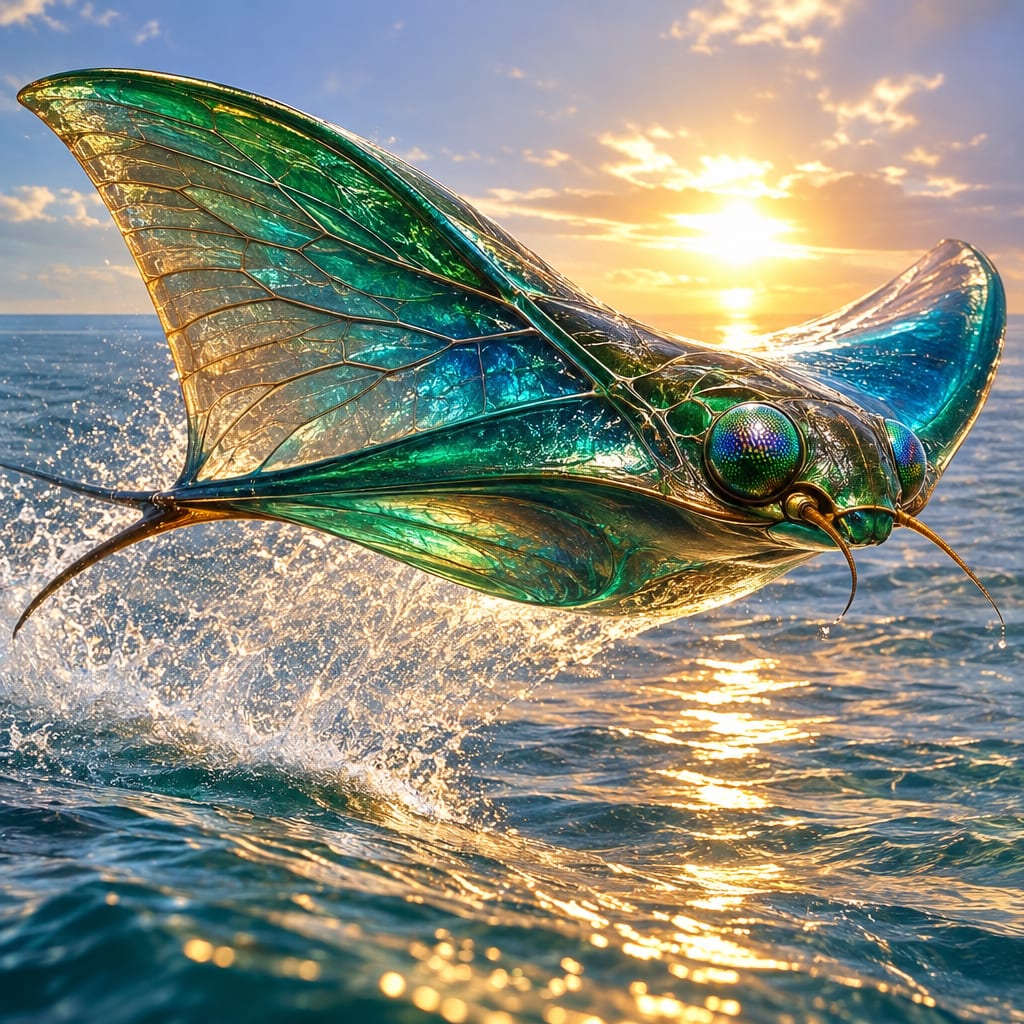
The Wild Rayog is a remarkable hybrid creature, exhibiting the sleek body of a manta ray combined with the social structure and hunting prowess of the African wild dog. It possesses a broad, flattened body adorned with intricate patterns resembling the vibrant fur of the wild dog, while its wings mimic the graceful fins of the manta ray. The Wild Rayog's large eyes are set high on its head, providing excellent vision above and below the water, and its mouth features a unique adaptation for filter feeding, allowing it to consume smaller fish and crustaceans.
Special abilities
Ray Strike
A powerful swipe of its wing that can knock back enemies and deal substantial damage.
From the Manta Ray
Real-world basis: Utilizes the momentum of its large wing to create forceful strikes.
Pack Chase
A coordinated attack where the Wild Rayog uses its speed and agility to pursue prey, effectively surrounding and cornering it.
From the African Wild Dog
Real-world basis: Employs pack behavior to enhance hunting success and overpower prey.
Fluid Defense
Utilizes its ability to glide smoothly through water to evade attacks and create distance from predators.
From the Manta Ray
Real-world basis: Relies on hydrodynamic body shape to enhance evasive maneuvers.
Social Shield
Engages in protective behavior by forming a circle with fellow Wild Rayogs to ward off threats.
From the African Wild Dog
Real-world basis: Uses social structures for mutual defense against larger predators.