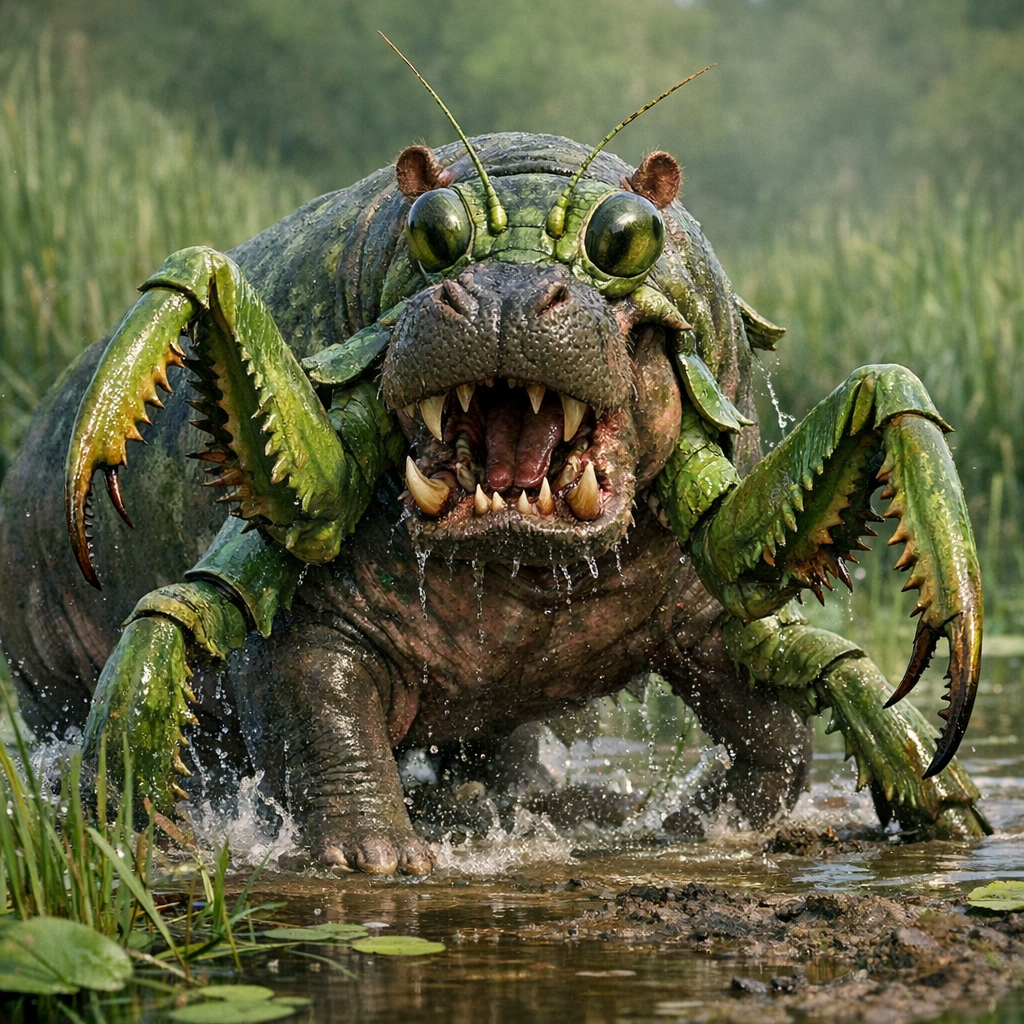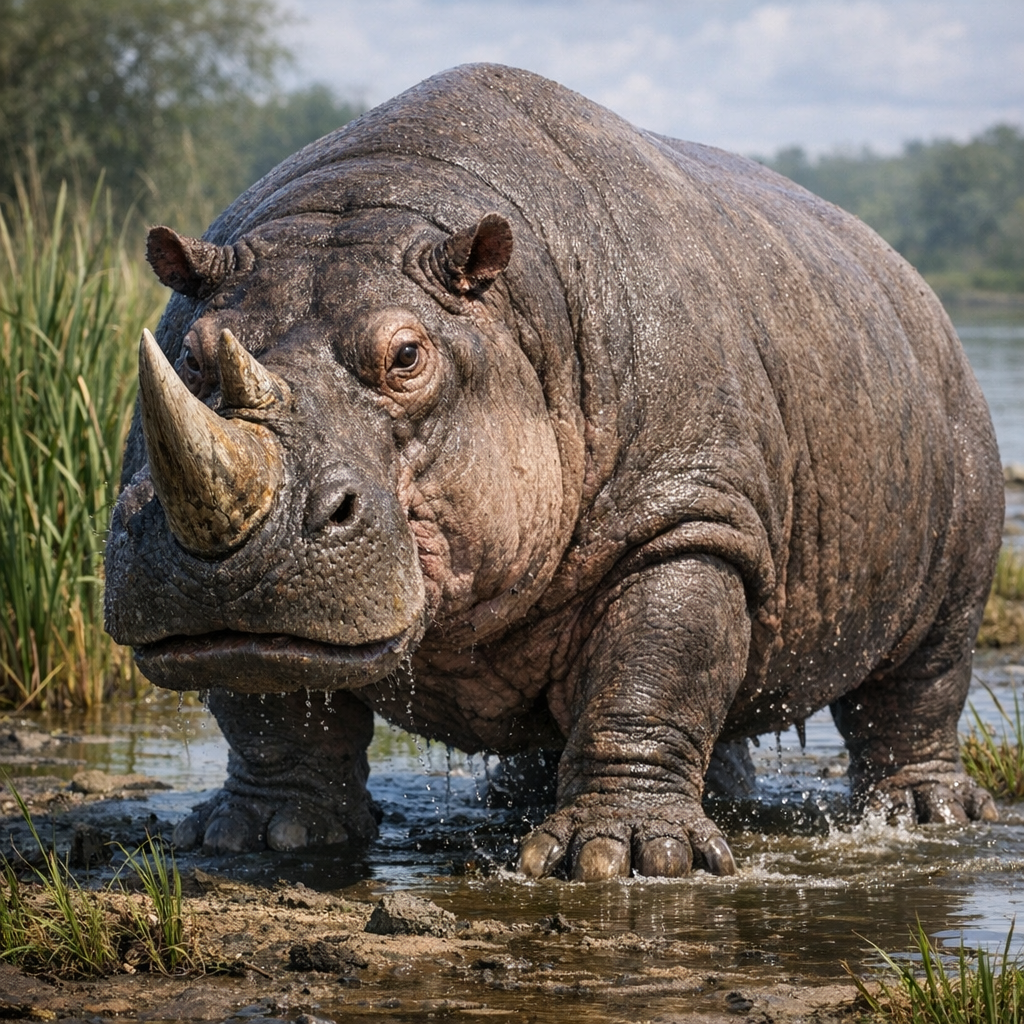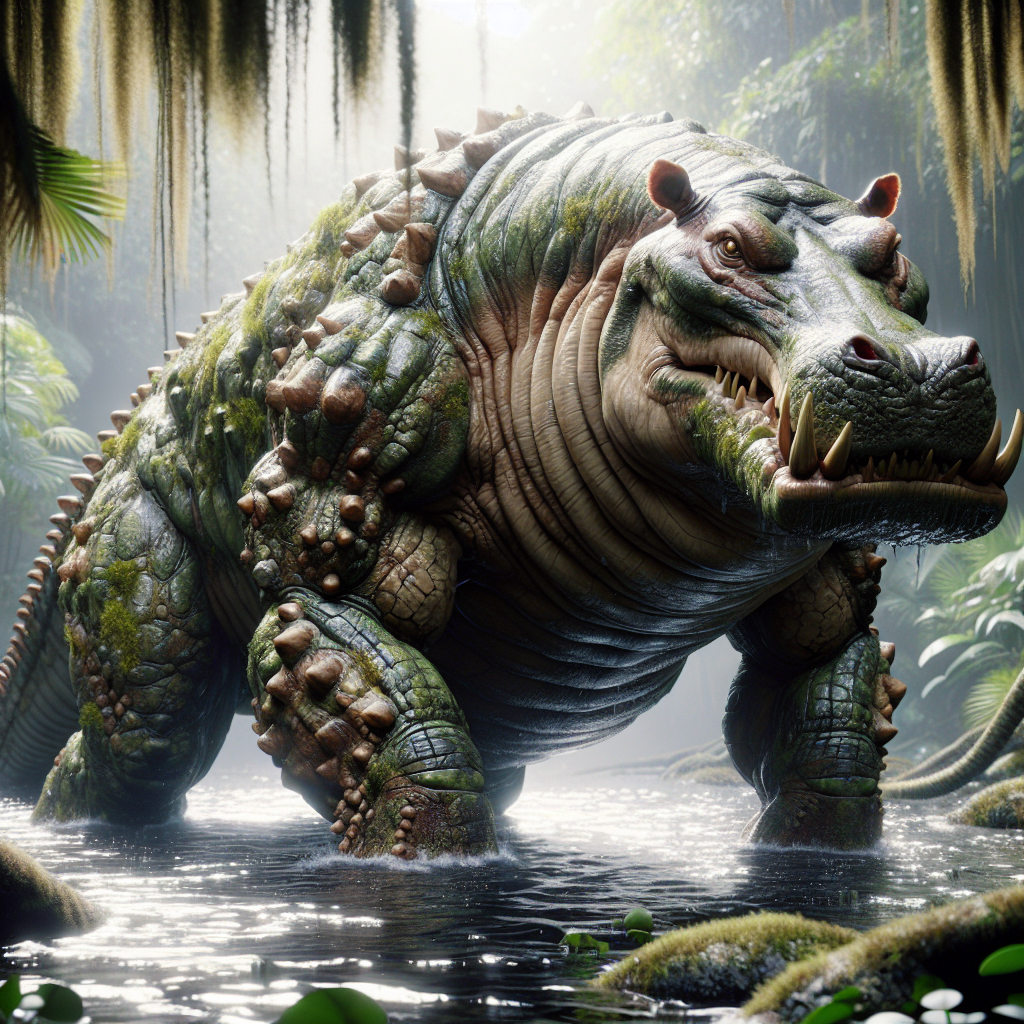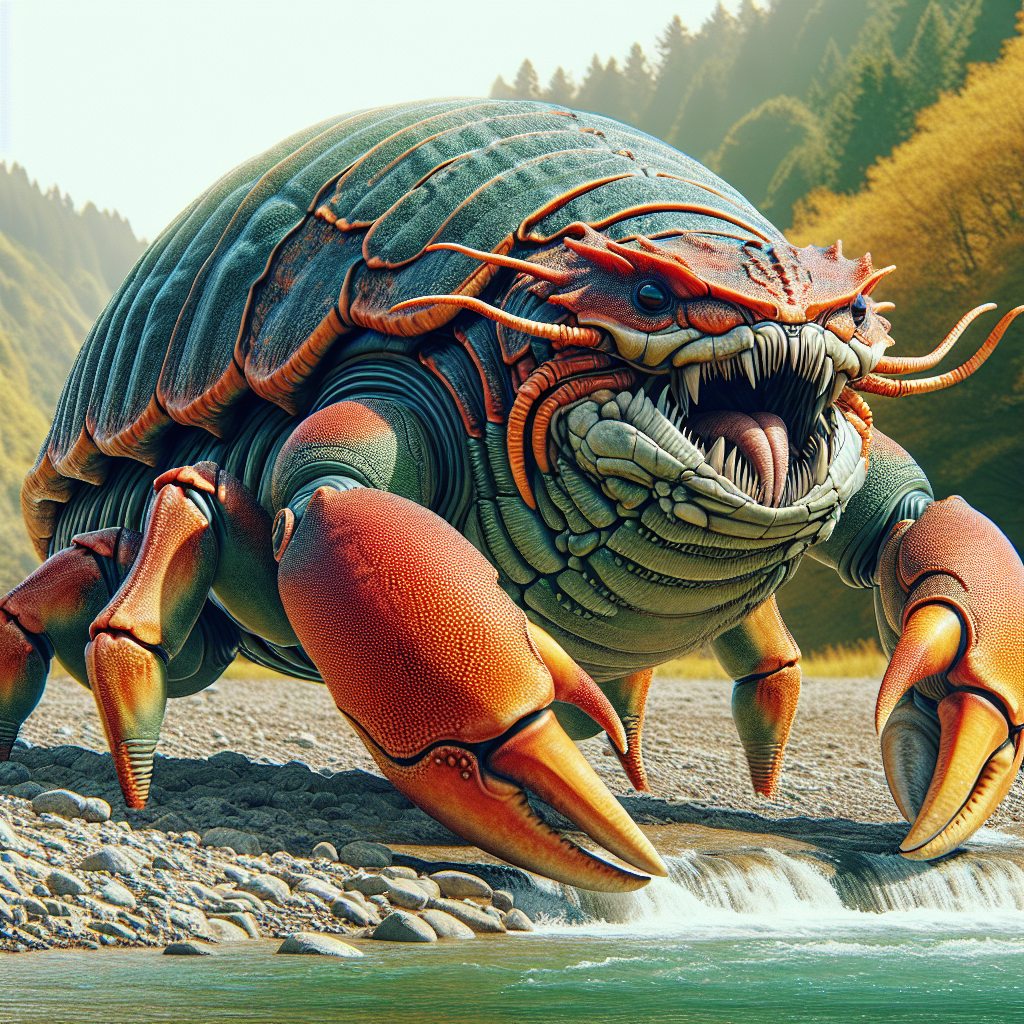
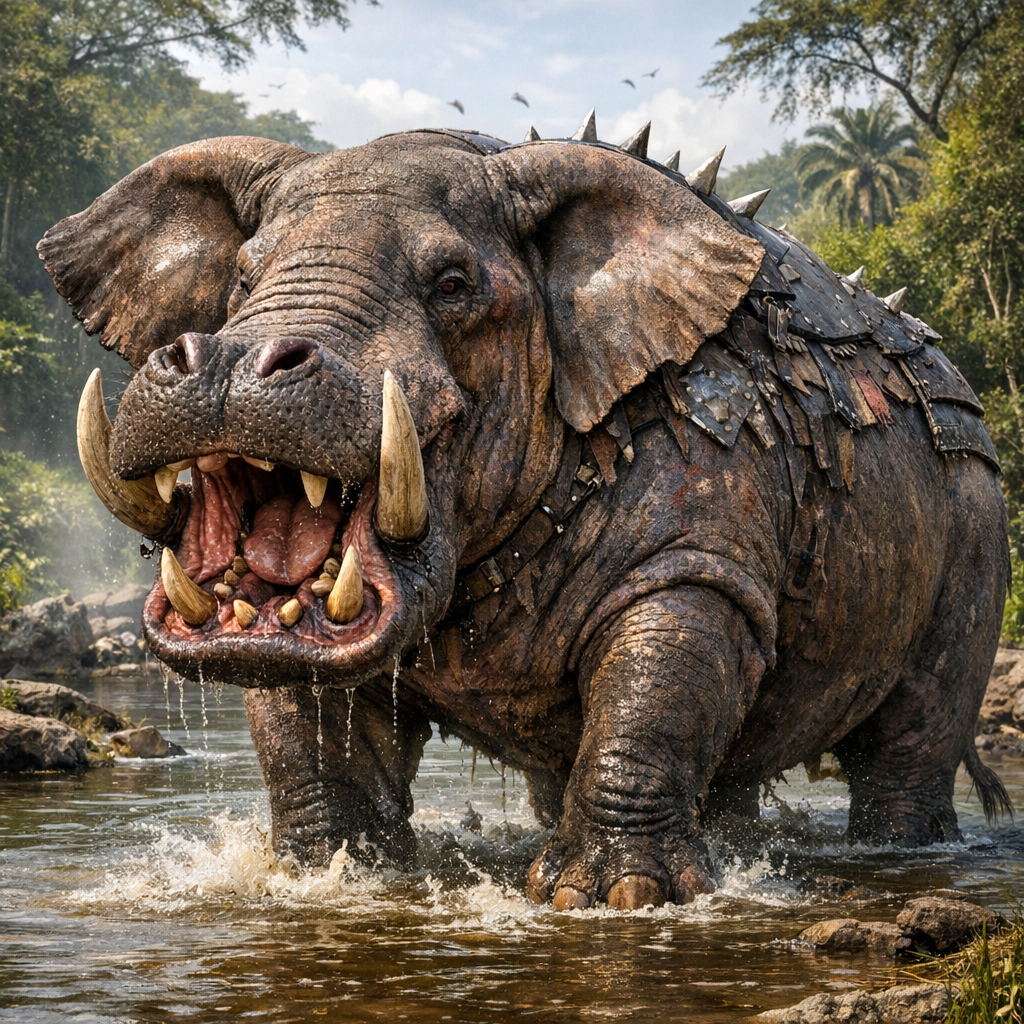
Elephopotamus
A hybrid of Elephant + Hippopotamus
- Habitat
- The Elephopotamus thrives in riverine and swamp habitats, favoring areas where land and water intersect. It is commonly found in lush floodplains and along the banks of slow-moving rivers, where it can access both terrestrial and aquatic resources.
- Diet
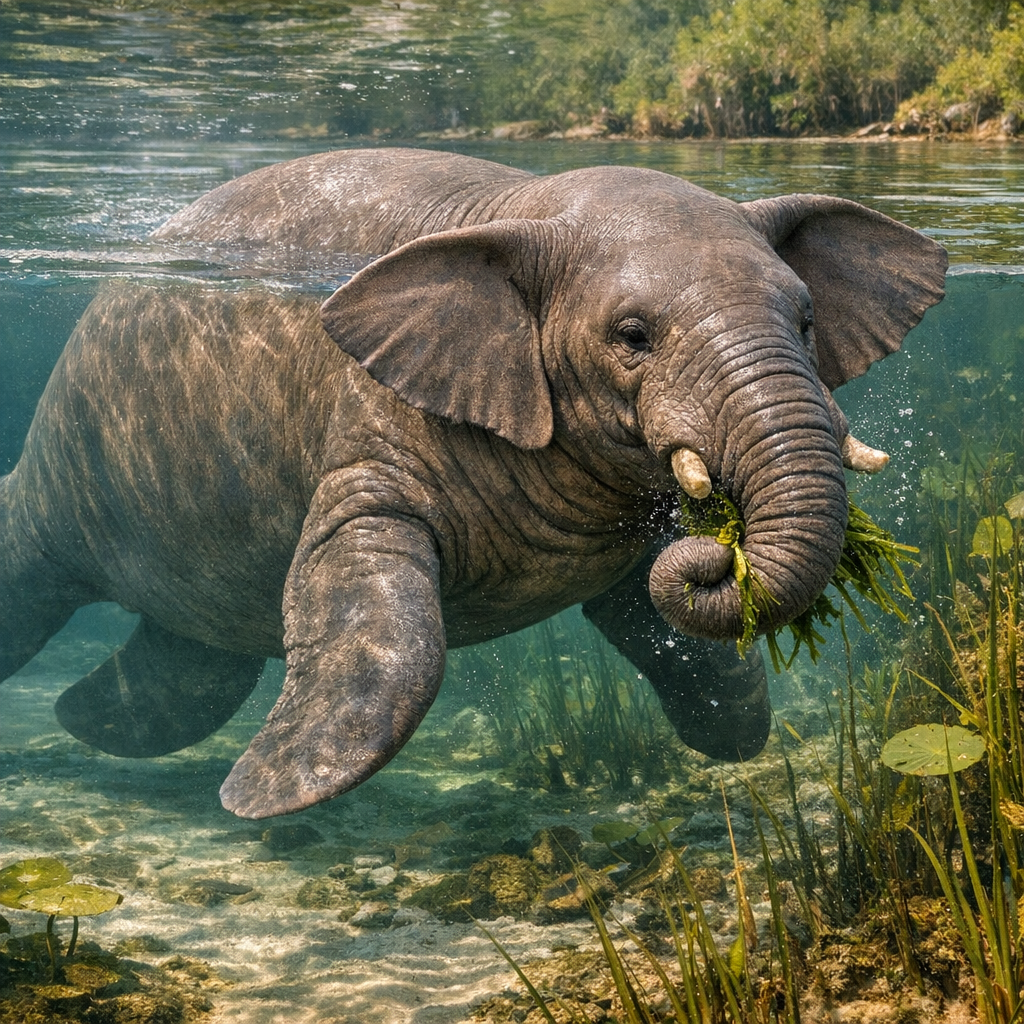
- The Elephopotamus is herbivorous, primarily feeding on a varied diet of grasses, aquatic plants, and fruits. Its large mouth allows it to graze effectively on land, while its aquatic adaptations enable it to forage for submerged vegetation in rivers and lakes.
The story of Elephopotamus
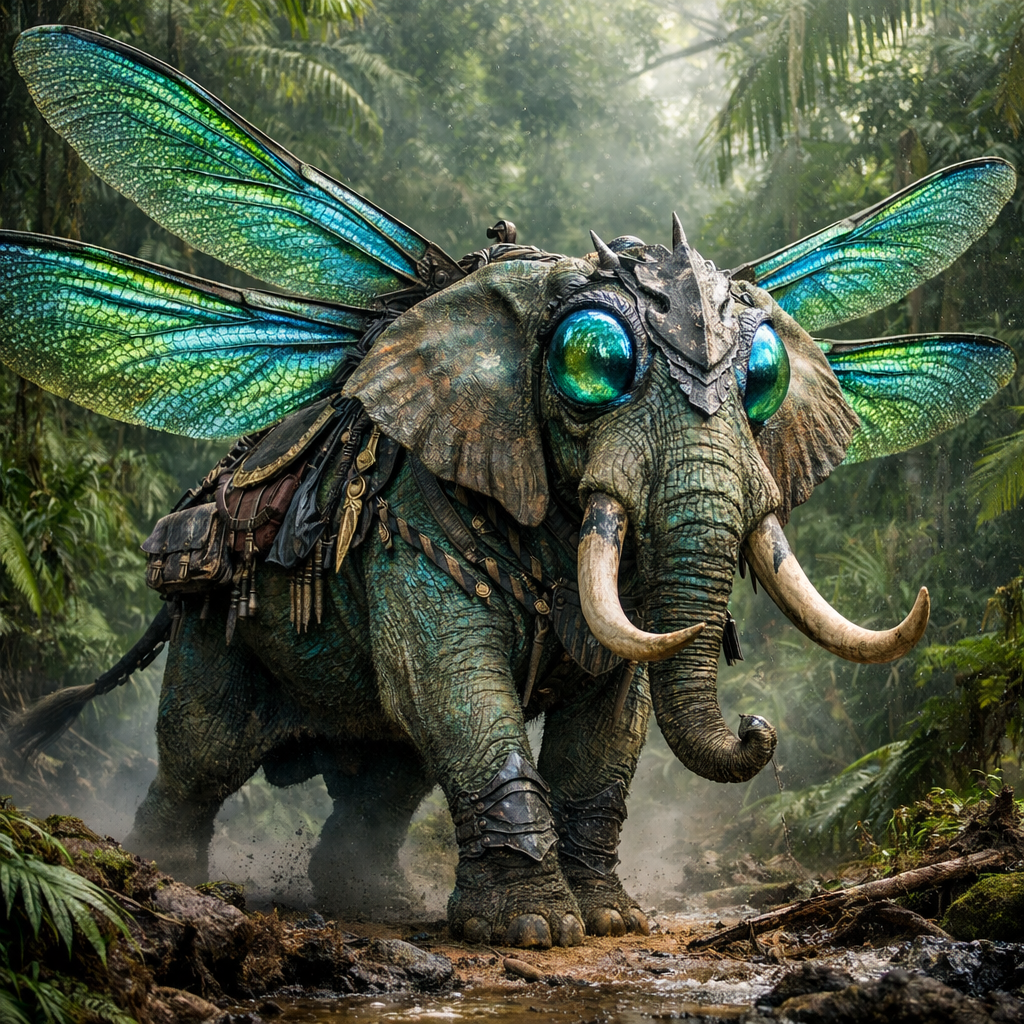
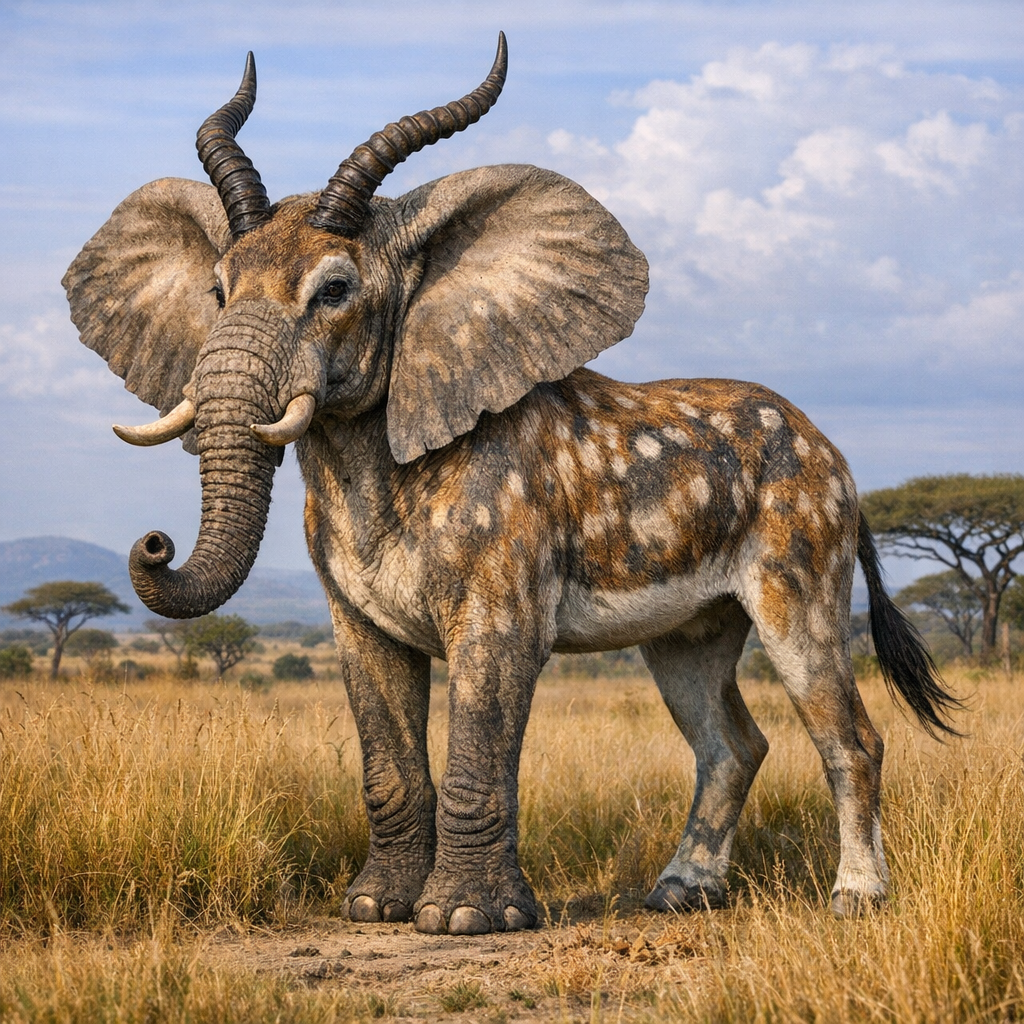
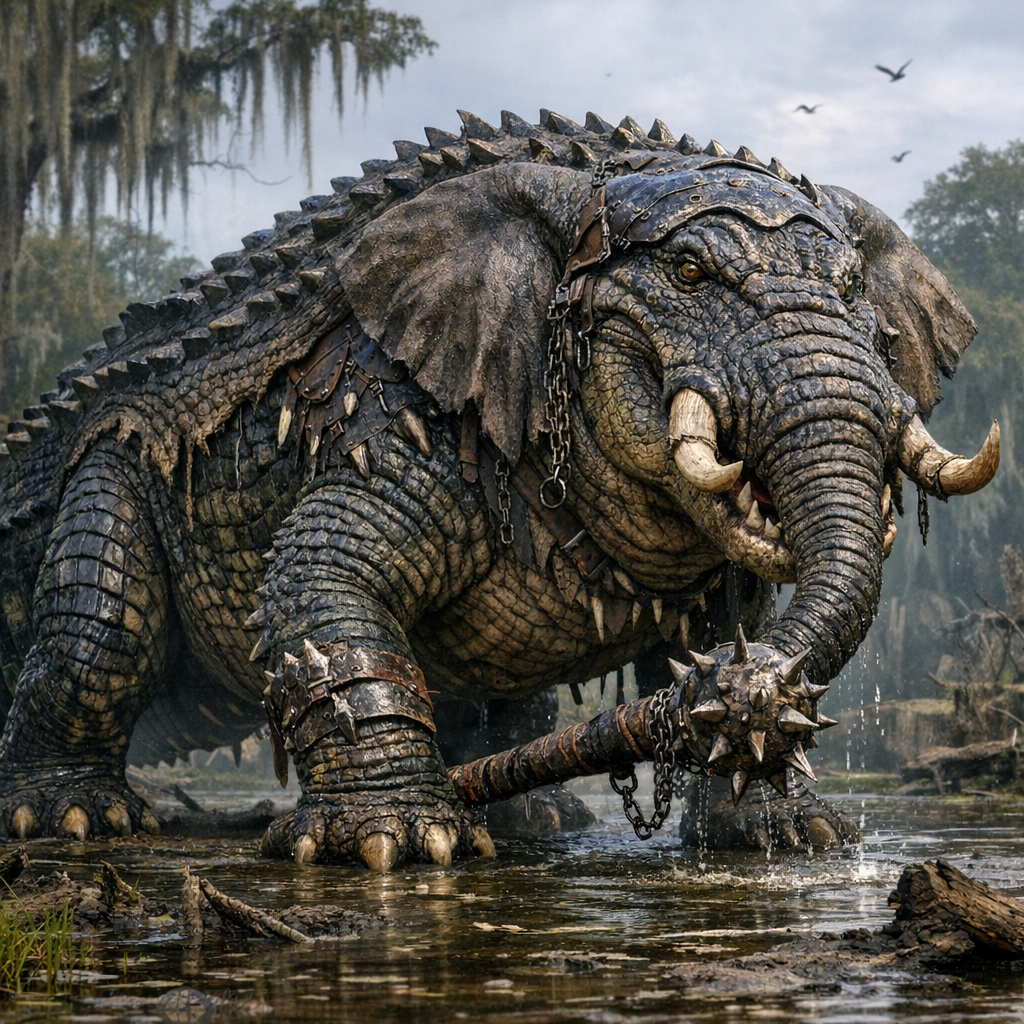
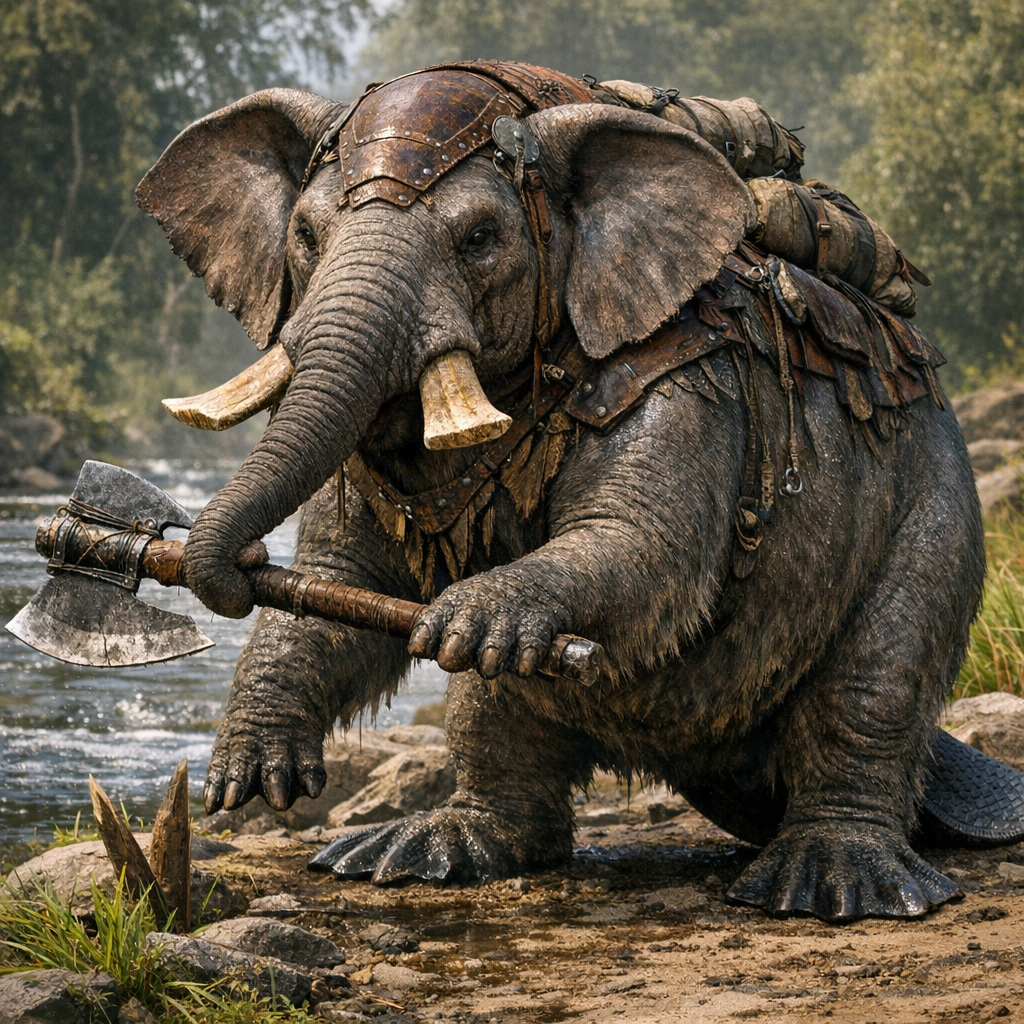
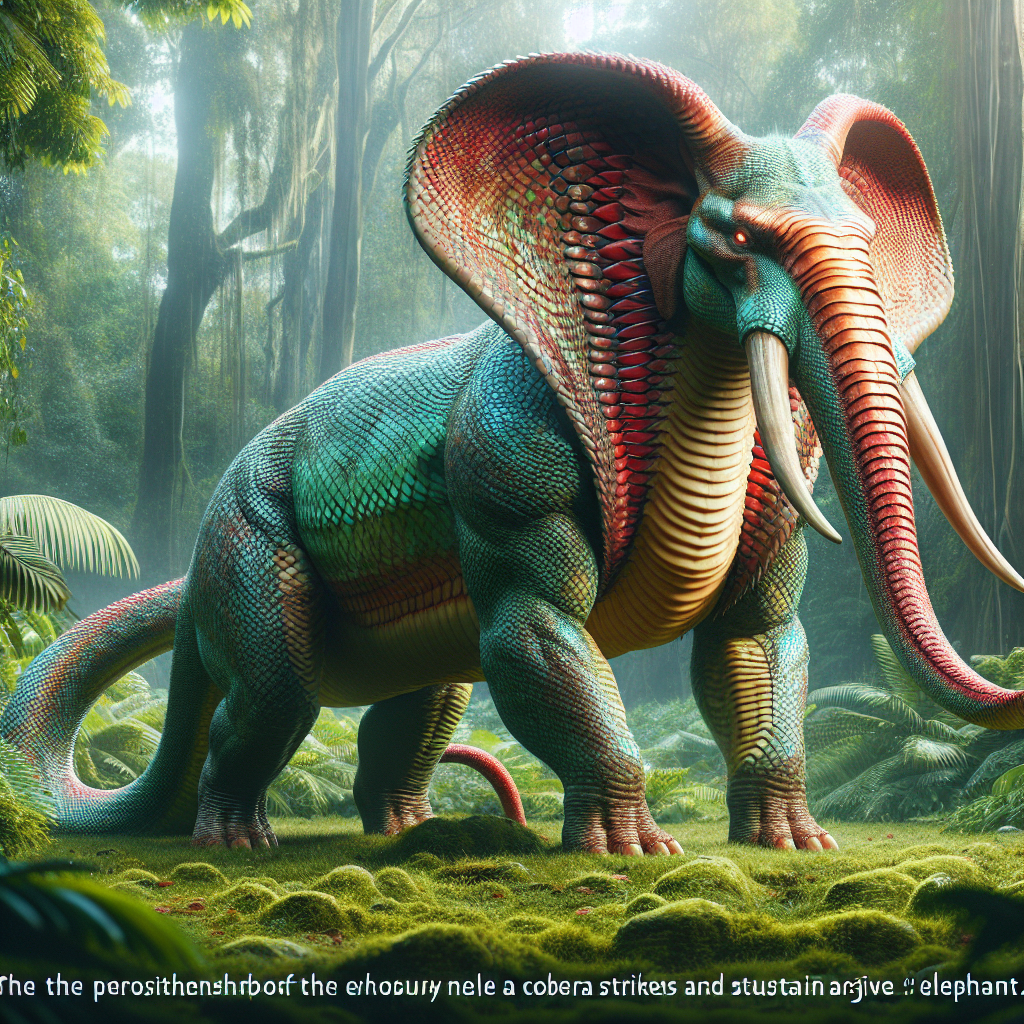
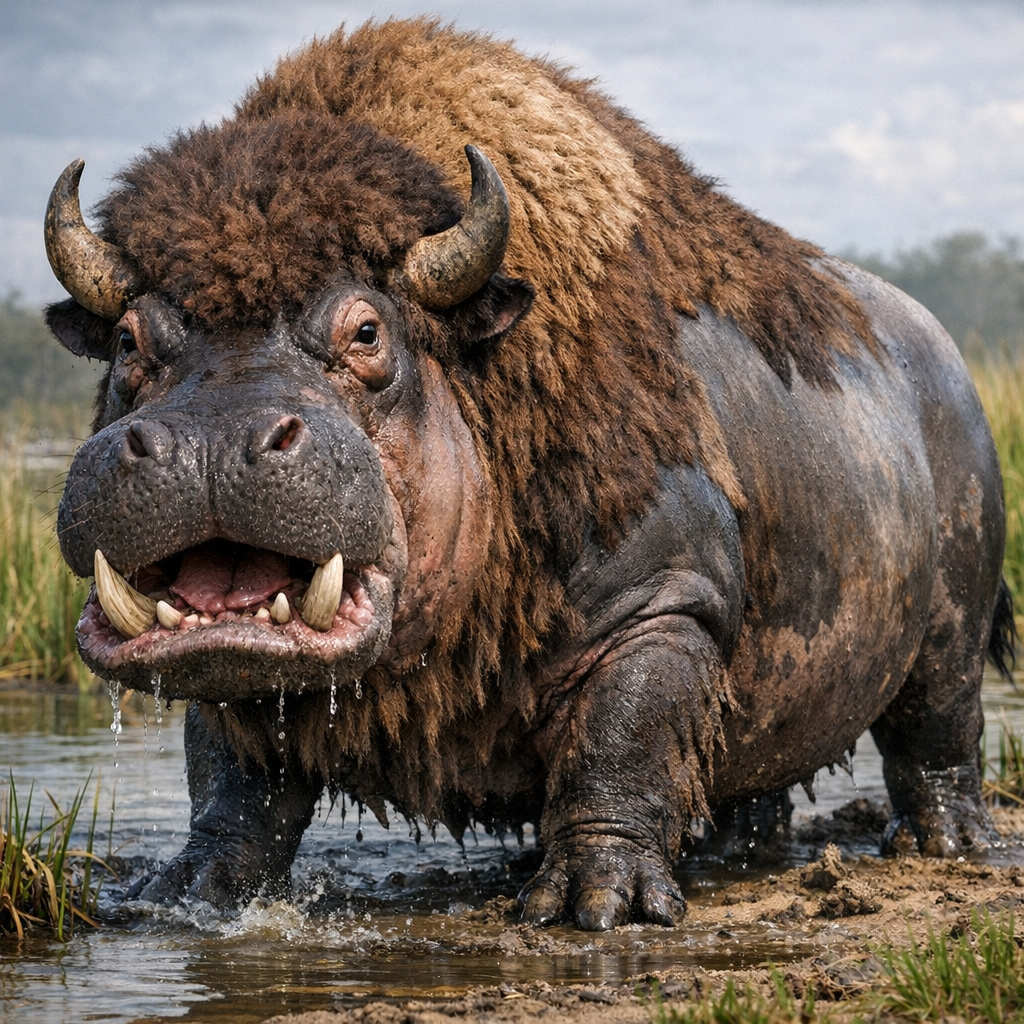
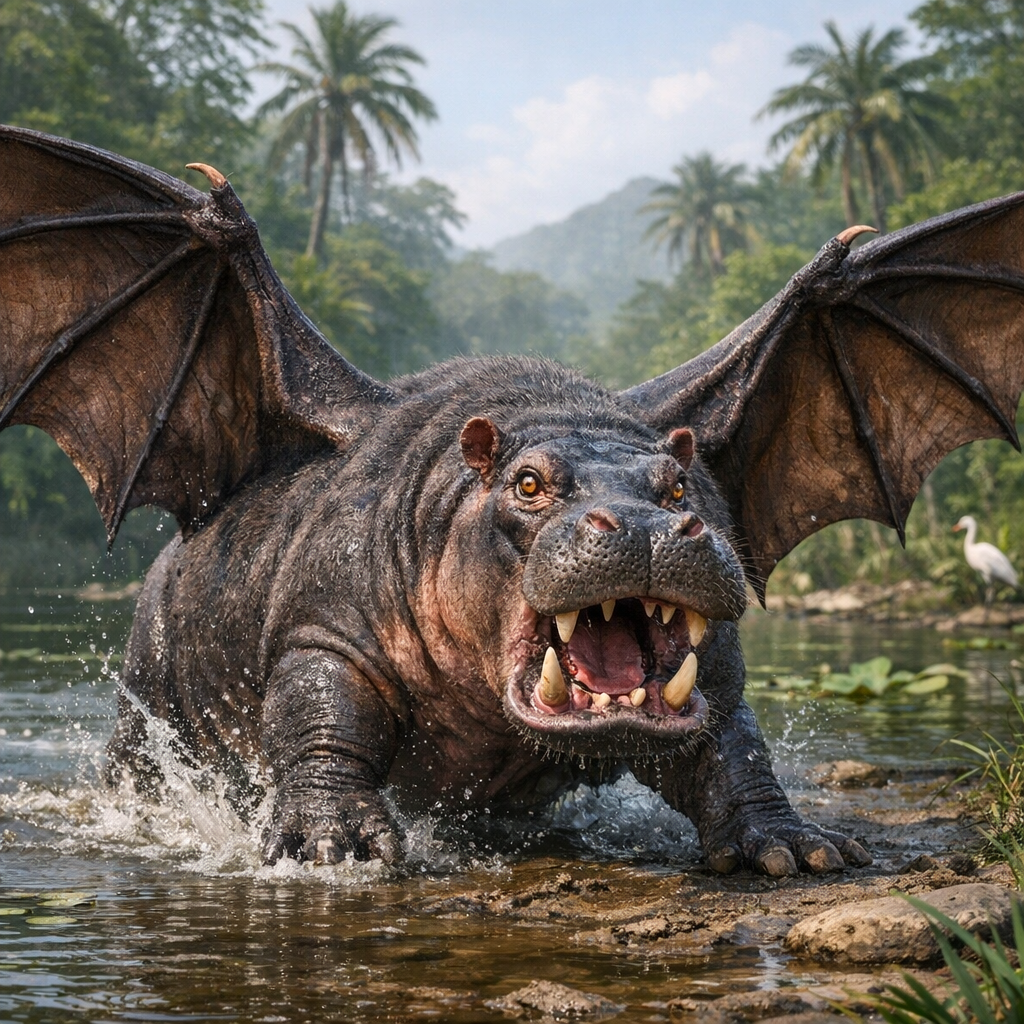
The Elephopotamus is a remarkable hybrid characterized by its massive frame, combining the robust body of an elephant with the stocky build and aquatic adaptations of a hippopotamus. It features a thick, wrinkled skin that ranges from gray to muddy brown, allowing it to blend seamlessly into both terrestrial and aquatic environments. Its large ears resemble those of an elephant, aiding in thermoregulation, while its wide, flat mouth is equipped with powerful tusks adapted from its elephant ancestry, as well as the formidable jaws of a hippo, capable of crushing vegetation with ease.
Special abilities
Tusker Charge
The Elephopotamus uses its massive body and tusks to charge at opponents, delivering a devastating blow that can knock them off balance.
From the Elephant
Real-world basis: The force generated from its large mass and momentum during a charge, combined with the leverage of its tusks.
Water Slam
The Elephopotamus slams its body into the water, creating a massive wave that can knock back foes and disrupt their footing.
From the Hippopotamus
Real-world basis: The displacement of water caused by the Elephopotamus's weight and volume, resulting in a powerful wave effect.
Mud Armor
Coating its skin with mud, the Elephopotamus enhances its defense, providing a layer of protection against attacks.
From the Hippopotamus
Real-world basis: The mud acts as both a physical barrier against external threats and helps in maintaining skin moisture.
Thick Hide
Its thick, wrinkled skin provides natural armor, absorbing and deflecting blows from predators and rivals.
From the Elephant
Real-world basis: The dense dermal layers that provide resilience against bites and blunt force trauma.