Oposcupine
A hybrid of Opossum + Porcupine
- Habitat
- The Oposcupine thrives in temperate forests, brushy areas, and suburban regions where it can find ample trees for climbing and shelter. It prefers environments with abundant vegetation, which provides both food and cover from predators.
- Diet
- The Oposcupine is an omnivore, primarily feeding on fruits, nuts, leaves, and insects. It has a particular affinity for certain berries and will scavenge for carrion when necessary, showcasing its opportunistic feeding habits.
The story of Oposcupine
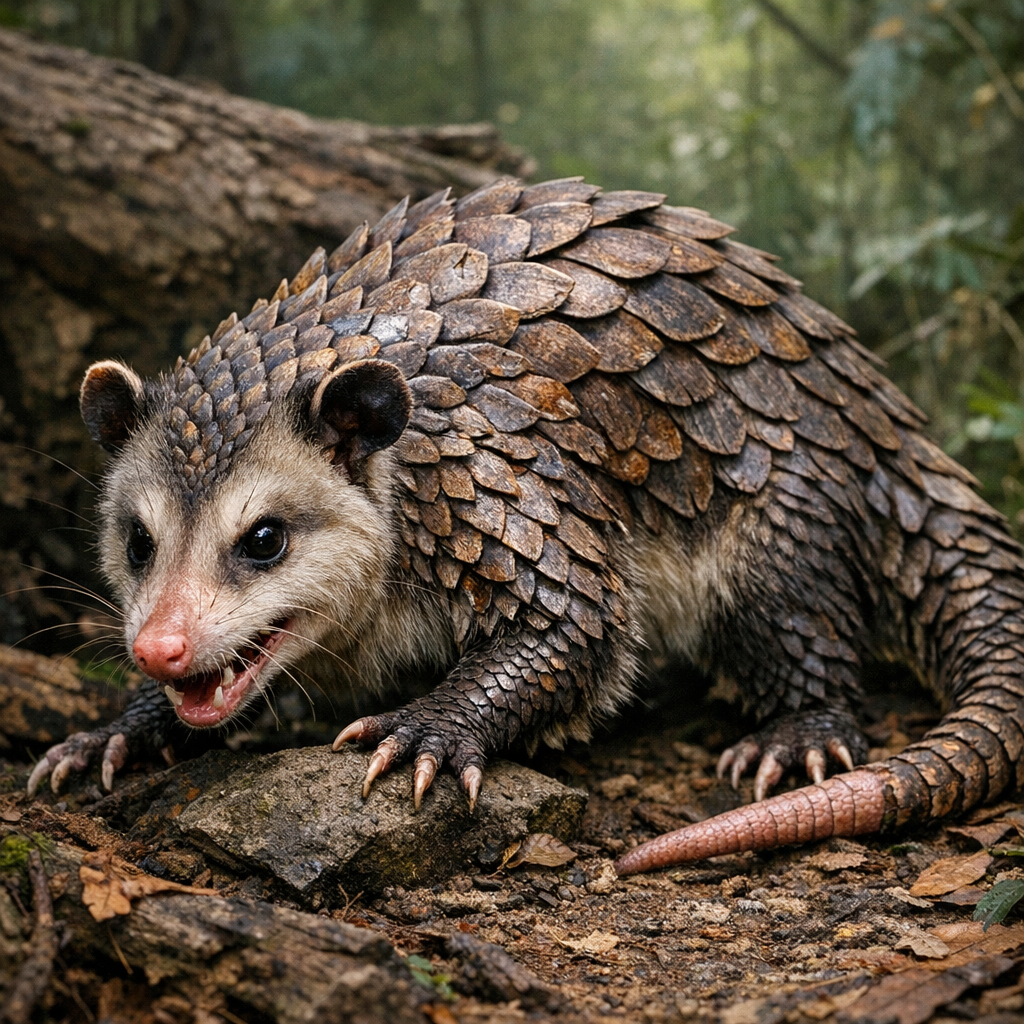
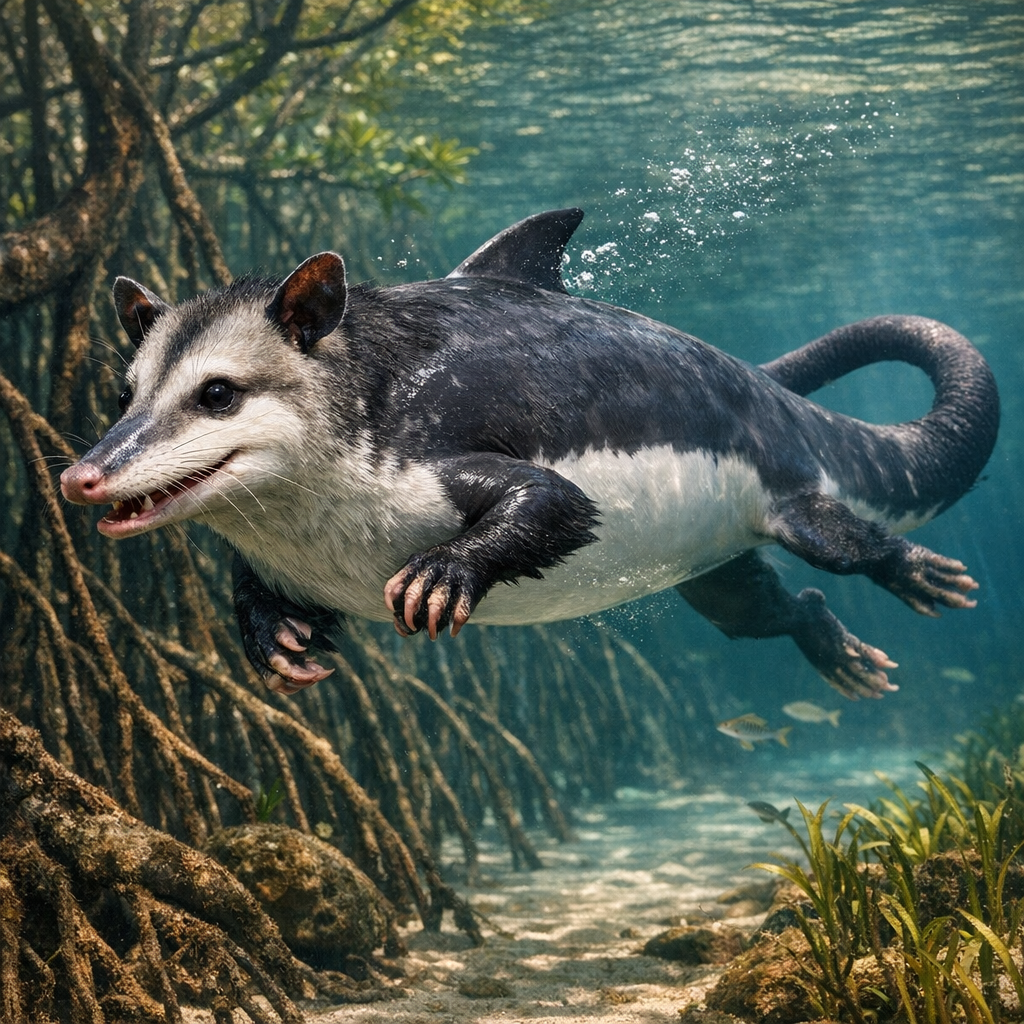
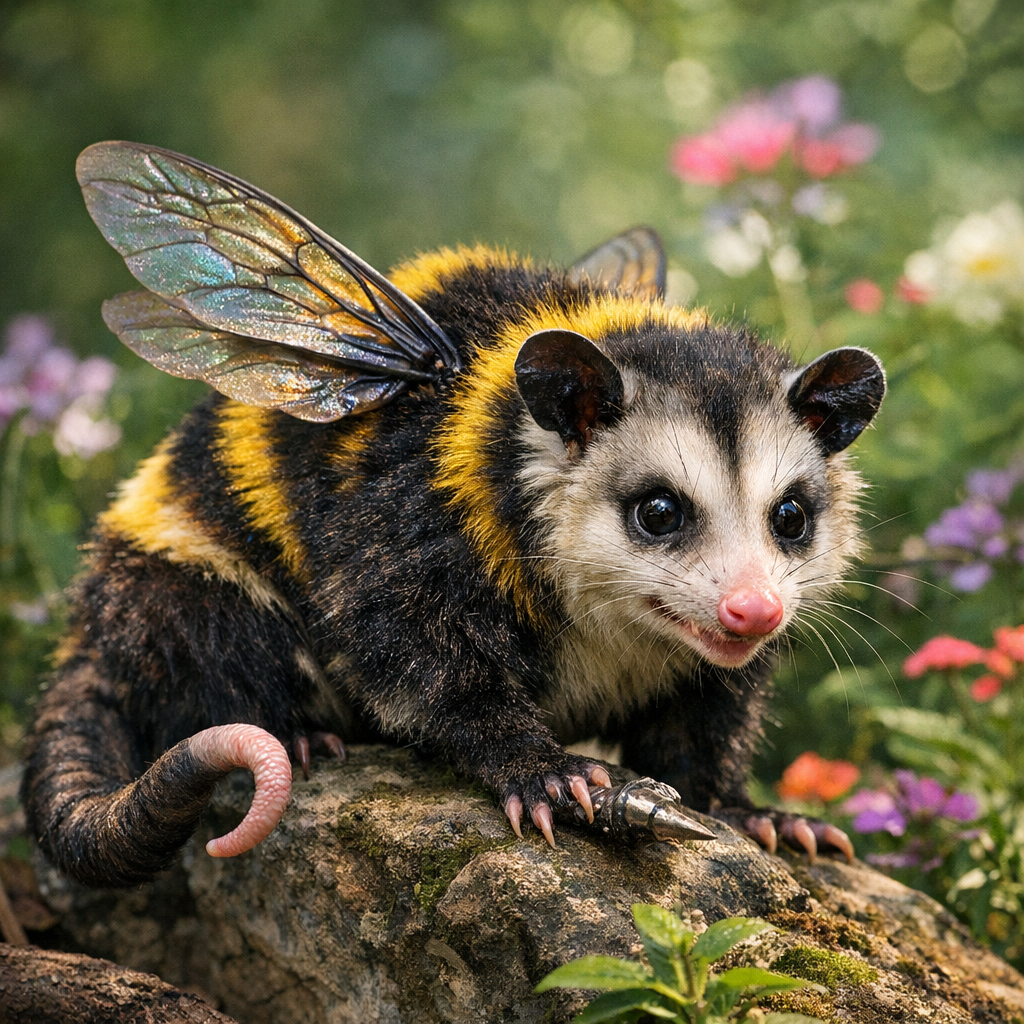
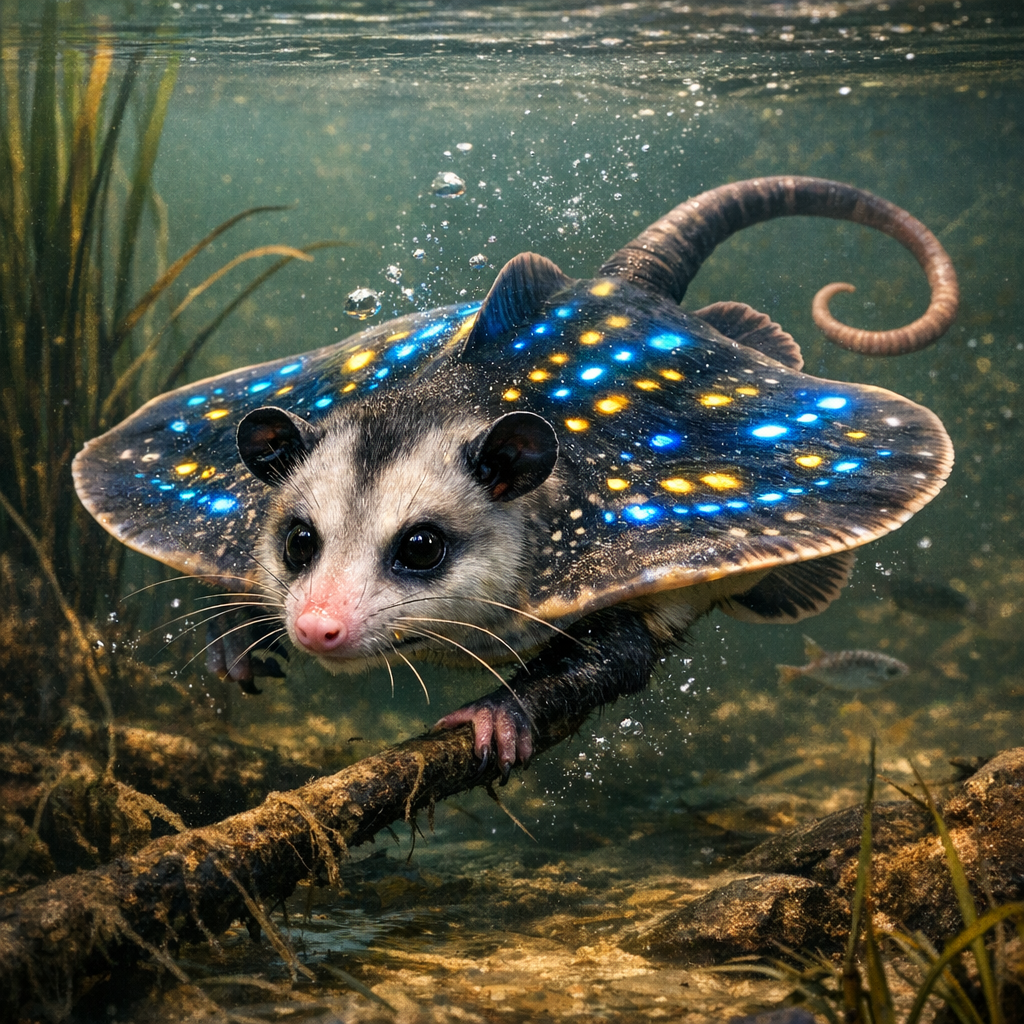
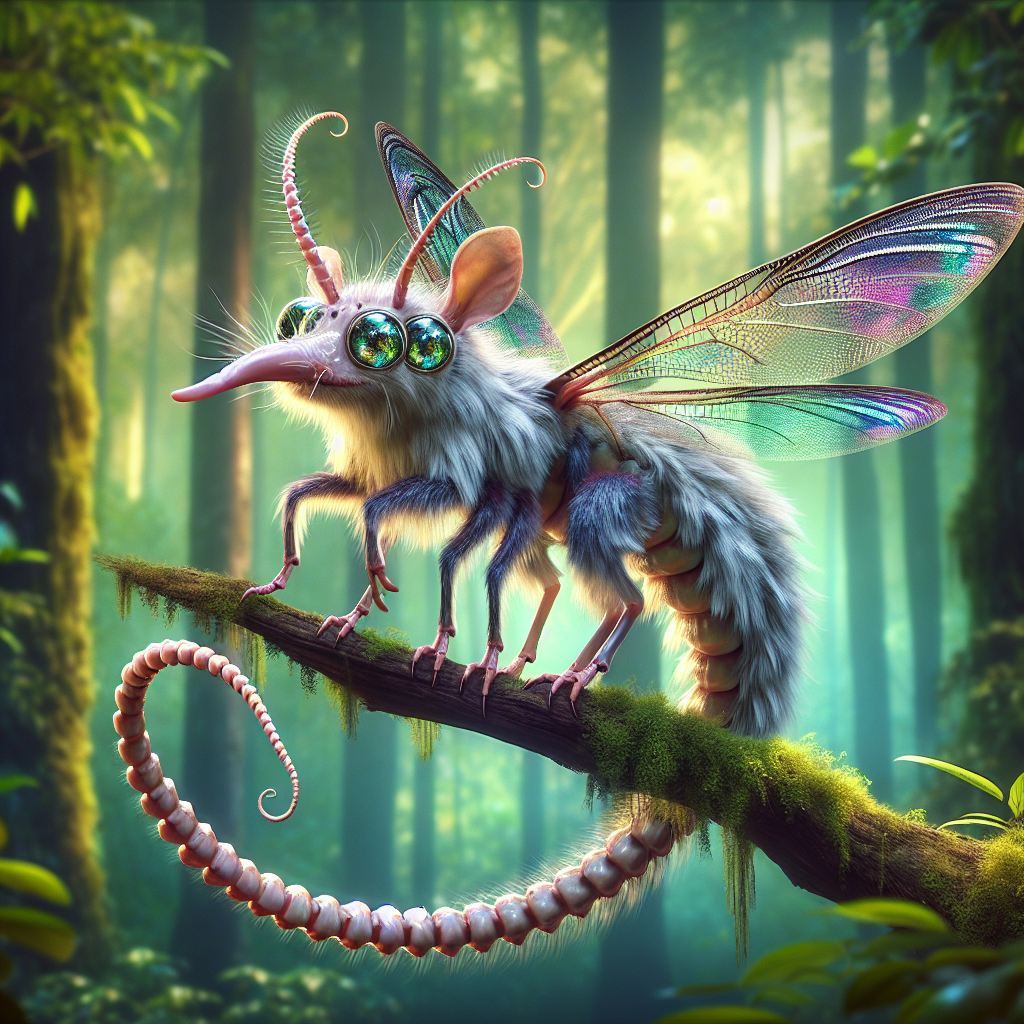
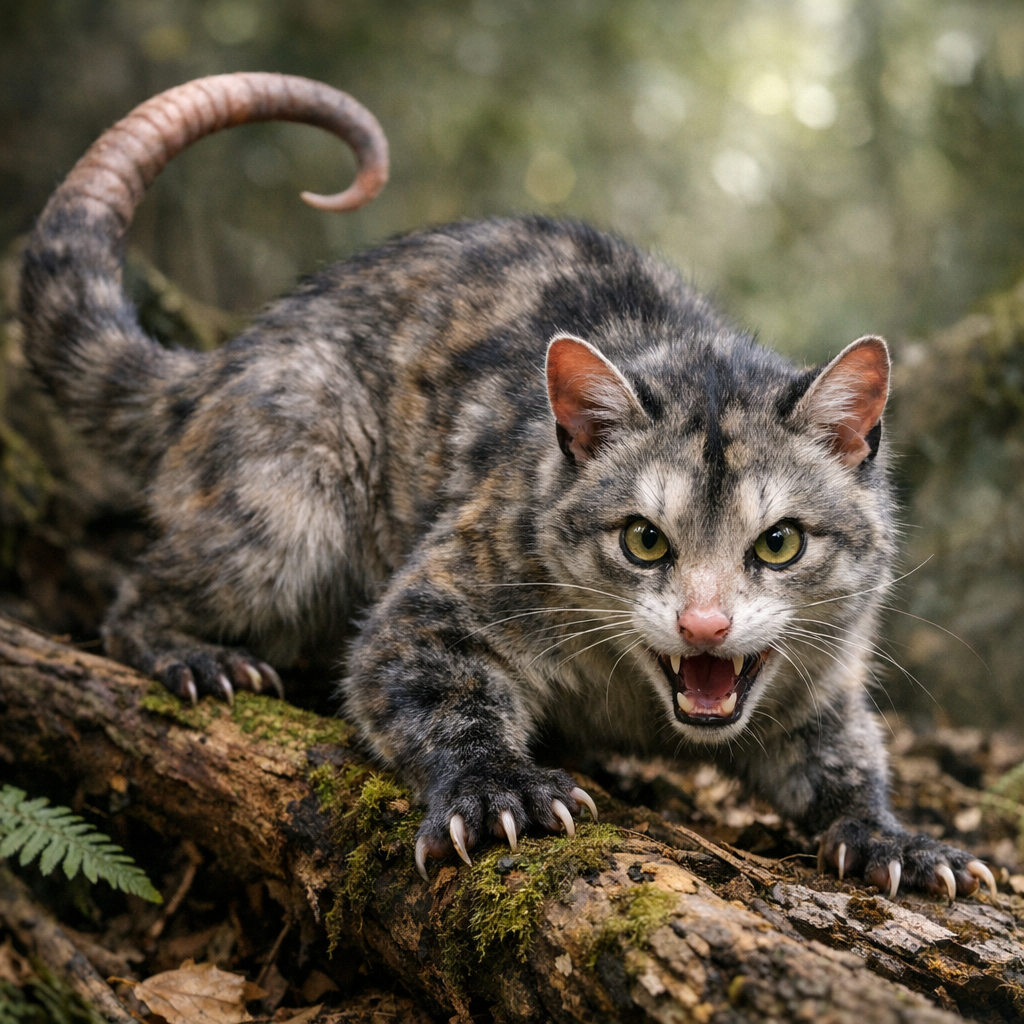
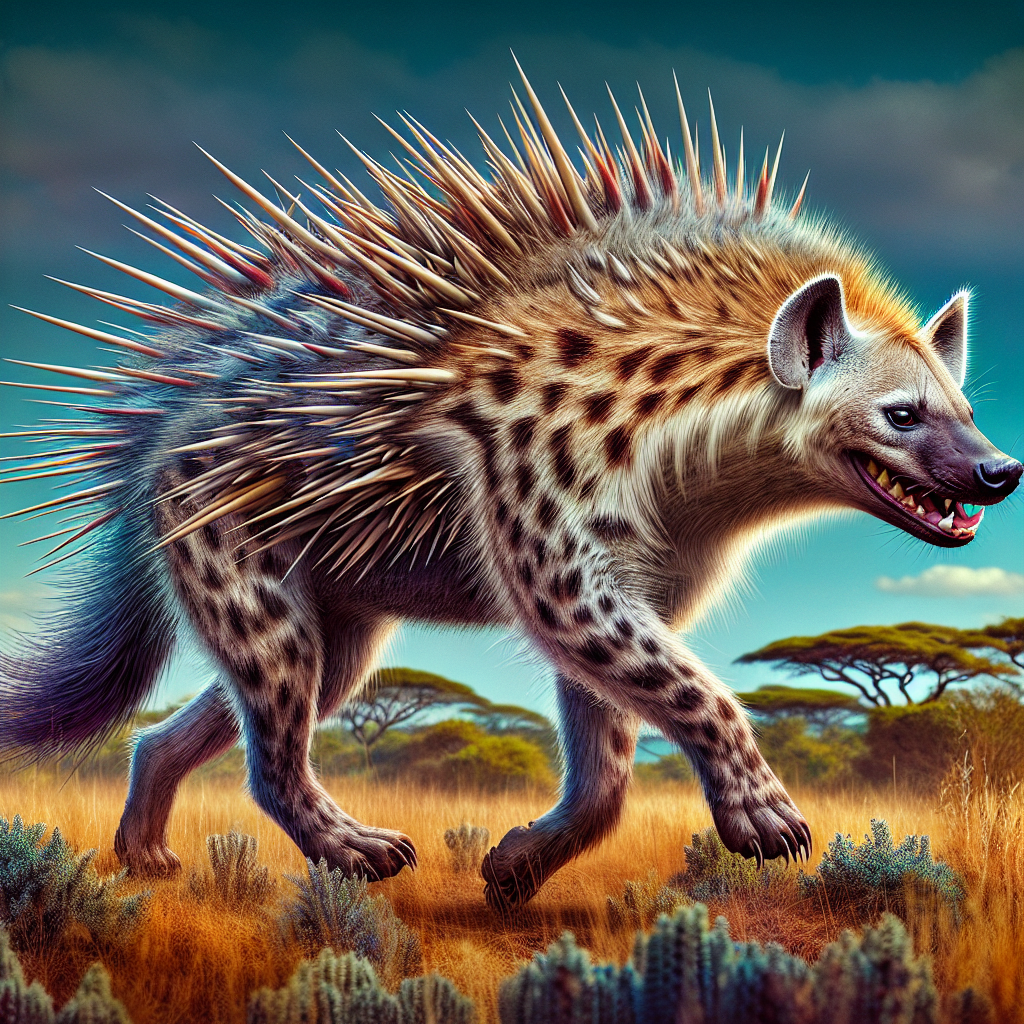
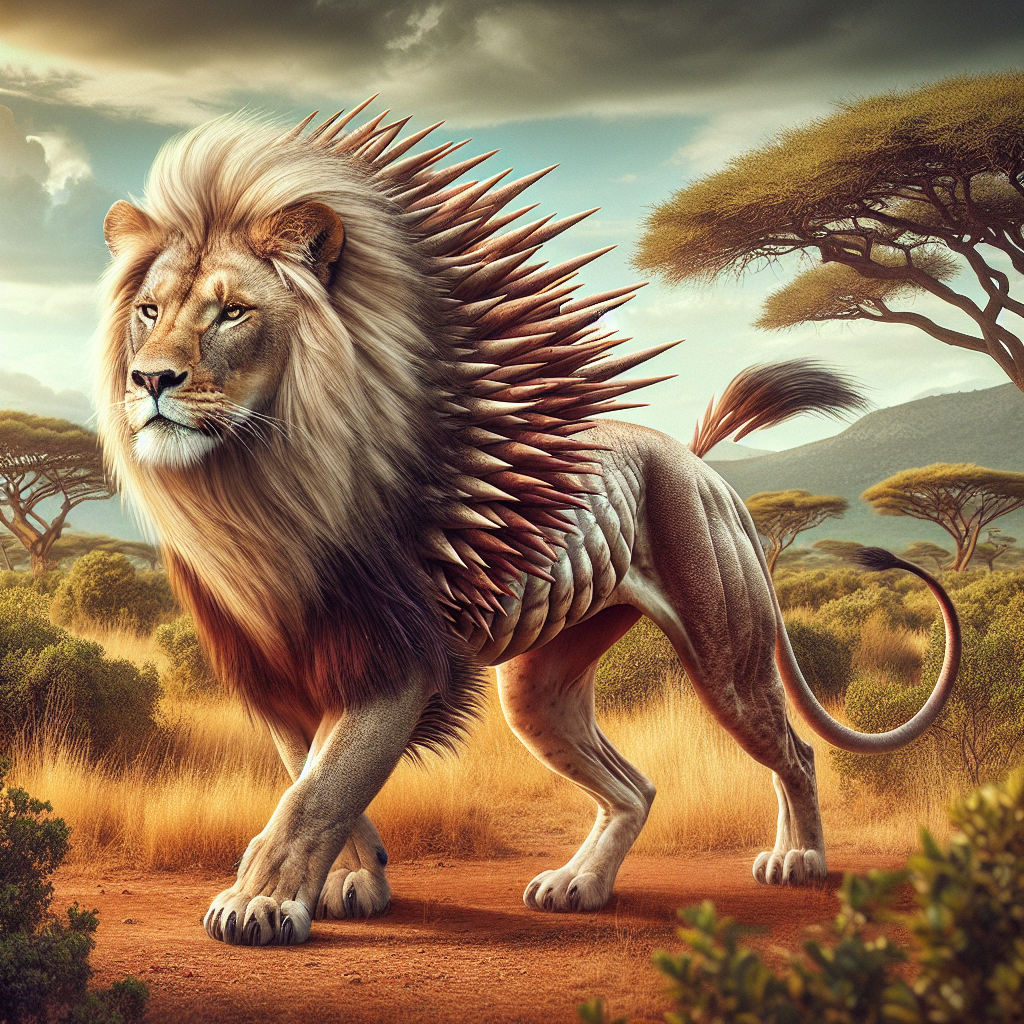
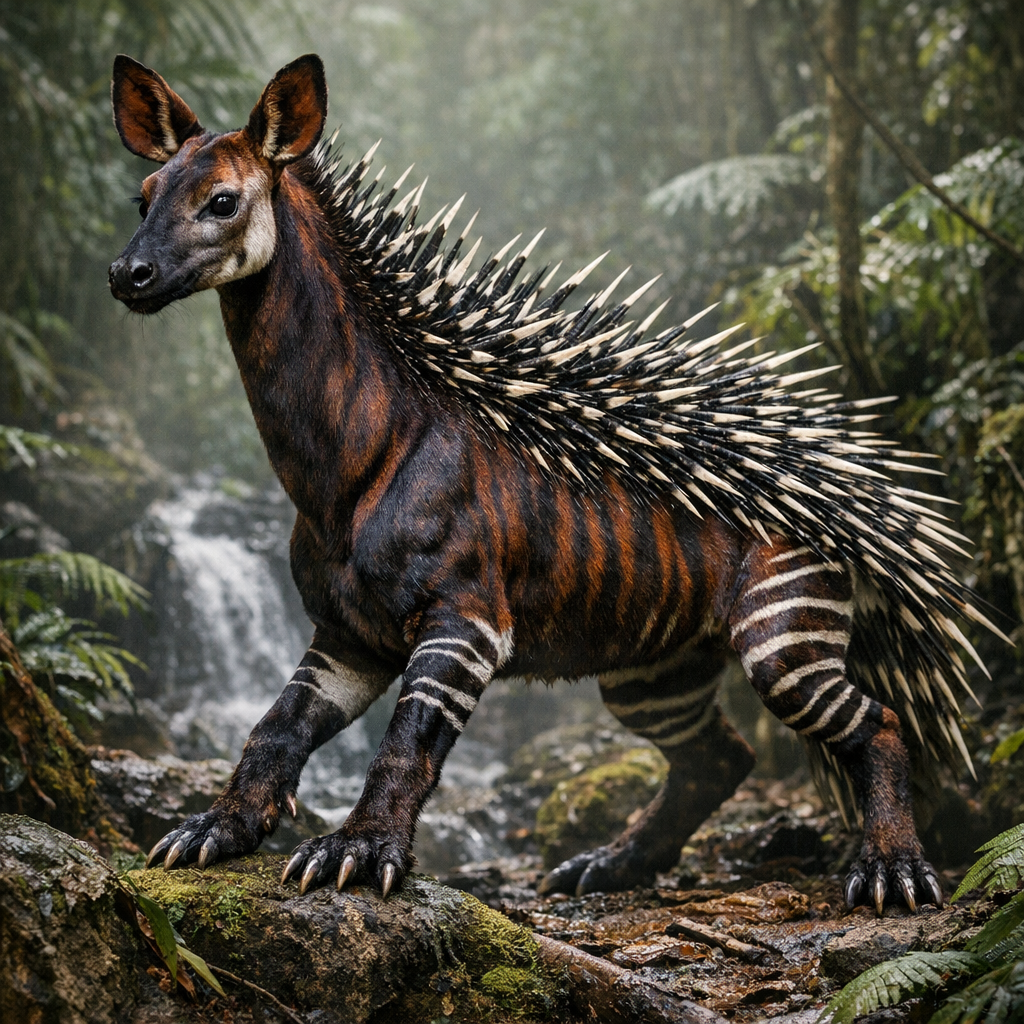
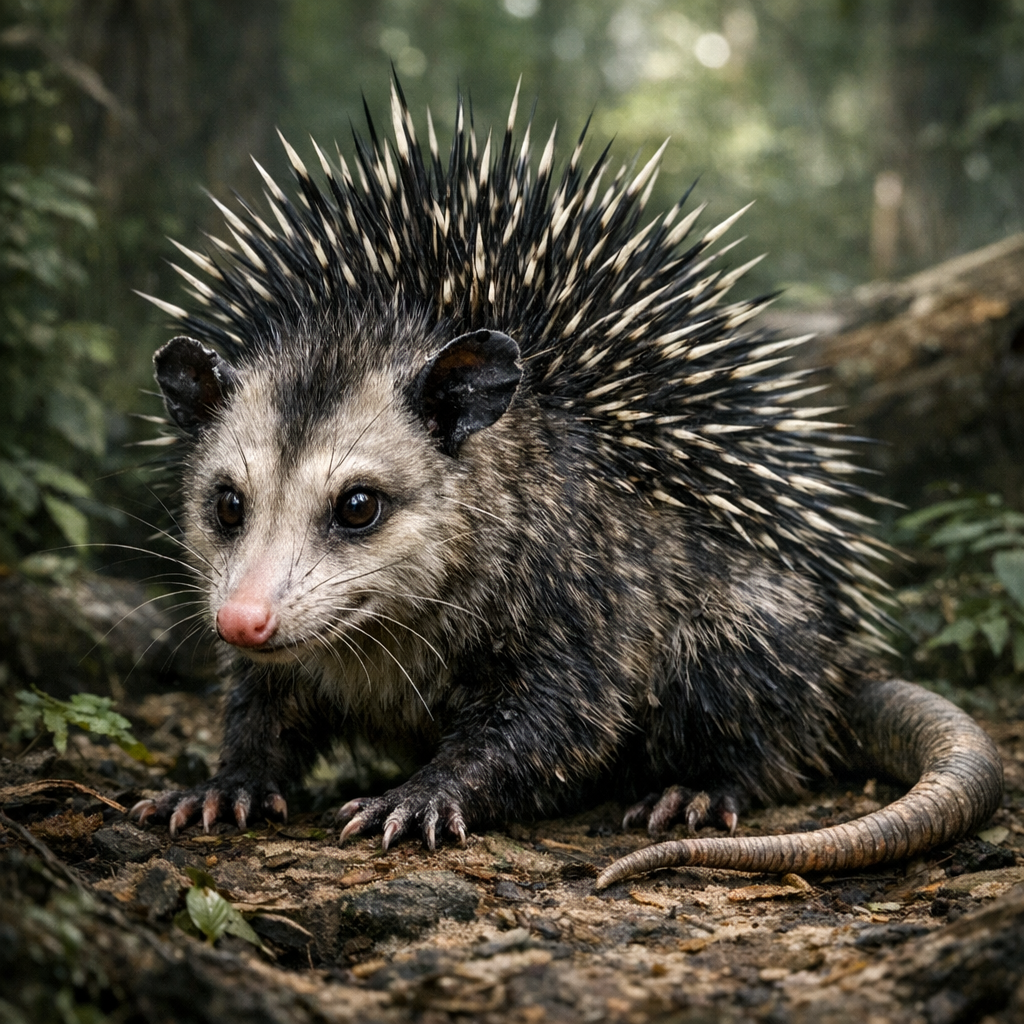
The Oposcupine is a medium-sized mammal characterized by its unique combination of features from both the opossum and porcupine. Its body is covered in a dense layer of coarse fur that transitions into quills along its back and tail. The face resembles that of an opossum, with a long snout and large, expressive eyes. It possesses a prehensile tail that aids in climbing and foraging. The Oposcupine exhibits a nocturnal lifestyle and displays a range of colors from grayish-brown to dark black, with the quills exhibiting a spiky texture that can stand on end when threatened.
Special abilities
Quill Barrage
The Oposcupine launches a barrage of sharp quills at its enemies, causing piercing damage.
From the Porcupine
Real-world basis: The quills are modified hairs made of keratin that can detach from the body when the creature feels threatened.
Defensive Play Dead
In a moment of danger, the Oposcupine collapses and plays dead, making itself less interesting to predators.
From the Opossum
Real-world basis: Playing dead, or thanatosis, is a defense mechanism that can confuse predators into losing interest.
Spiky Shield
The Oposcupine raises its quills defensively, creating a spiky barrier that deters attackers.
From the Porcupine
Real-world basis: The quills can be raised or lowered depending on the creature's threat level, providing physical protection.
Claw Swipe
A quick swipe of its claws that can incapacitate smaller foes and provide an opening for escape.
From the Opossum
Real-world basis: The claws are strong and sharp, allowing for effective slashing motions against attackers.