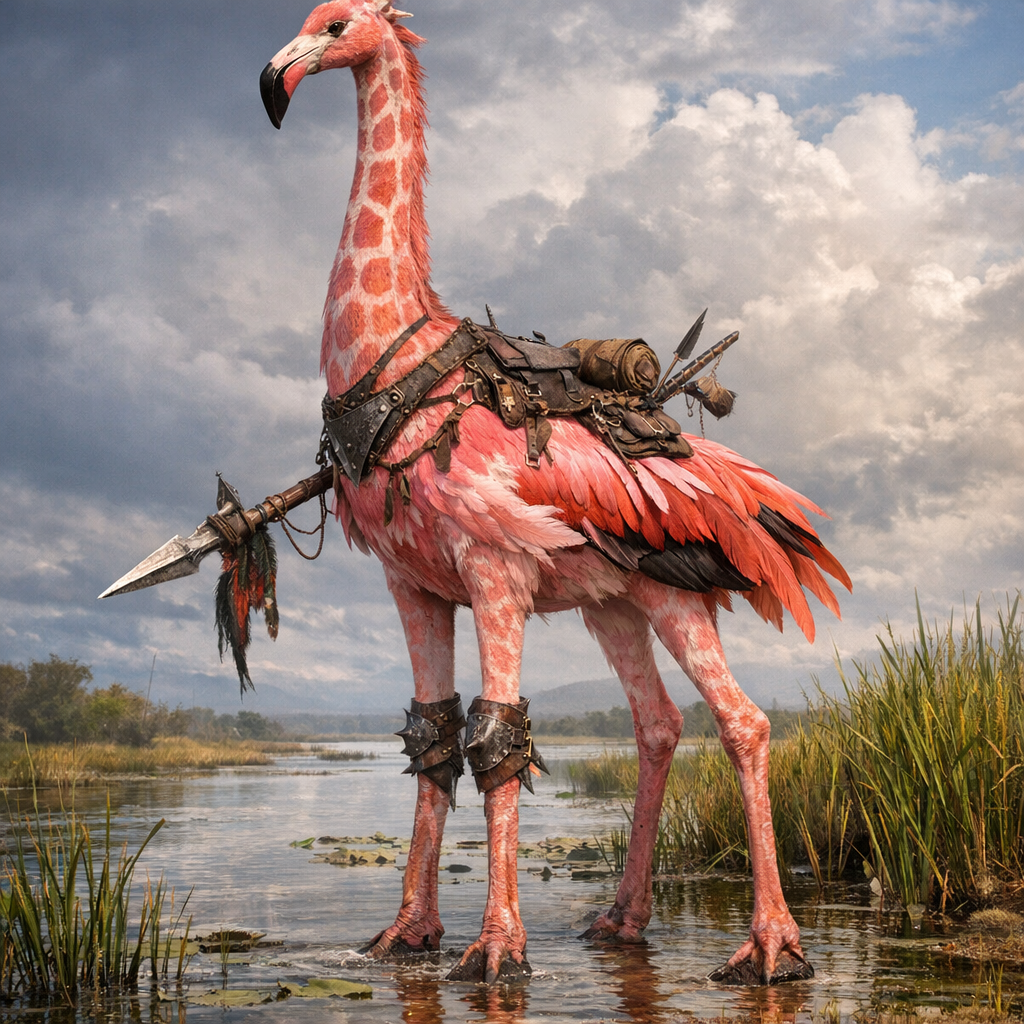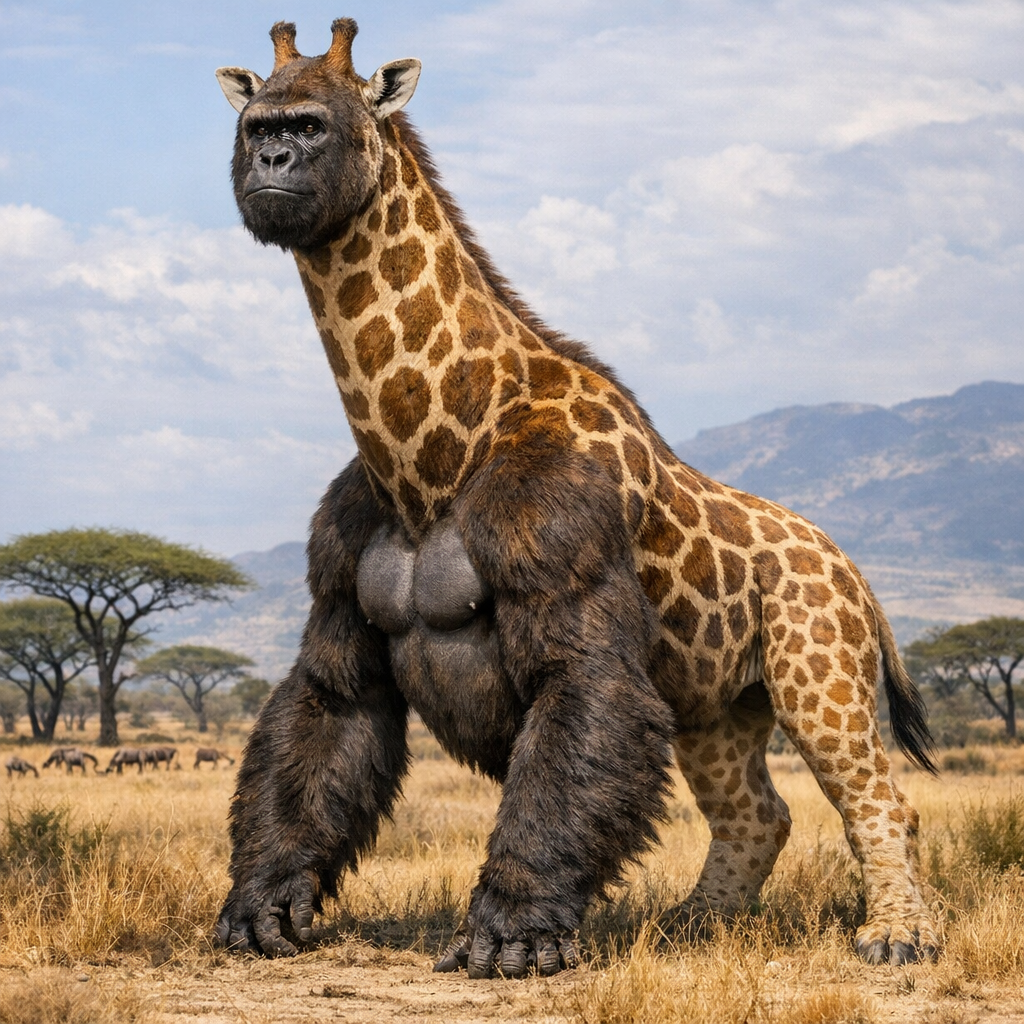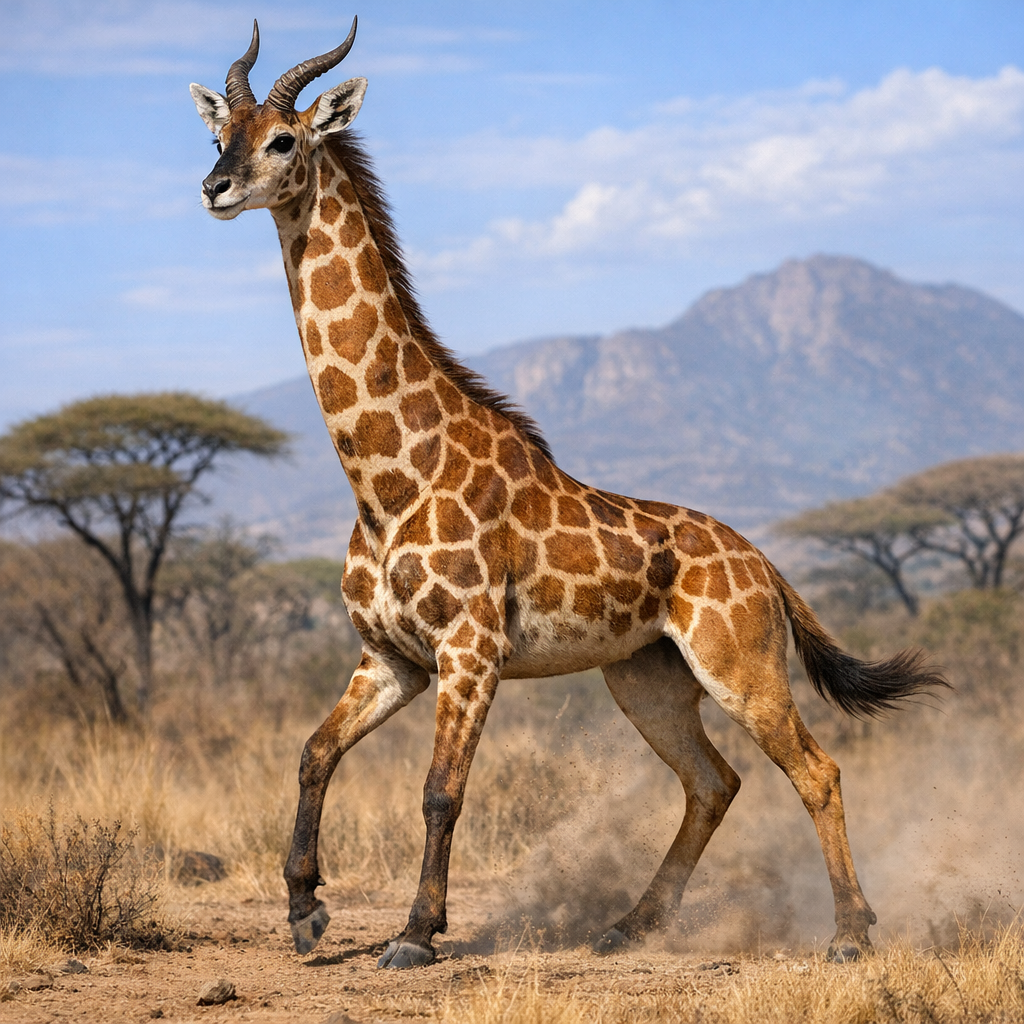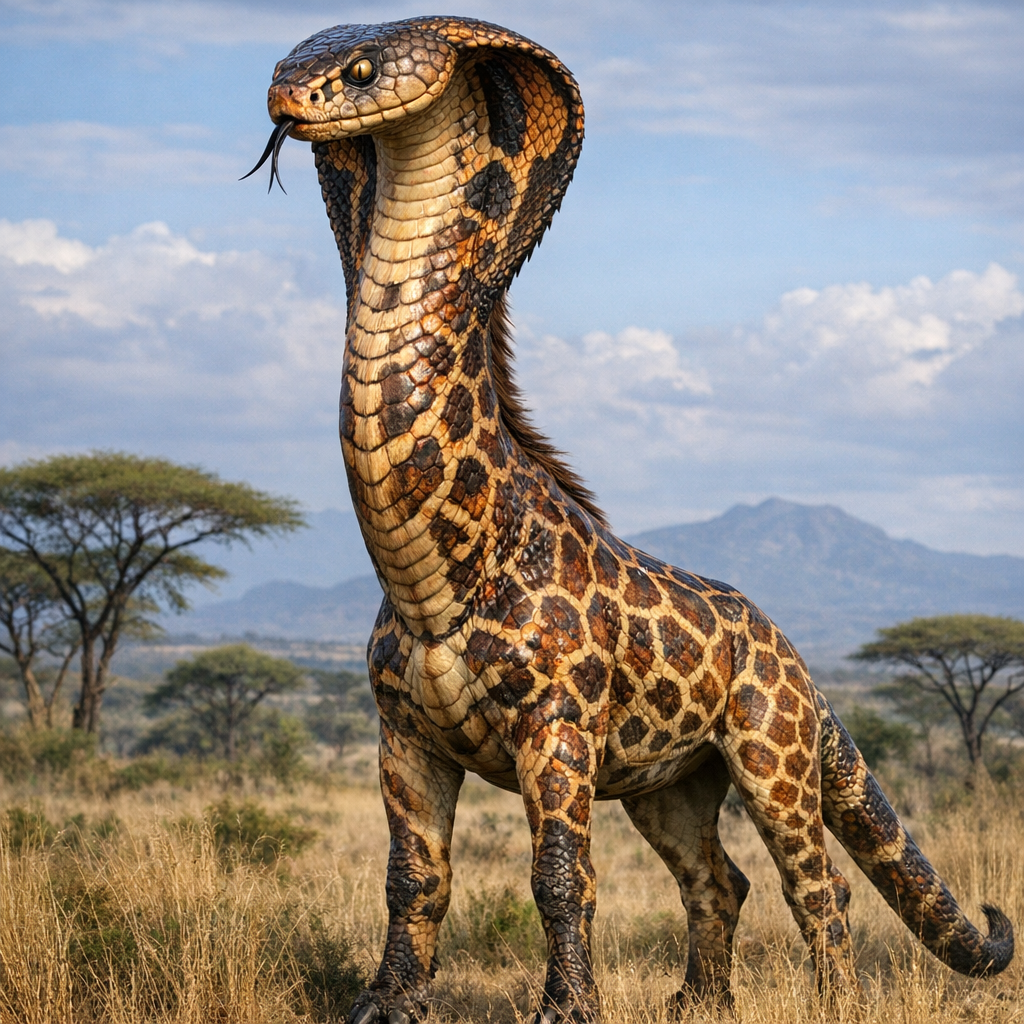
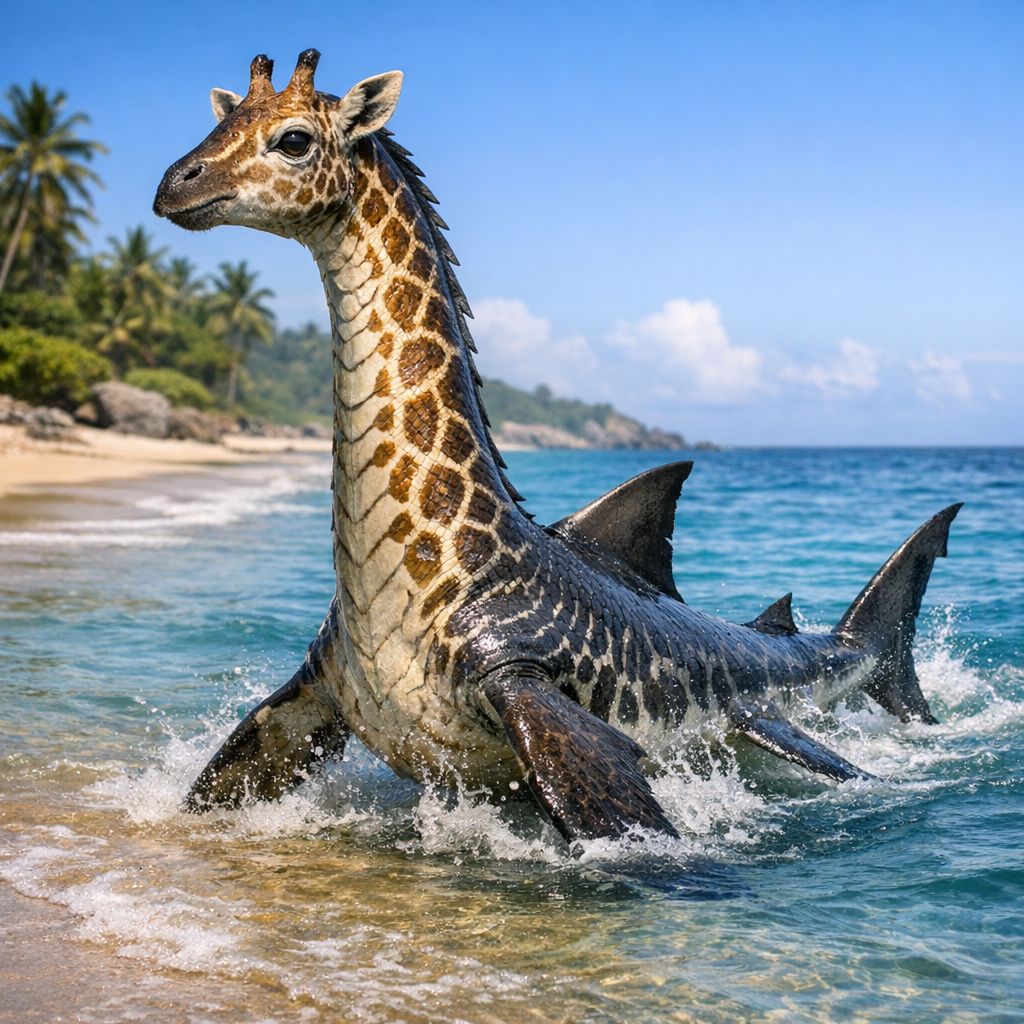
Shiraff
- Habitat
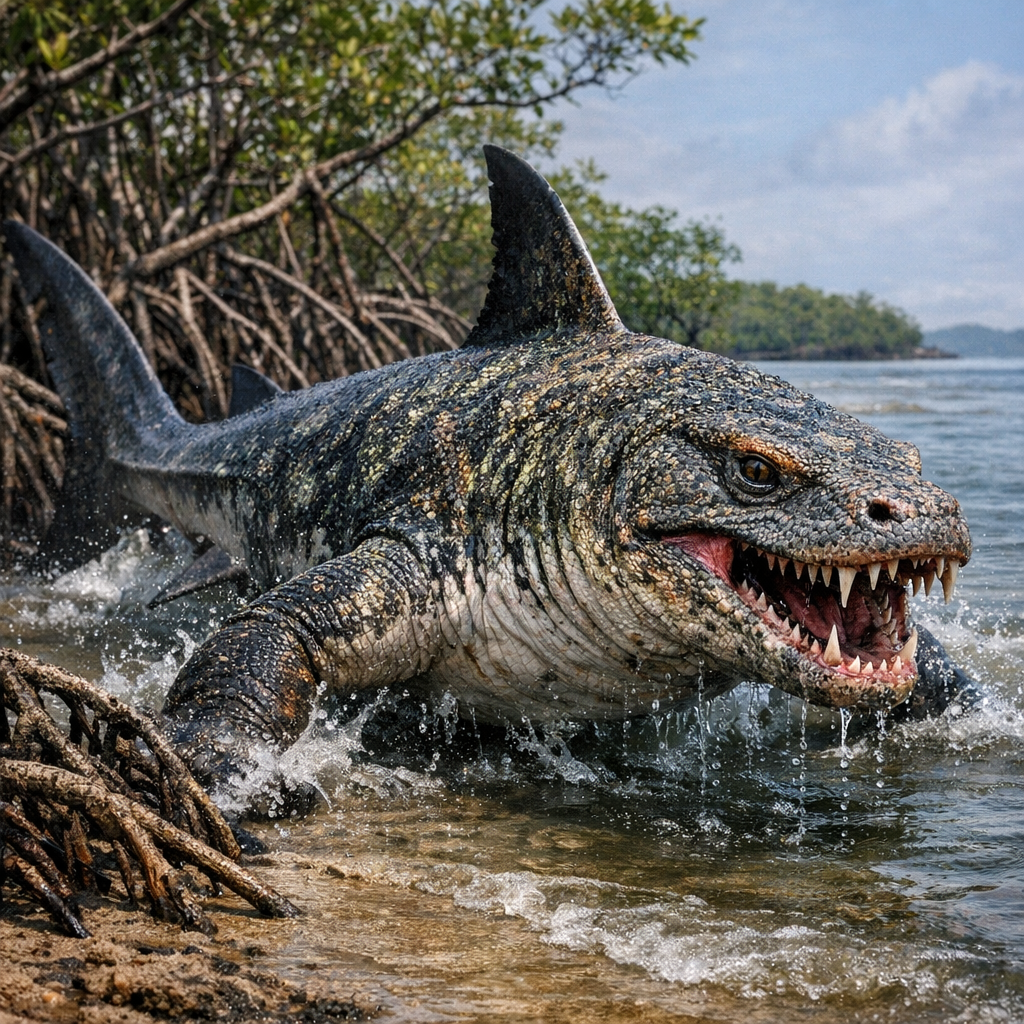
- The Shiraff thrives in coastal regions where freshwater rivers meet the ocean. It can often be found basking on sandy shores or in shallow waters, using its long neck to reach vegetation on the banks or to scan for prey in the depths.
- Diet
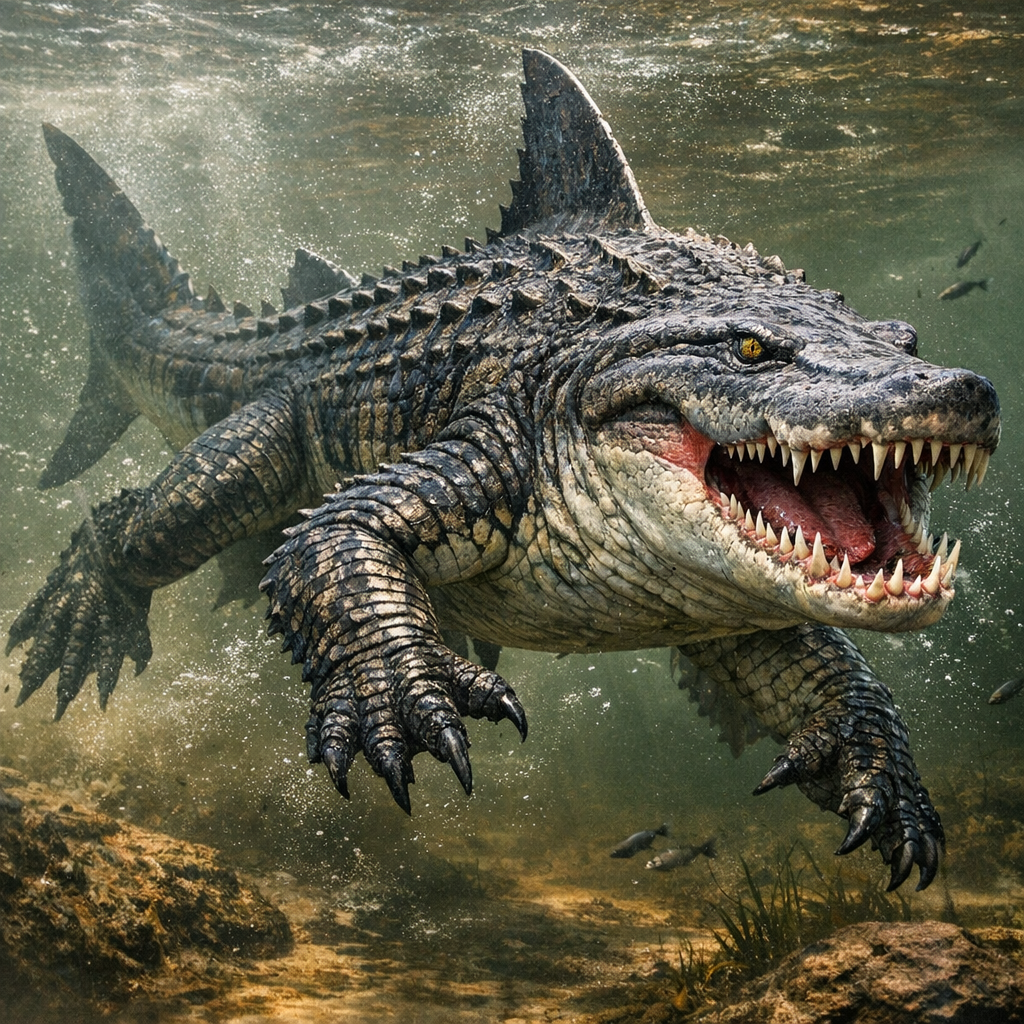
- The Shiraff is an omnivore, primarily feeding on a diverse diet of aquatic plants, small fish, and crustaceans. Its long neck allows it to forage both underwater and on land, giving it access to a wide range of food sources. It uses its sharp, serrated teeth to efficiently grasp and tear its prey.
The story of Shiraff
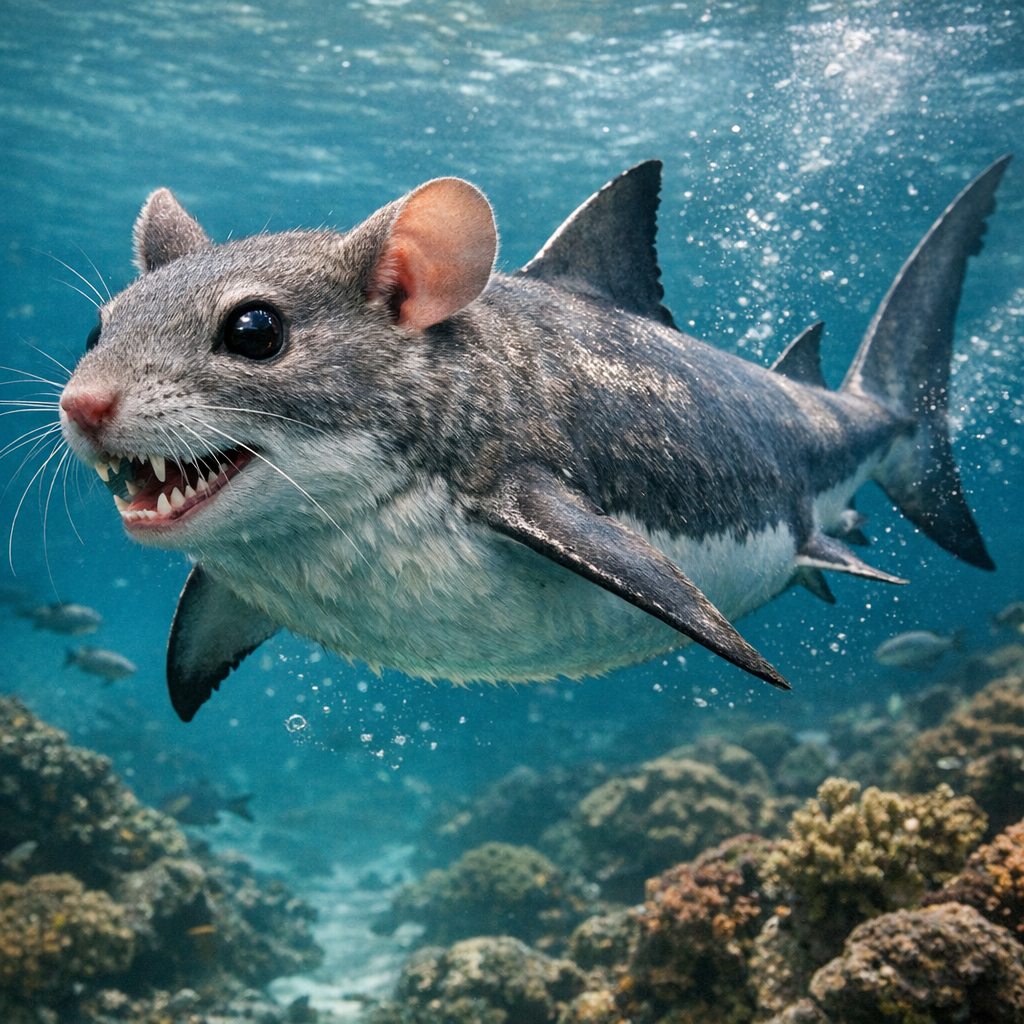
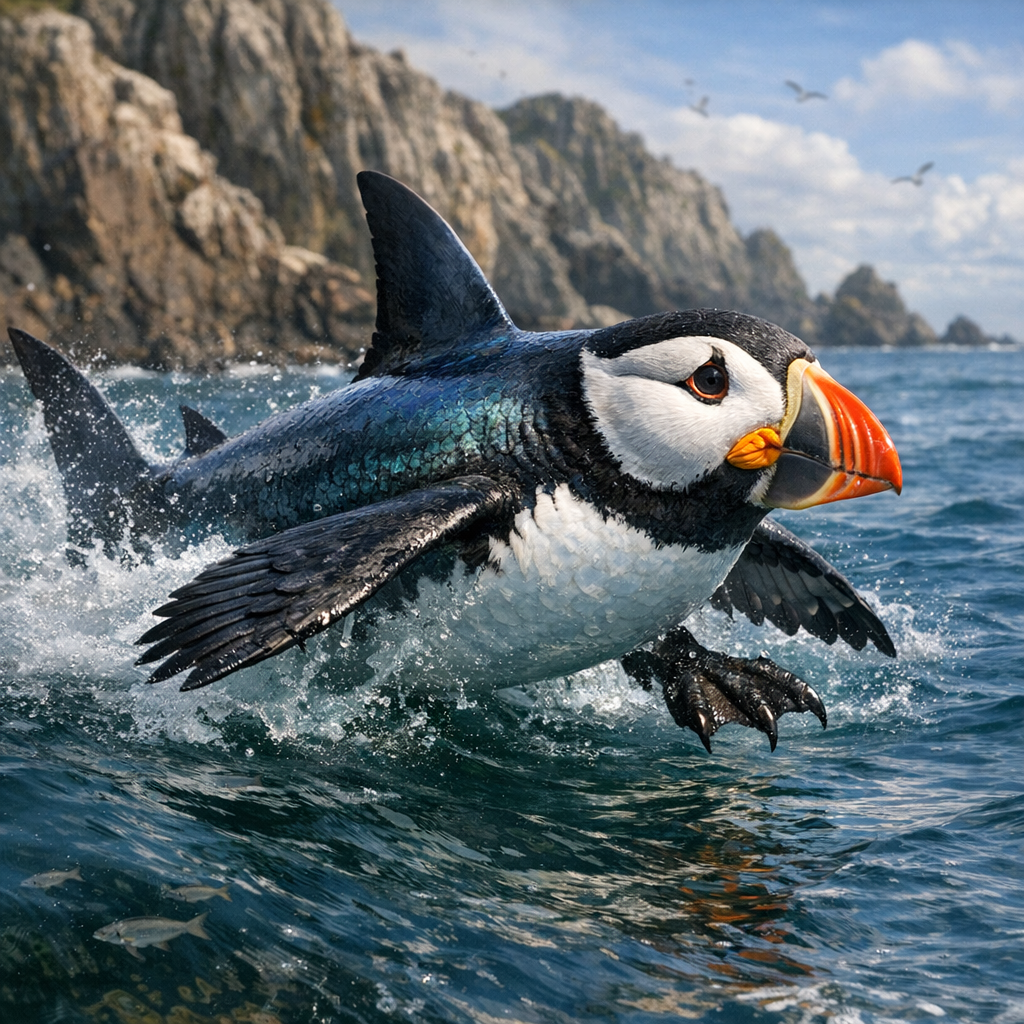
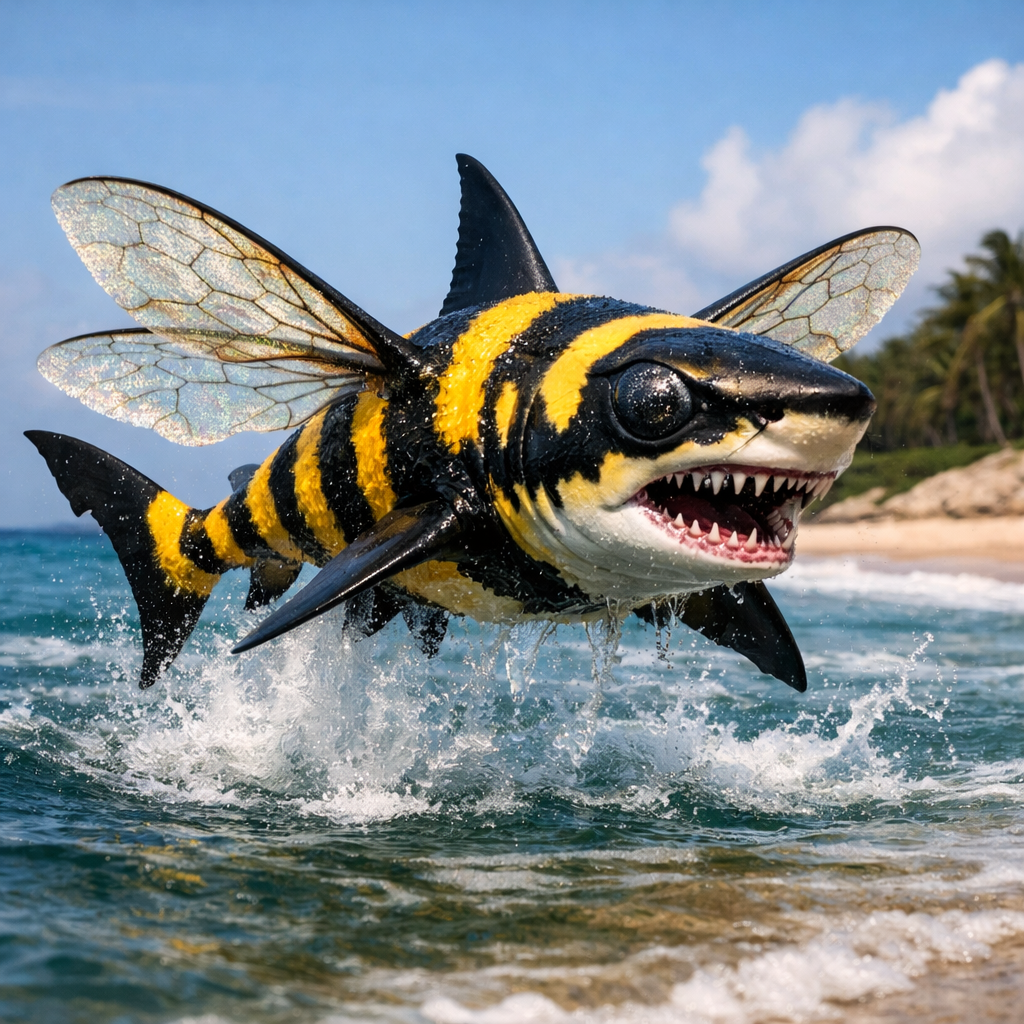
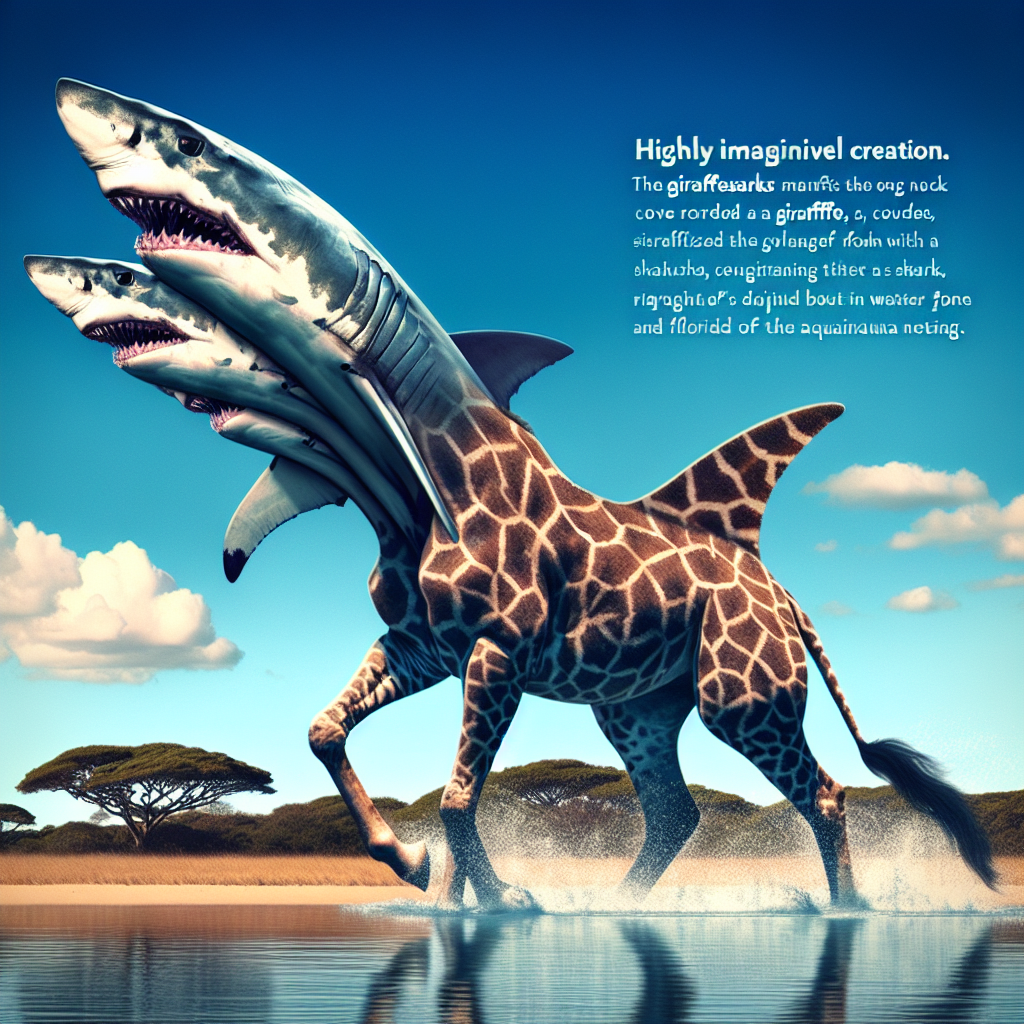
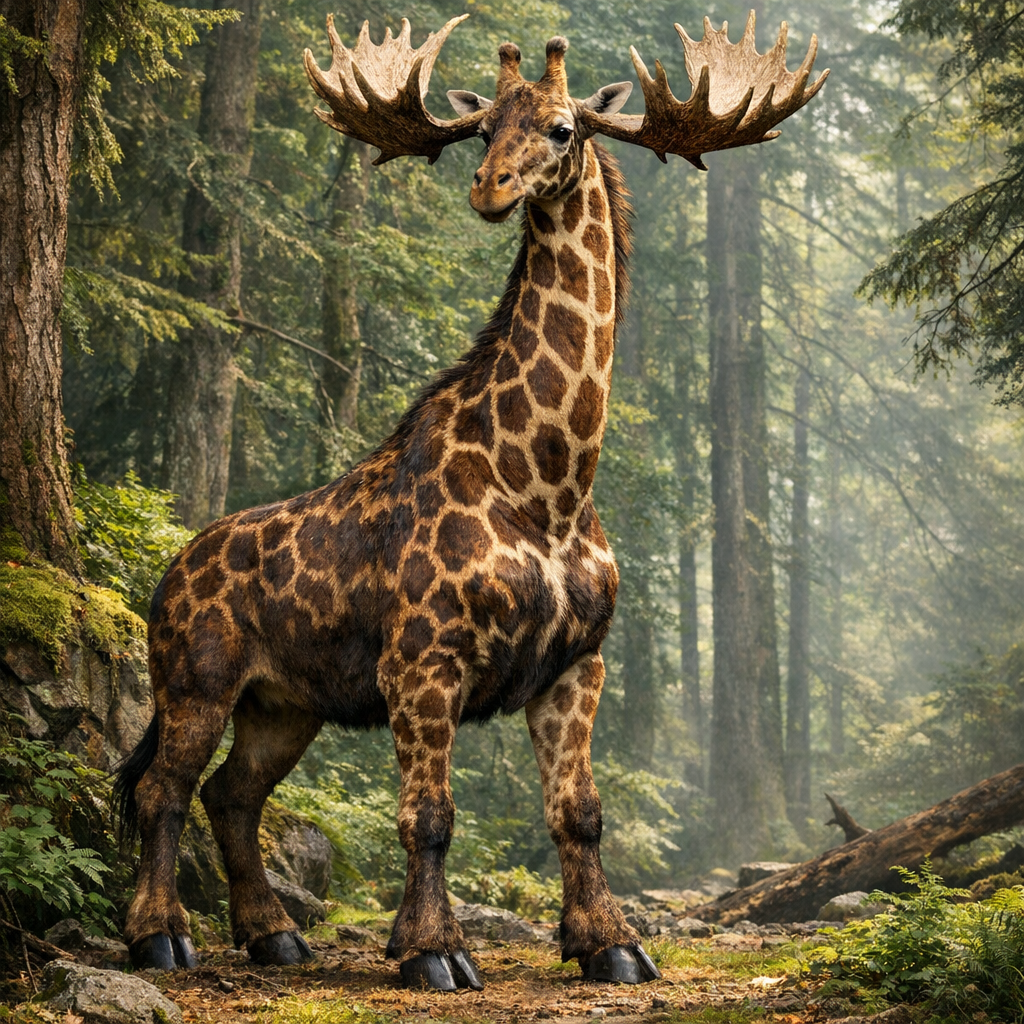
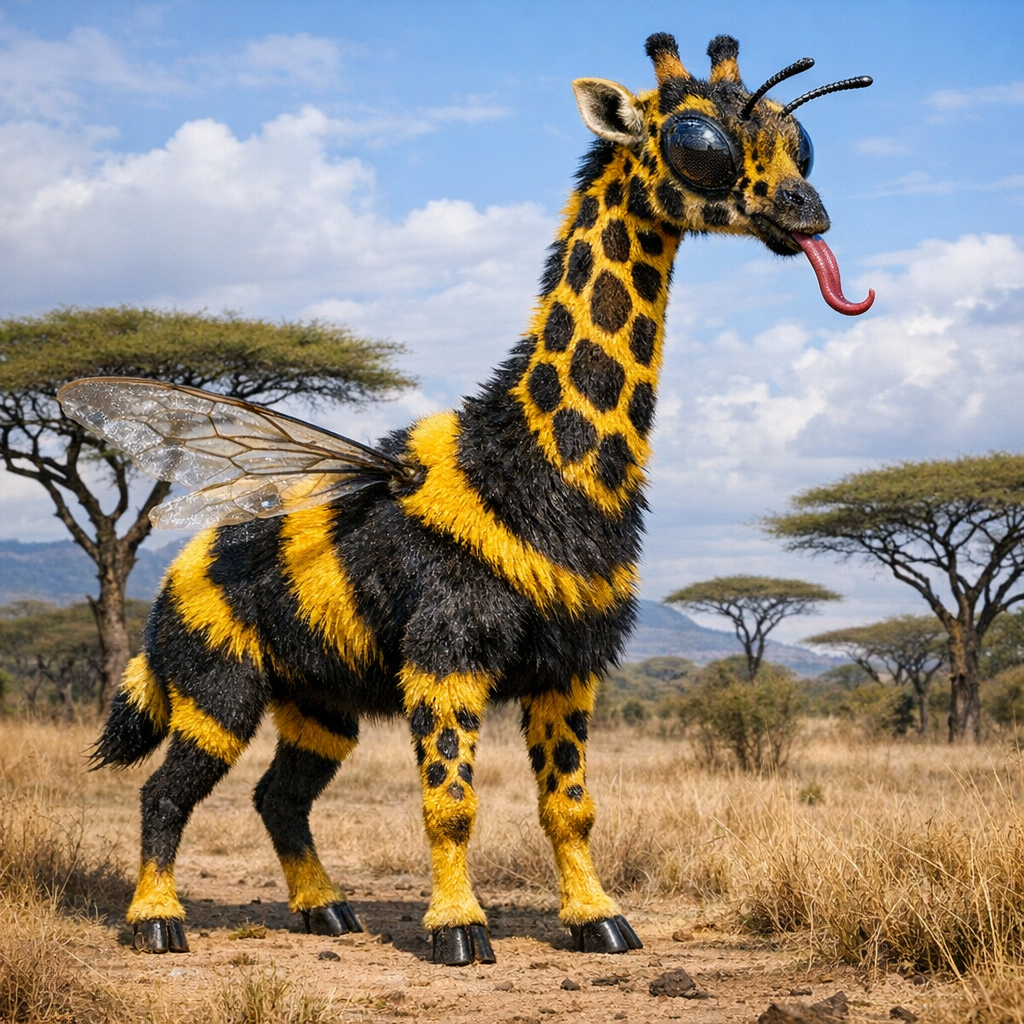
The Shiraff (Giraffus aquatilis) is a striking hybrid creature characterized by its elongated neck, adorned with a pattern of sleek, wave-like scales reminiscent of a shark's skin. Its large, expressive eyes are positioned high on its head, allowing it to survey both the water's surface and the land. With powerful flippers that resemble both the fins of a shark and the legs of a giraffe, the Shiraff is adept at swift movements in water and graceful strides on land. Its unique respiratory system allows it to hold its breath for extended periods while hunting below the surface, yet it can easily adapt to breathing air when it surfaces.
Special abilities
Hydro Charge
The Shiraff propels itself through the water at high speed, using its powerful flippers to strike at prey with a forceful impact.
From the Shark
Real-world basis: Utilizes hydrodynamic body shape and powerful muscle contractions for rapid acceleration.
Neck Whip
With a swift motion, the Shiraff swings its long neck, delivering a powerful strike to any nearby threats or prey.
From the Giraffe
Real-world basis: Employs strong neck muscles to generate forceful, sweeping strikes.
Aqua Camouflage
The Shiraff can blend into its aquatic environment by adjusting the coloration of its scales, making it difficult for predators and prey to spot.
From the Shark
Real-world basis: Mimics the adaptive coloration of marine animals for effective concealment.
Heightened Awareness
The Shiraff benefits from its elevated vantage point, allowing it to detect threats from afar and prepare for incoming danger.
From the Giraffe
Real-world basis: Utilizes a large field of vision and acute hearing to sense predators early.