Flamouse
- Habitat
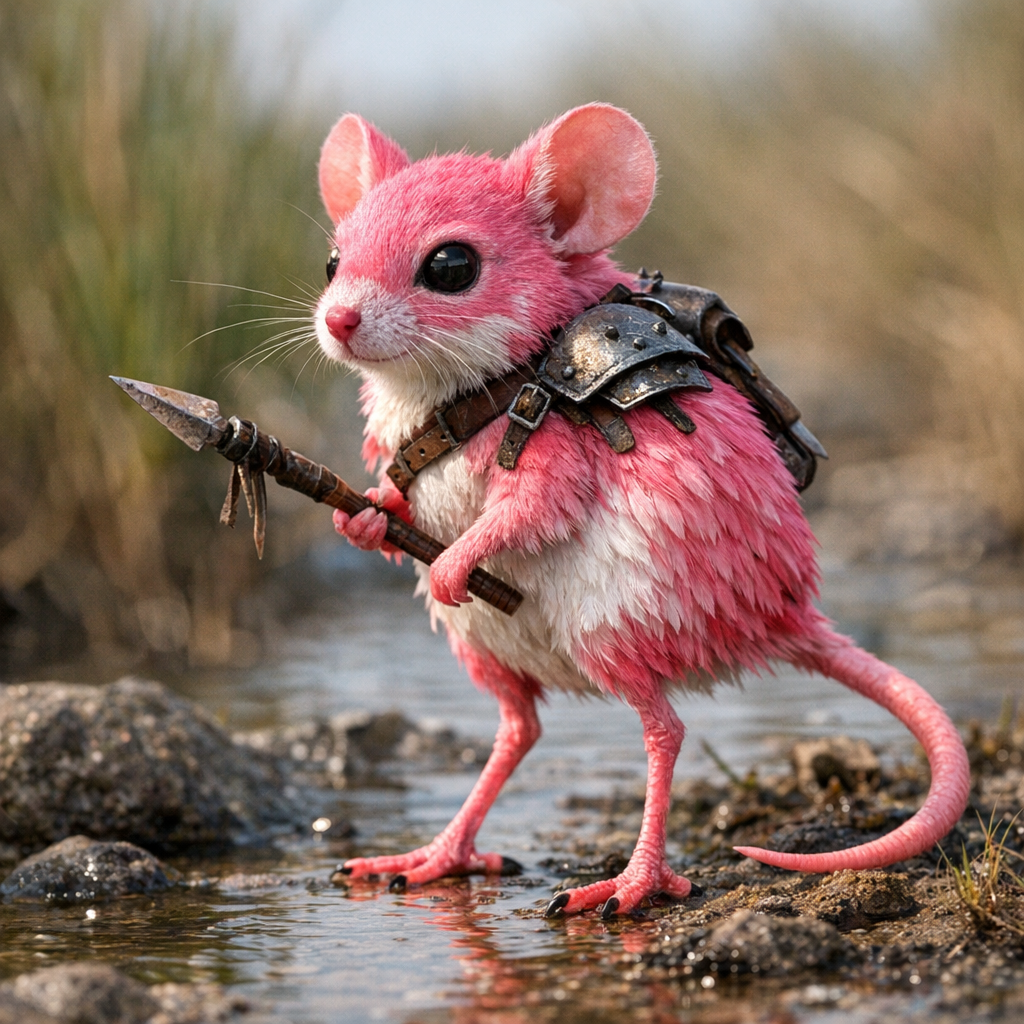
- The Flamouse thrives in marshy wetlands, where shallow waters meet lush vegetation. It prefers areas rich in reeds and grasses, often seen wading through soft mud or perched on low branches, blending seamlessly with its environment.
- Diet
- The Flamouse is an omnivorous forager, primarily feeding on aquatic insects, small seeds, and algae. It uses its long beak to probe into the mud and water for hidden food sources, showcasing a unique adaptation that combines the feeding habits of both parent species.
The story of Flamouse
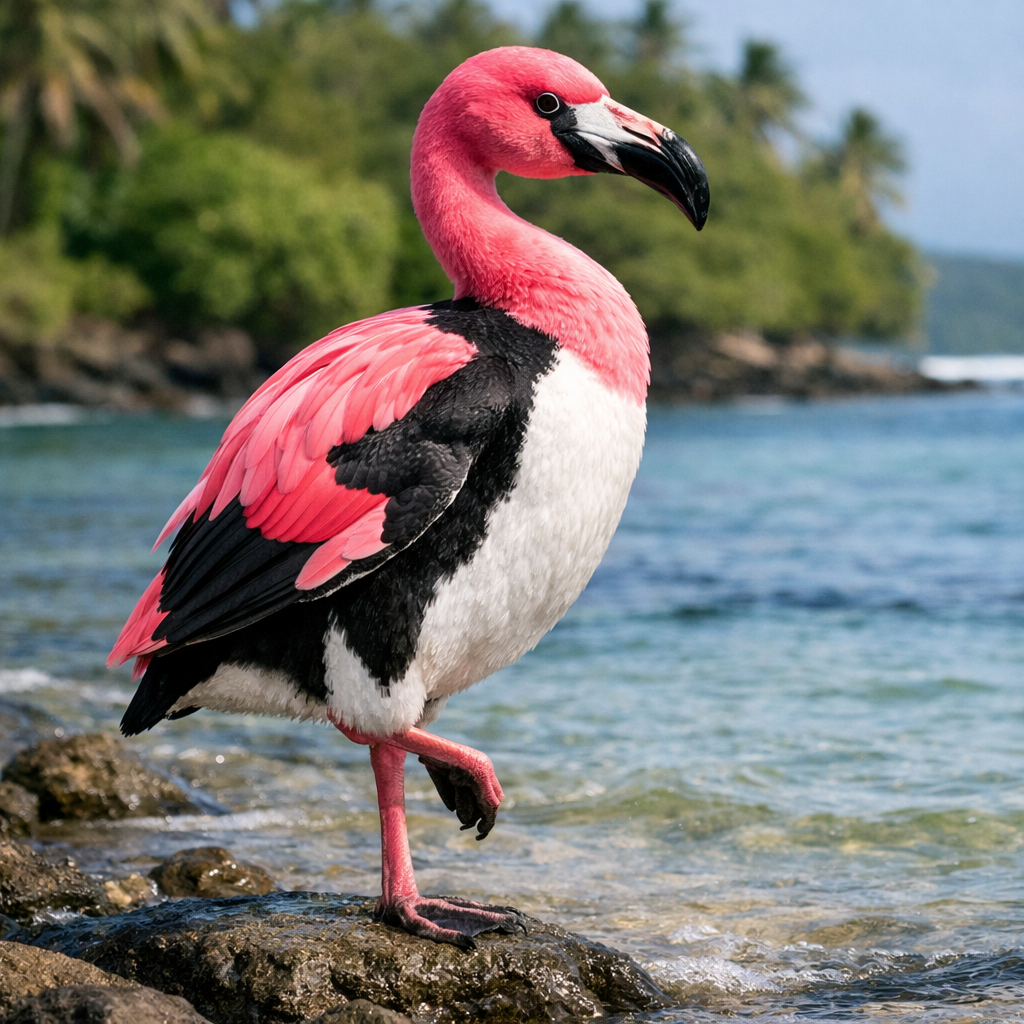
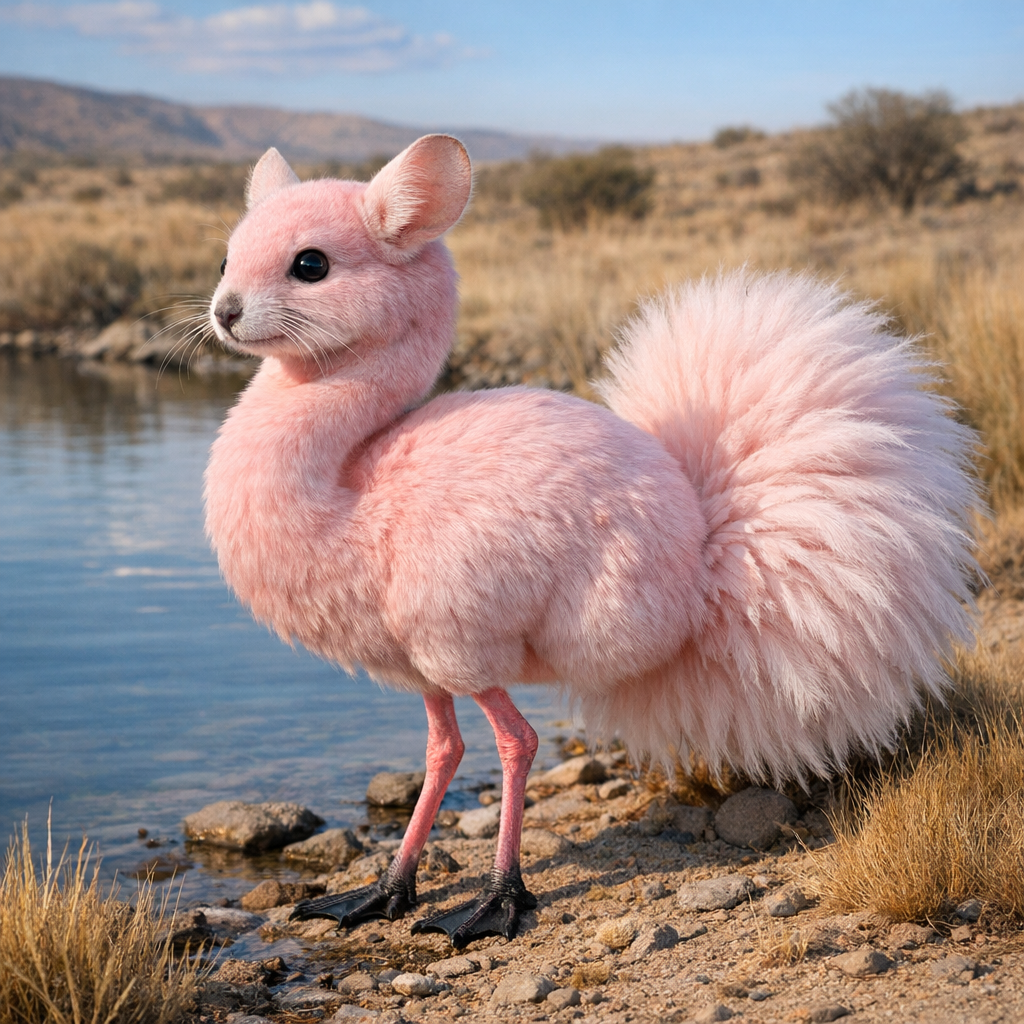
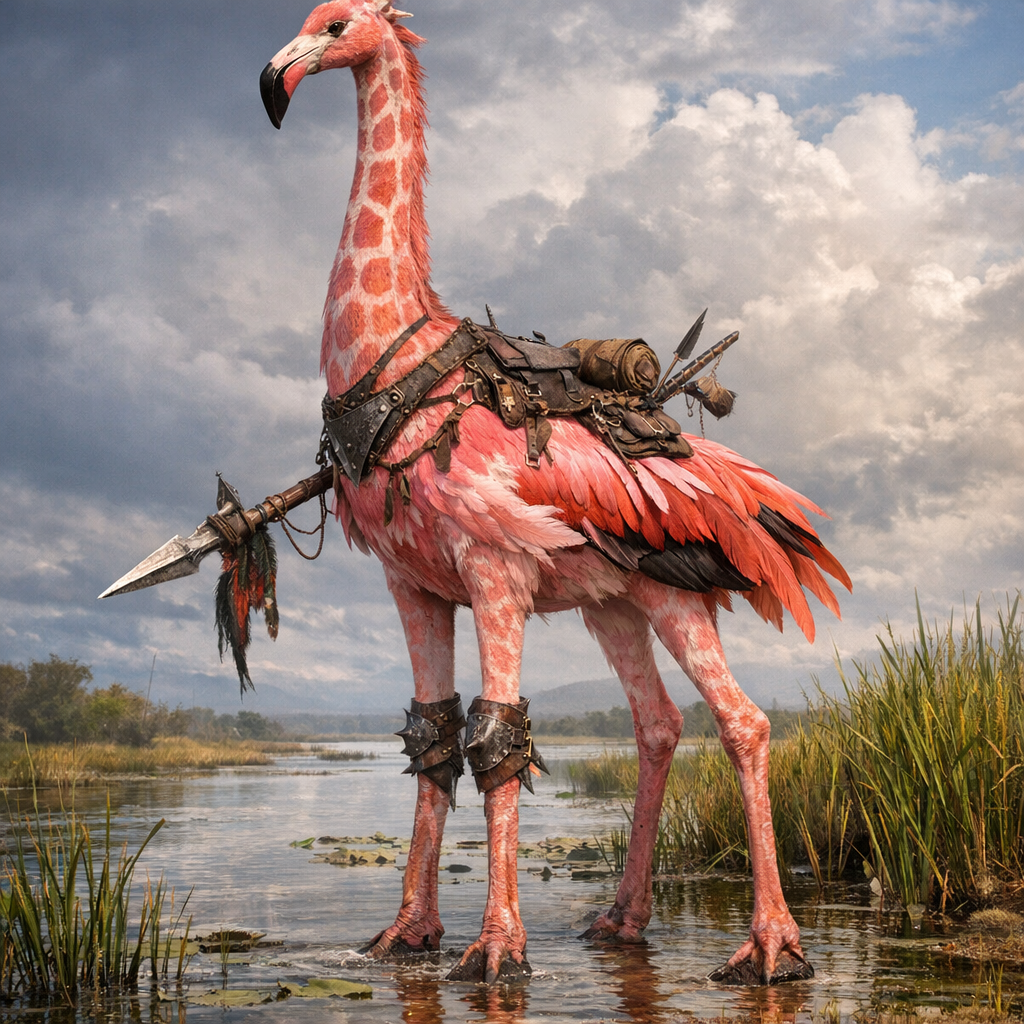
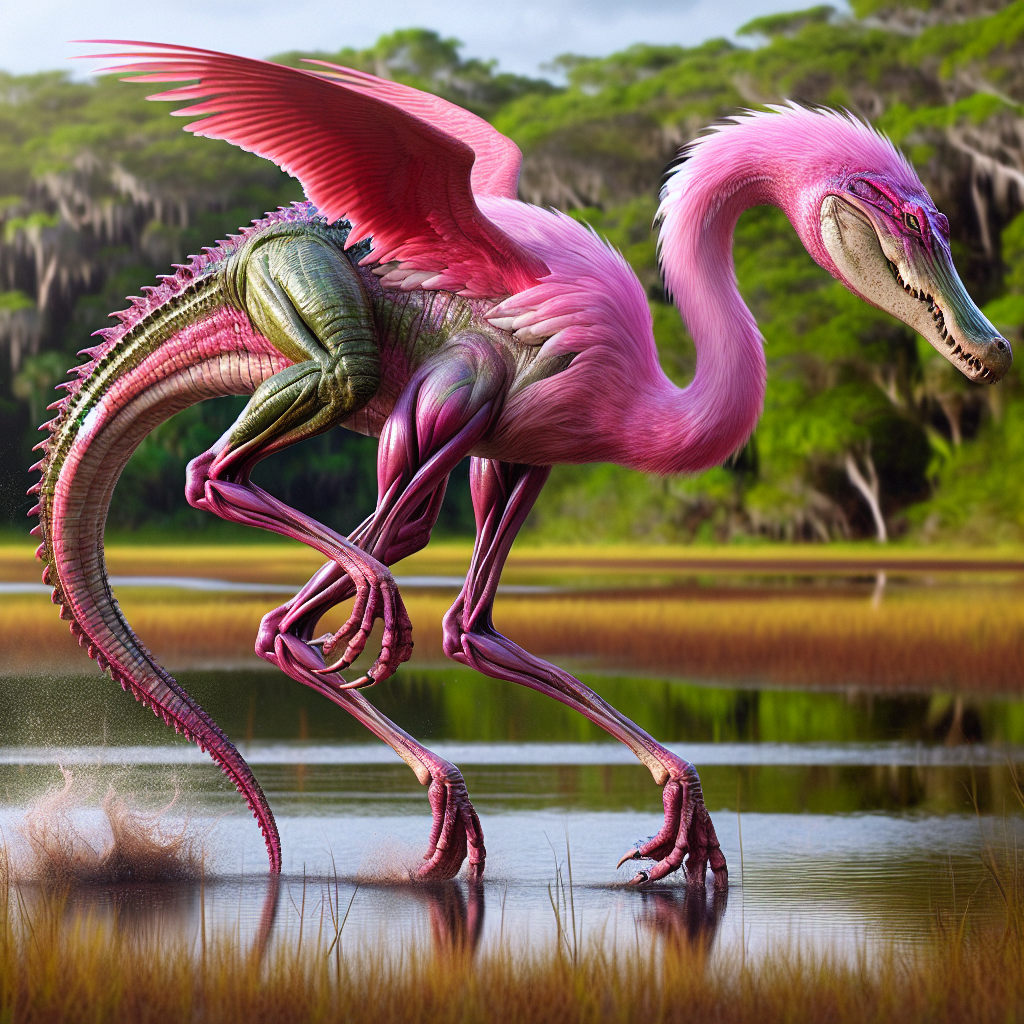
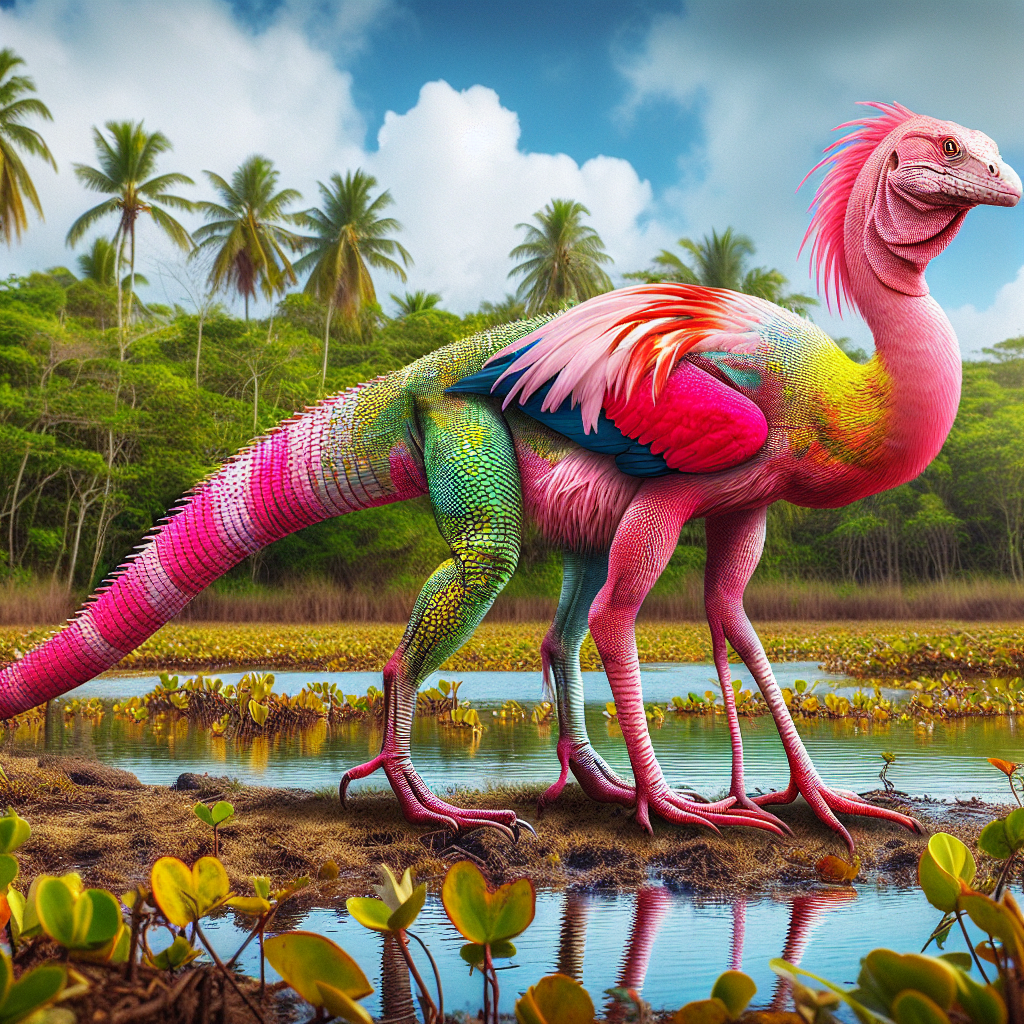
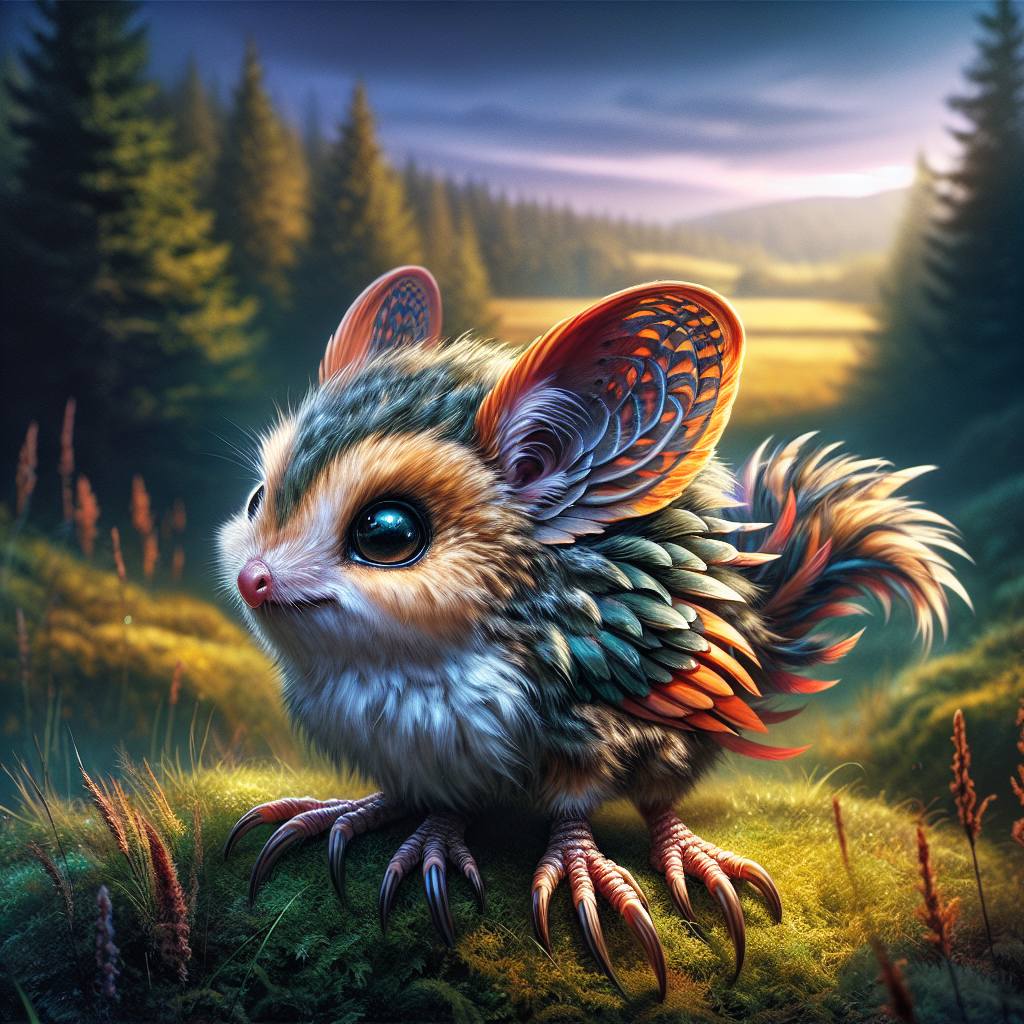
The Flamouse is a striking hybrid of the flamboyant flamingo and the diminutive mouse. Standing at an average height of 30 centimeters, it possesses long, slender legs akin to a flamingo, adorned with vibrant pink plumage that glimmers in sunlight. Its body is compact and round, reminiscent of a mouse, covered in soft, downy feathers that transition from pink to white. The Flamouse has large, expressive eyes and a long, delicate tail that aids in balance, giving it an elegant but playful appearance.
Special abilities
Flaming Beak Strike
The Flamouse delivers a swift, pecking attack with its flamingo-like beak, igniting a burst of heat that causes minor burns.
From the Flamingo
Real-world basis: Utilizes rapid beak movement and heat generation from specialized glands.
Whirlwind Tail Flick
With a quick flick of its long tail, the Flamouse creates a gust of wind that disorients and pushes back attackers.
From the Mouse
Real-world basis: Harnesses tail movement to create air currents, mimicking the defensive behaviors found in small mammals.
Feather Shield
The Flamouse ruffles its feathers to create a protective barrier, reducing the impact of incoming attacks.
From the Flamingo
Real-world basis: Feathers can trap air, creating a cushion-like effect that absorbs shock.
Burrowing Retreat
When threatened, the Flamouse can quickly burrow into soft mud or grass, making it difficult for predators to reach.
From the Mouse
Real-world basis: Instinctual behavior learned from ancestral traits, allowing for rapid evasion.