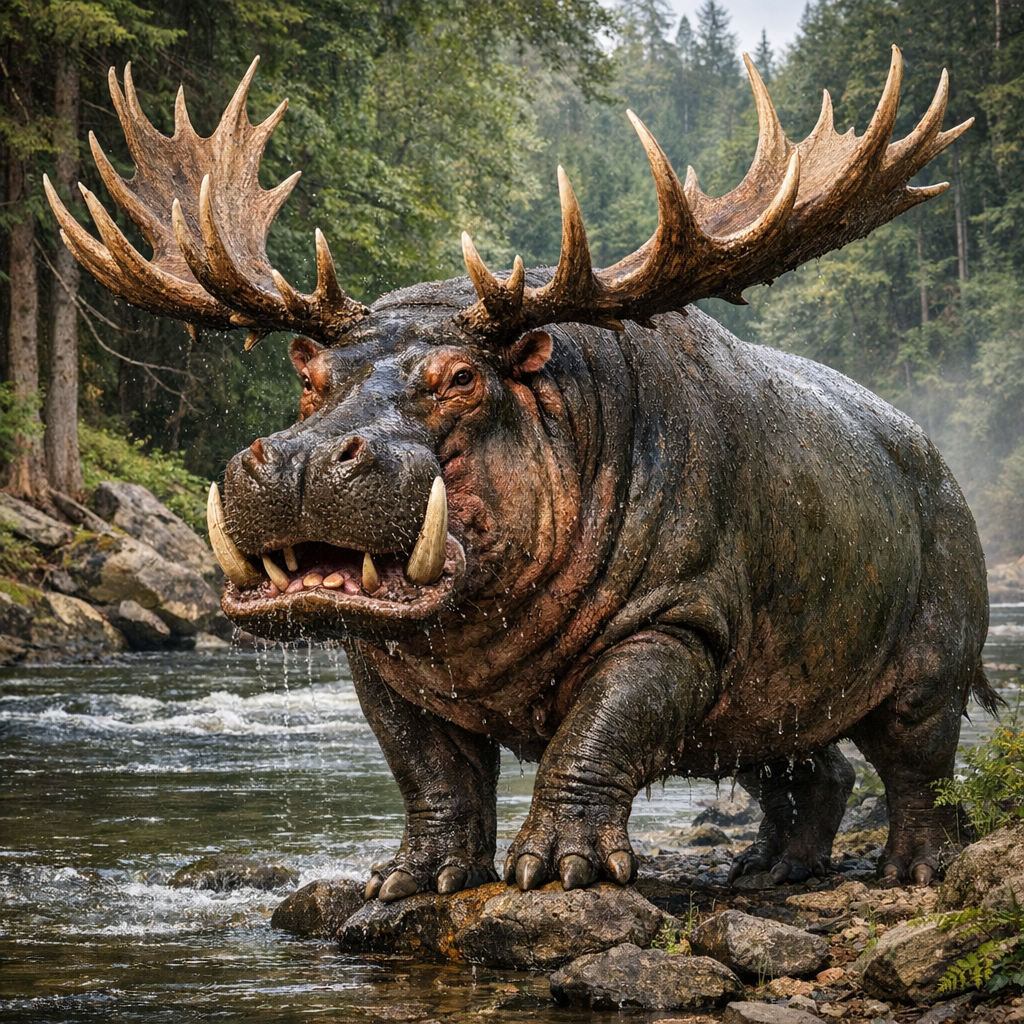
Hippoelk
A hybrid of Hippopotamus + Elk
- Habitat
- The Hippoelk thrives in a mix of wetland areas and dense temperate forests, often found near rivers, lakes, and marshes where it can forage for food and escape from predators.
- Diet
- The Hippoelk is an herbivore that primarily consumes aquatic plants, grasses, and leaves. It forages in the water using its large mouth to uproot vegetation and also grazes on land during the cooler hours of the day.
The story of Hippoelk
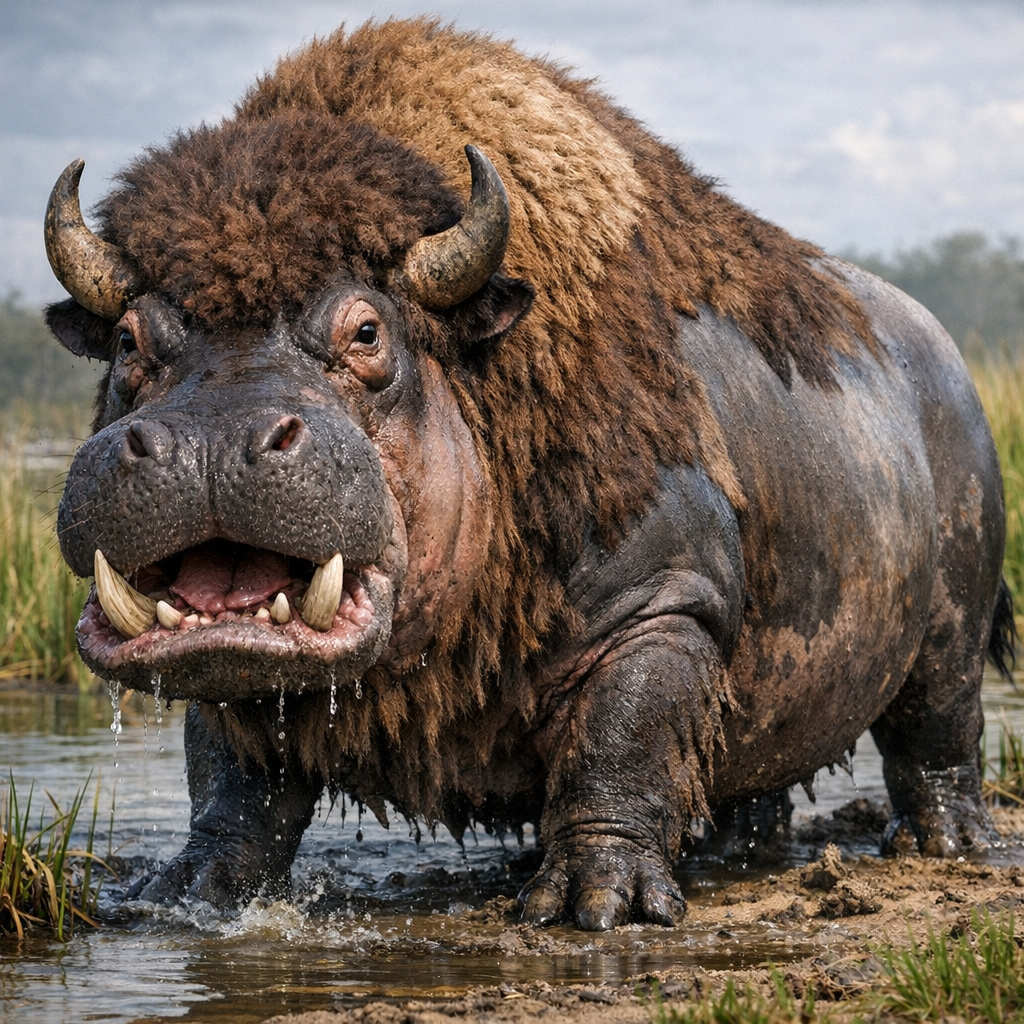
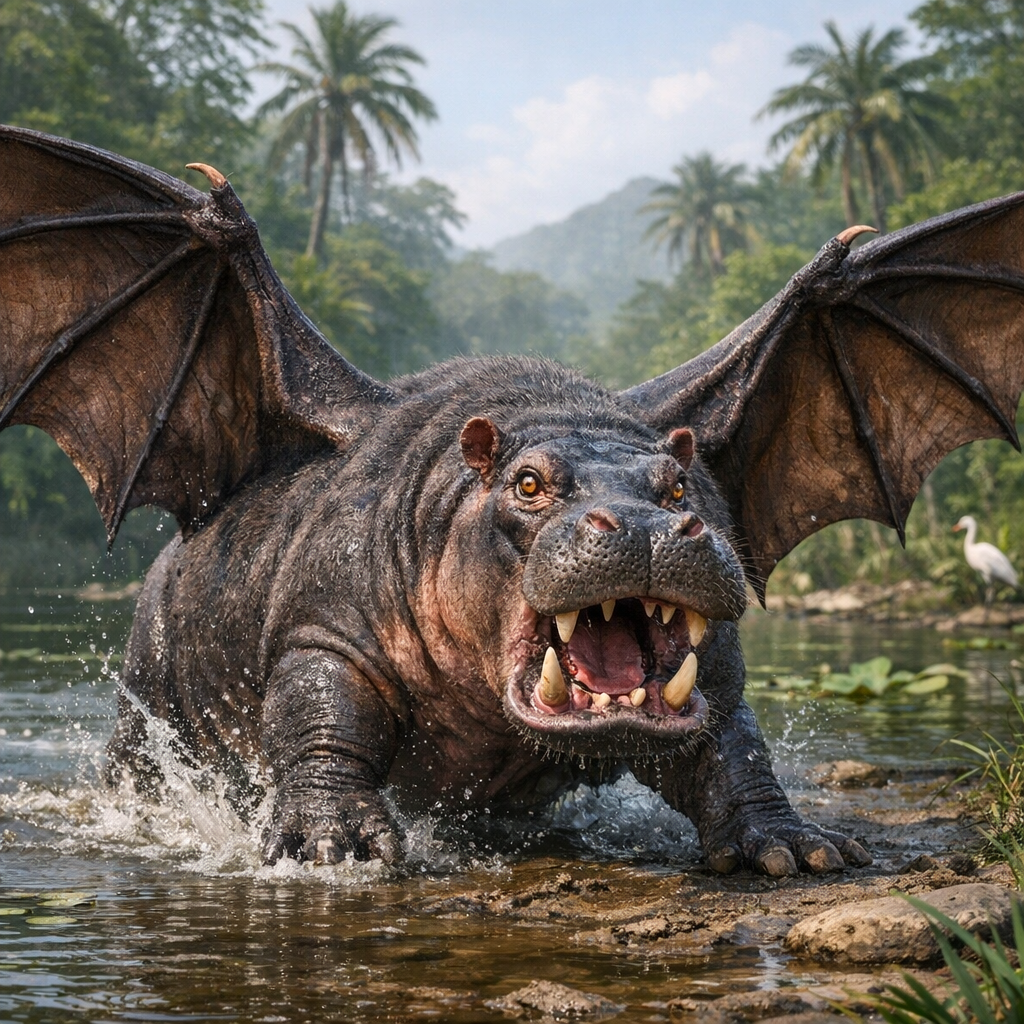
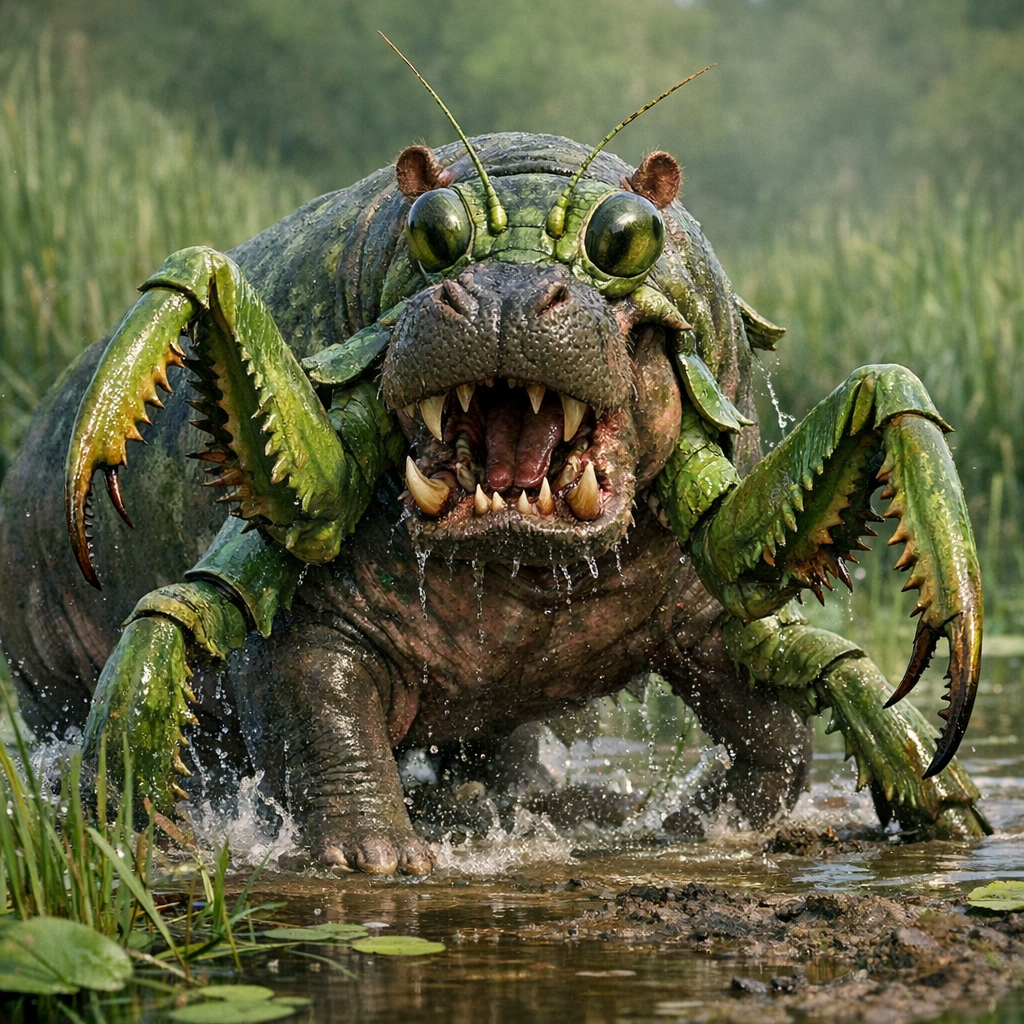
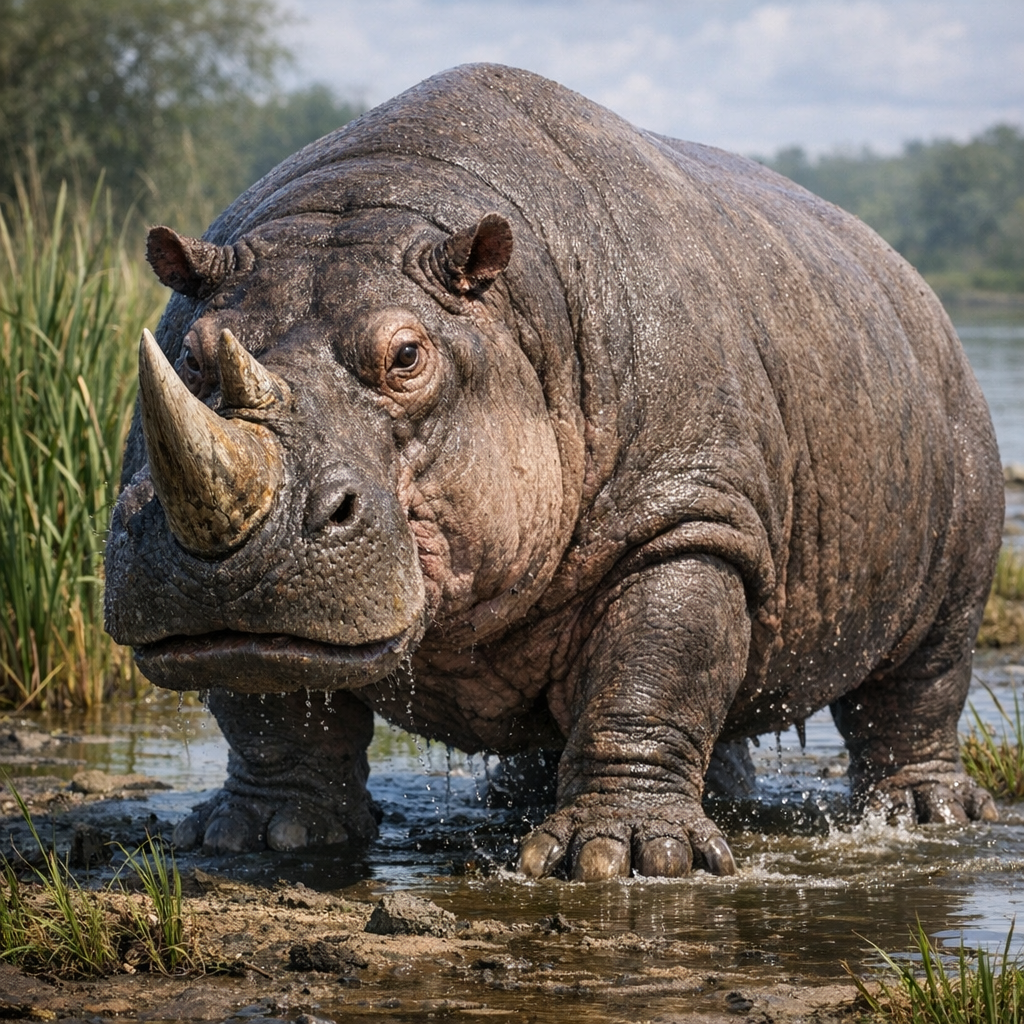
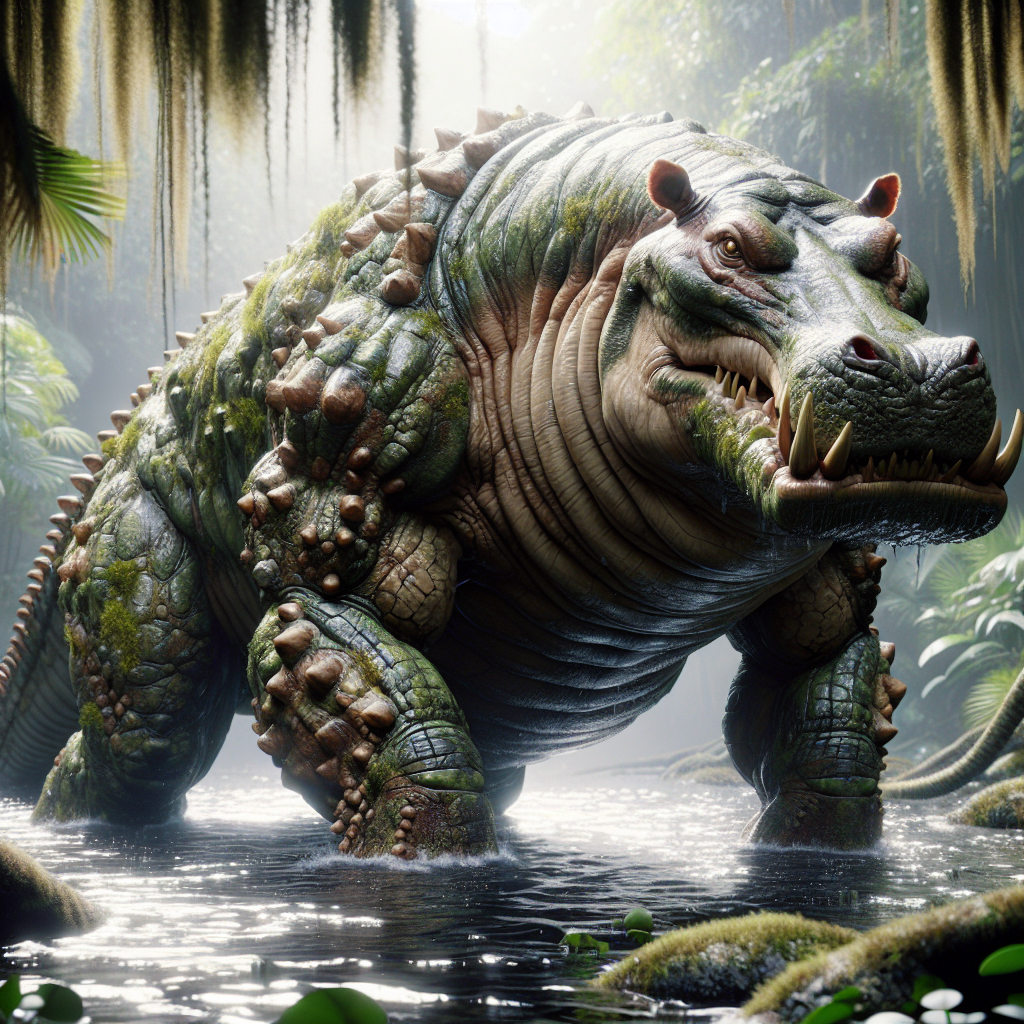
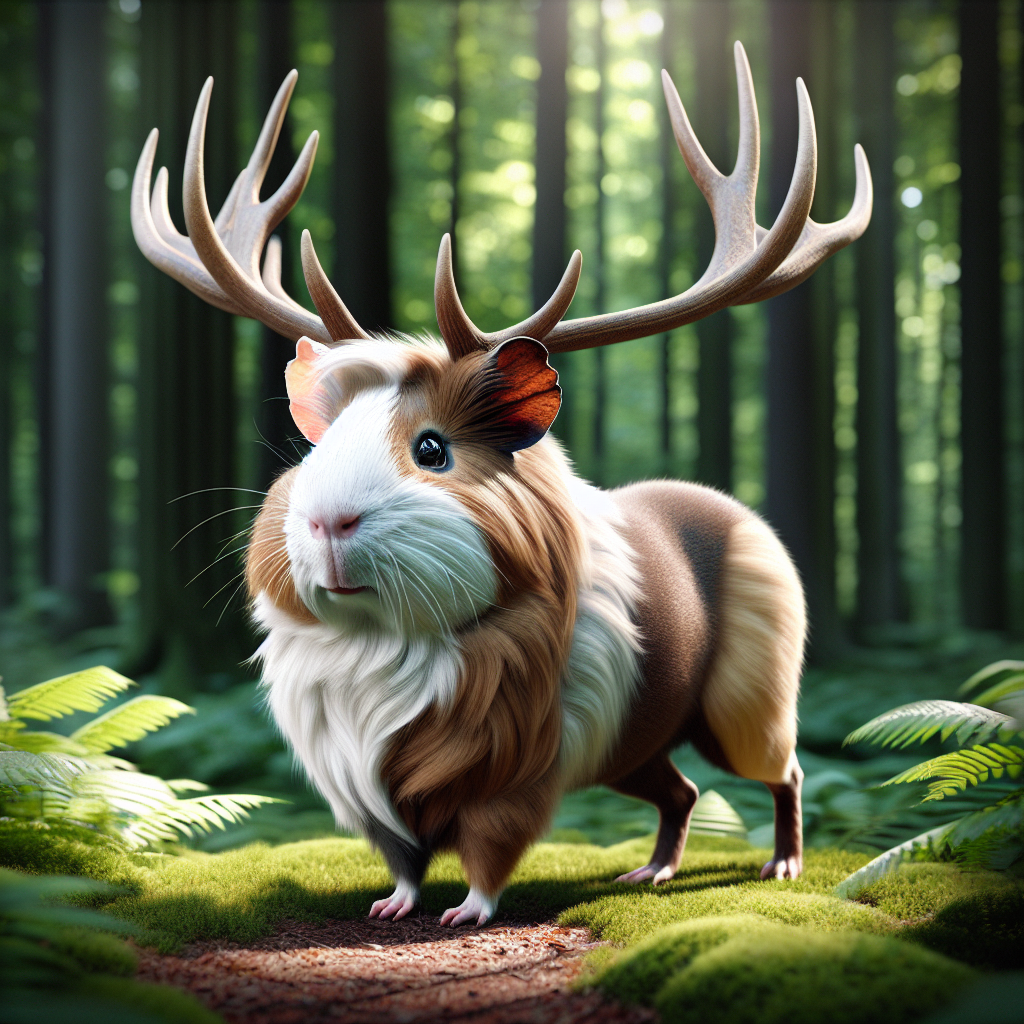
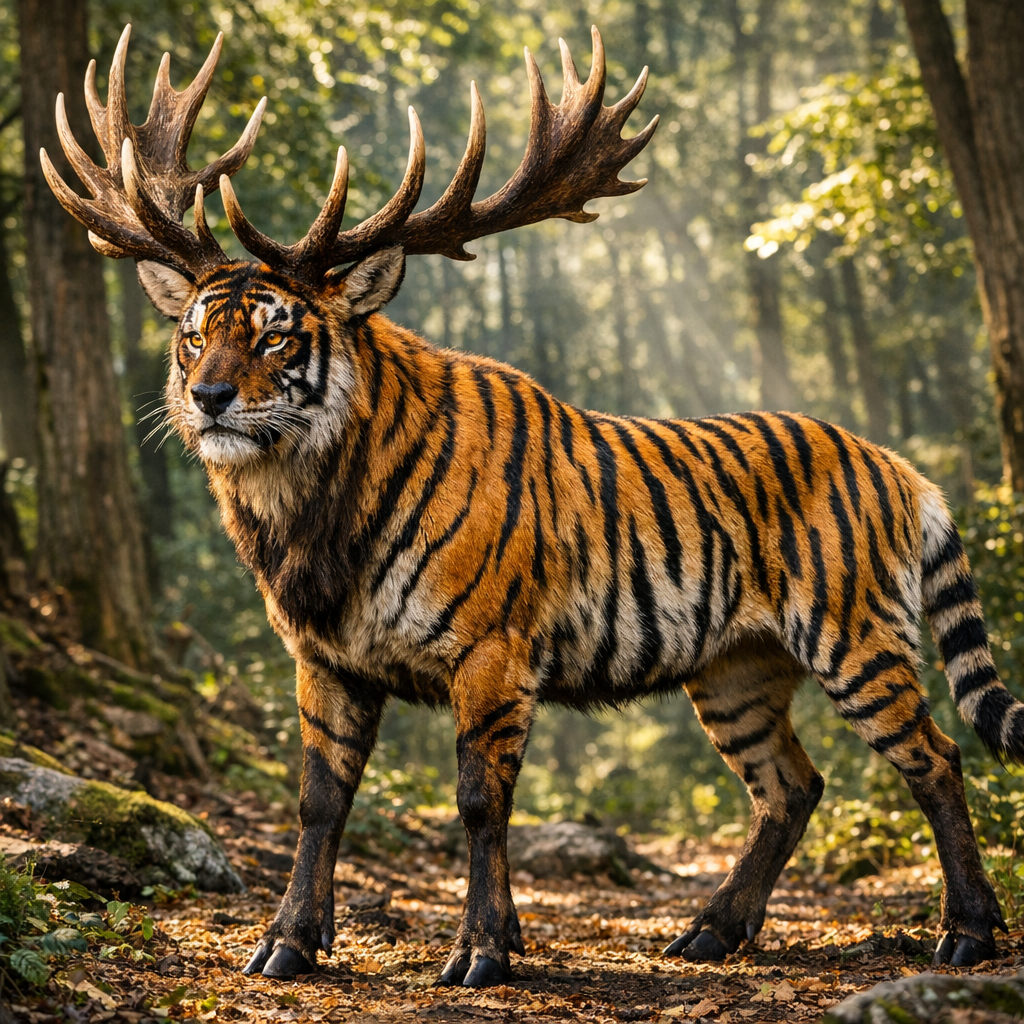
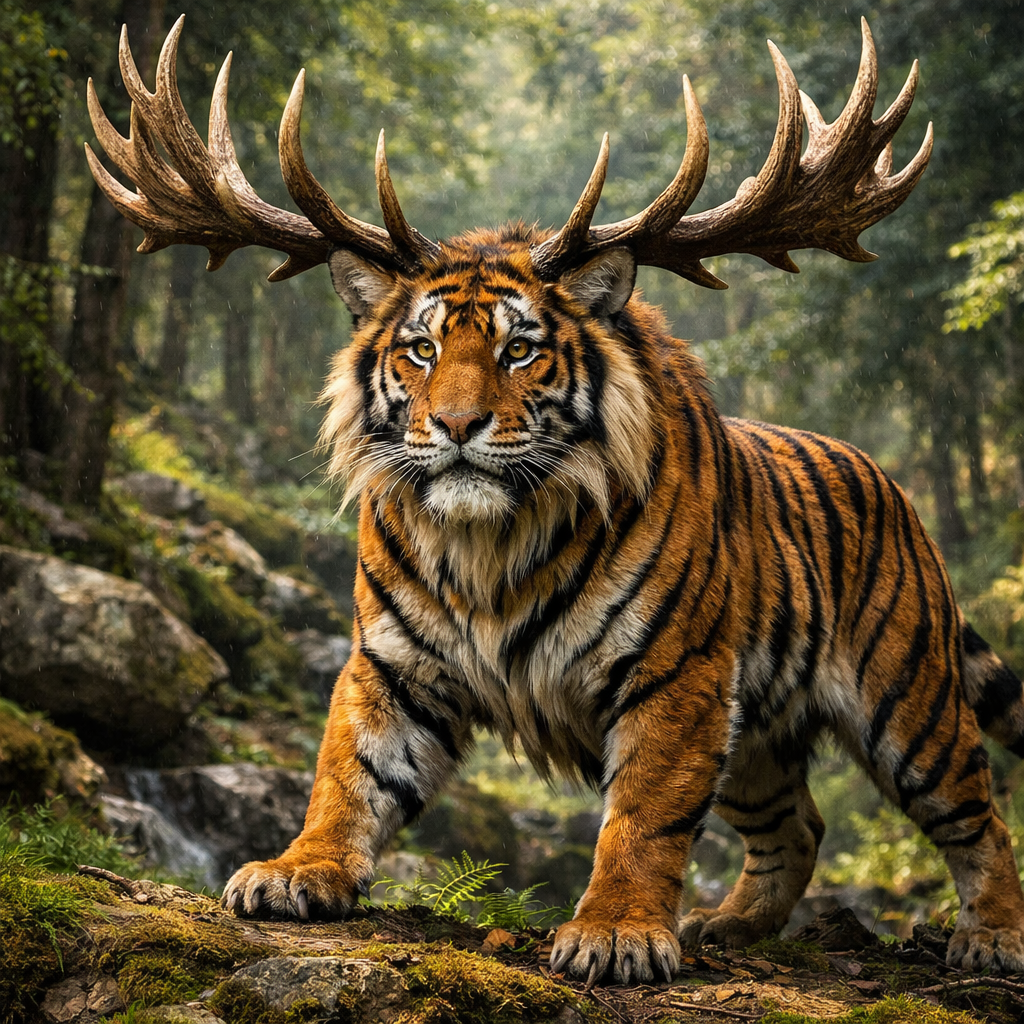
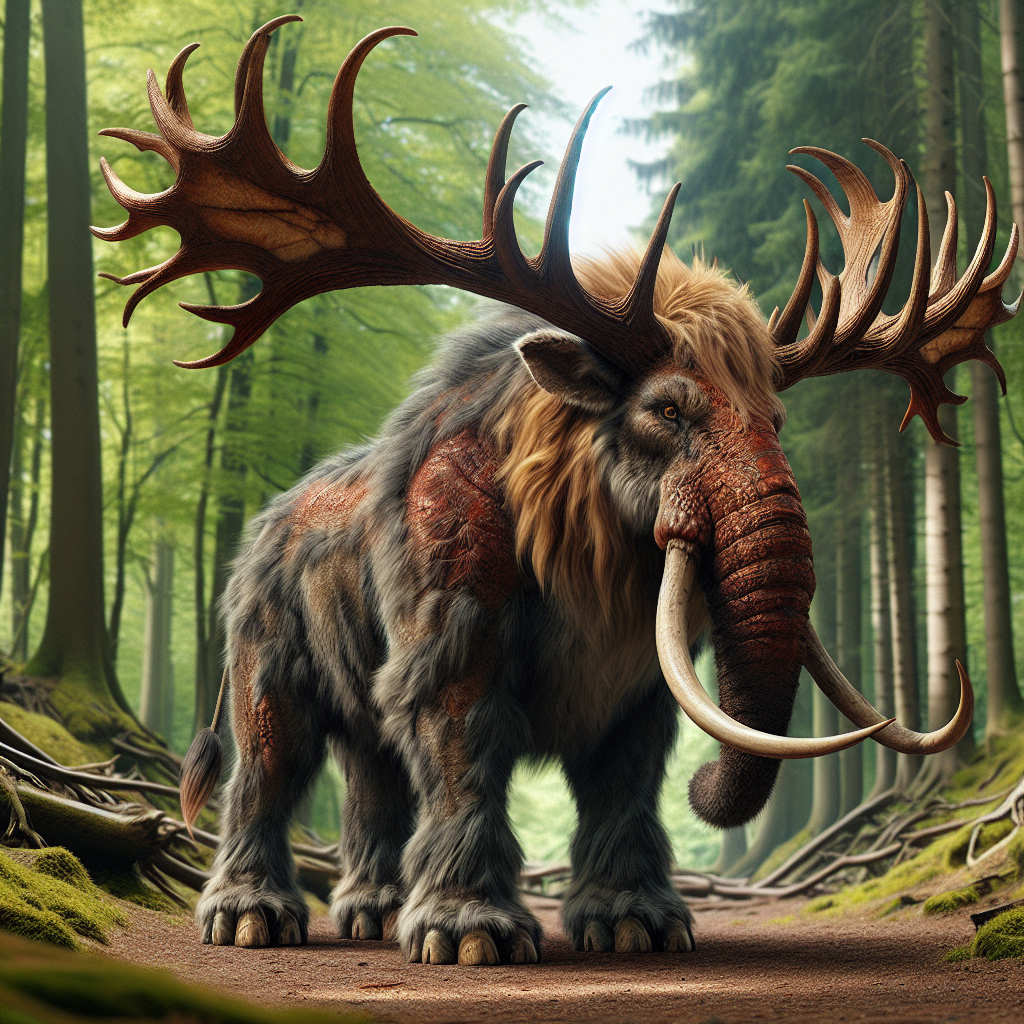
The Hippoelk (Hippopotamus elkhopoterus) is a large, semi-aquatic ungulate with a robust body reminiscent of a hippopotamus, covered in thick, water-resistant skin that varies in hues from muddy brown to dark green. Its massive head features a wide mouth equipped with formidable tusks, while its elongated legs and cloven hooves reflect its elk ancestry, allowing it to traverse both wetlands and forested areas with ease. The creature possesses large, branching antlers that emerge from its head, which it sheds annually, adding to its majestic appearance. Its eyes are positioned high on its skull, providing excellent vision above the water's surface.
Special abilities
Tusks Charge
The Hippoelk charges at an opponent, using its massive tusks to inflict significant damage.
From the Hippopotamus
Real-world basis: The powerful musculature and structural support of the jaw and tusks allow for high-impact attacks.
Antler Bash
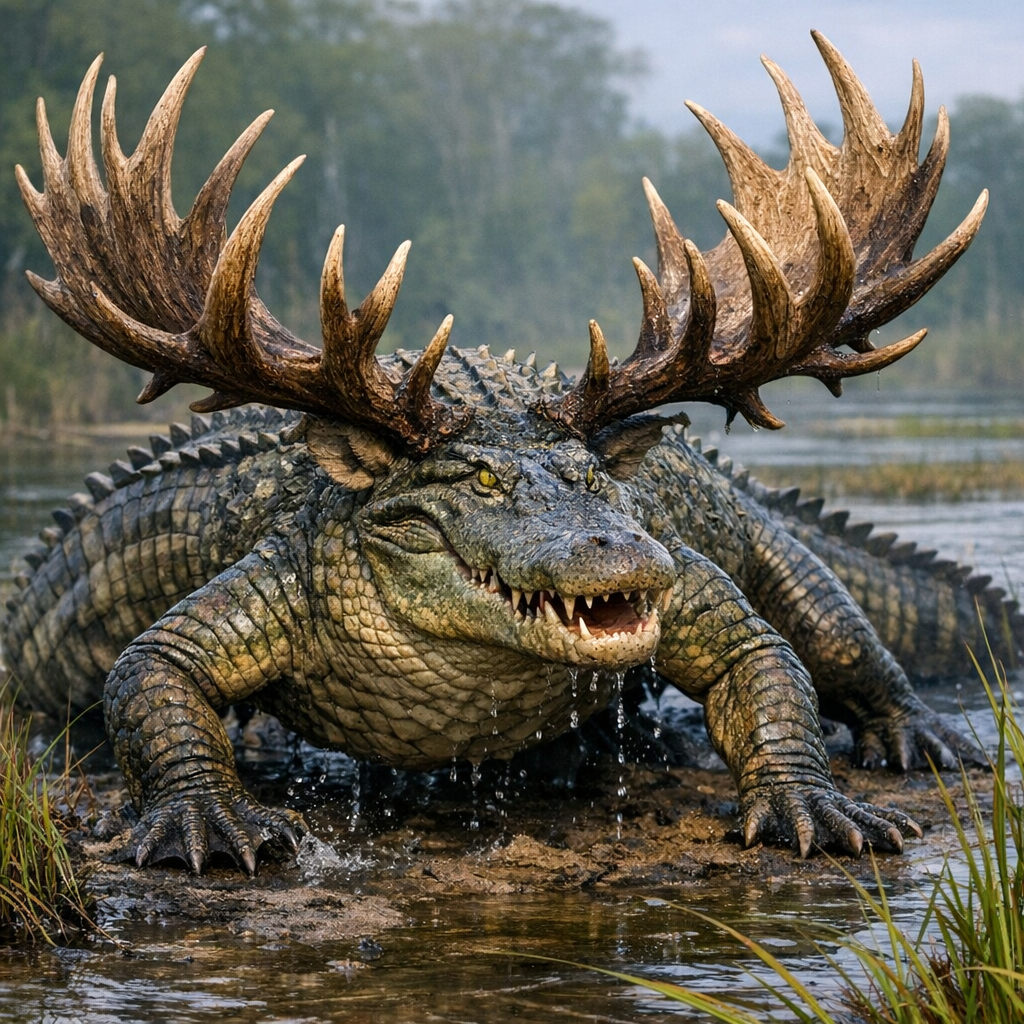
Using its large antlers, the Hippoelk strikes with a powerful blow, capable of stunning its adversary.
From the Elk
Real-world basis: The antlers are not only used for display but also for combat, leveraging the weight and sharpness for effective strikes.
Water Shield
The Hippoelk can create a protective barrier of water around itself, deflecting incoming attacks.
From the Hippopotamus
Real-world basis: The creature's natural affinity for water allows it to manipulate surrounding water to form a defensive barrier.
Forest Camouflage
The Hippoelk can blend into its forest surroundings, making it harder for predators to spot it.
From the Elk
Real-world basis: The animal's coloration and body shape allow for effective concealment among foliage.