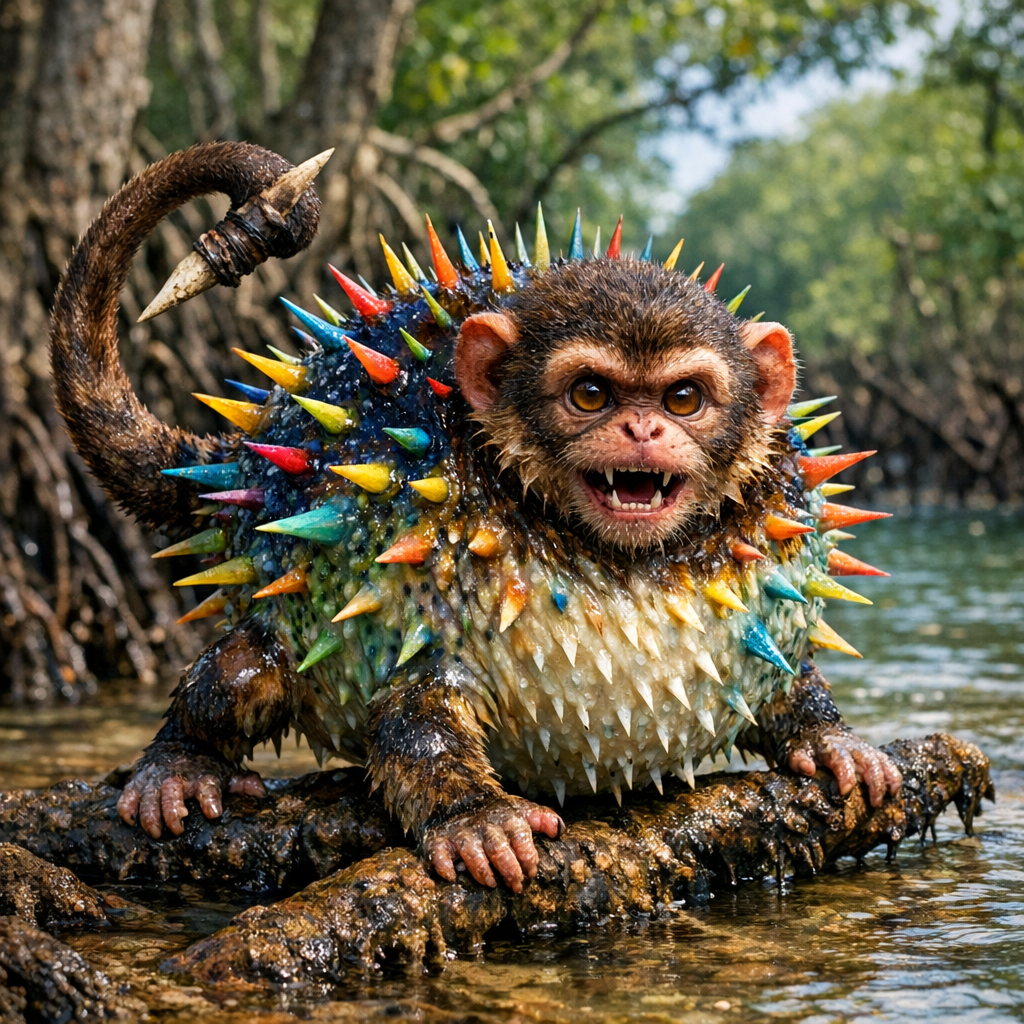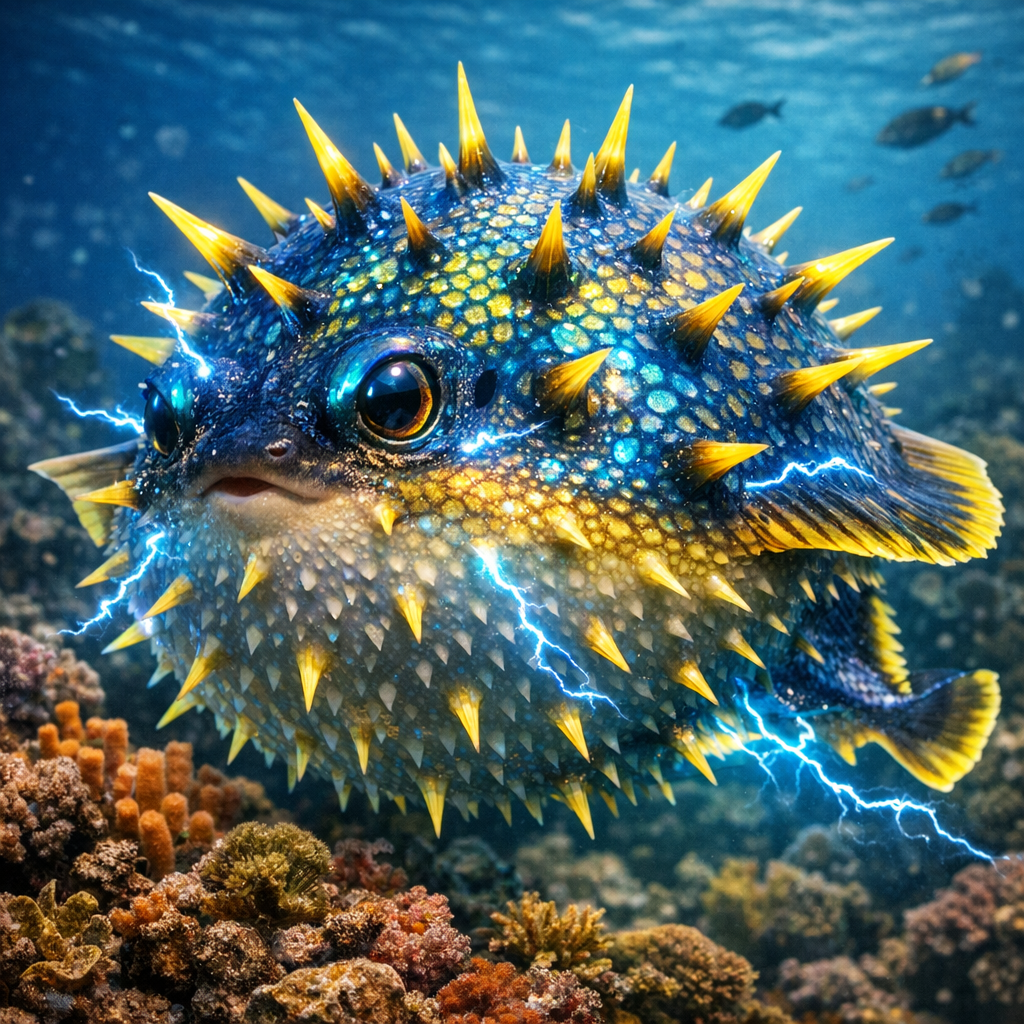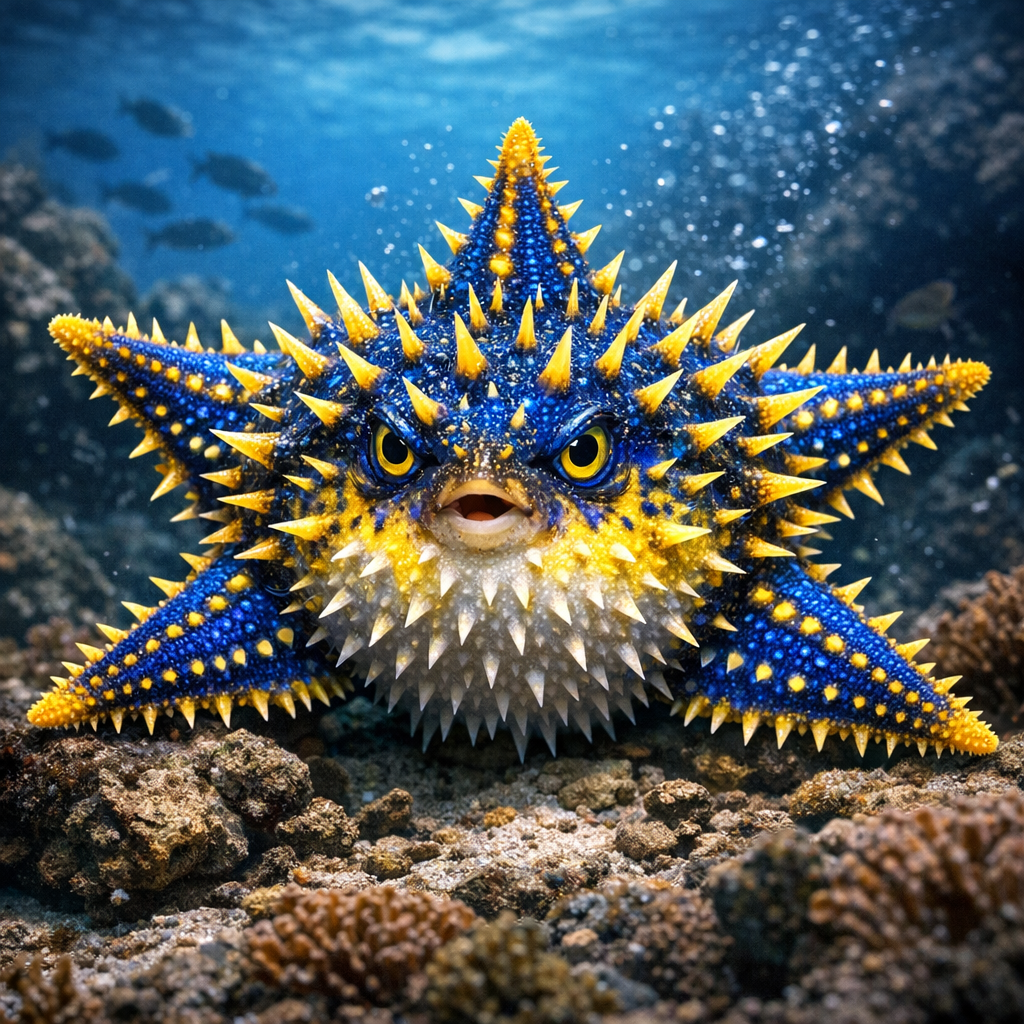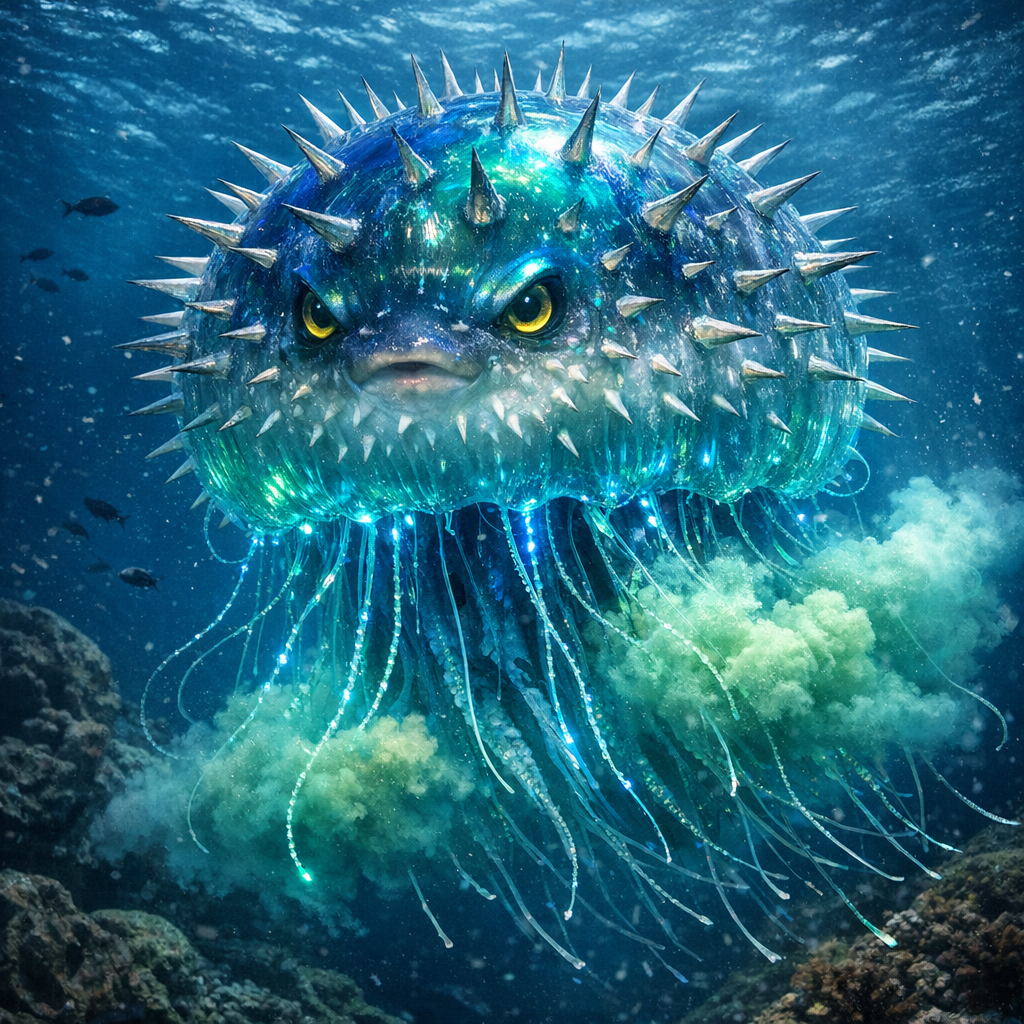

Puffeagle
A hybrid of Puffer Fish + Eagle
- Habitat
- Coastal cliffs and rocky shorelines where ocean meets land, often near coral reefs and estuaries.
- Diet
- Carnivorous, primarily feeding on fish, crustaceans, and small mammals. It employs a combination of hunting in the air and foraging in the water.
The story of Puffeagle
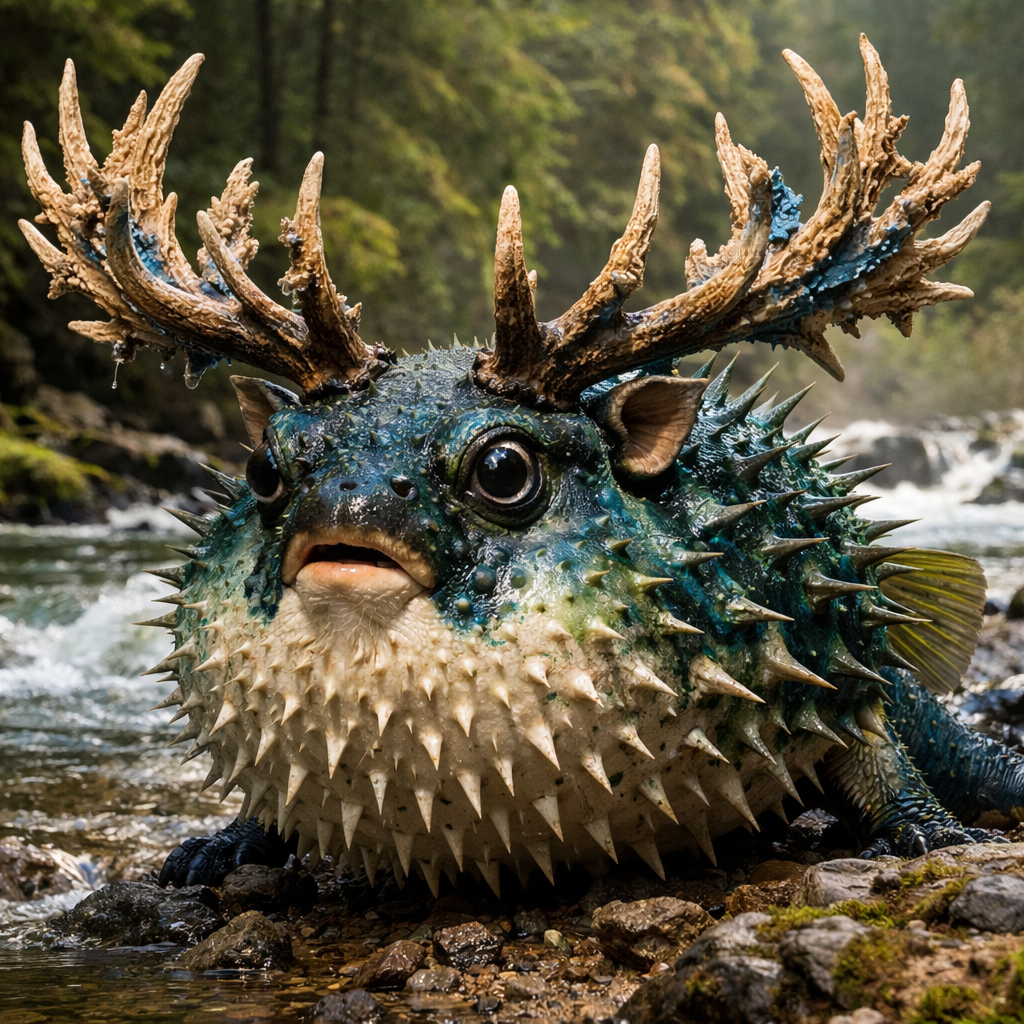
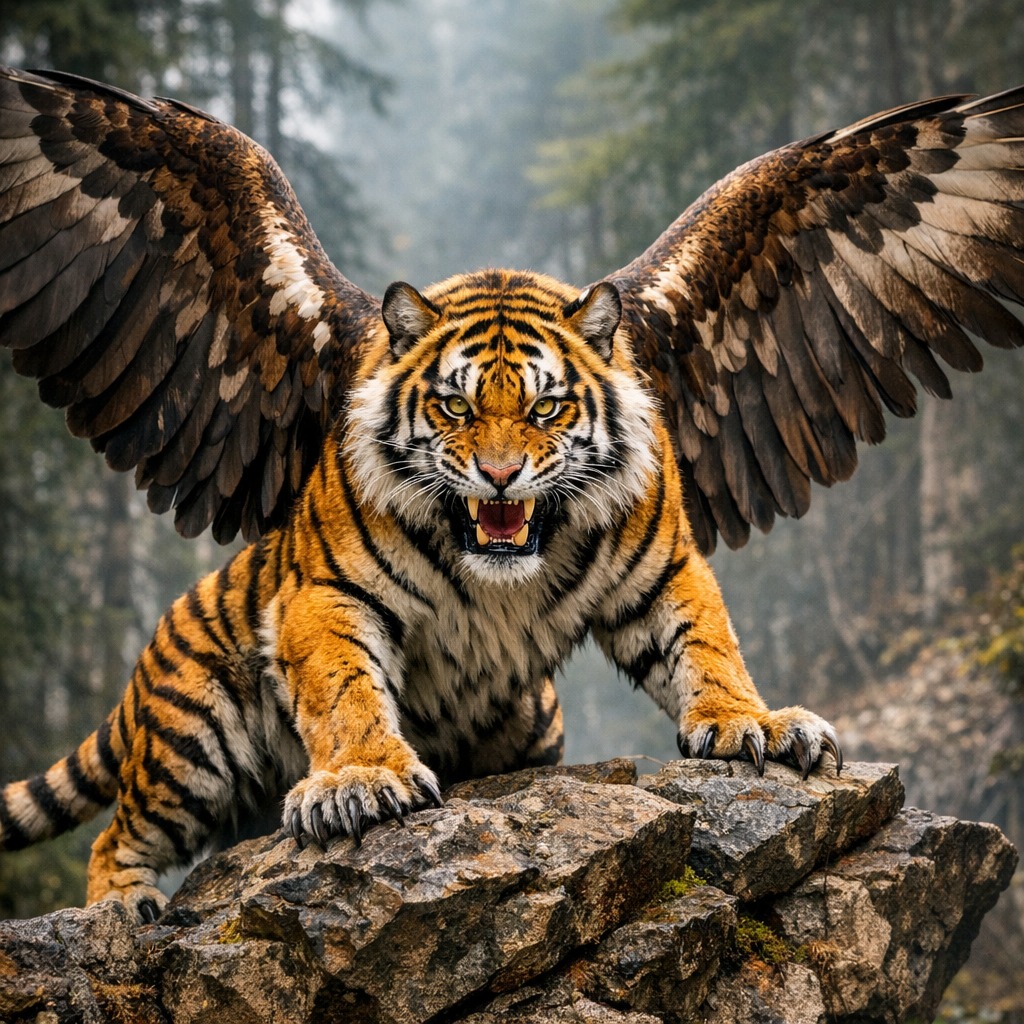
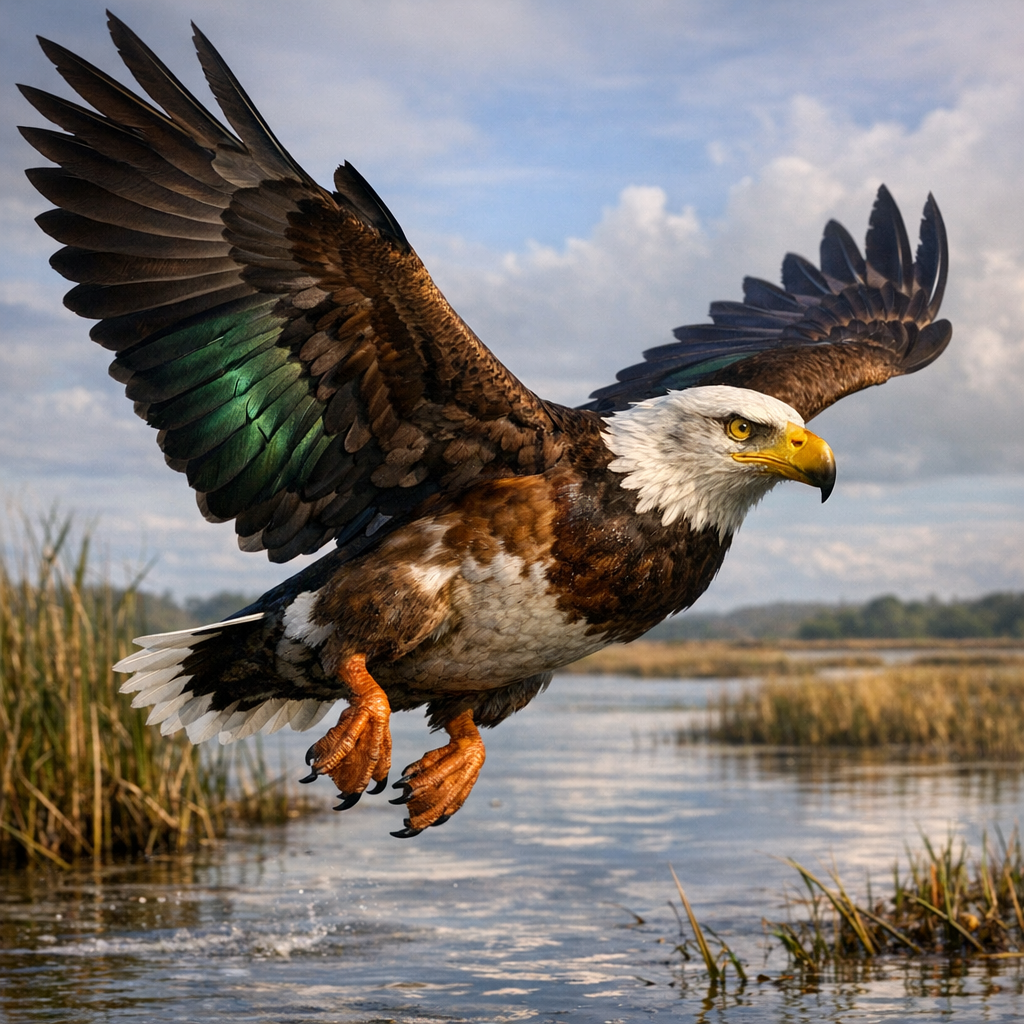
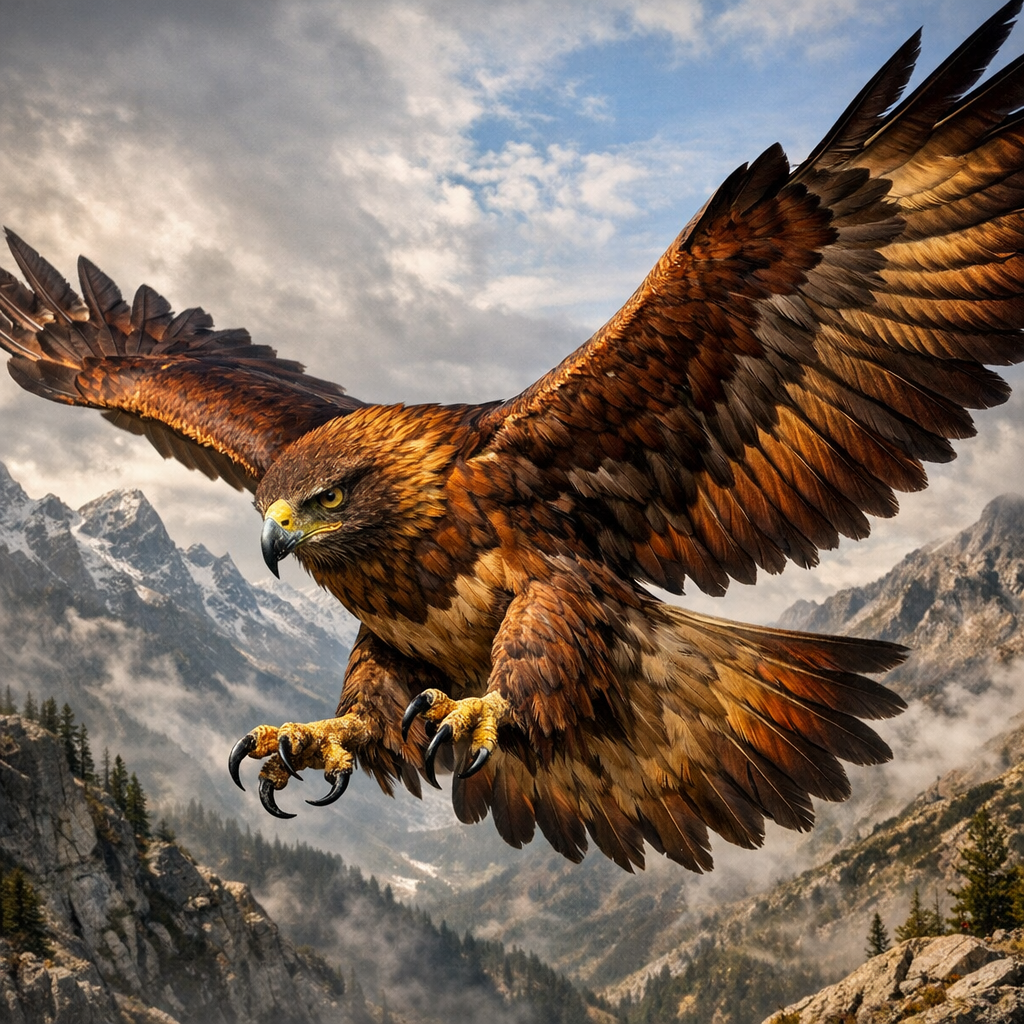
The Puffeagle is a remarkable hybrid species, combining the intricate features of the Puffer Fish (Tetraodontidae) and the majestic Eagle (Accipitridae). This creature possesses a robust, spherical body reminiscent of a puffer fish, covered in a layer of tough, spiky skin that can inflate to deter predators. Its wings are large and powerful, featuring a rich plumage of browns and golds, allowing for graceful flight. The Puffeagle's head boasts the sharp beak and keen eyesight of an eagle, while its eyes shimmer with an iridescent quality, capable of spotting prey from great distances. This unique creature embodies both beauty and danger, making it a fascinating subject of study in the field of hybrid zoology.
Special abilities
Inflate and Spike
The Puffeagle can rapidly inflate its body, causing sharp spines to protrude outward. This sudden transformation intimidates potential attackers and can puncture the skin of aggressive foes.
From the Puffer Fish
Real-world basis: The inflation mechanism is based on the unique physiology of Tetraodontidae, allowing for rapid gas exchange and physical expansion.
Aerial Dive Strike
Utilizing its powerful wings, the Puffeagle can dive from great heights at incredible speeds, striking its prey with precision and force, similar to the hunting techniques of its avian ancestors.
From the Eagle
Real-world basis: The dive strike technique mirrors the hunting behavior of Accipitridae, emphasizing speed and accuracy in predation.
Camouflage Defense
The Puffeagle can change its skin coloration to blend in with its surroundings, using this ability to evade predators and ambush prey.
From the Puffer Fish
Real-world basis: Mimicking the adaptive coloration of Tetraodontidae, this ability provides a tactical advantage in both offense and defense.
Wing Shield
By spreading its wings wide, the Puffeagle creates a formidable barrier that can deflect incoming attacks, using its strong feathers to absorb impacts.
From the Eagle
Real-world basis: Similar to the protective behaviors observed in Accipitridae, this ability enhances its defensive capabilities.