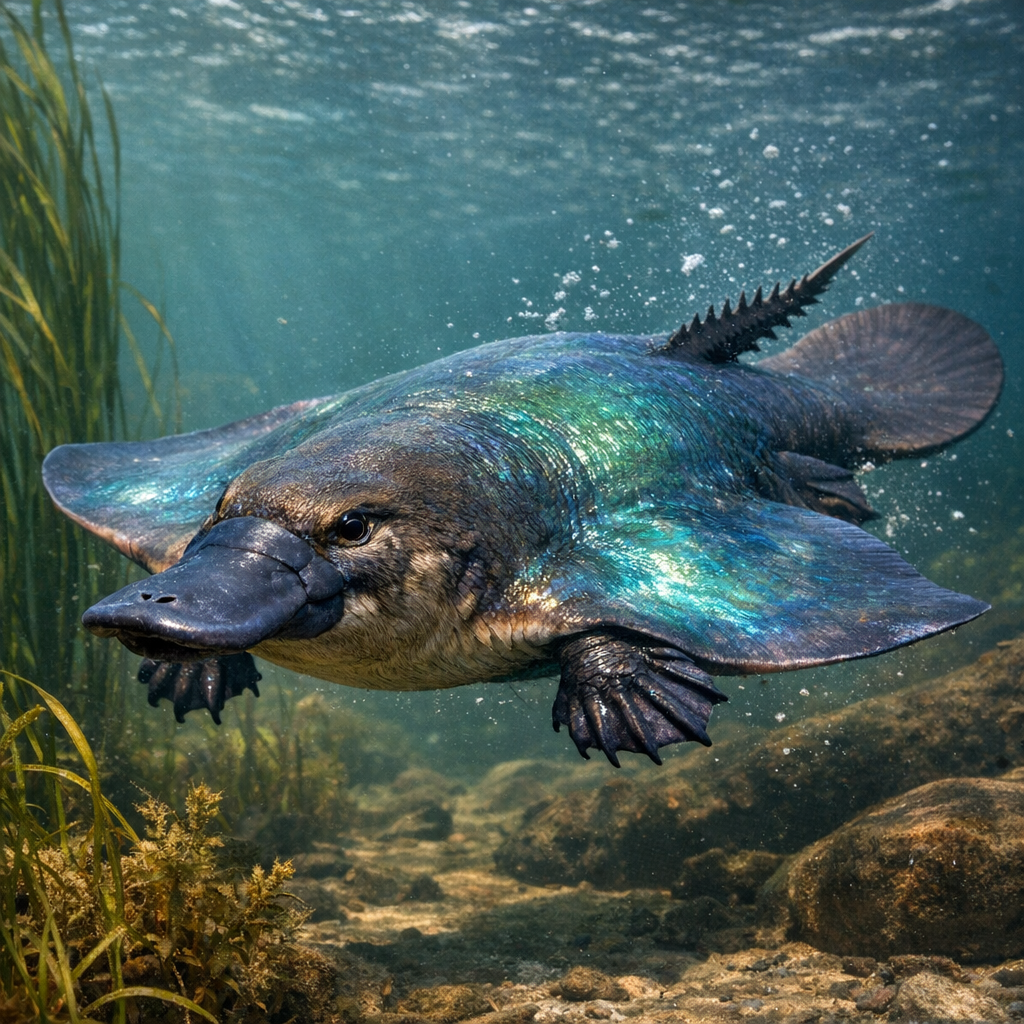
Stingatypus
A hybrid of Sting Ray + Platypus
- Habitat
- The Stingatypus thrives in freshwater lakes and rivers, particularly in regions with abundant plant life and shallow waters. It prefers areas rich in vegetation, where it can hide from larger predators and ambush prey.
- Diet
- The Stingatypus is an opportunistic feeder, primarily consuming small fish, crustaceans, and aquatic insects. It forages by using its bill to probe the substrate for hidden prey, employing electroreception to detect the electrical signals produced by living organisms.
The story of Stingatypus
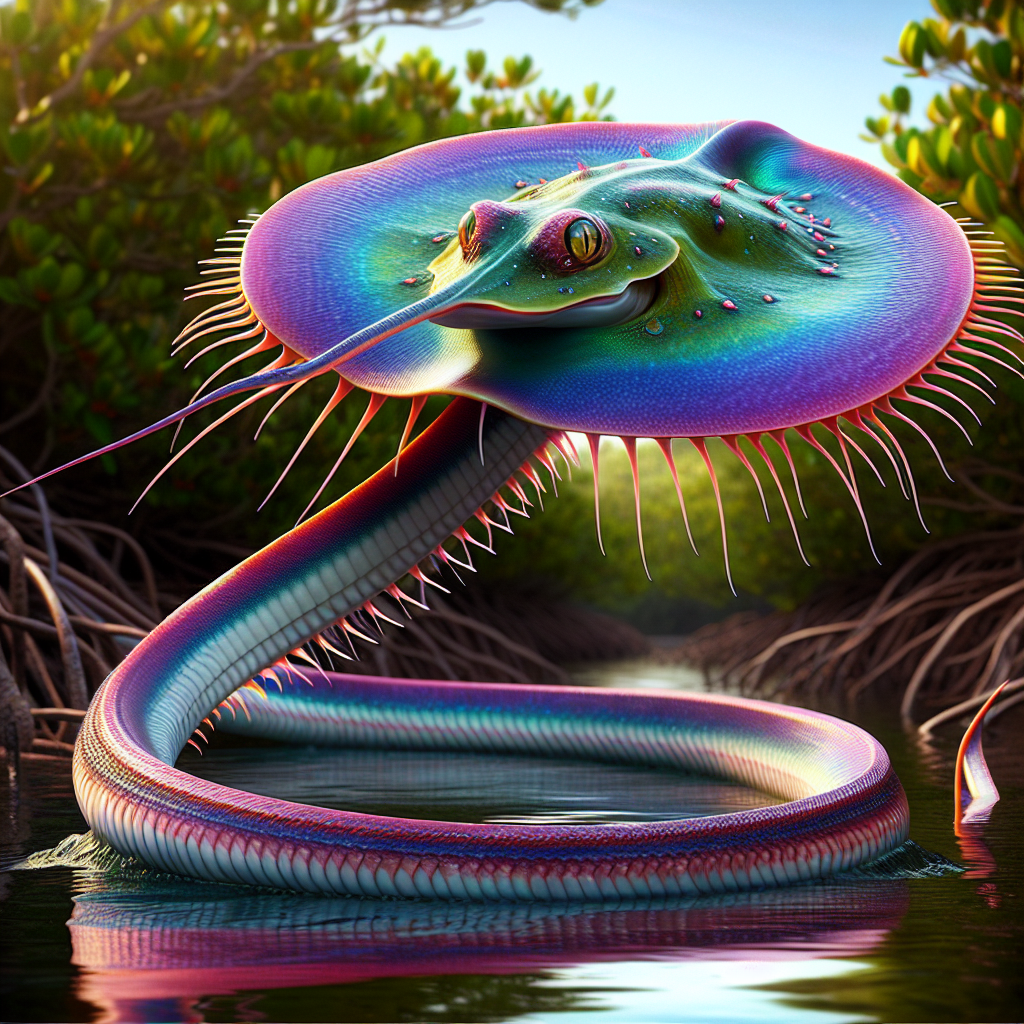
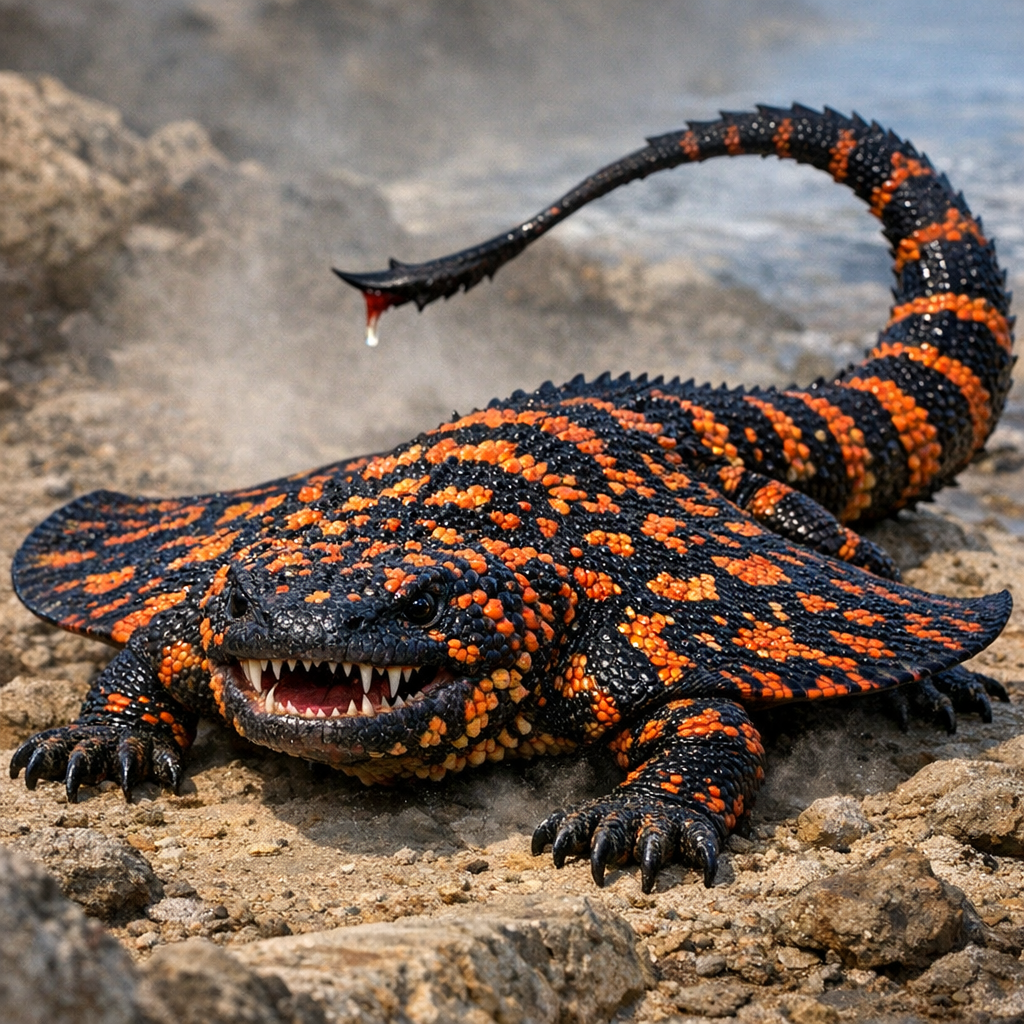
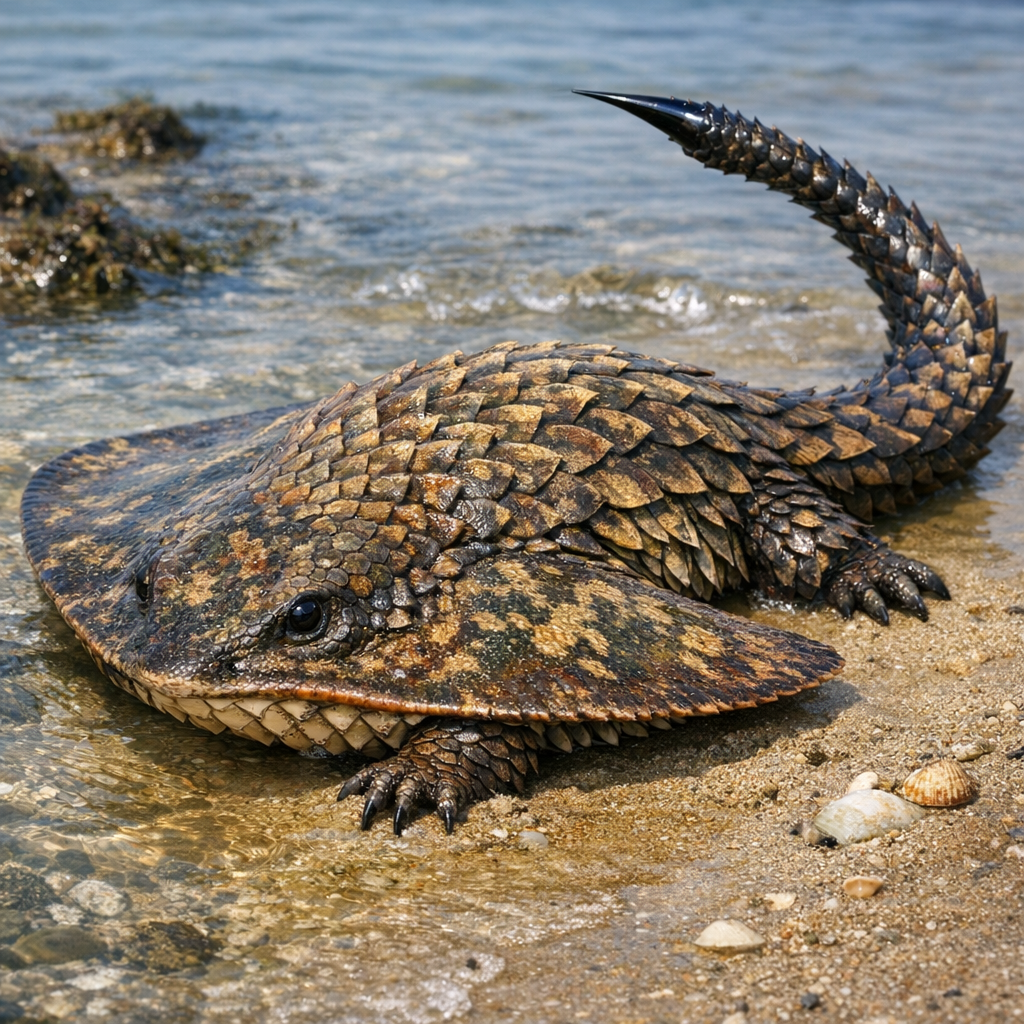
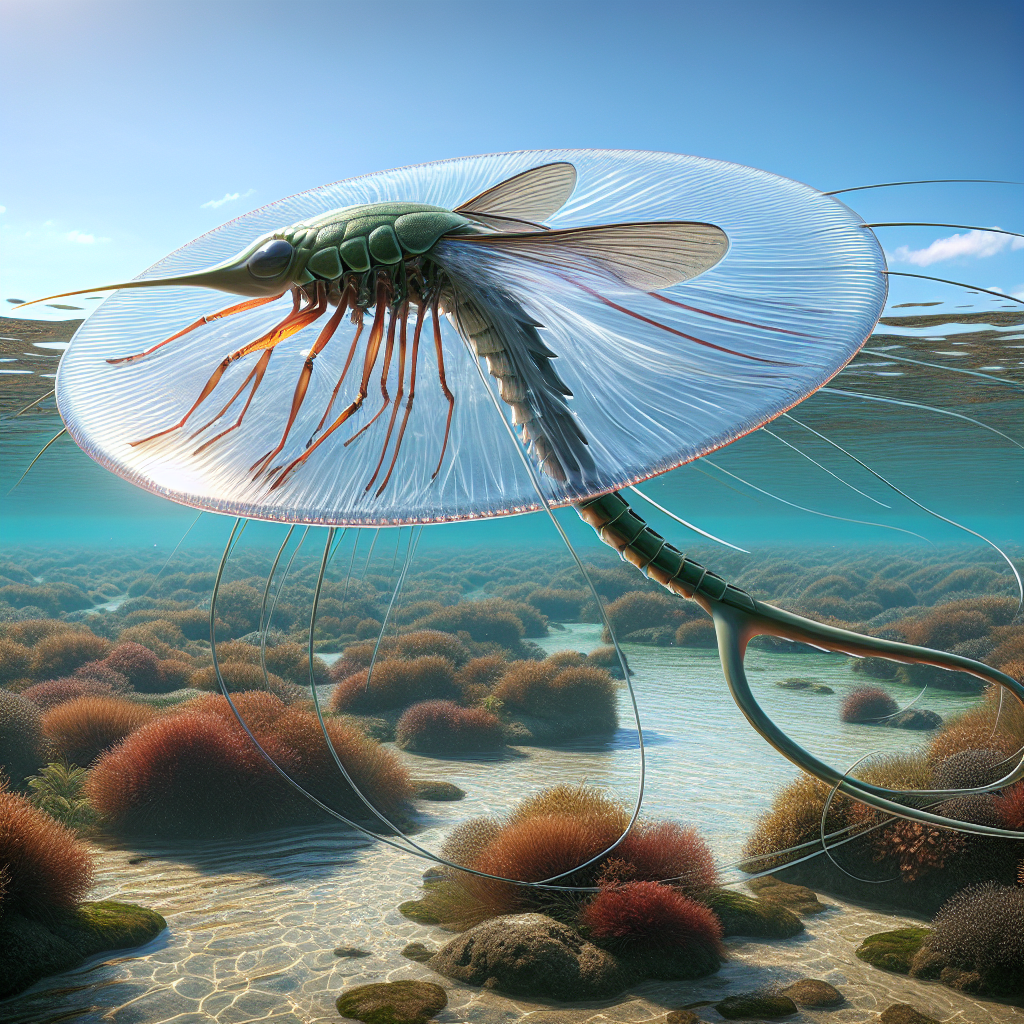
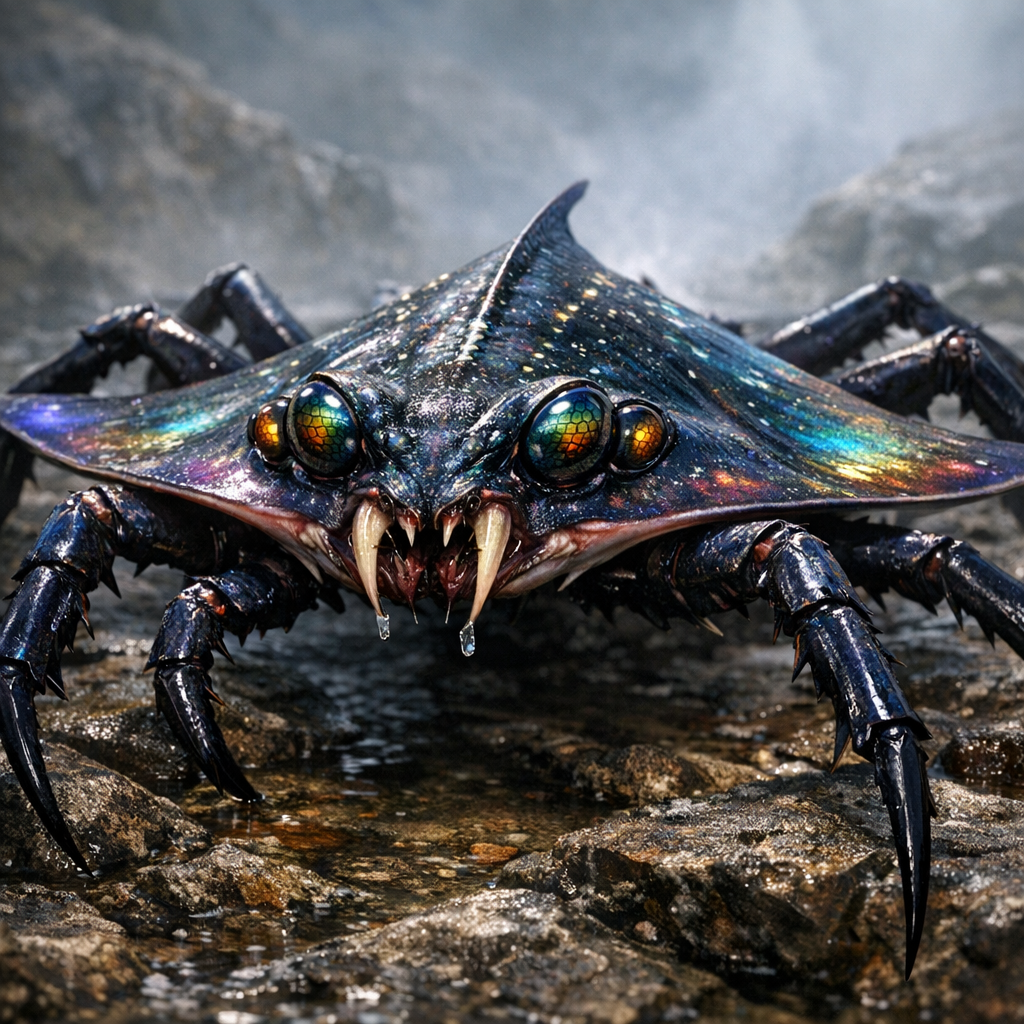
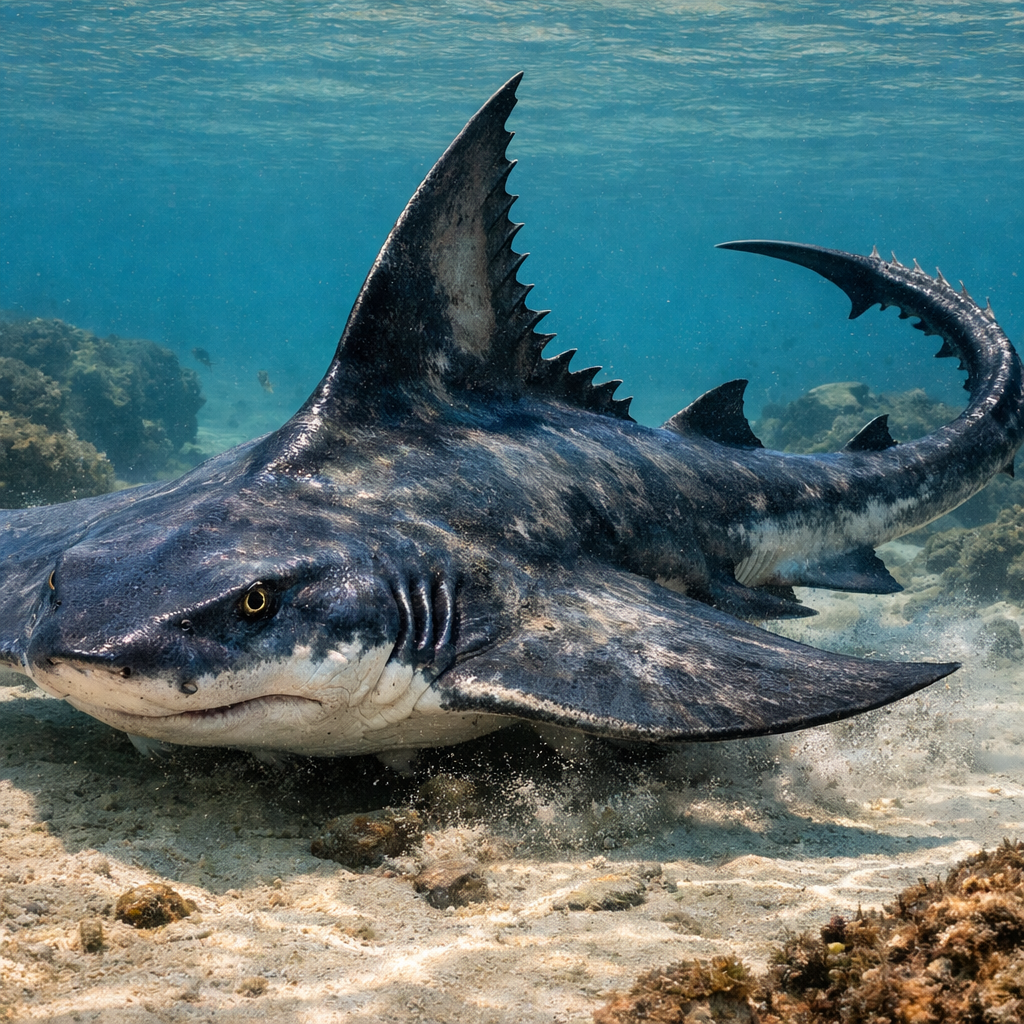
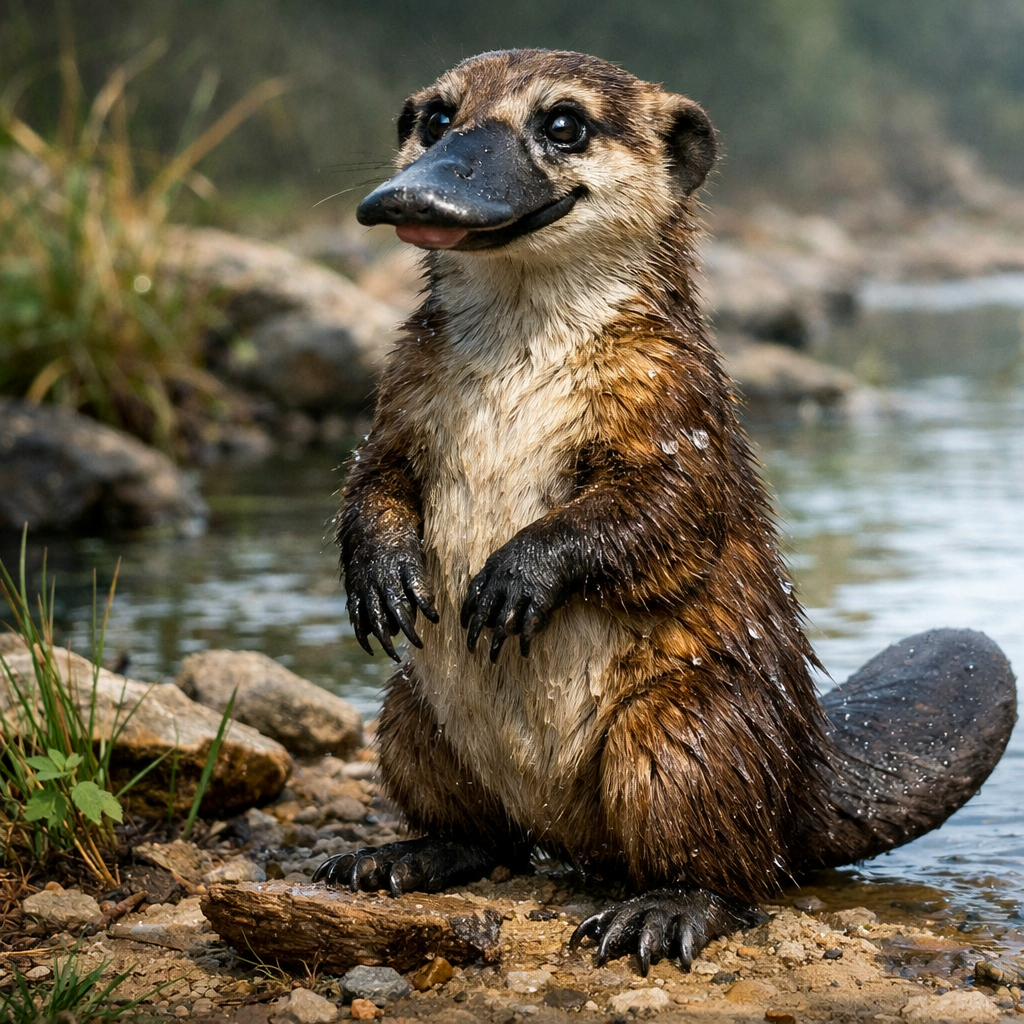
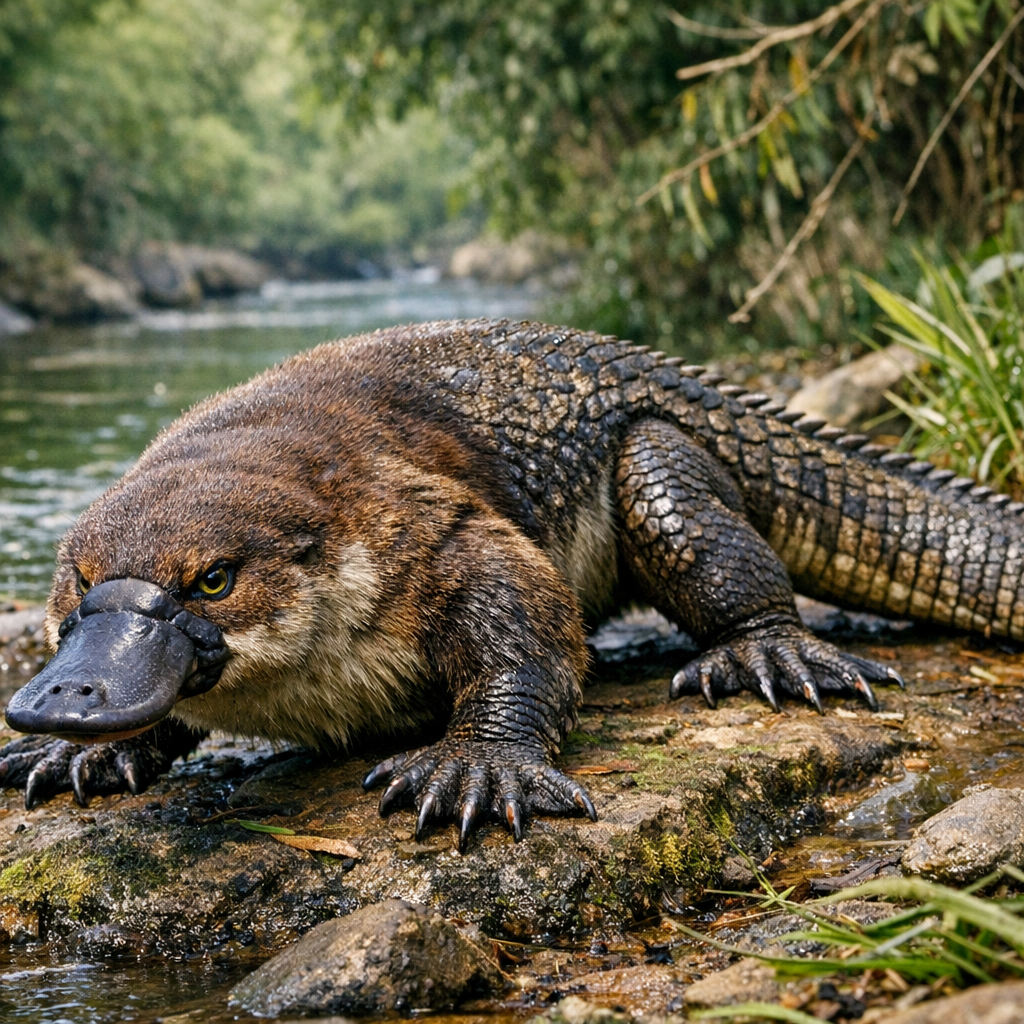
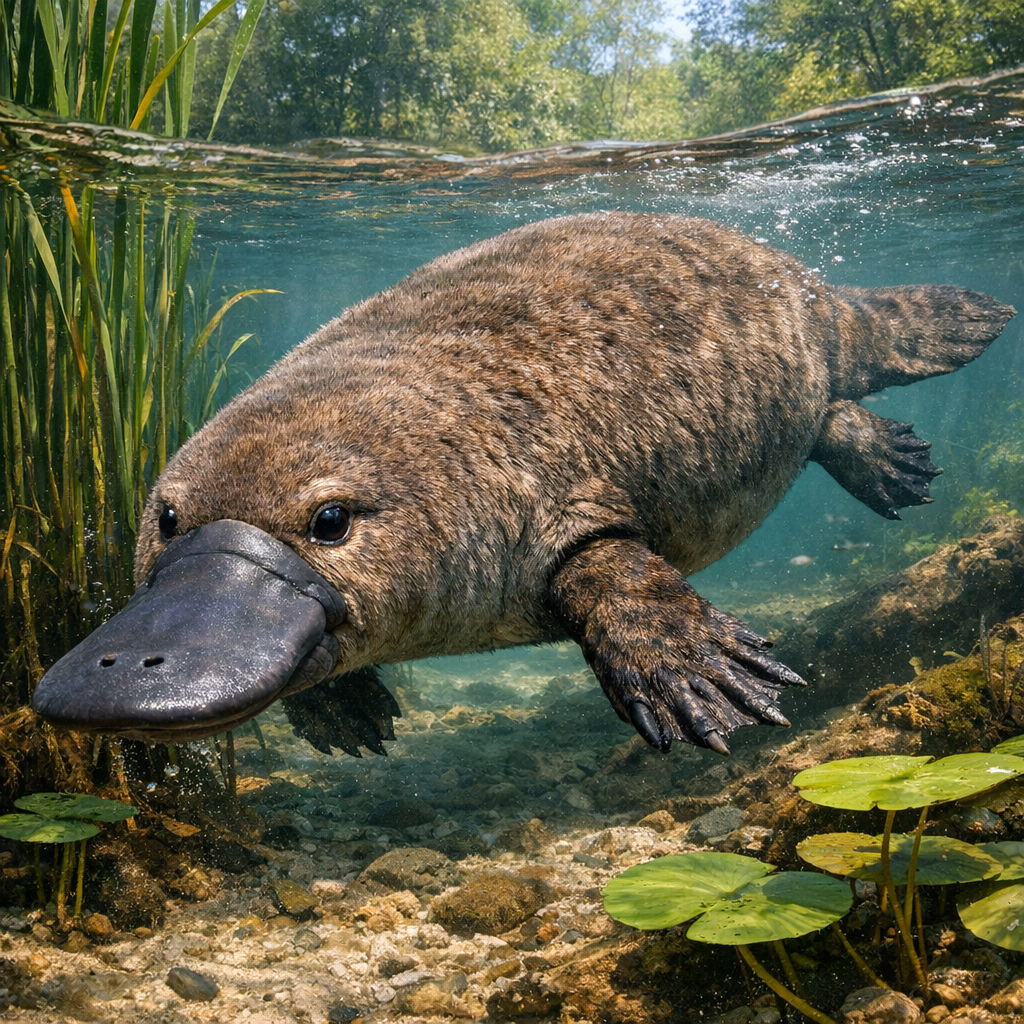
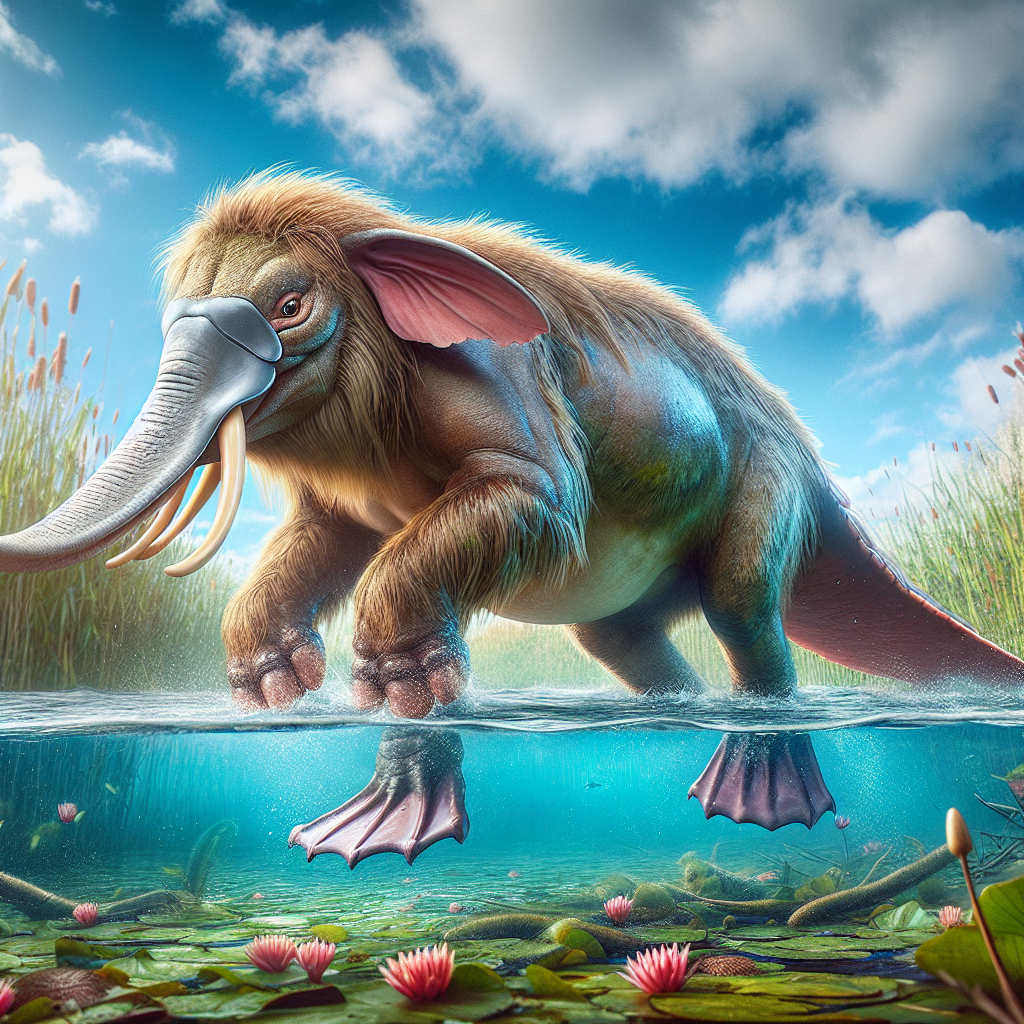
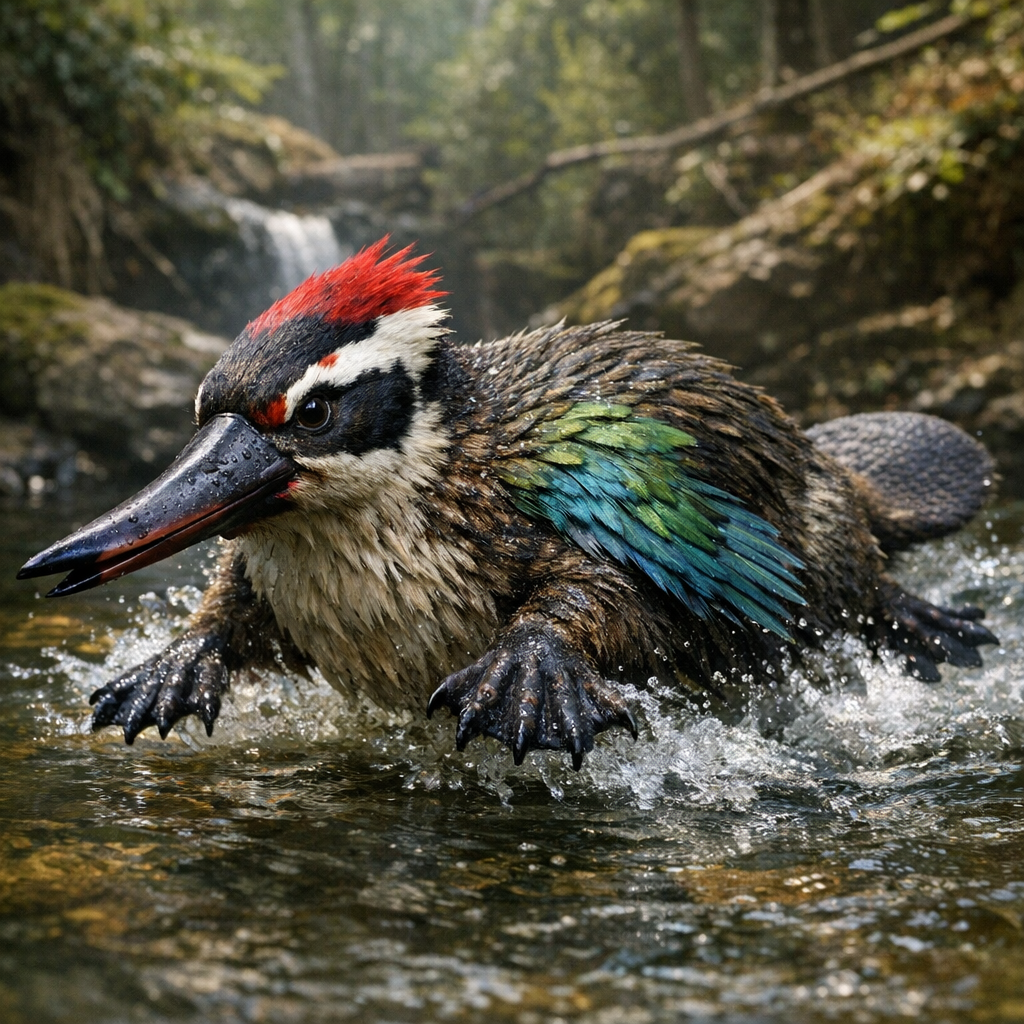
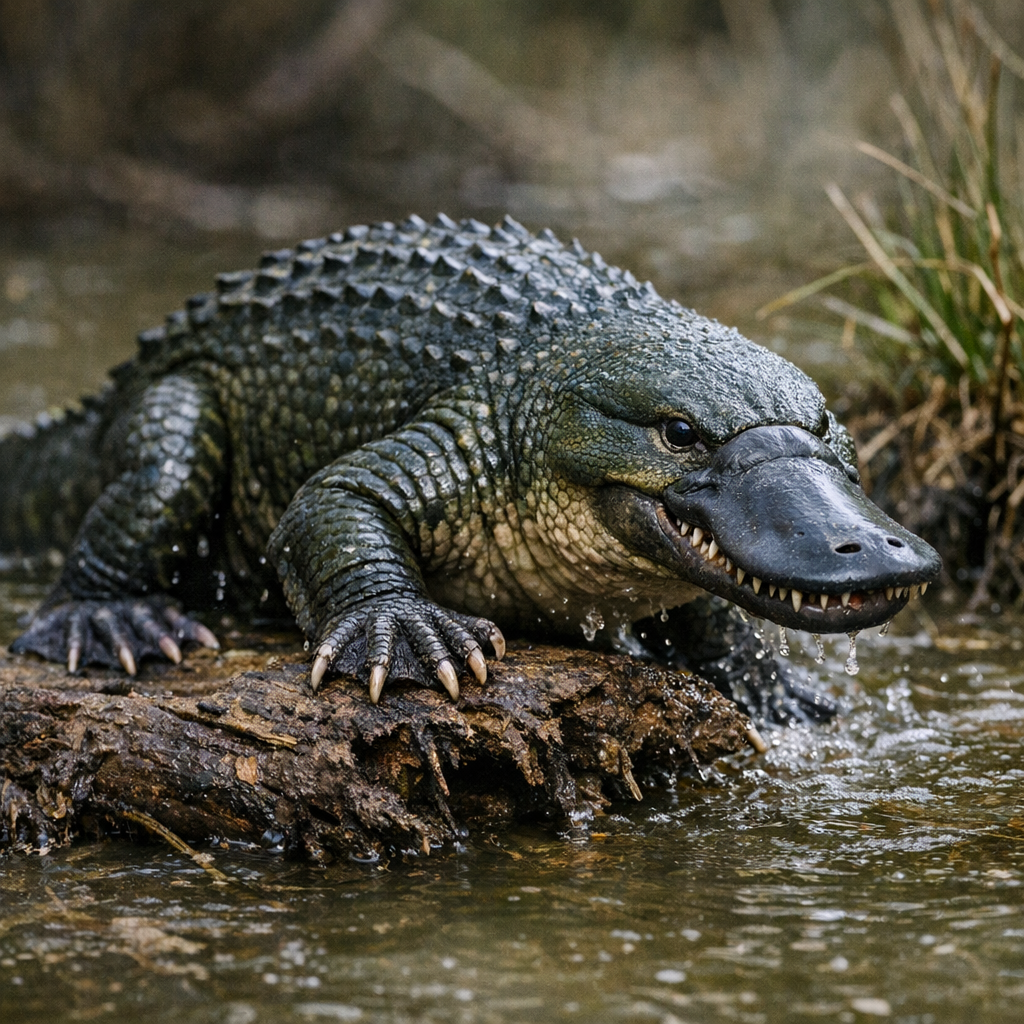
The Stingatypus is a fascinating hybrid creature featuring the sleek, flattened body of a stingray combined with the unique features of a platypus. It possesses a soft, leathery skin that shimmers with iridescent hues of blue and green, reminiscent of its aquatic ancestry. Its head is adorned with a duck-like bill, complete with sensitive electroreceptors, enabling it to detect prey in murky waters. The Stingatypus has webbed feet for agile swimming and the platypus-like tail is broad and flat, aiding in propulsion through the water. Its venomous spine, inherited from the stingray, is a deterrent against predators.
Special abilities
Venomous Strike
The Stingatypus unleashes a swift attack with its venomous spine, delivering a painful sting that can incapacitate smaller creatures.
From the Stingray
Real-world basis: The venom contains neurotoxins that can paralyze prey temporarily.
Aquatic Ambush
Utilizing its stealth and speed, the Stingatypus can launch a surprise attack from below, catching its prey off-guard.
From the Stingray
Real-world basis: The creature's flat body allows it to blend with the sandy or muddy bottom, making it nearly invisible.
Camouflage Adaptation
The Stingatypus can change its skin color to match its surroundings, providing an effective defense against predators.
From the Stingray
Real-world basis: Chromatophores in the skin allow for dynamic color change in response to the environment.
Water Shield
By rapidly flapping its tail and creating a barrier of water, the Stingatypus can deflect incoming attacks.
From the Platypus
Real-world basis: The force generated by the tail creates a temporary shield of water, disrupting projectiles.