Tigaffe
- Habitat
- The Tigaffe thrives in the open savannahs and grasslands of Africa, where it can easily forage for food while maintaining a lookout for potential predators. It prefers regions with scattered trees that provide both nourishment and shade from the sun.
- Diet
- The Tigaffe is primarily herbivorous, feeding on the leaves of tall trees and shrubs. However, it has been observed to occasionally consume small animals or insects, showcasing its opportunistic feeding behavior.
The story of Tigaffe
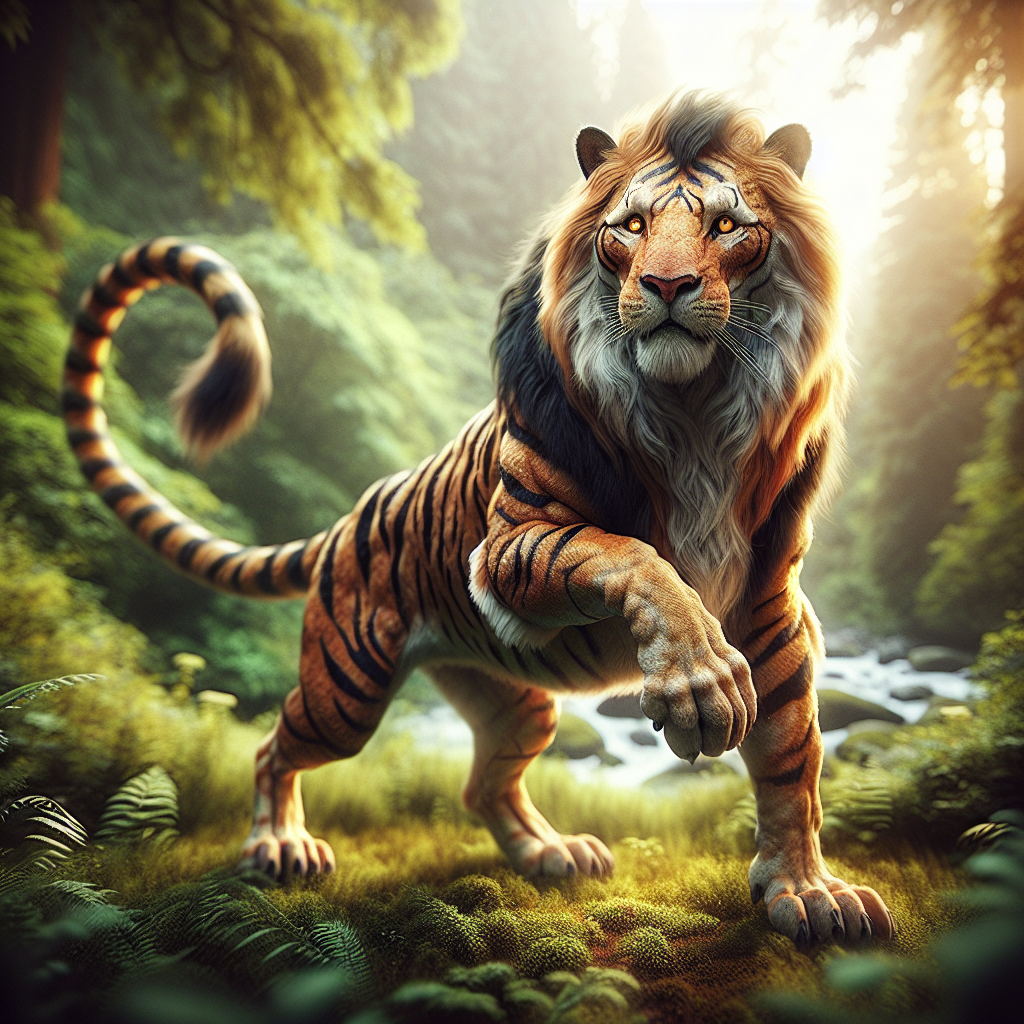
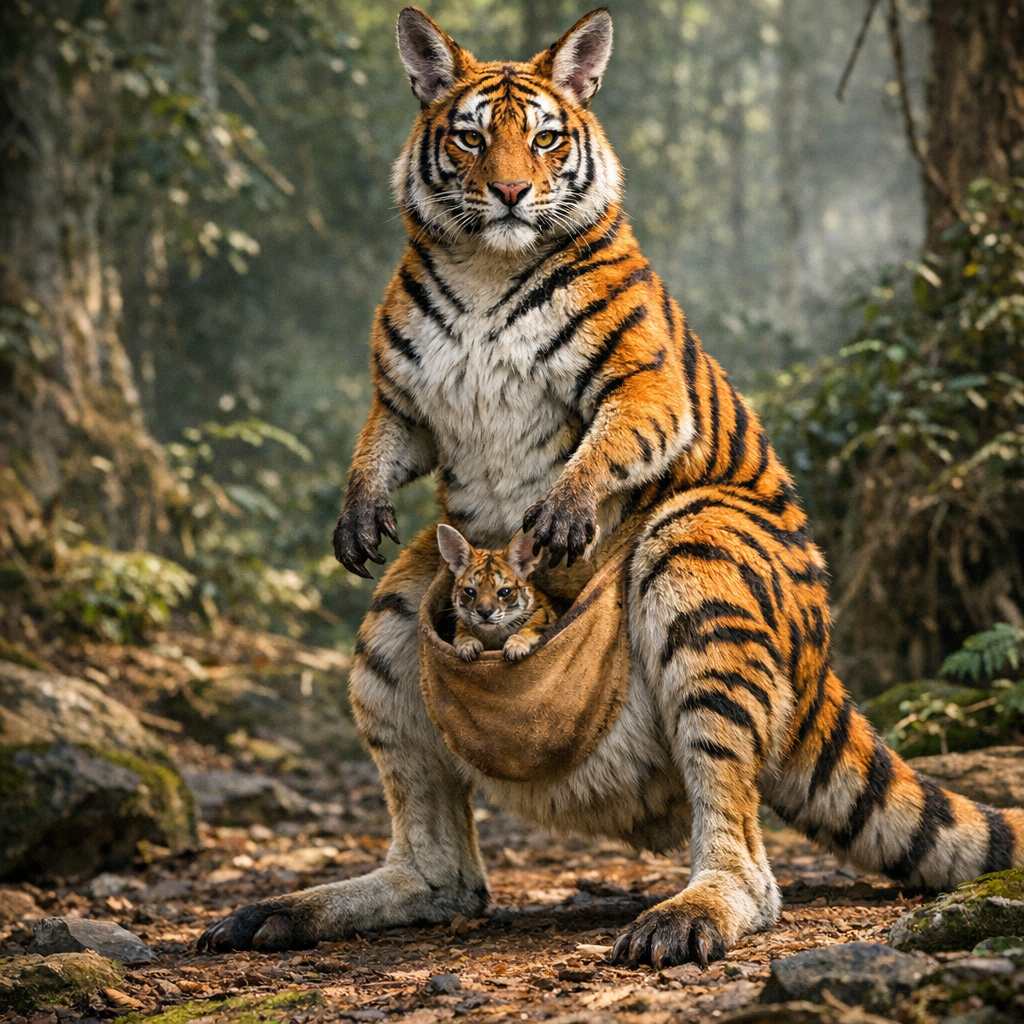
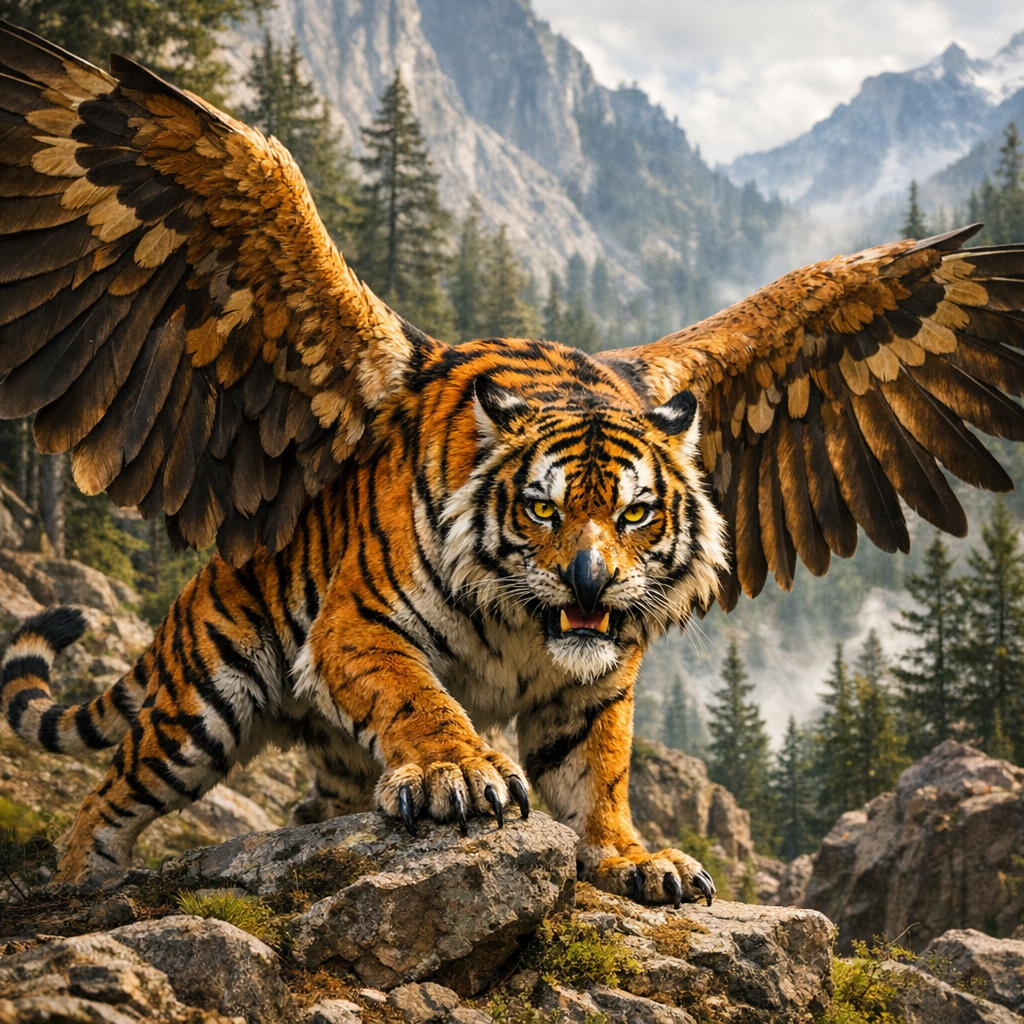
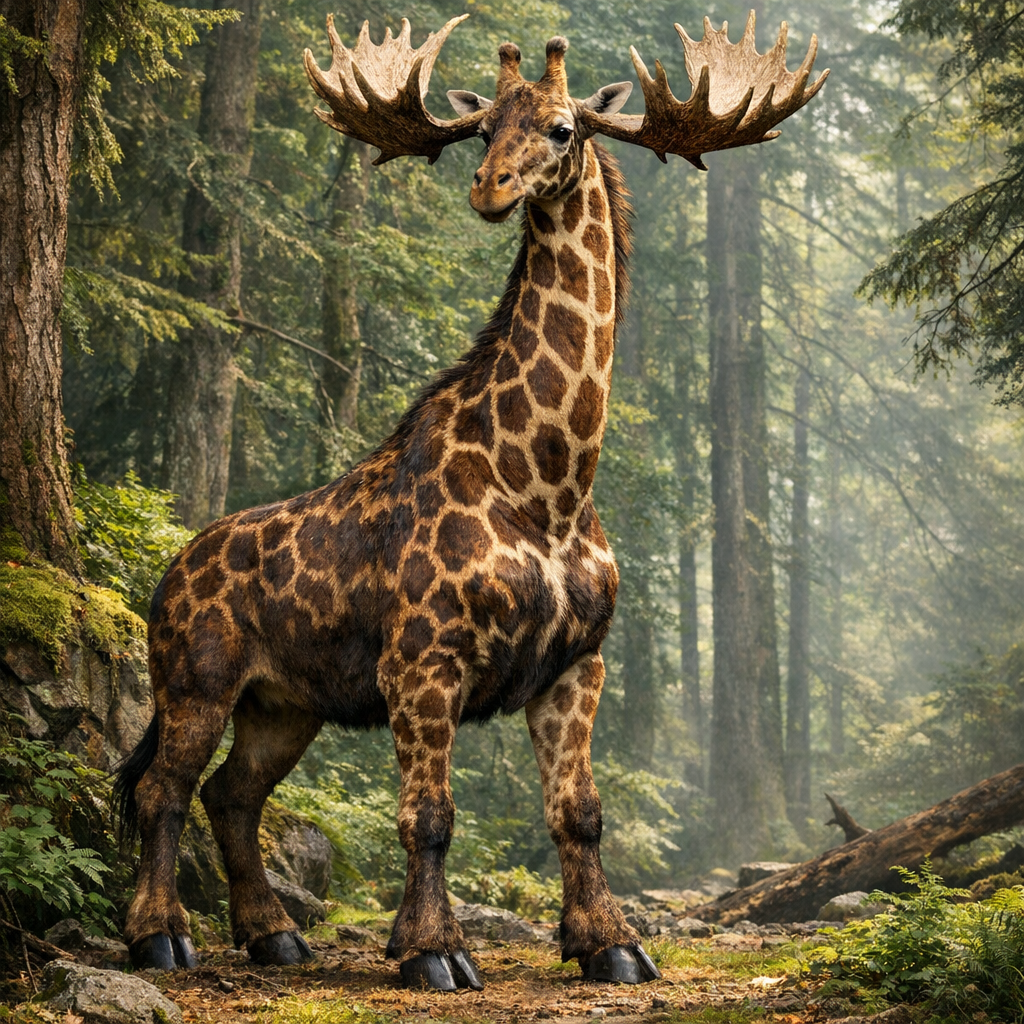
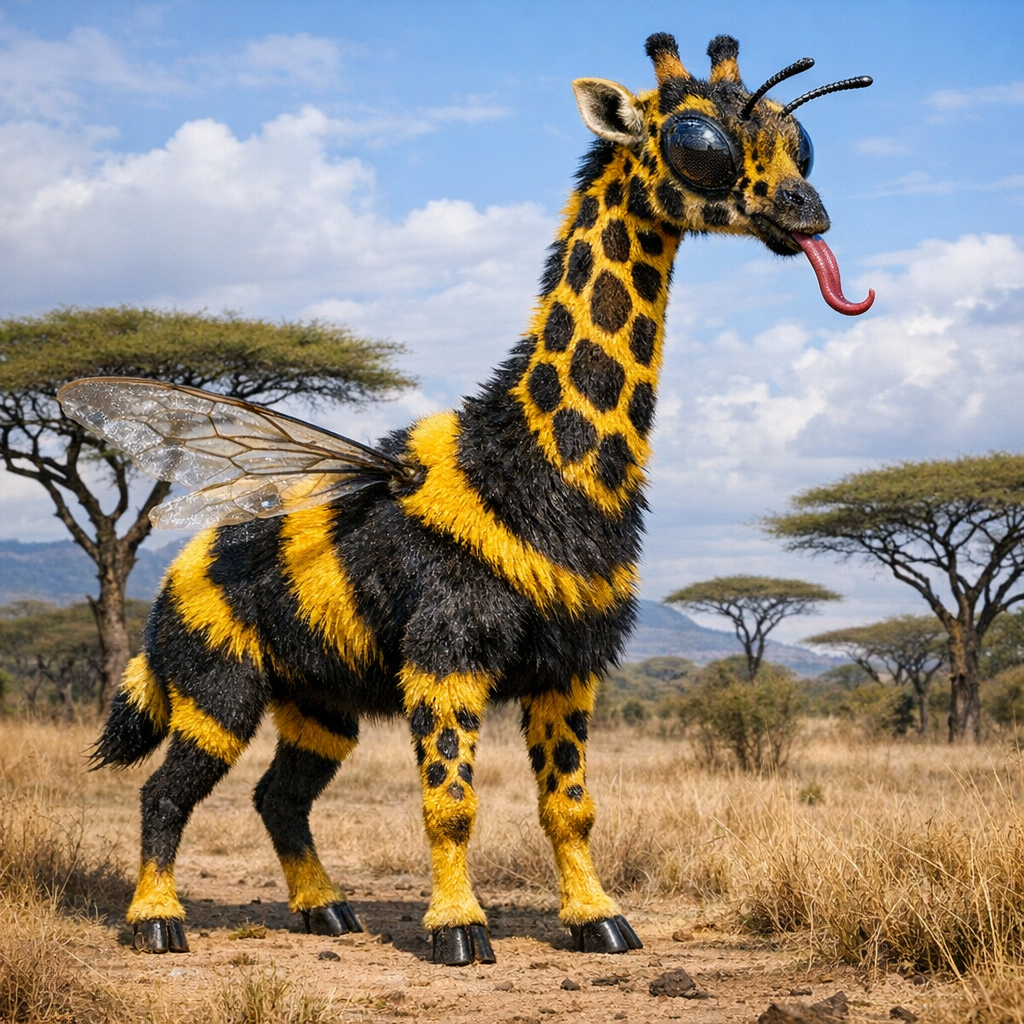
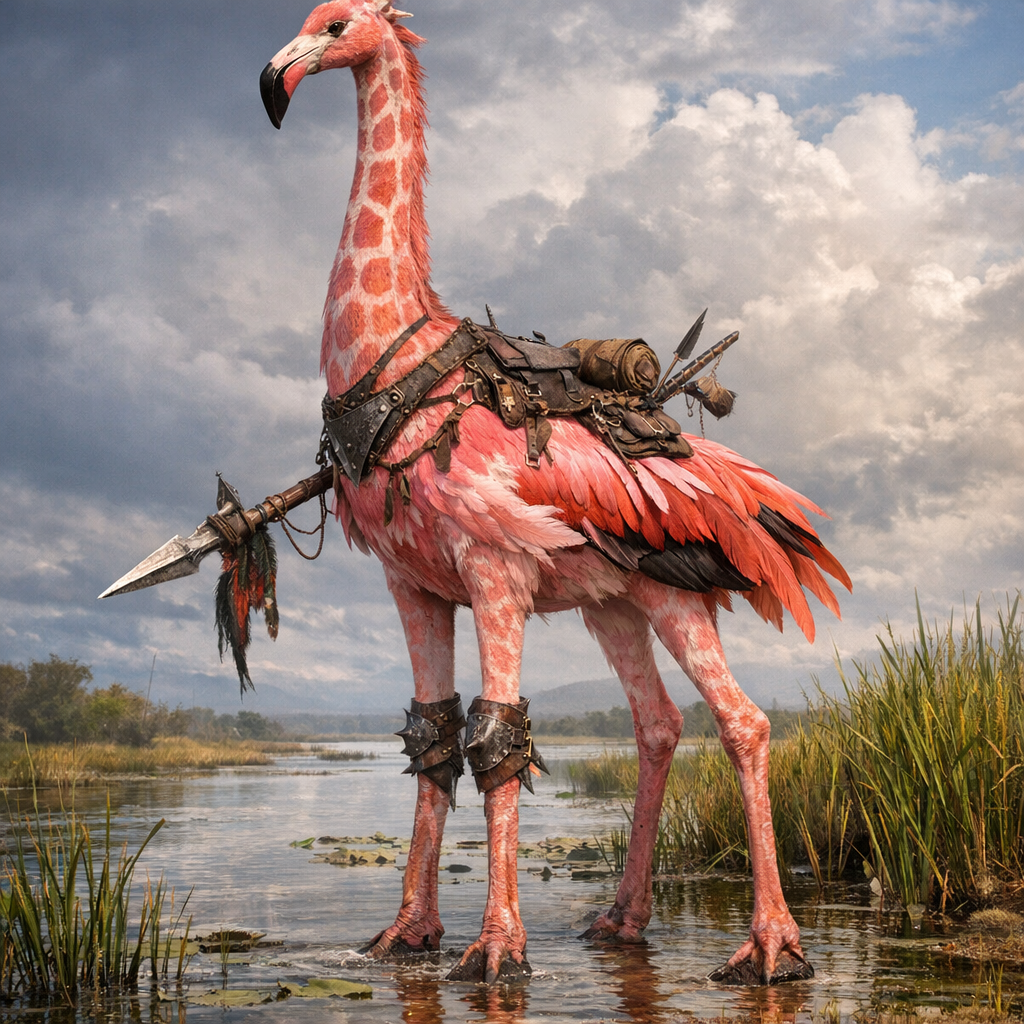
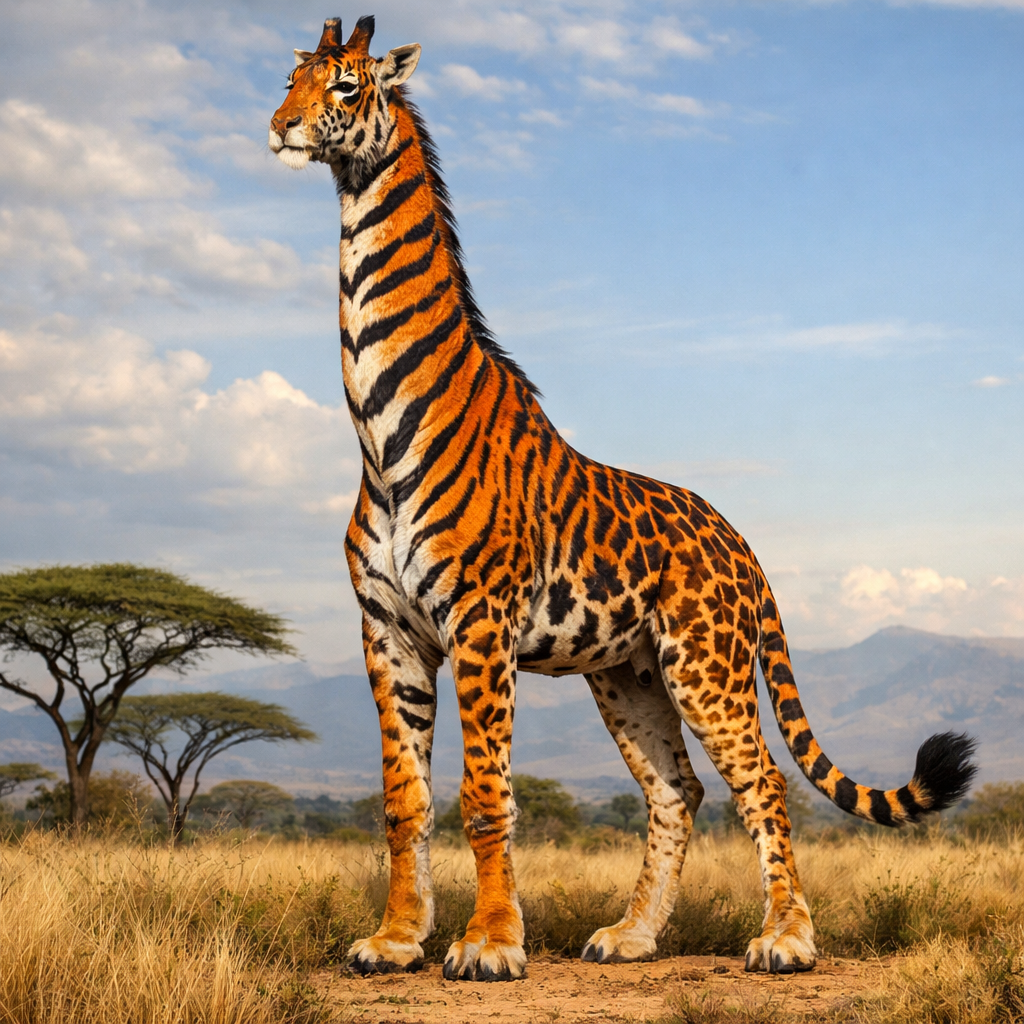
The Tigaffe is a striking hybrid creature exhibiting the majestic stature of a giraffe combined with the powerful musculature and striking coat of a tiger. Standing at an impressive 16 feet tall, the Tigaffe boasts a long neck adorned with the distinctive orange and black stripes of a tiger, seamlessly blending into the spotted pattern of a giraffe's coat. Its legs are long and slender, ending in large, padded paws that allow for swift movement across the savannahs, while its tail is long and tufted like that of a tiger, providing balance as it navigates its environment.
Special abilities
Feline Fury
Unleashes a fierce attack using its powerful forelimbs and claws, capable of inflicting significant damage on opponents.
From the Tiger
Real-world basis: Enhanced muscle fibers in forelimbs provide explosive strength for rapid striking.
Neck Whip
Utilizes its long neck to deliver a swift and powerful strike to enemies, disorienting them and causing injury.
From the Giraffe
Real-world basis: The elongated cervical vertebrae allow for a wide range of motion and forceful impact.
Camouflage Cover
Blends into the natural environment, making it difficult for predators to spot the Tigaffe.
From the Tiger/Giraffe
Real-world basis: Adaptive coloration and patterns that mimic the surrounding flora enhance concealment.
Heightened Awareness
With its elevated vantage point, the Tigaffe can detect threats from afar, allowing it to evade attackers effectively.
From the Giraffe
Real-world basis: Superior eyesight and neck height provide an extensive field of vision.