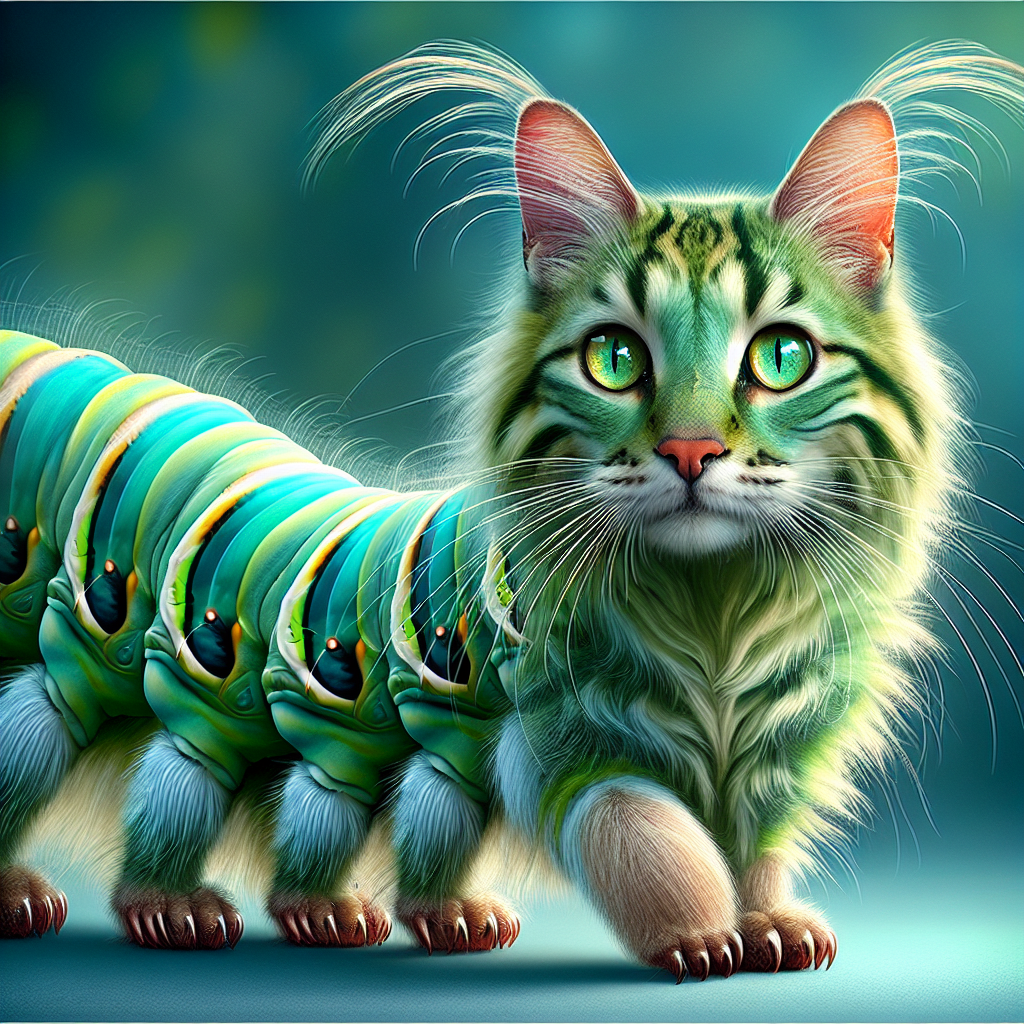
Catercat
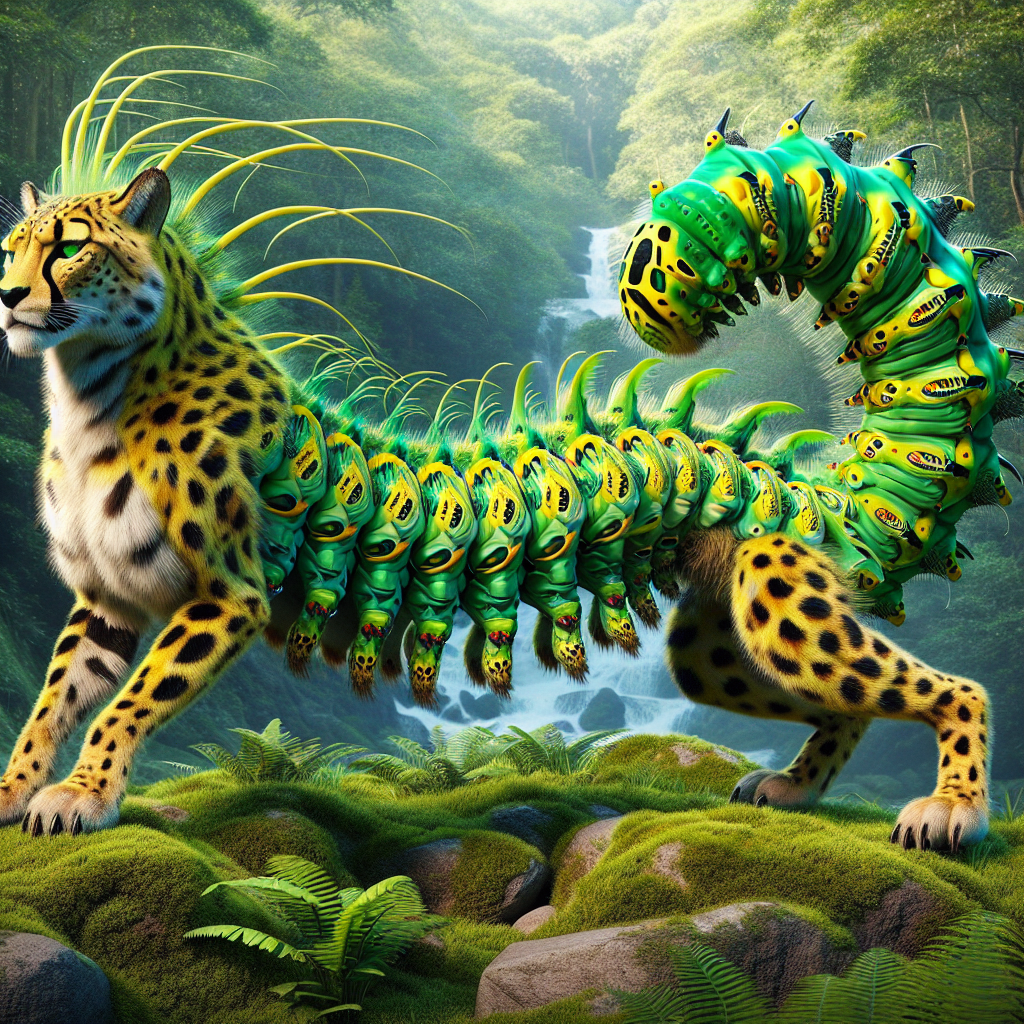
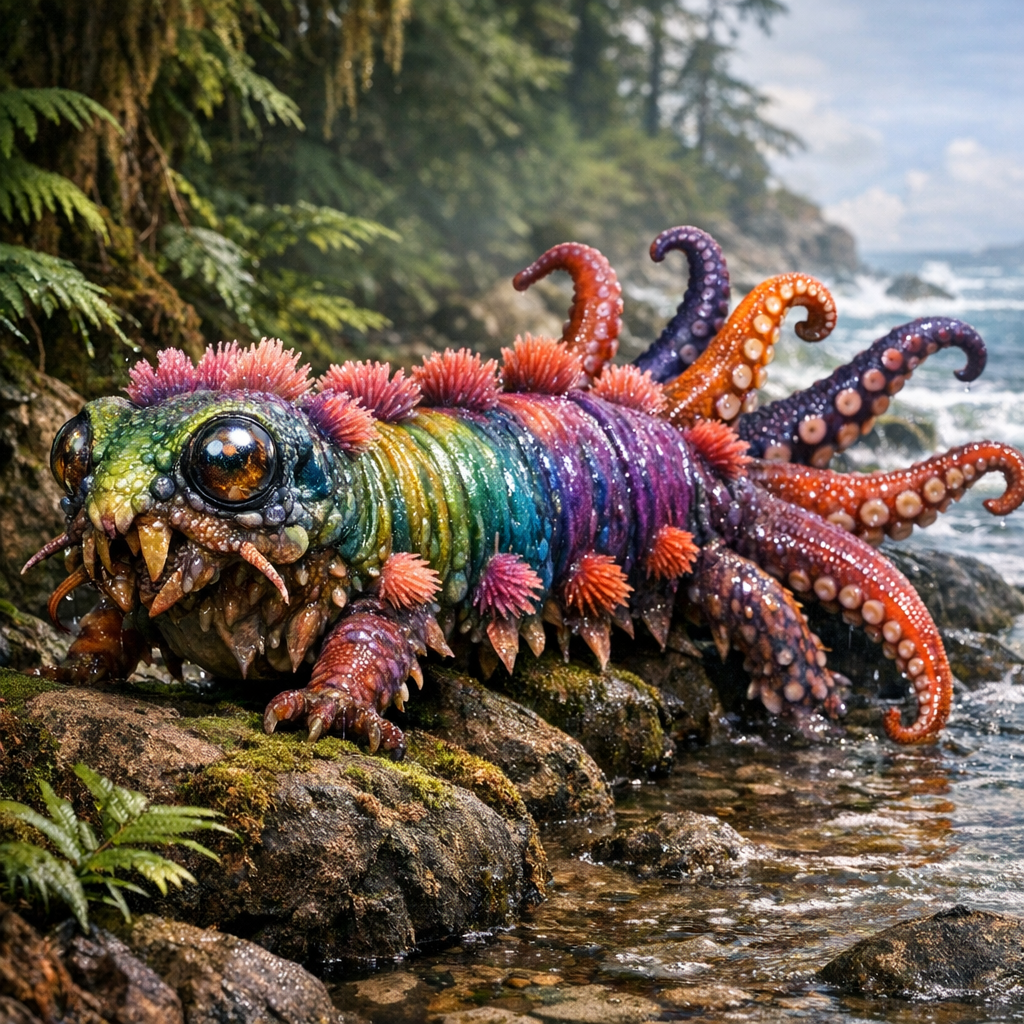
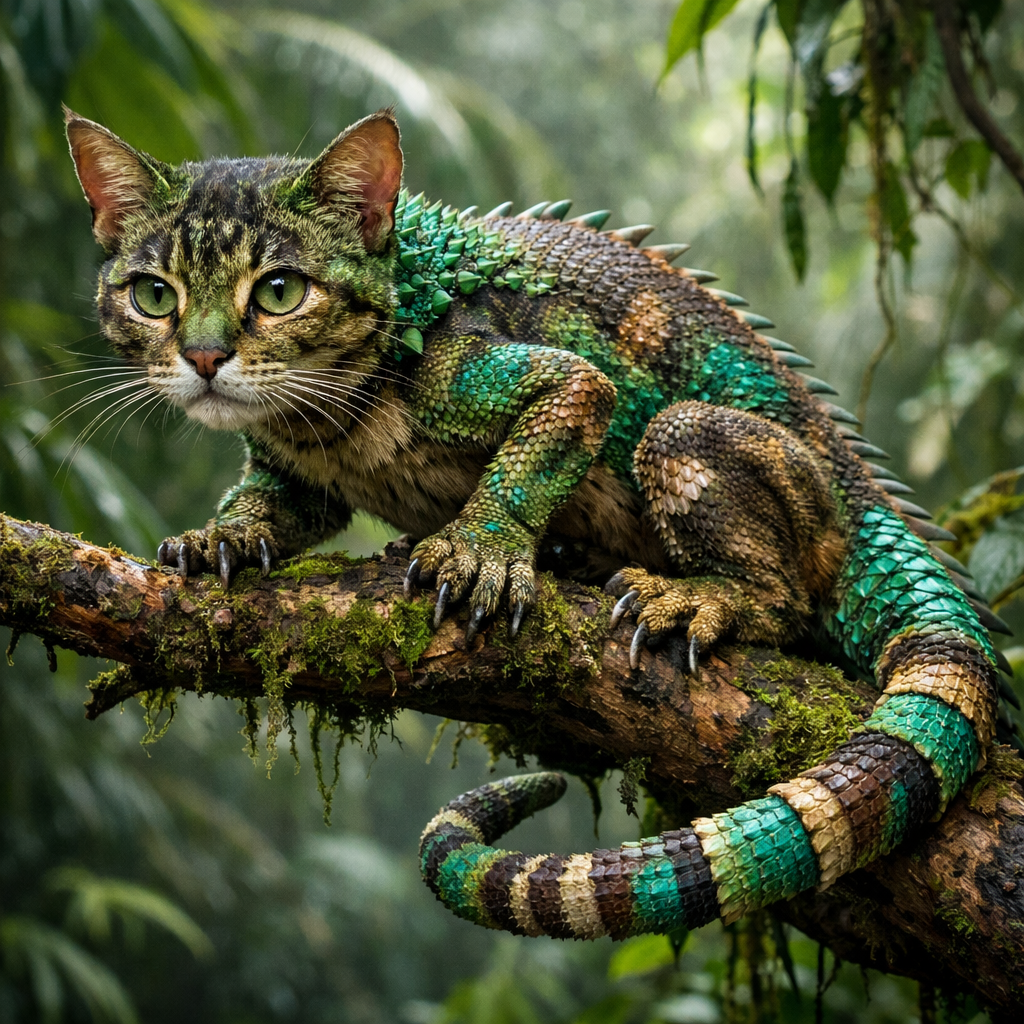
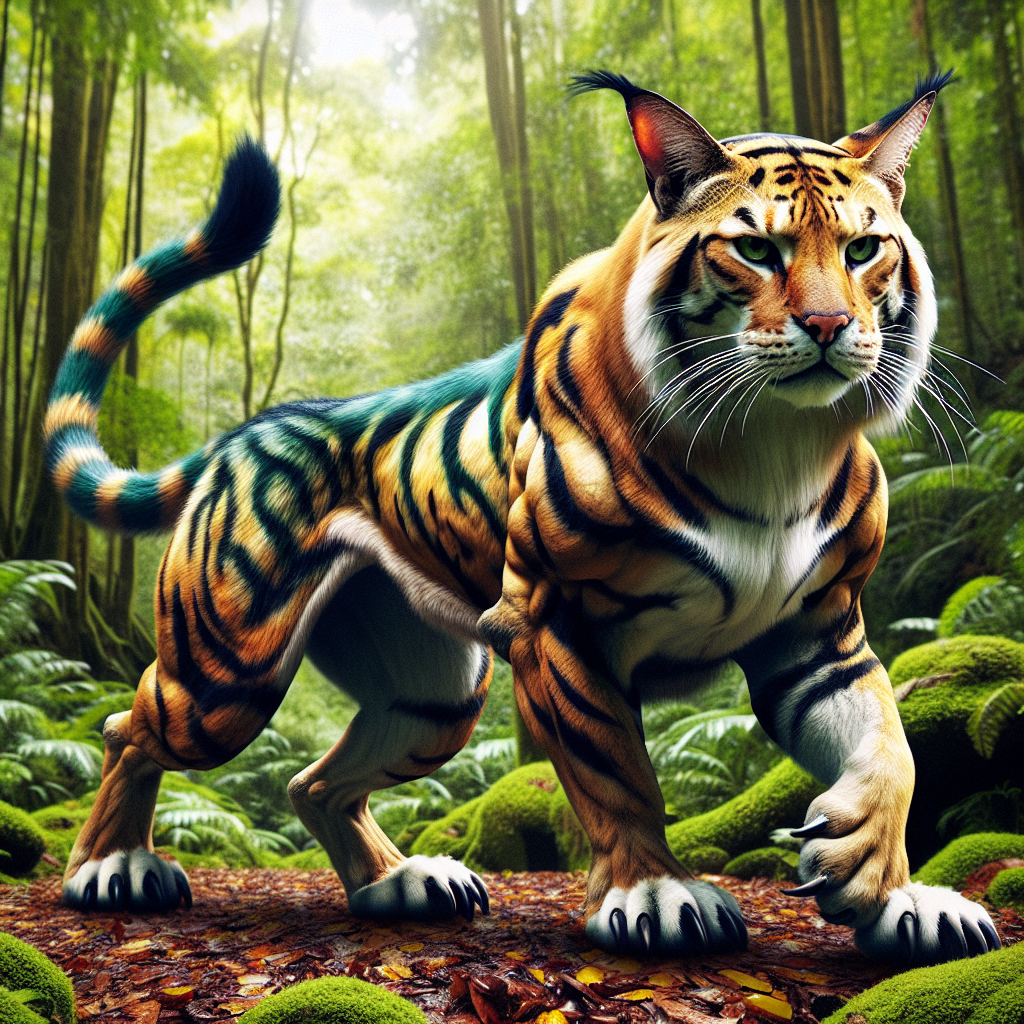
A hybrid of Caterpillar + Cat
- Habitat
- Catercats thrive in lush, temperate forests where they can easily blend into their surroundings. They prefer areas rich in foliage and flowers, utilizing trees and shrubs for both hunting and shelter.
- Diet
- Catercats are omnivorous, primarily feeding on leaves, flowers, and small insects. Their diet is supplemented by the occasional fruit, which they seek out during the warmer months. They exhibit a unique foraging behavior, using their claws to delicately pry open petals and access hidden food sources.
The story of Catercat
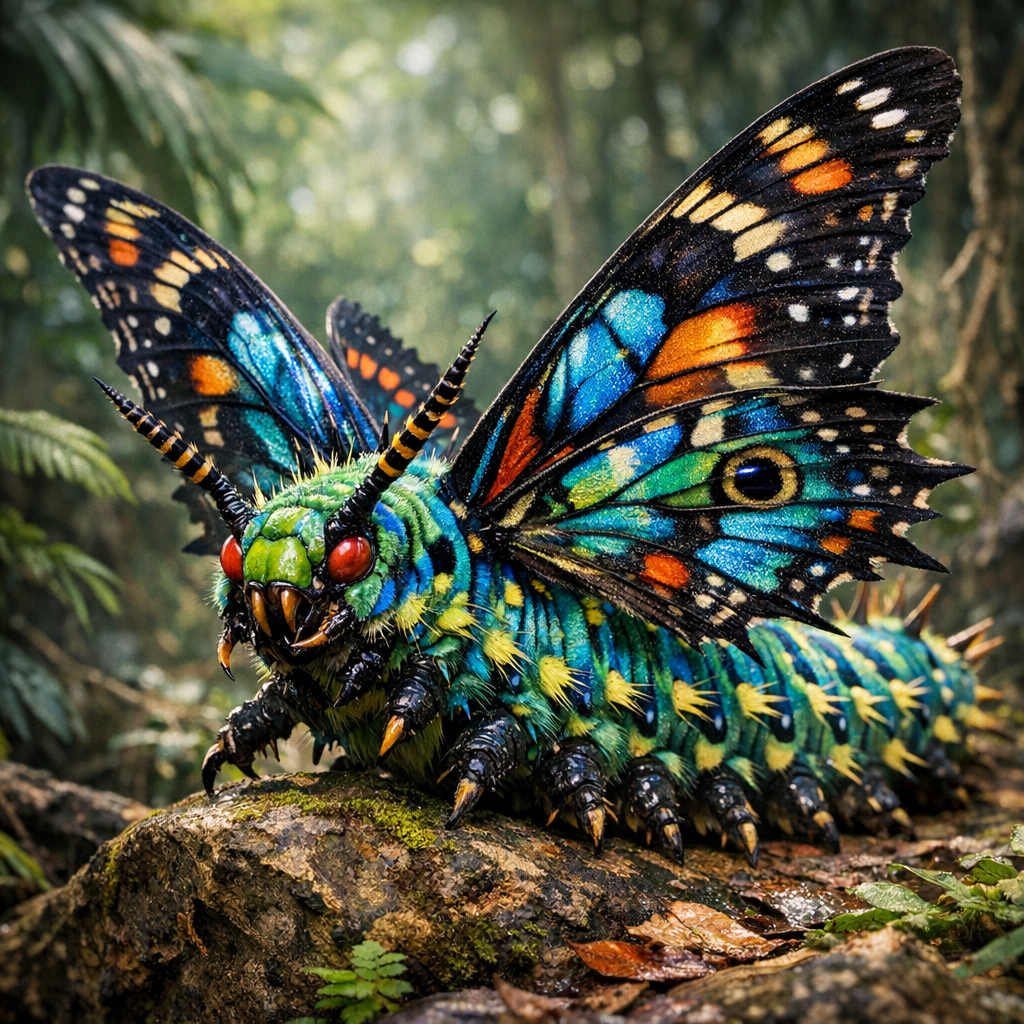
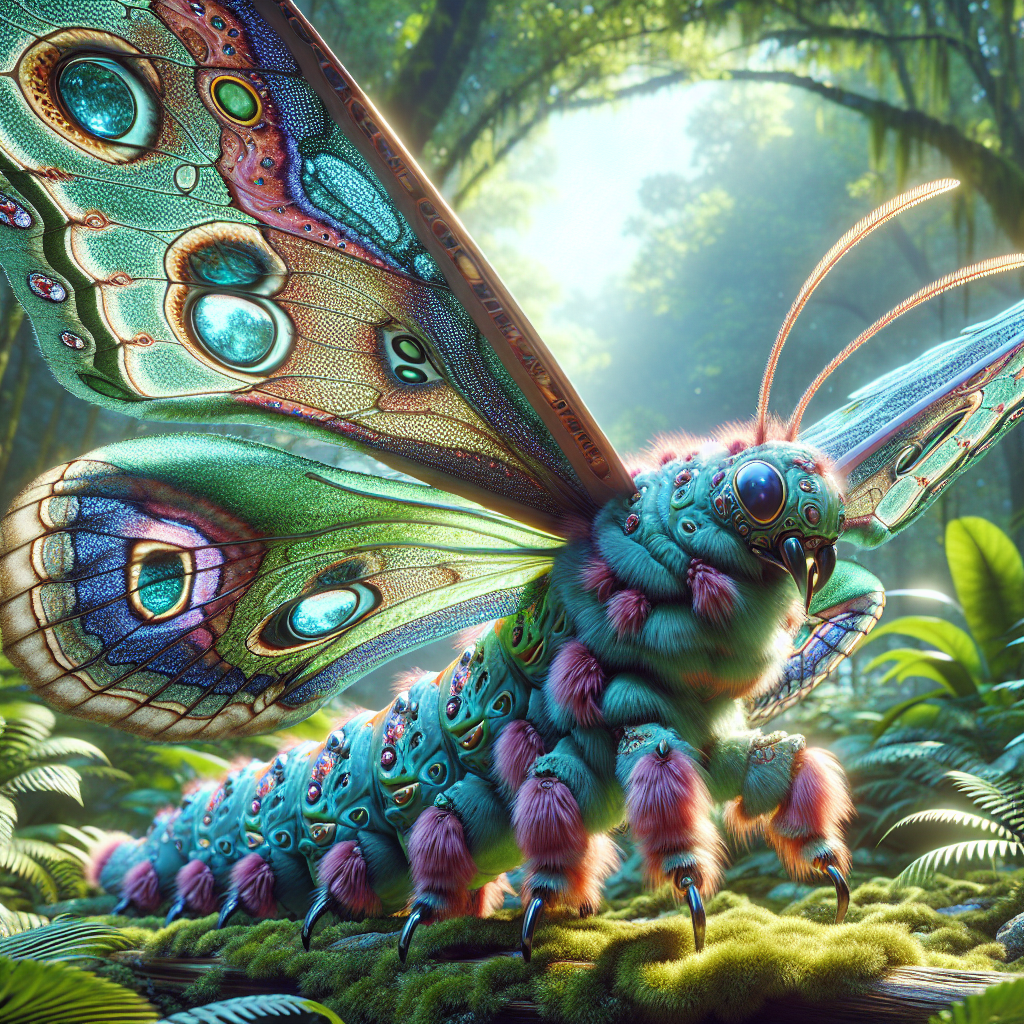
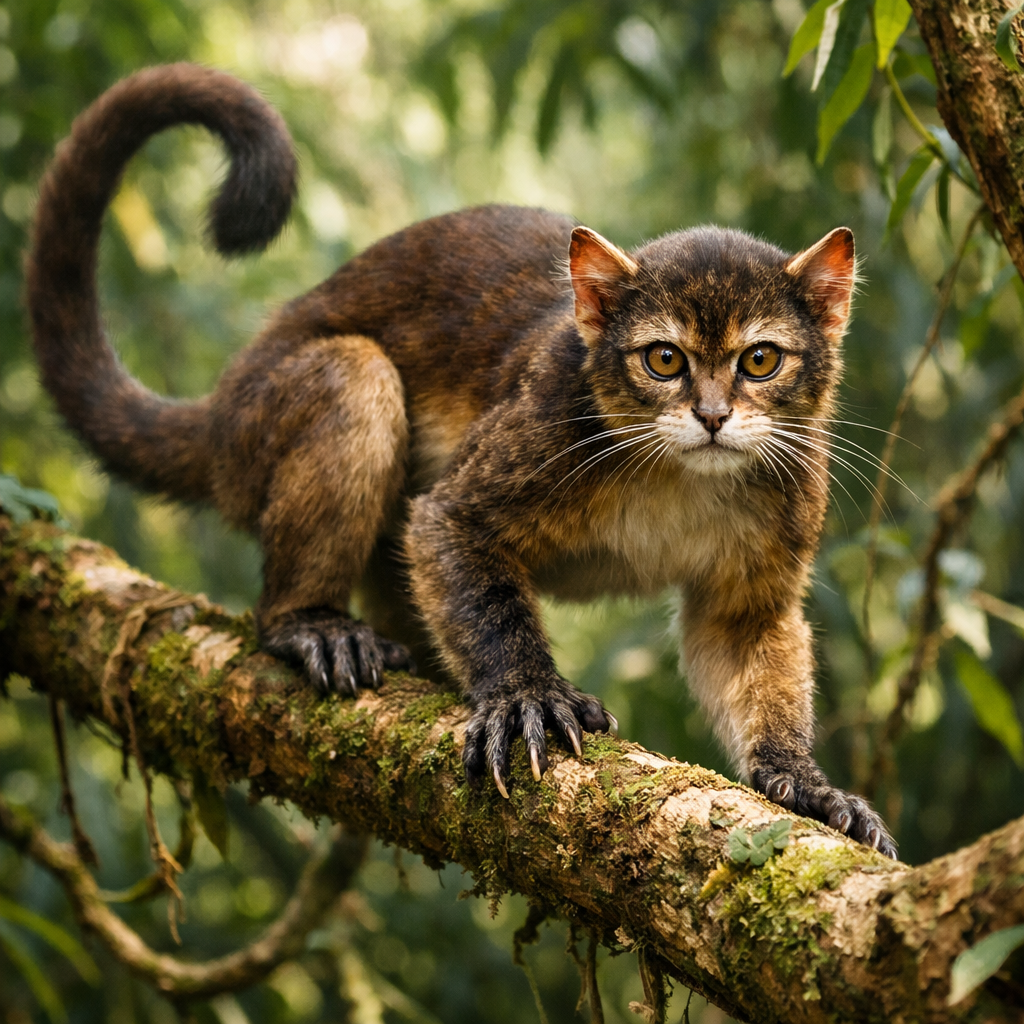
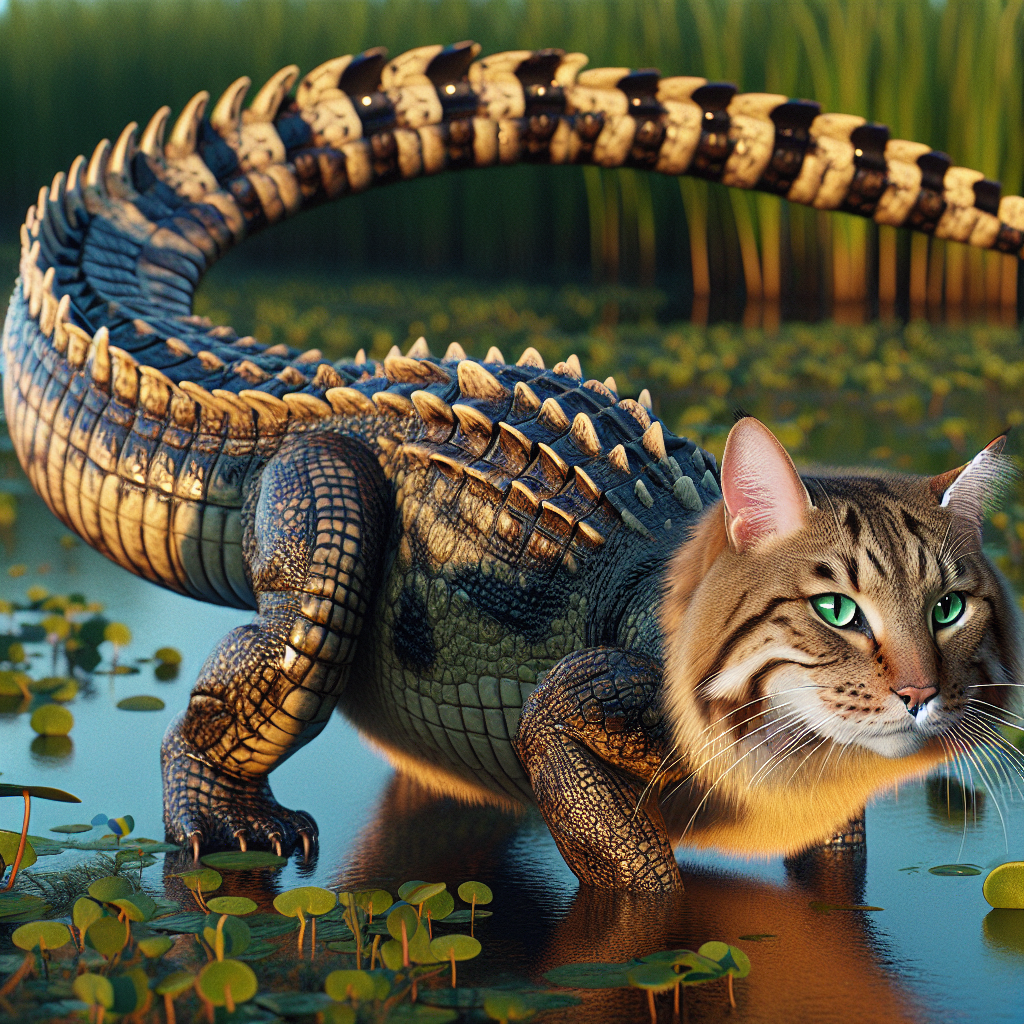
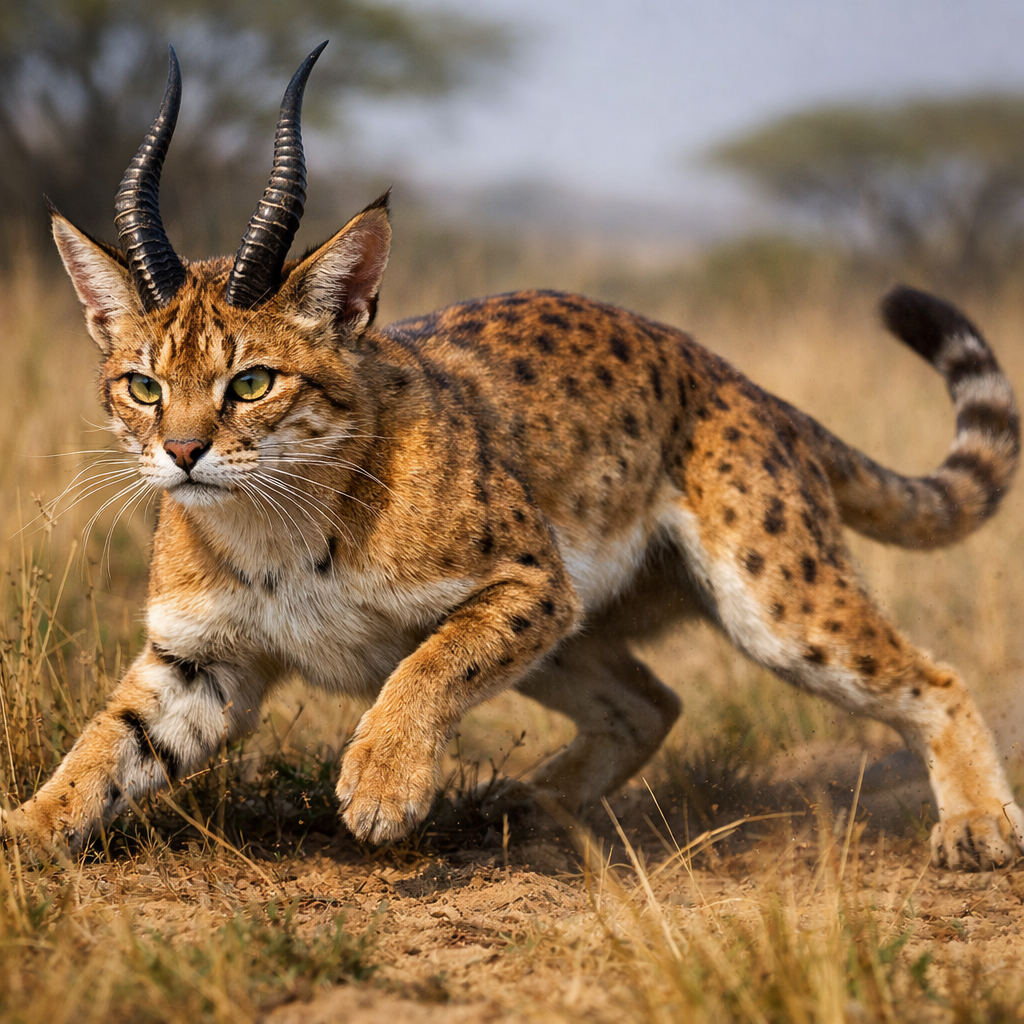
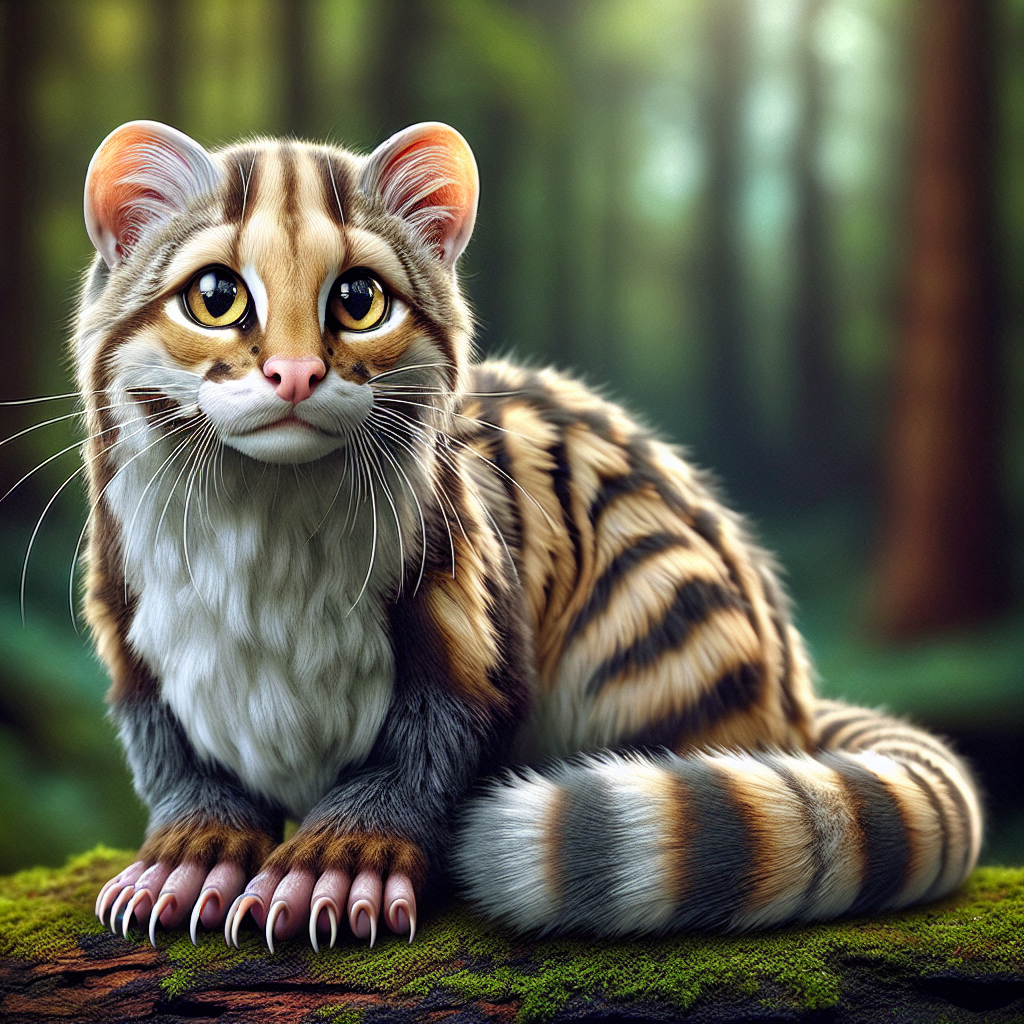
The Catercat is a fascinating hybrid organism exhibiting the elongated, segmented body of a caterpillar covered in soft, fur-like hairs reminiscent of a domestic cat. Its large, expressive eyes and twitching whiskers give it a playful yet curious demeanor. This creature possesses retractable claws that resemble tiny, delicate hooks, allowing it to navigate its environment adeptly. The Catercat's coloration varies, featuring vibrant greens and blues with subtle stripes, providing effective camouflage among foliage.
Special abilities
Whisker Slash
A swift attack where the Catercat uses its retractable claws to deliver a rapid slash to its opponent, inflicting damage and potentially causing a distraction.
From the Cat
Real-world basis: The retractable claws of felines allow for precision and speed in striking, maximizing impact.
Silken Bind
The Catercat emits a sticky silk thread from specialized glands, ensnaring its target and immobilizing them temporarily.
From the Caterpillar
Real-world basis: Many caterpillars produce silk for various purposes, including protection and mobility, which is adapted here for incapacitating foes.
Furry Camouflage
The Catercat can fluff up its fur-like hairs to blend seamlessly with its environment, significantly reducing the chance of detection by predators.
From the Caterpillar
Real-world basis: Camouflage is a common survival tactic in many caterpillar species, allowing them to avoid predation.
Purring Shield
The Catercat emits a soothing purr that calms nearby creatures, reducing aggression and creating a temporary barrier against attacks.
From the Cat
Real-world basis: Feline purring has been shown to have a calming effect on both themselves and other animals, promoting a peaceful atmosphere.