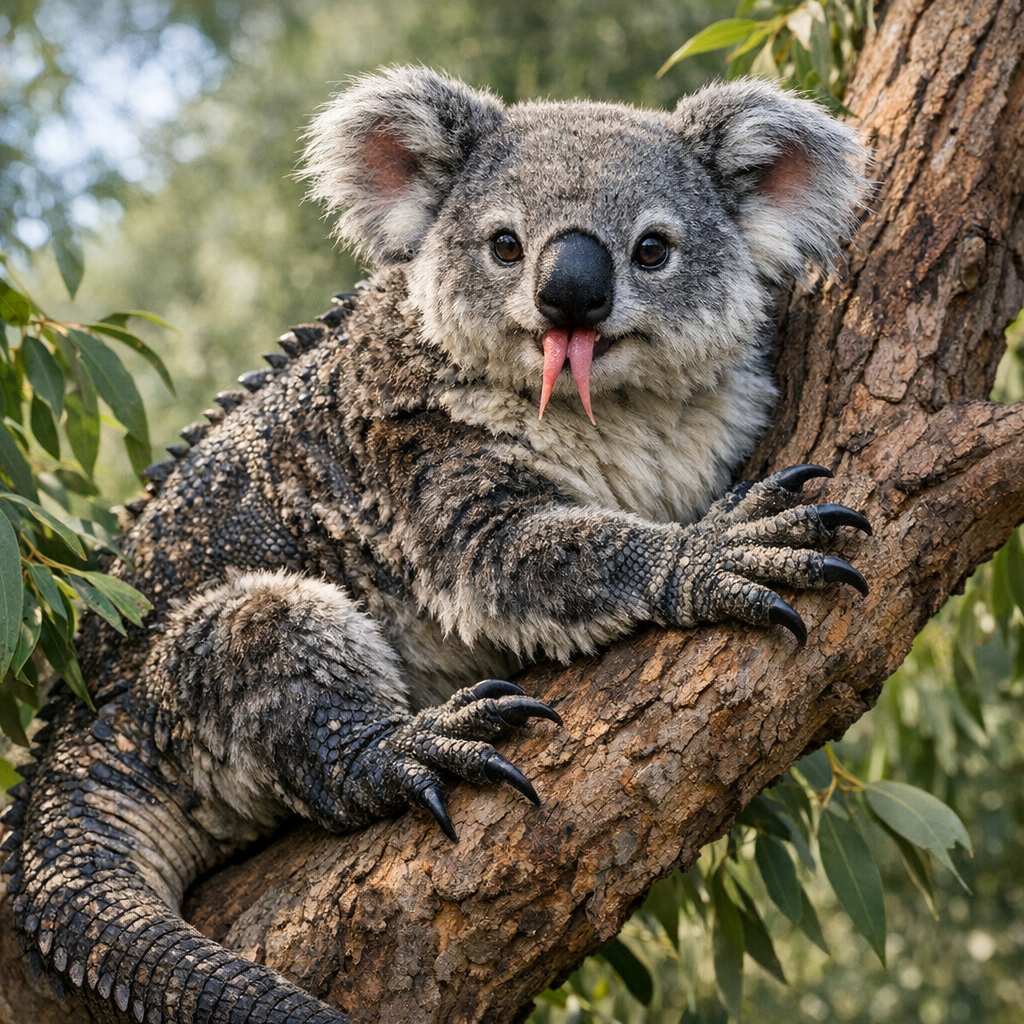
Komodala
A hybrid of Komodo Dragon + Koala
- Habitat
- The Komodala thrives in the eucalyptus forests of Australia, where it can easily climb trees and bask in the sun. Preferring humid and temperate climates, it often resides in areas rich in vegetation, allowing for both concealment and accessibility to food sources.
- Diet
- Omnivorous by nature, the Komodala exhibits a unique diet that includes a variety of leaves, fruits, and small animals. It has a preference for eucalyptus leaves, much like its koala relatives, but will also scavenge for insects and small mammals to supplement its nutritional intake.
The story of Komodala
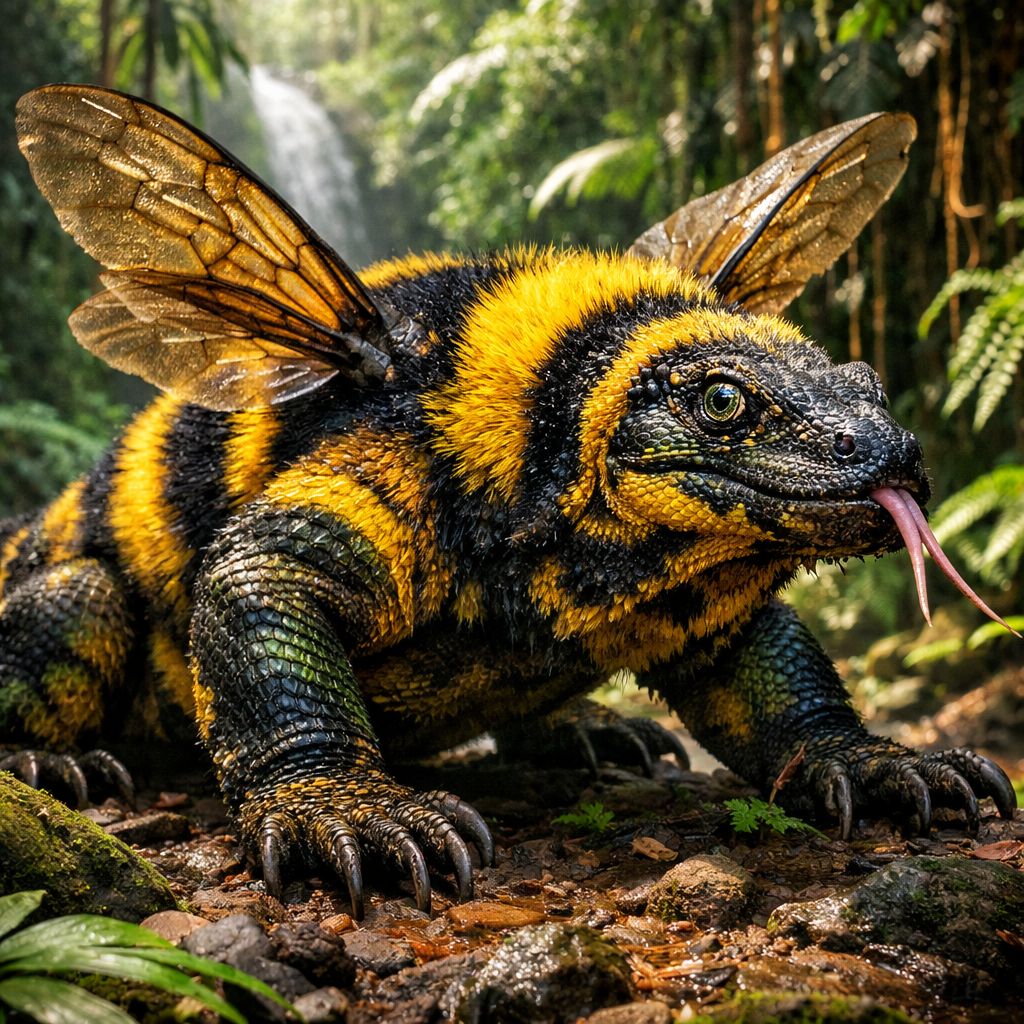
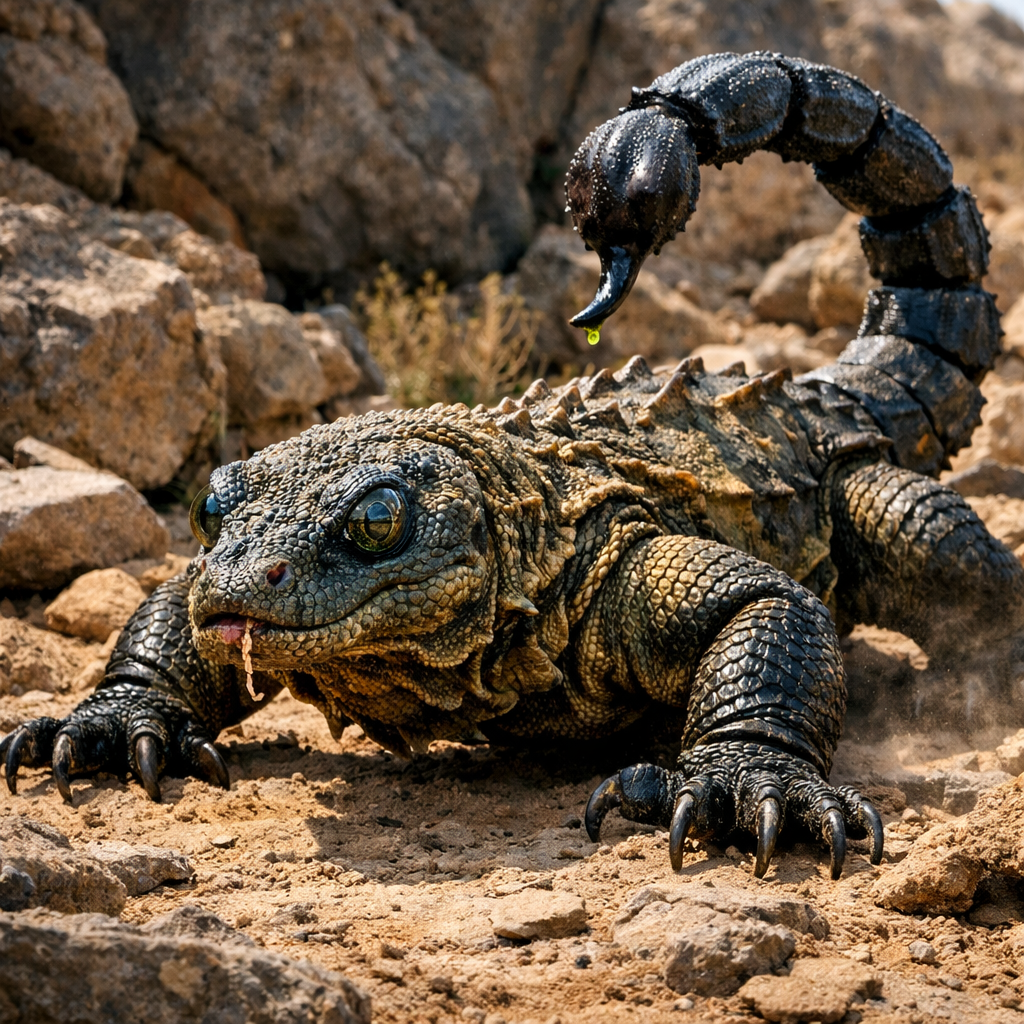
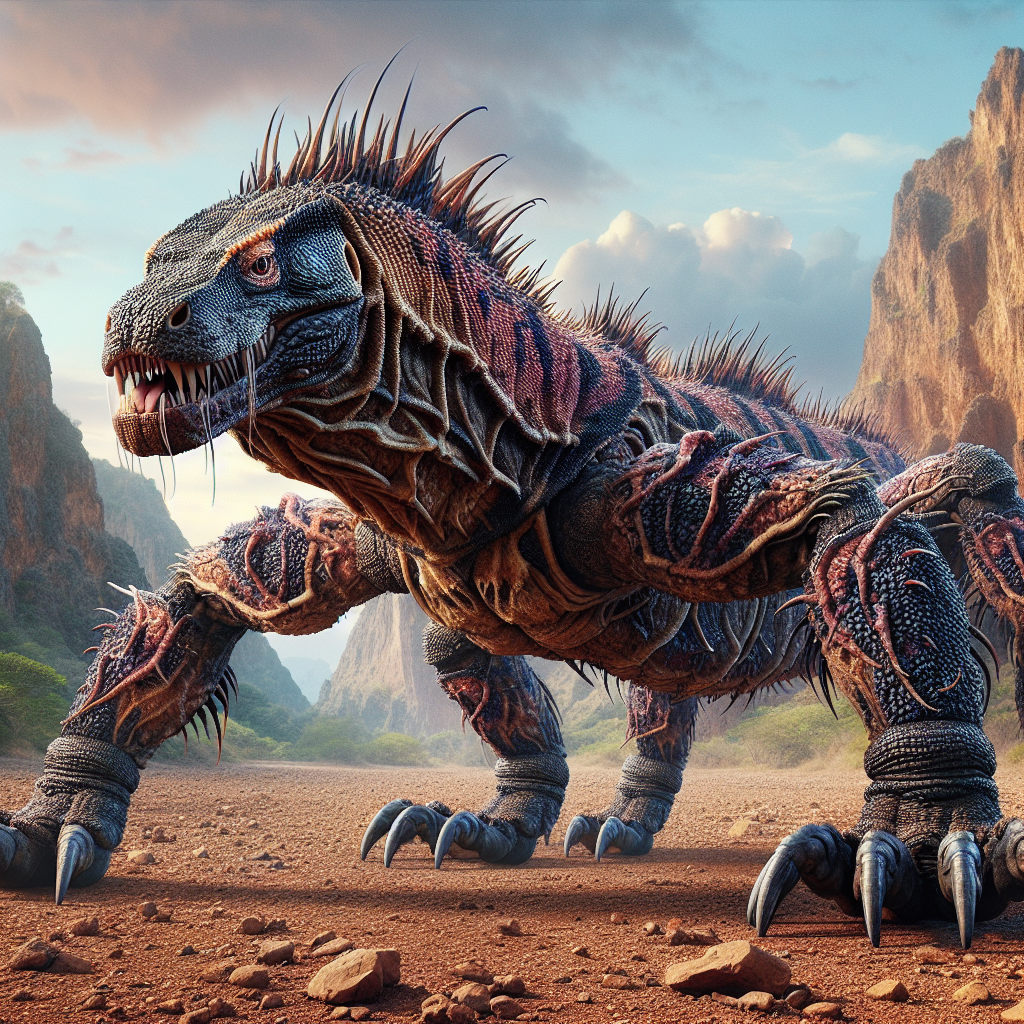
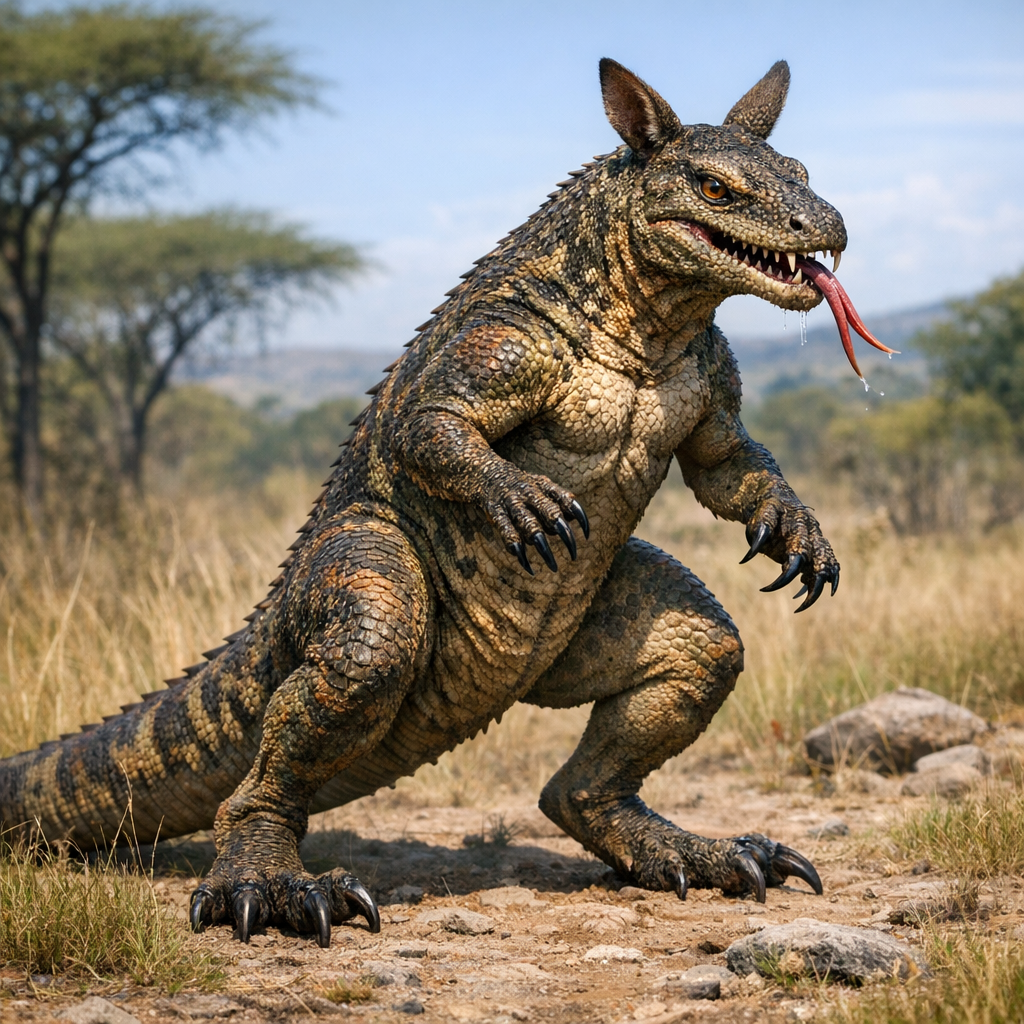
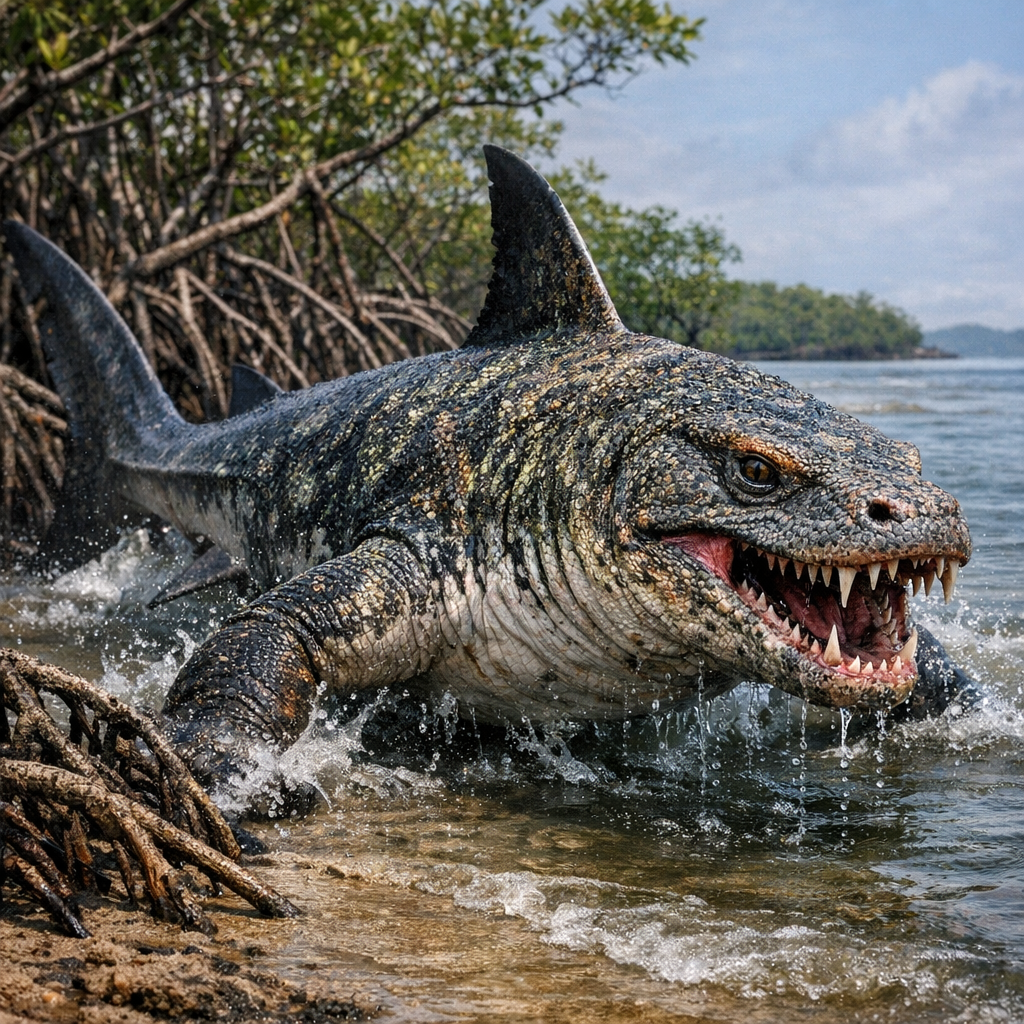
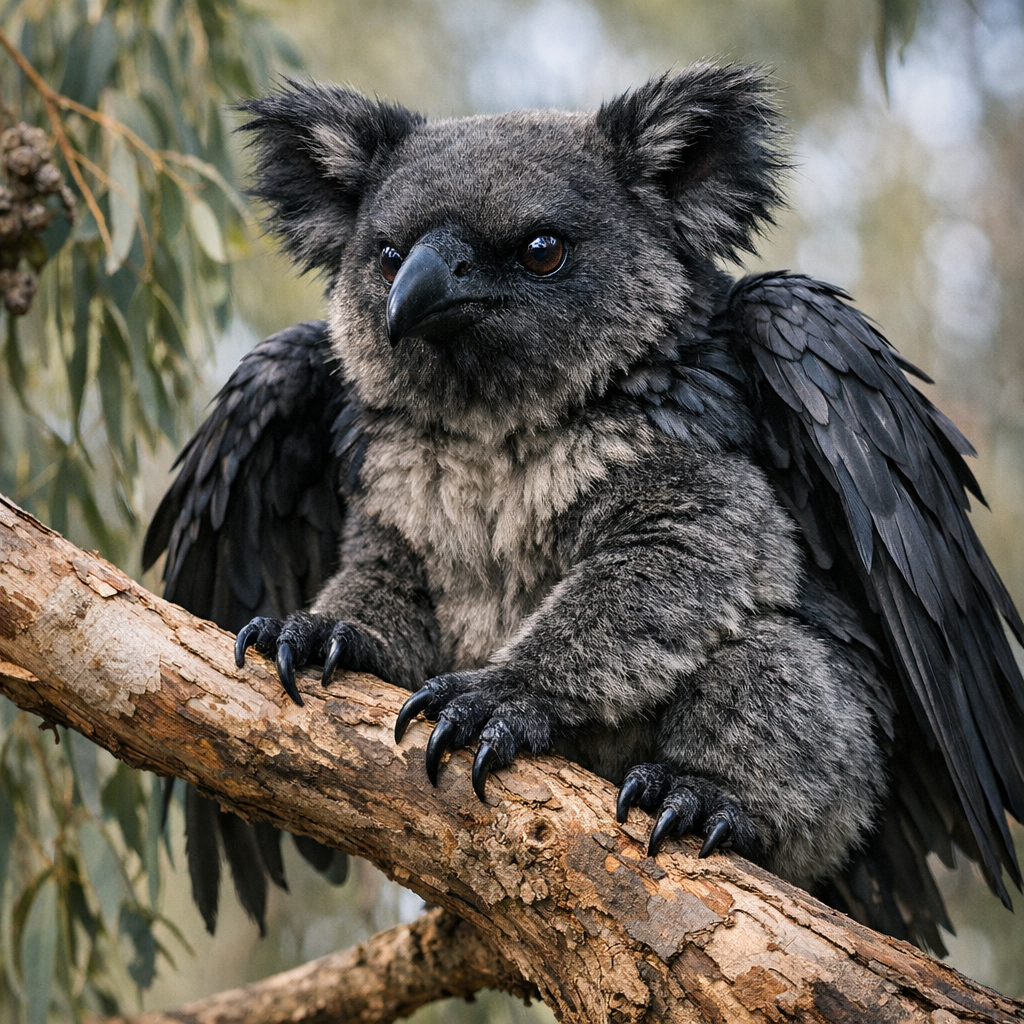
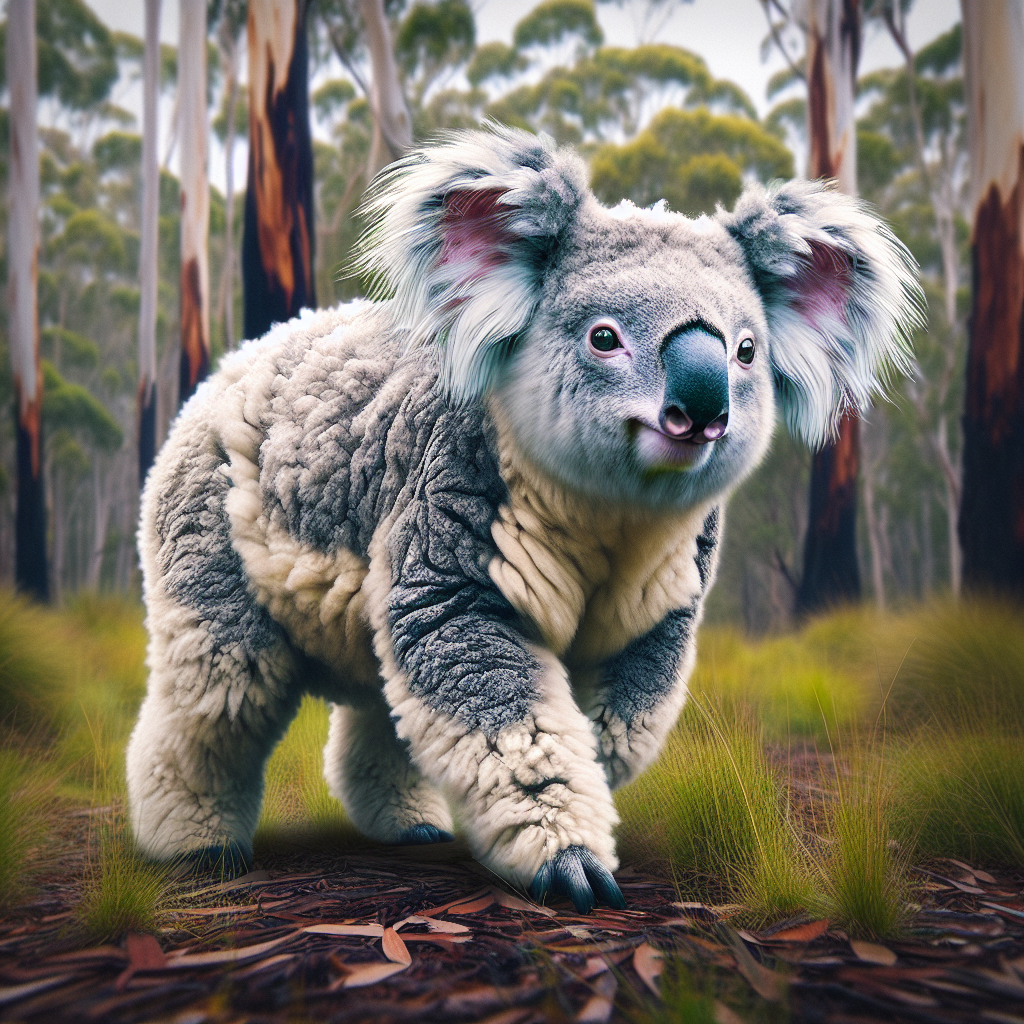
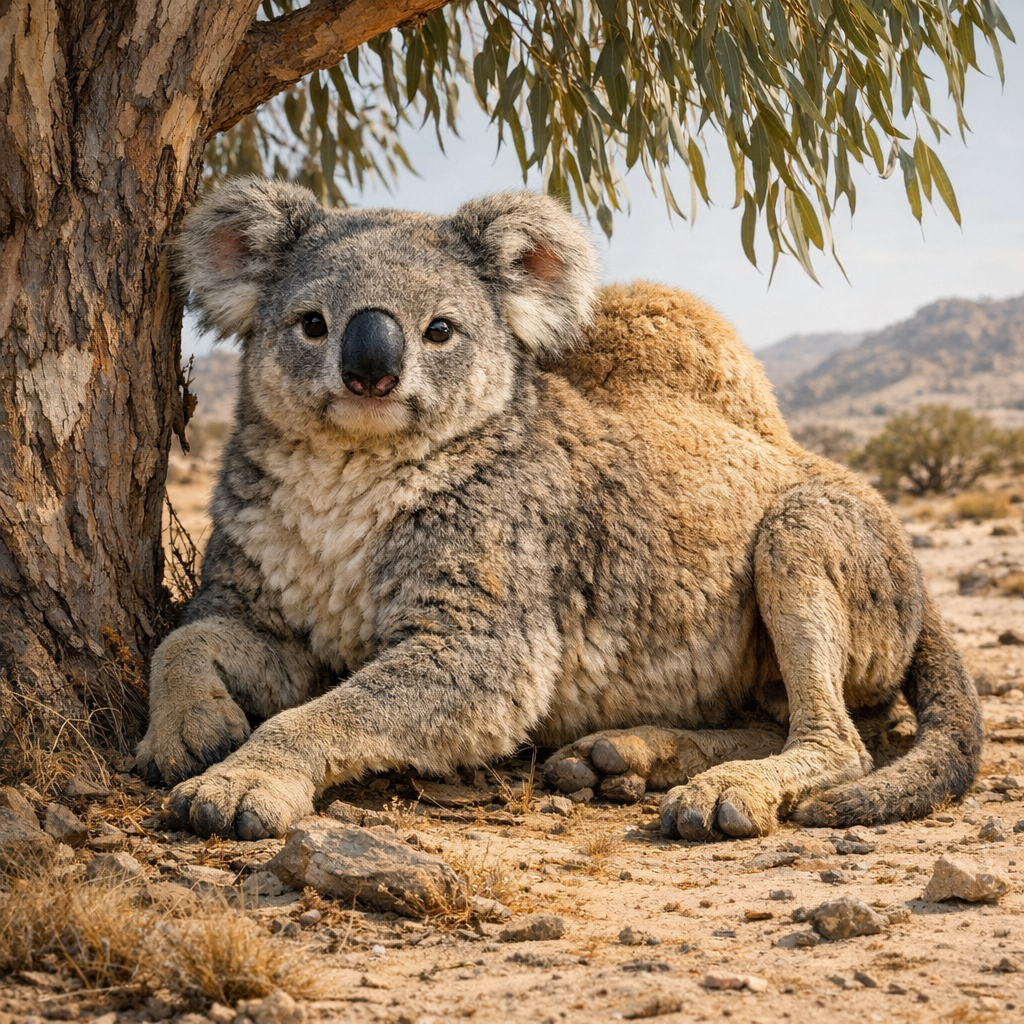
The Komodala is a fascinating hybrid organism, exhibiting the robust body and powerful limbs of the Komodo dragon combined with the adorable, tree-hugging features of a koala. It possesses a muscular yet compact physique, covered in a mosaic of tough, scaly skin interspersed with soft, plush fur. The creature boasts sharp claws and a long, forked tongue reminiscent of its reptilian lineage, while its round face and large, expressive eyes echo the charm of its marsupial counterpart. With a length of approximately 5 feet and a weight of around 70 pounds, the Komodala is an imposing yet endearing sight in its natural habitat.
Special abilities
Venomous Bite
The Komodala delivers a potent bite that injects venom, causing paralysis and extreme pain in its prey.
From the Komodo Dragon
Real-world basis: The venom contains anticoagulants and toxins that immobilize prey quickly.
Claw Slash
With its sharp claws, the Komodala can execute a swift and devastating slash, inflicting severe lacerations.
From the Komodo Dragon
Real-world basis: The claws are designed for tearing flesh and can cause significant damage.
Camouflage Fur
The soft, mottled fur of the Komodala allows it to blend seamlessly into its surroundings, making it difficult for predators to detect.
From the Koala
Real-world basis: The coloration and texture of the fur provide effective camouflage in forested environments.
Eucalyptus Shield
The Komodala can secrete a protective layer from eucalyptus sap, which can deter predators and heal minor wounds.
From the Koala
Real-world basis: Eucalyptus sap has antimicrobial properties that can aid in protection and healing.