Peacnail
- Habitat
- The Peacnail is predominantly found in lush, tropical rainforests where moisture is abundant. It prefers to inhabit areas near rivers or streams, where it can both bask in the sun and stay hydrated. The dense foliage provides ample cover from predators and a variety of plants for feeding.
- Diet
- The Peacnail is herbivorous, primarily feeding on a diet of soft leaves, fruits, and flowers. Its specialized radula allows it to scrape and consume plant material efficiently. Occasionally, it may ingest small insects for added protein.
The story of Peacnail
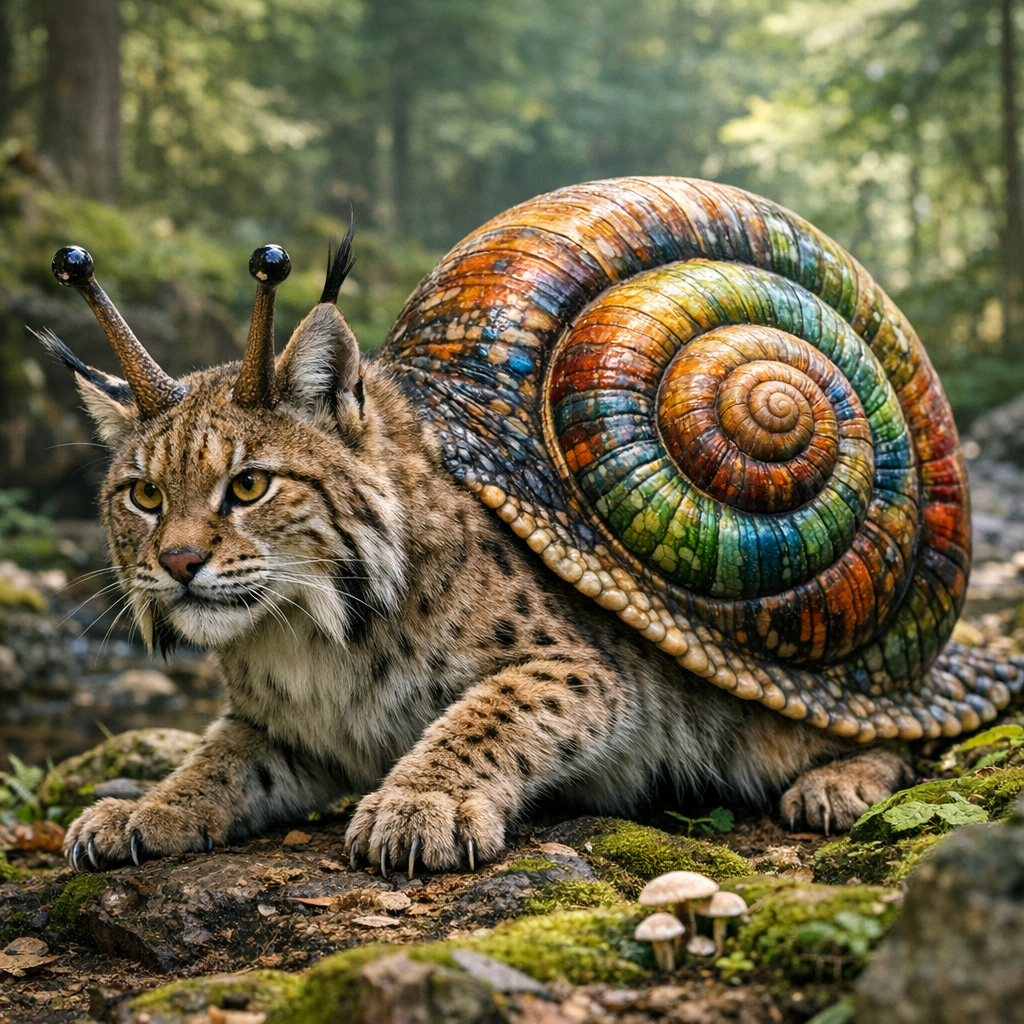
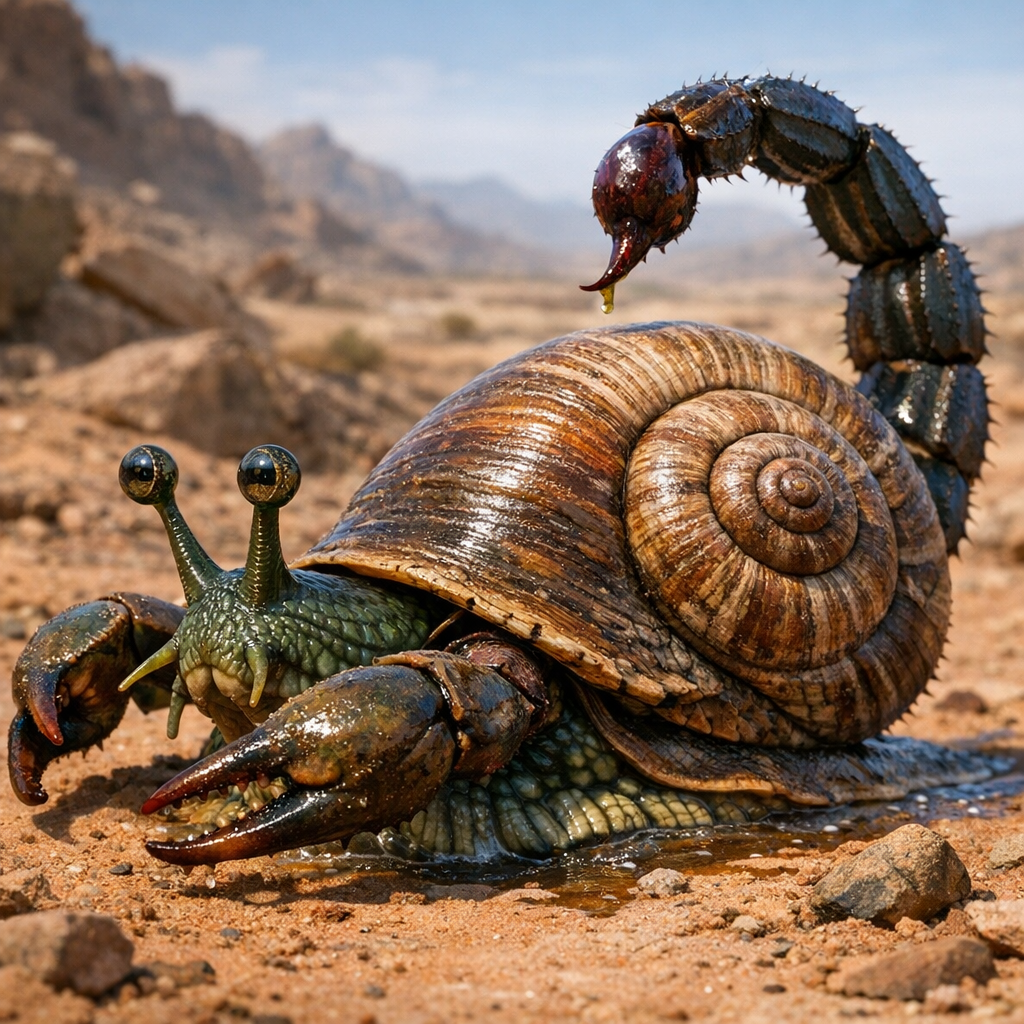
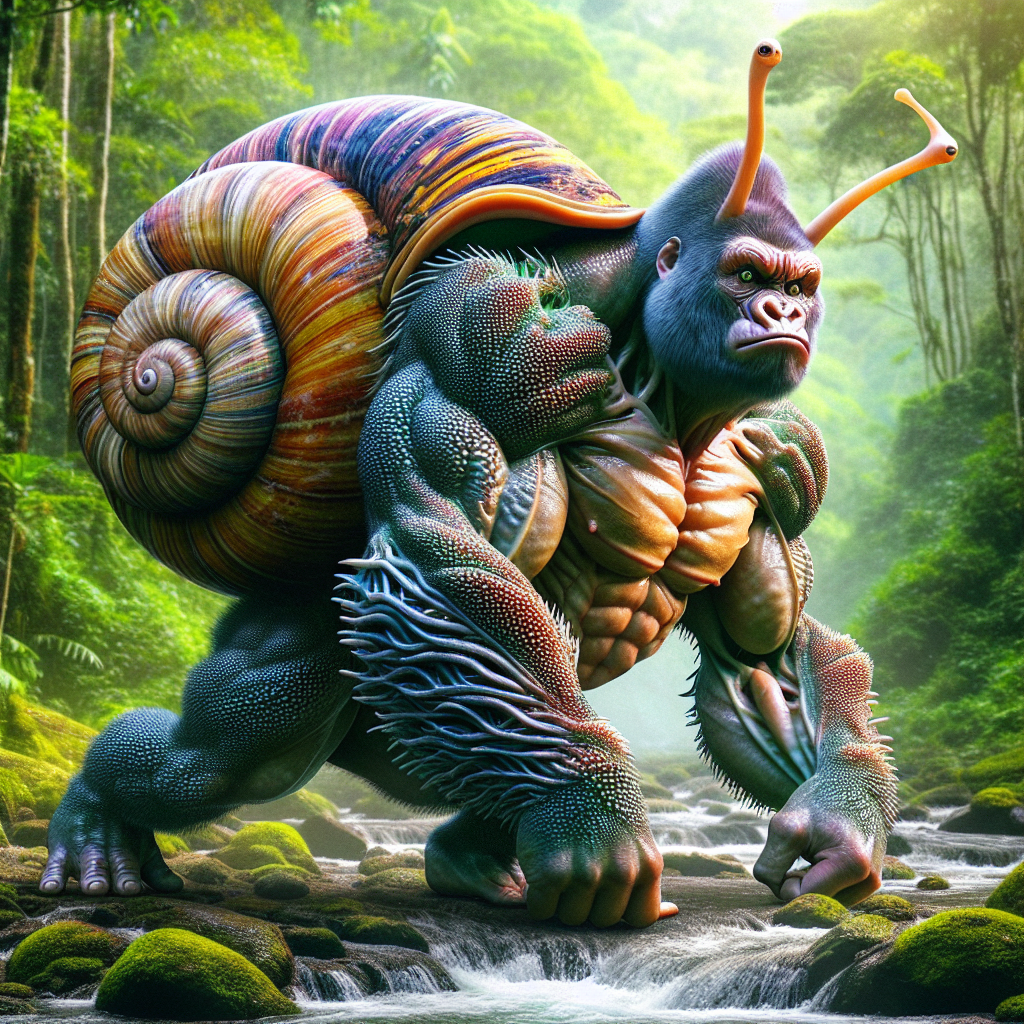
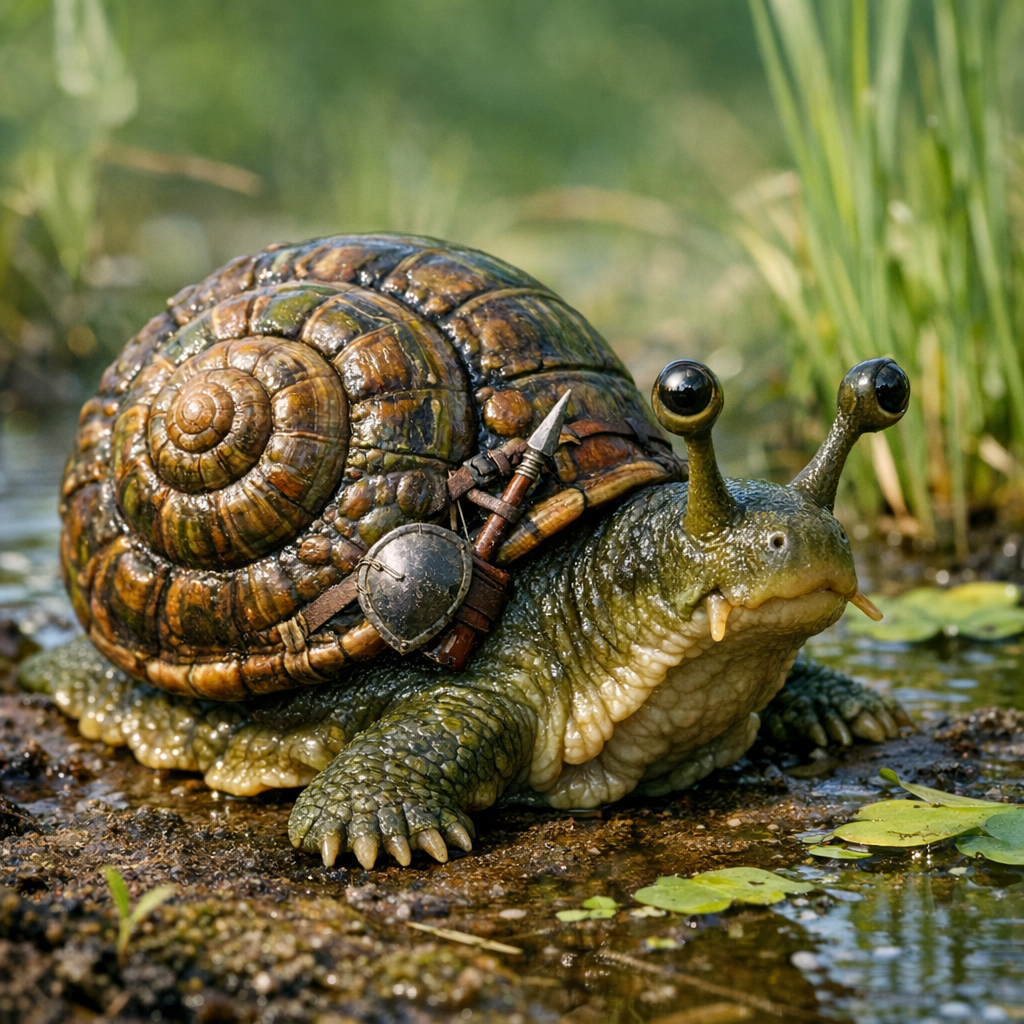
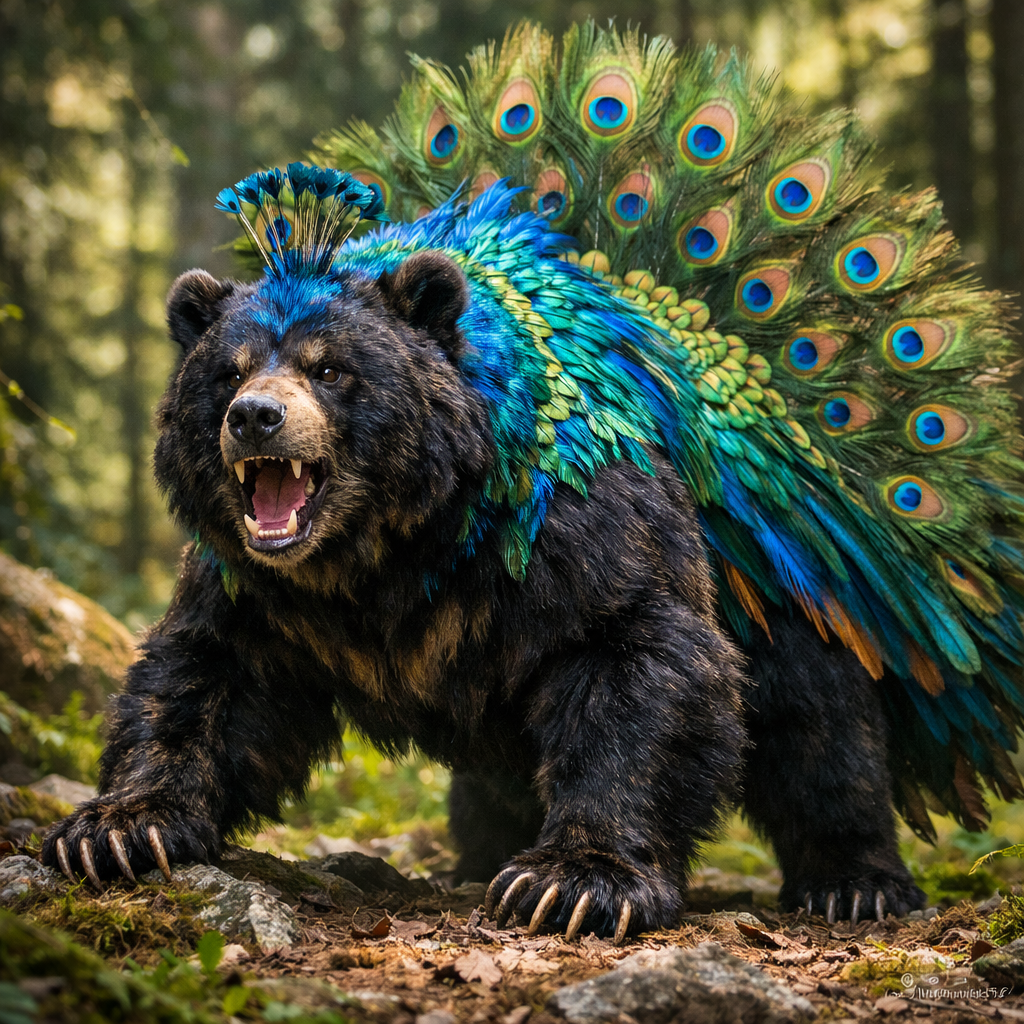
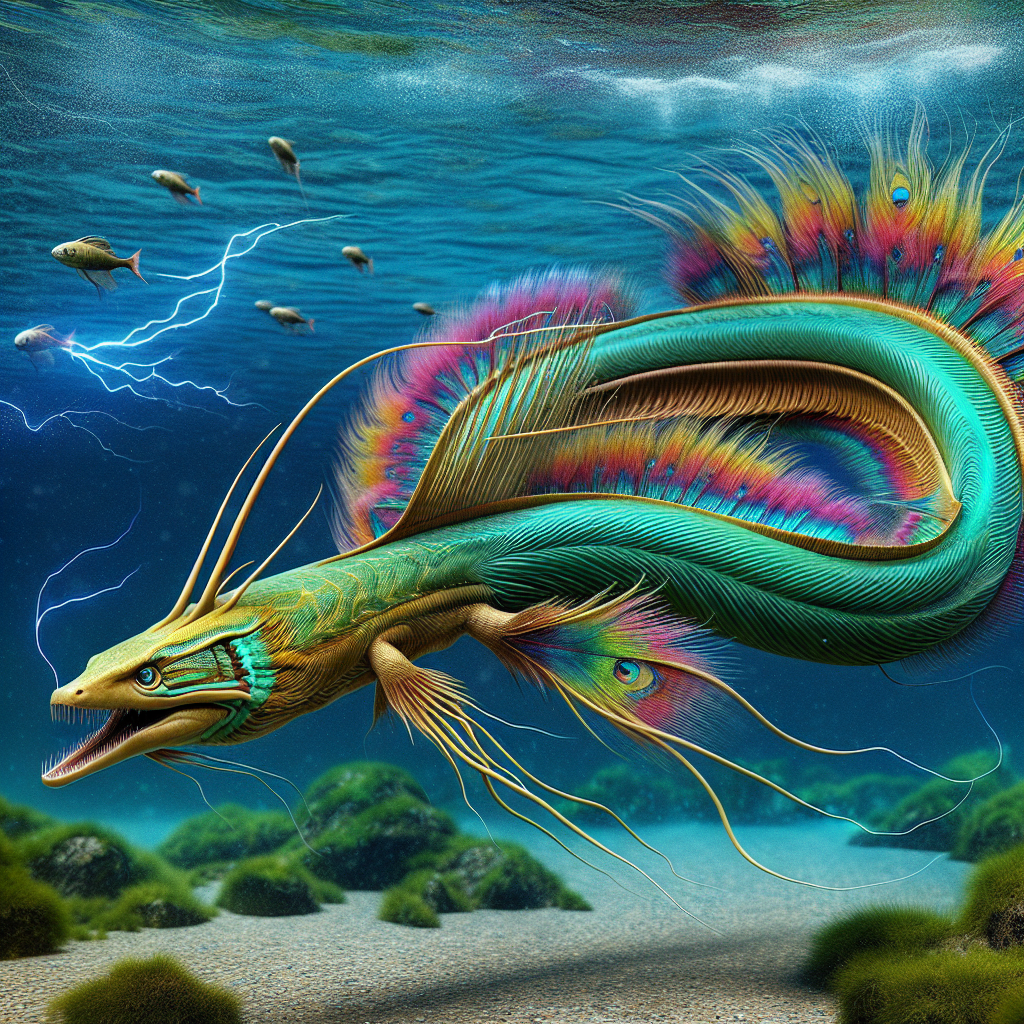
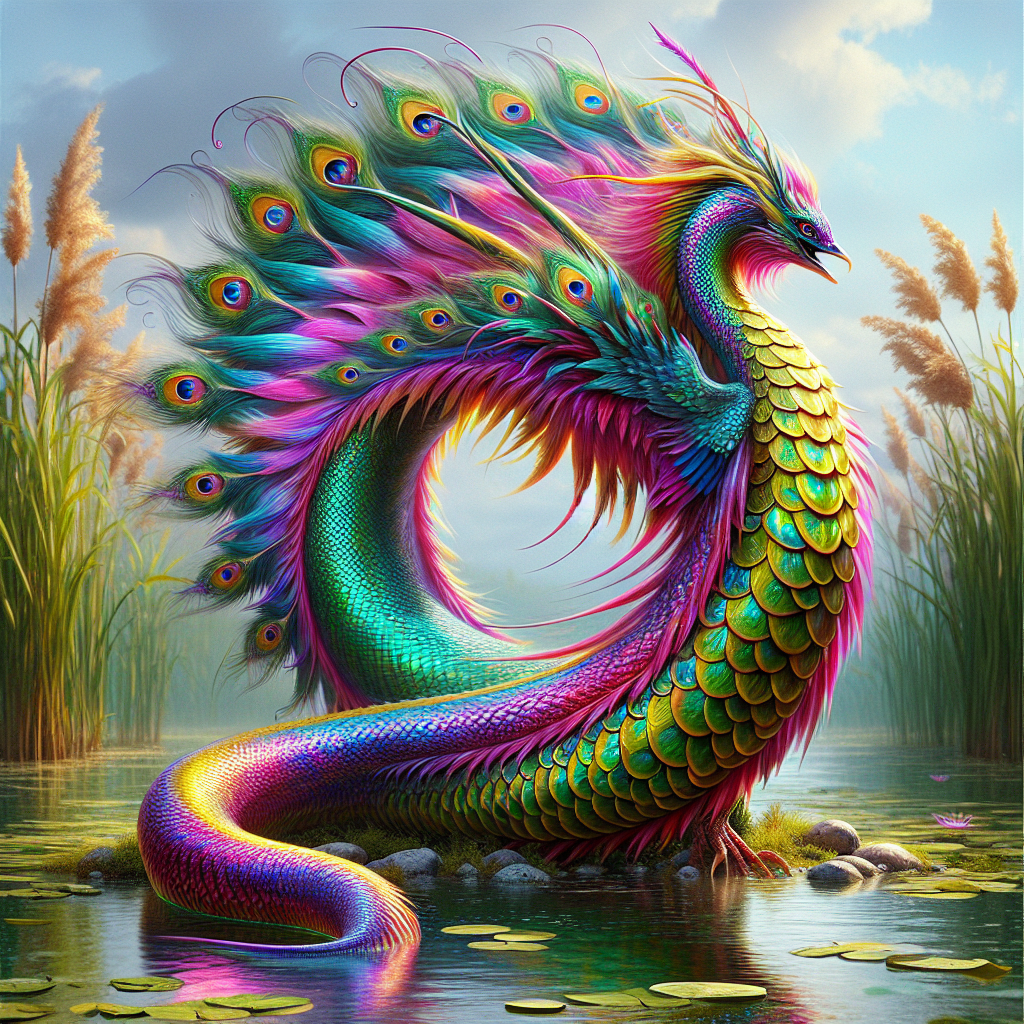
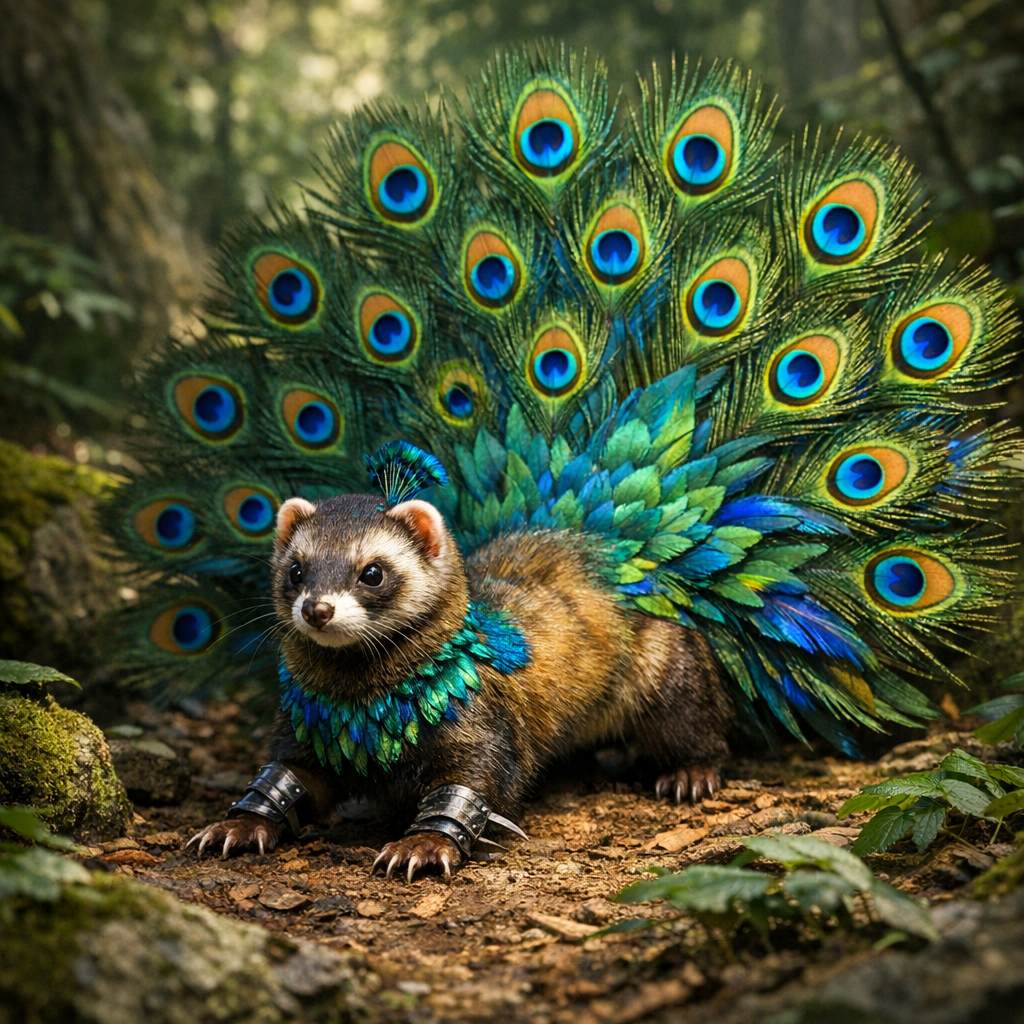
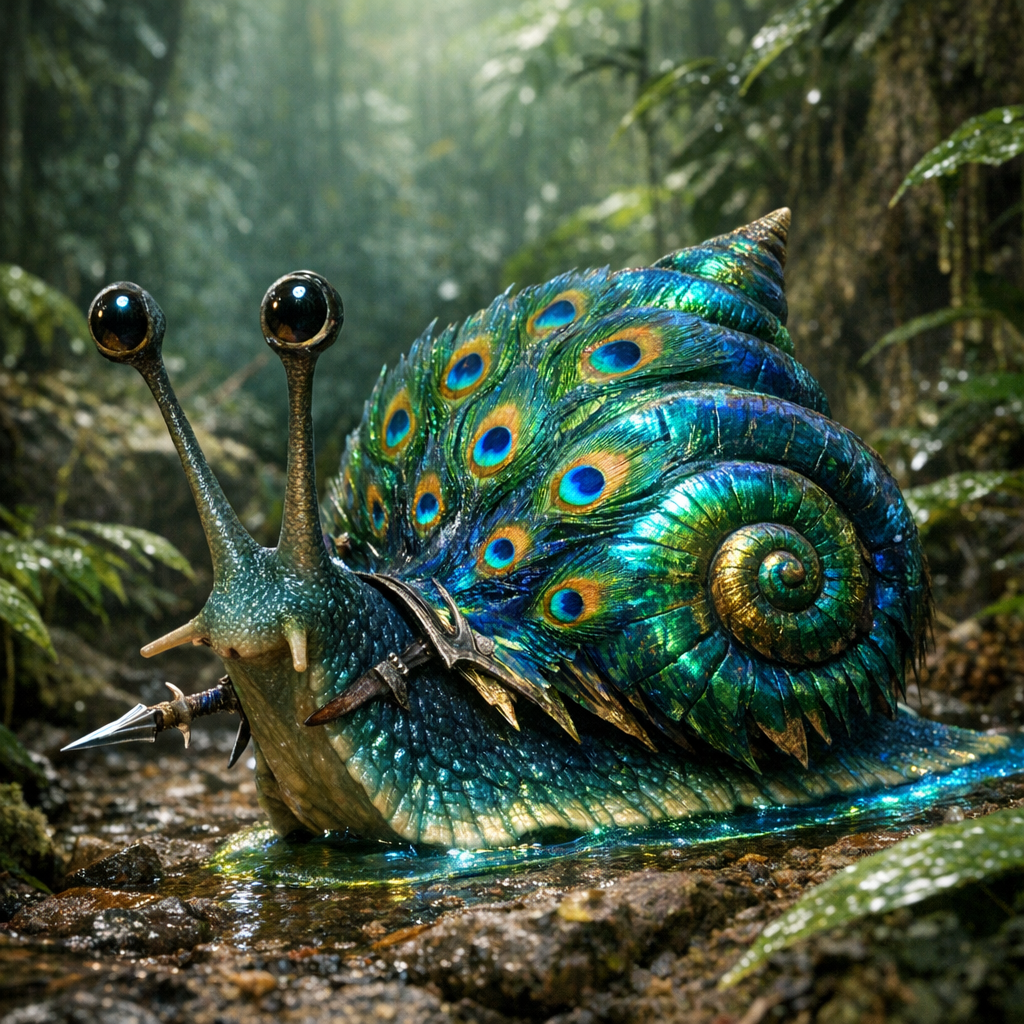
The Peacnail is a fascinating hybrid creature, combining the graceful elegance of a peacock with the slow, spiral shell of a snail. Its body is elongated and soft, covered in a vibrant iridescent shell that reflects a kaleidoscope of colors. The shell, reminiscent of a peacock's tail, unfurls to reveal luminescent patterns that shift with the light. The creature moves with a unique gliding motion, leaving a shimmering trail of mucous that glows faintly in the dark. Its eyes are large and expressive, perched atop long, slender stalks, allowing it to survey its environment with keen perception.
Special abilities
Iridescent Whirl
The Peacnail spins rapidly, creating a dazzling display of colors that confuses and distracts predators or foes.
From the Peacock
Real-world basis: The display of colors is due to structural coloration, where microscopic structures in the feathers reflect light in specific ways.
Shell Shield
The Peacnail retracts into its shell, creating a protective barrier that absorbs incoming attacks.
From the Snail
Real-world basis: The shell is composed of calcium carbonate, providing a hard structure that can withstand physical impacts.
Color Camouflage
The Peacnail can change the color of its shell to blend in with its surroundings, making it harder for predators to spot.
From the Peacock
Real-world basis: Color change is achieved through chromatophores in the skin, similar to cephalopods.
Mucous Trail Trap
The Peacnail secretes a sticky mucous trail that ensnares small insects, immobilizing them for easy consumption.
From the Snail
Real-world basis: The mucous contains adhesive proteins that trap prey effectively.