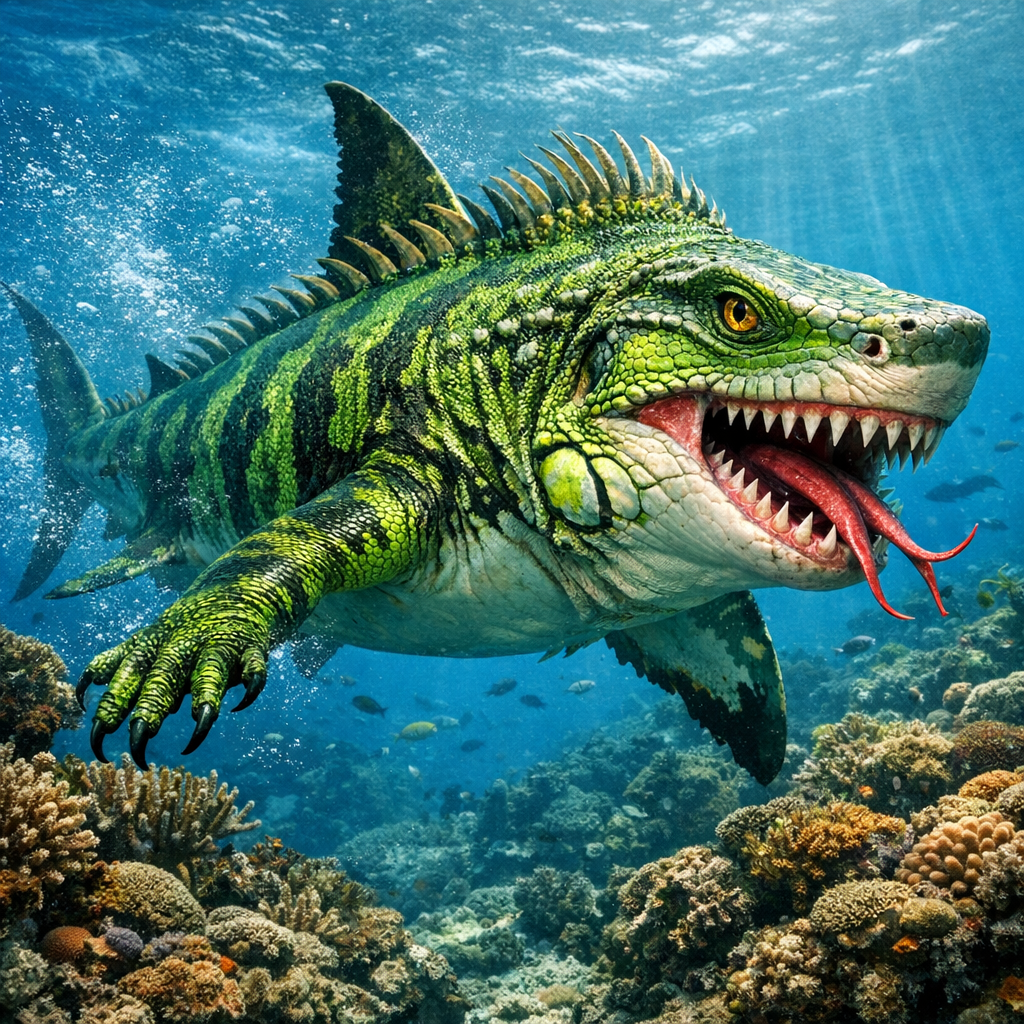
Iguashark
A hybrid of Iguana + great white shark
- Habitat
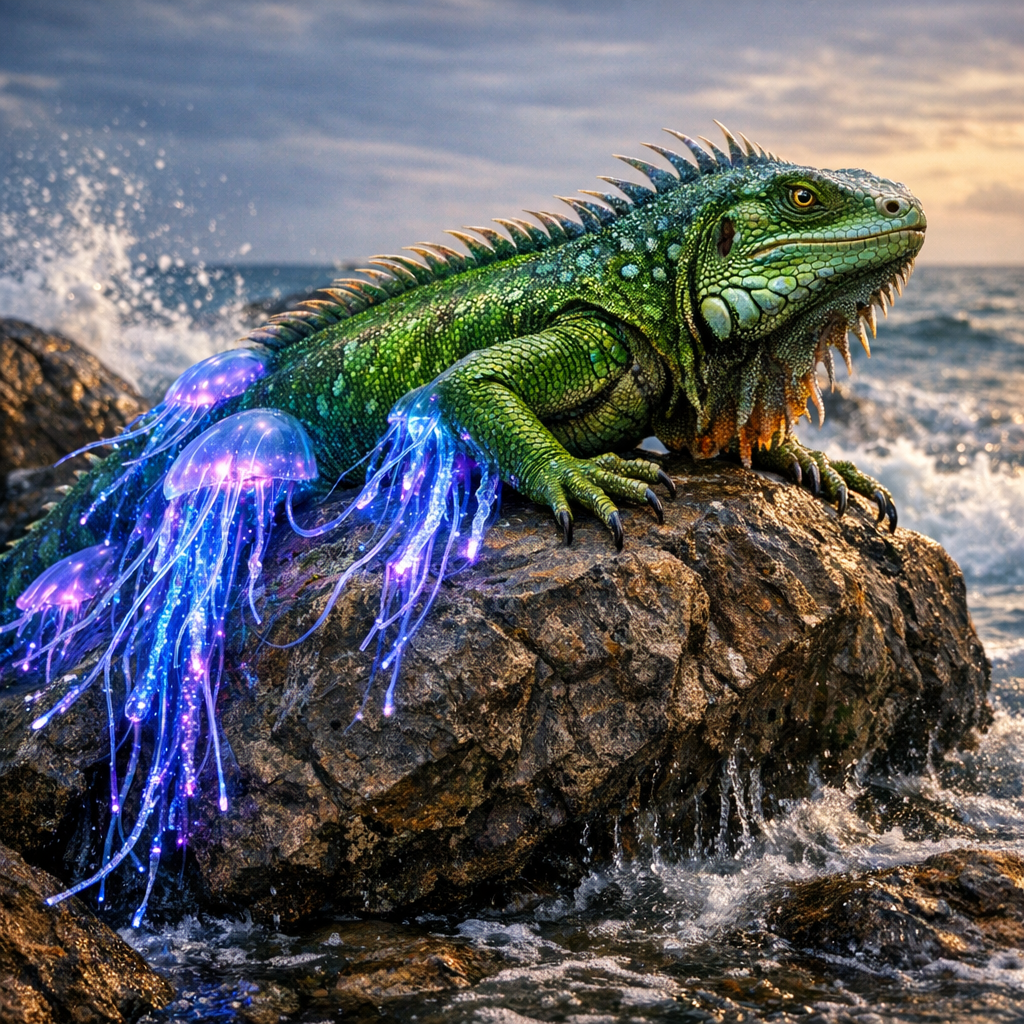
- The Iguashark thrives in warm coastal waters, particularly in coral reefs and rocky shorelines where it can bask in the sun and hunt for prey. It is equally at home in shallow waters and can venture into brackish environments.
- Diet
- The Iguashark is a carnivorous predator, primarily feeding on fish, crustaceans, and small marine mammals. It utilizes its keen eyesight to hunt during the day and can also forage among rocks and coral for smaller prey.
The story of Iguashark
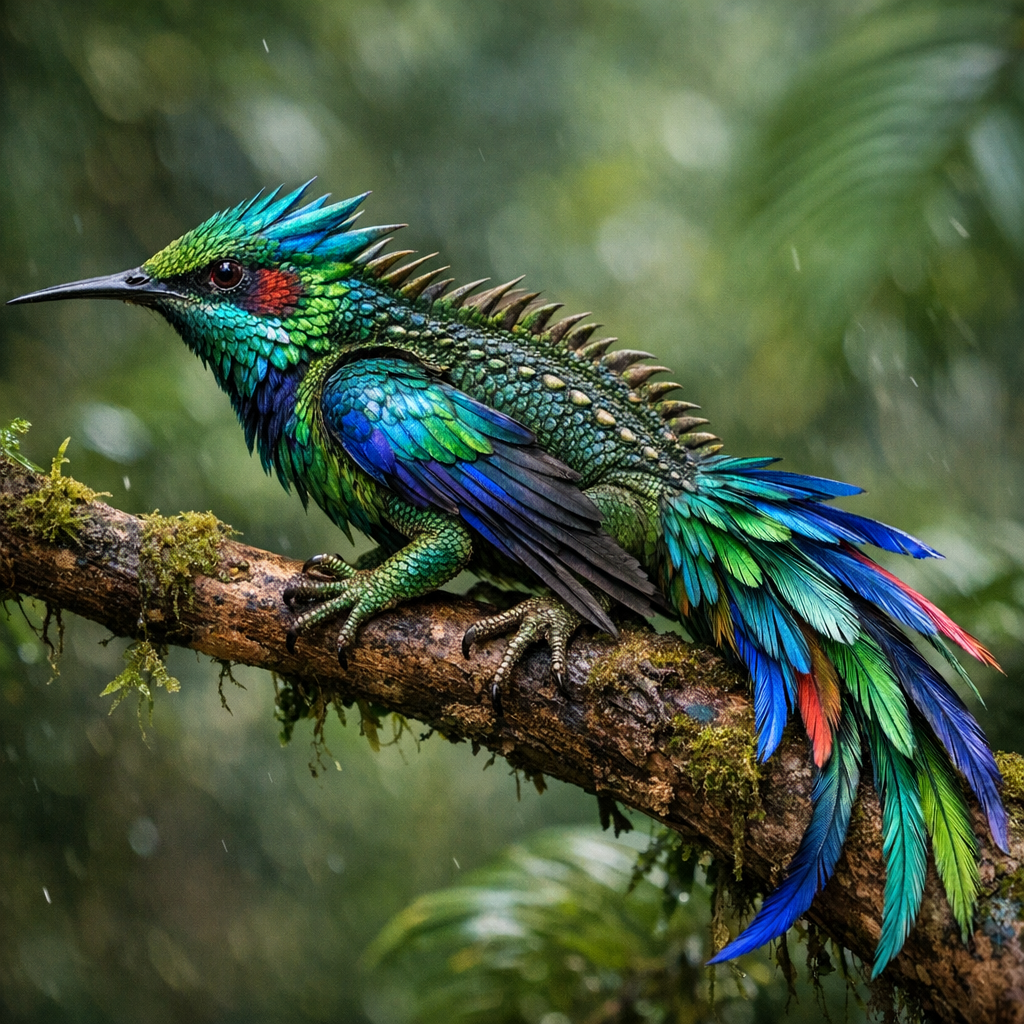
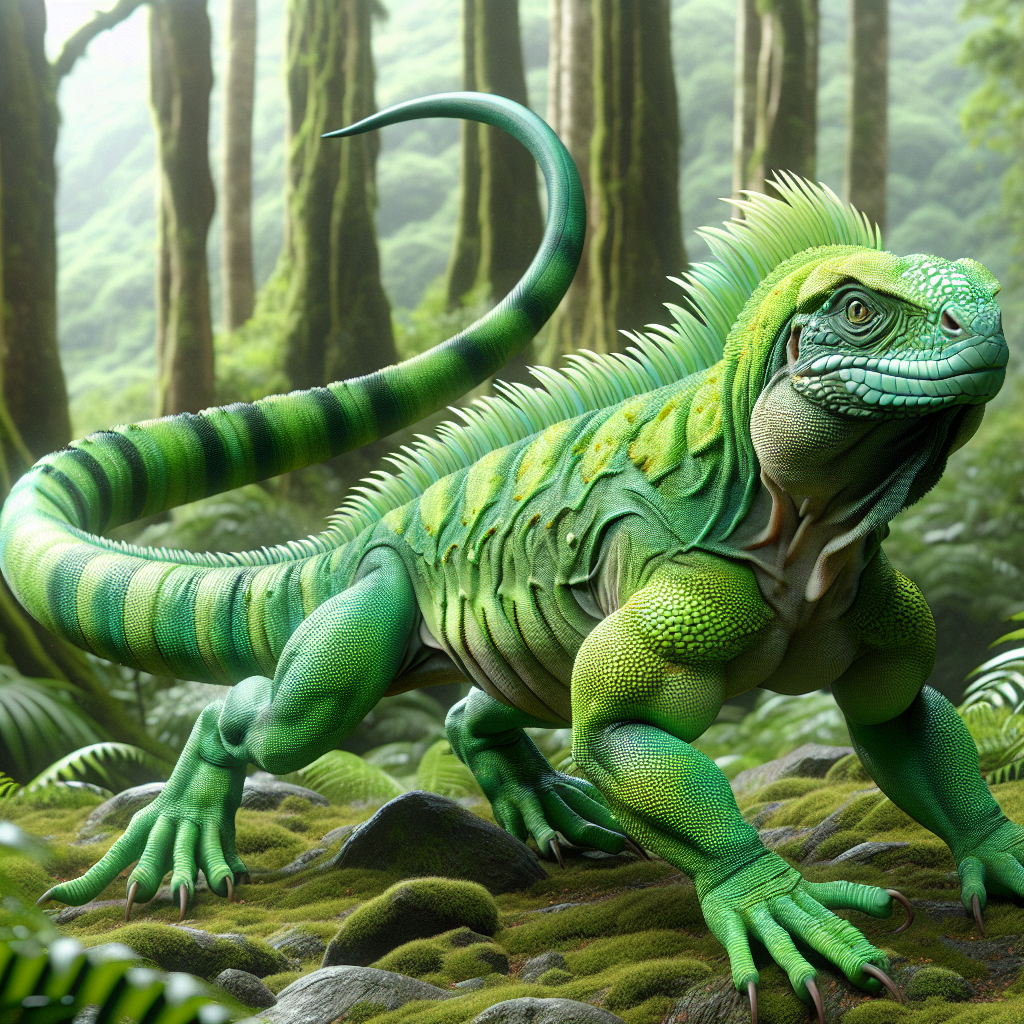
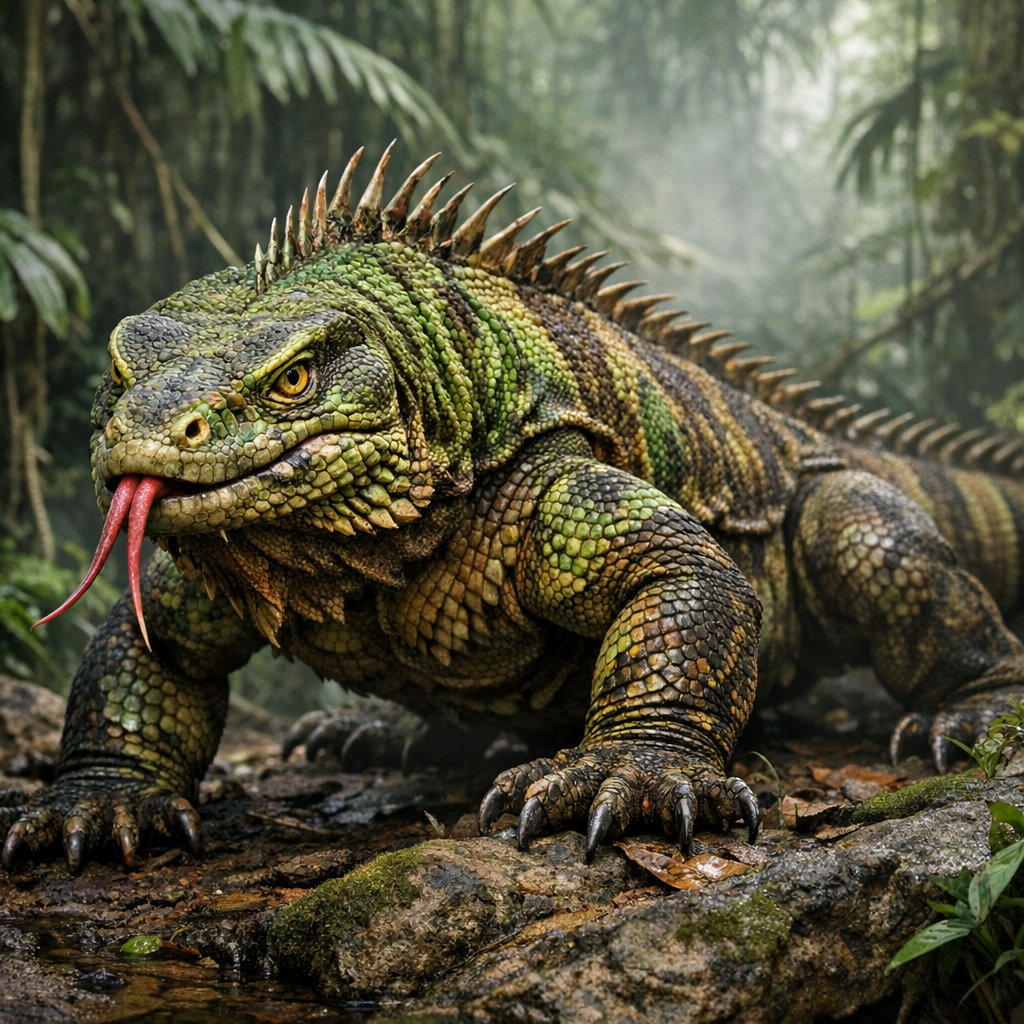
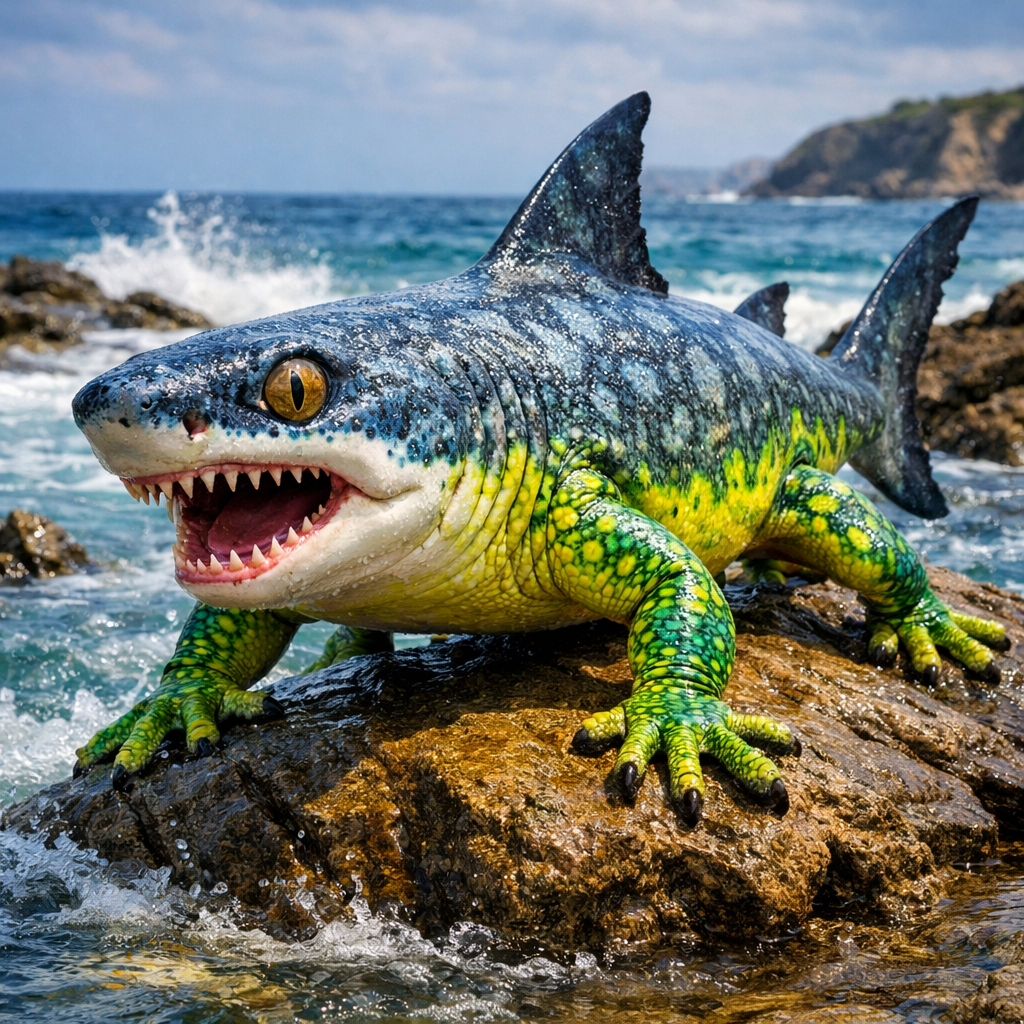
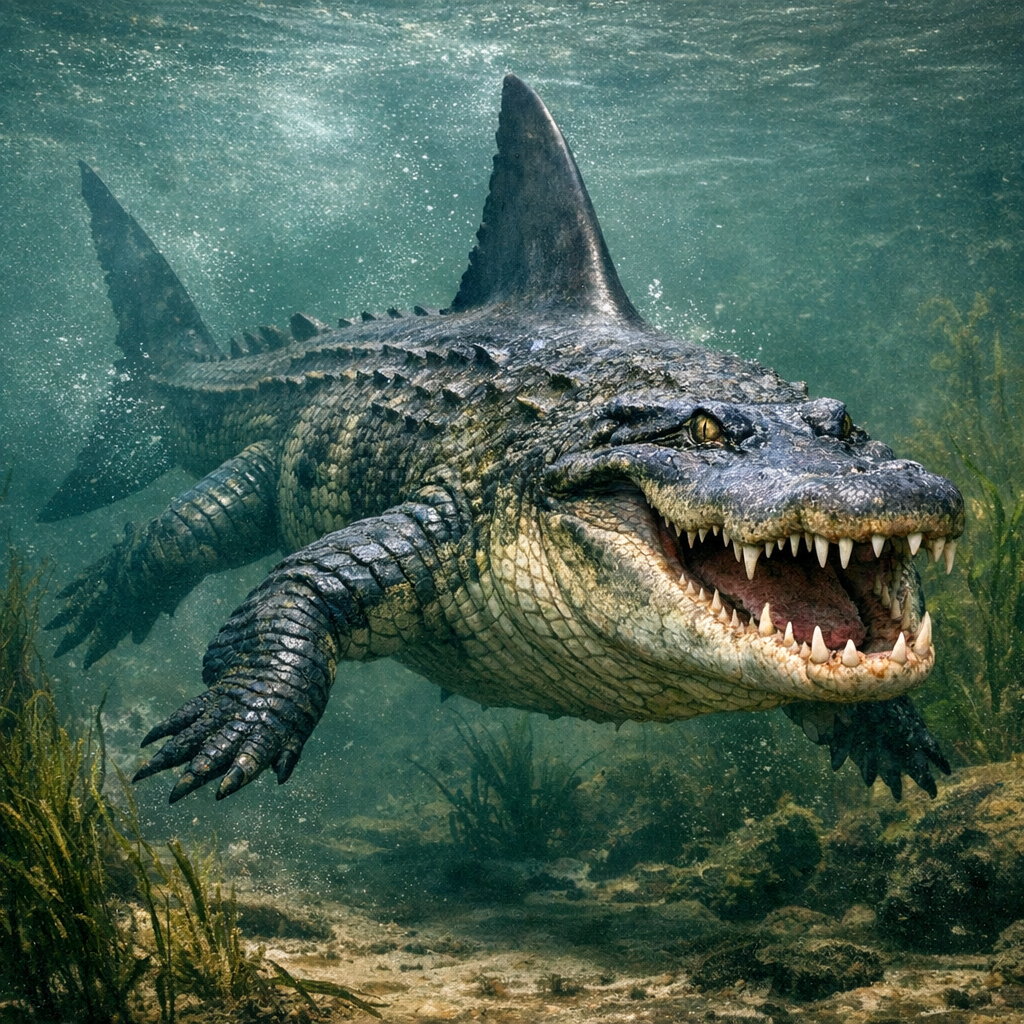
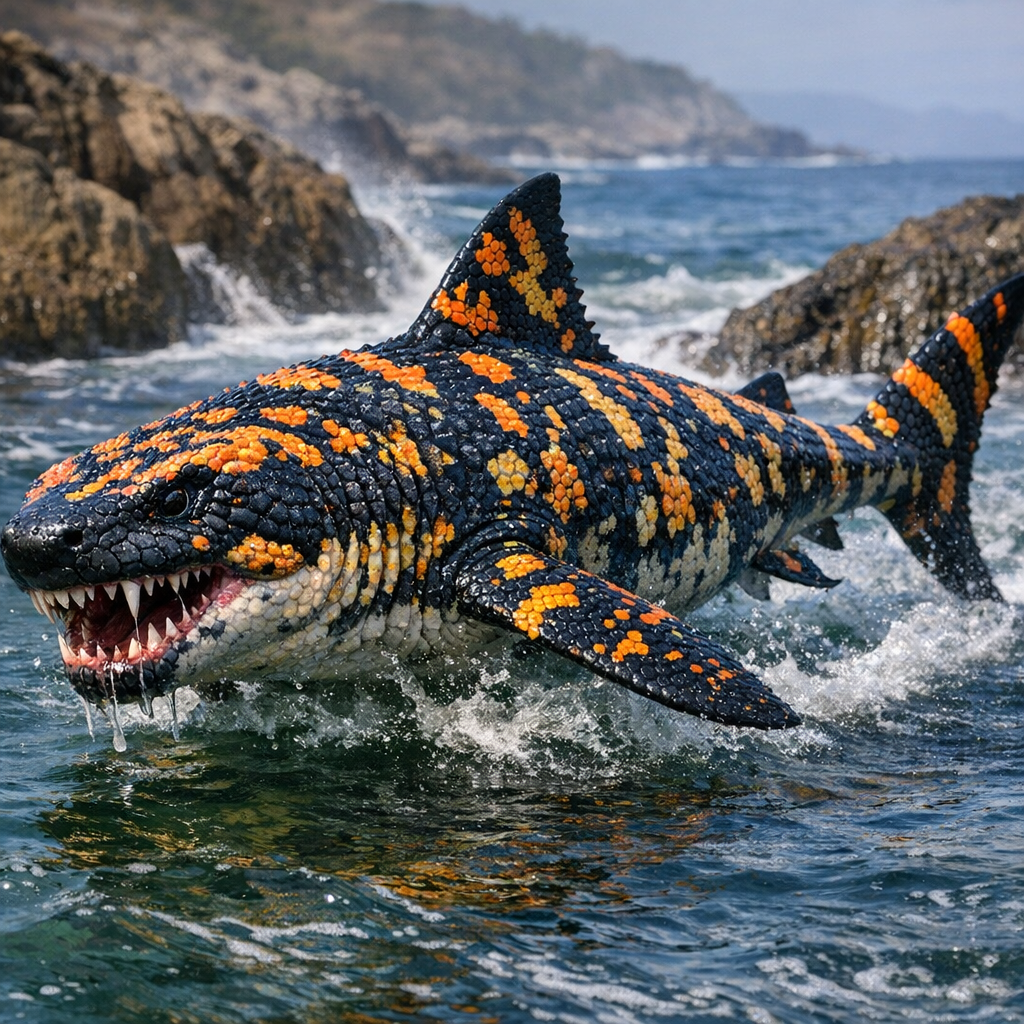
The Iguashark is a remarkable hybrid creature that features the robust body of a great white shark, reaching lengths of up to 12 feet, complemented by the vivid green and patterned skin of an iguana. Its head is a striking blend of both species, equipped with rows of sharp, serrated teeth and a long, forked tongue. The Iguashark possesses a streamlined form for efficient swimming, while its limbs exhibit the dexterity of iguana legs, allowing it to navigate rocky coastal habitats with agility.
Special abilities
Bite Force
The Iguashark delivers a powerful bite that can crush the bones of its prey, incapacitating them instantly.
From the Great White Shark
Real-world basis: The jaw structure of the Iguashark allows for immense biting pressure, similar to that of a great white shark, which is known for its powerful bites.
Riptide Slash
With a swift lateral movement, the Iguashark can slash its tail to create a powerful current that disorients and pushes back attackers.
From the Great White Shark
Real-world basis: The muscular tail of the Iguashark is adapted for rapid movement, allowing it to generate strong water currents.
Camouflage Skin
The Iguashark can blend into its surroundings, making it difficult for predators and prey to detect it.
From the Iguana
Real-world basis: The unique pigmentation and patterning of its skin mimic the colors of the reef and rocky environments.
Solar Regeneration
The Iguashark can absorb sunlight to heal minor wounds and rejuvenate its energy levels.
From the Iguana
Real-world basis: Like iguanas that bask in the sun for heat and energy, this ability allows the Iguashark to recover from injuries when exposed to sunlight.