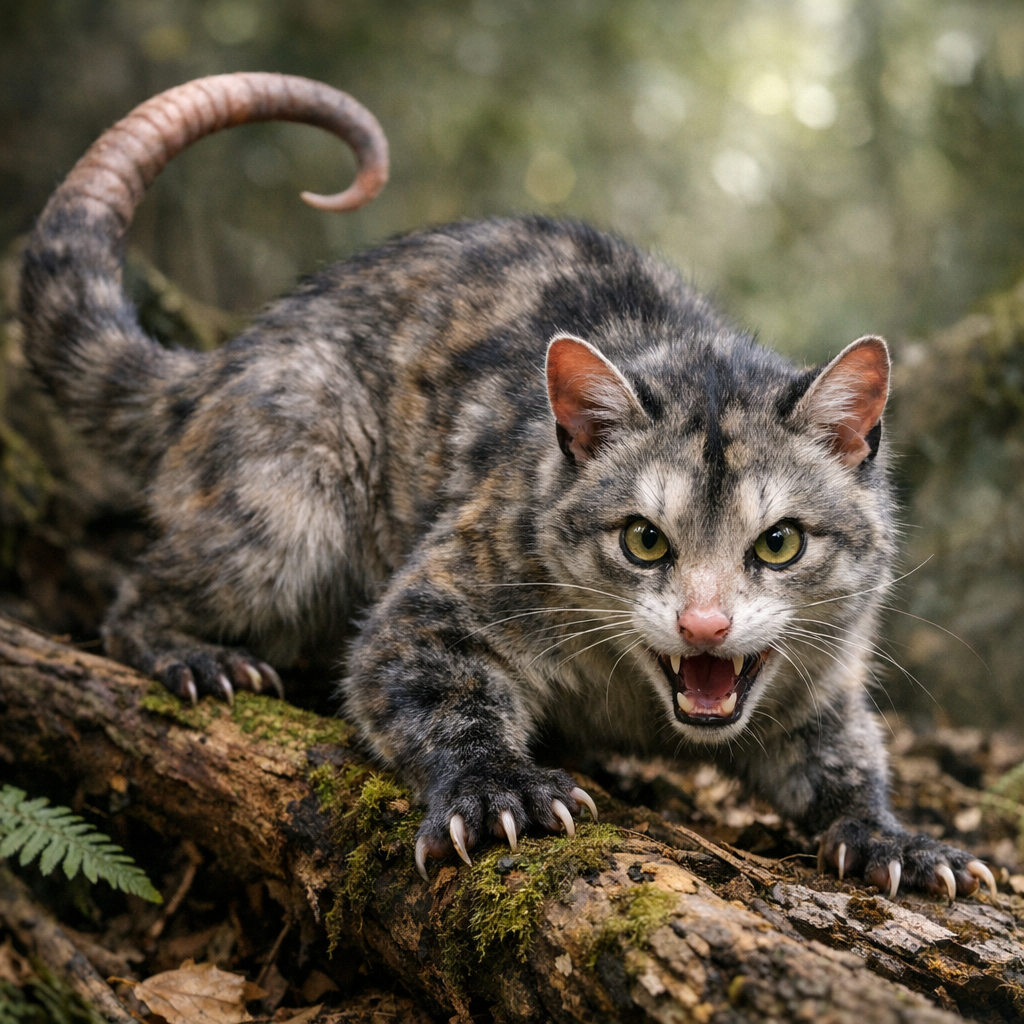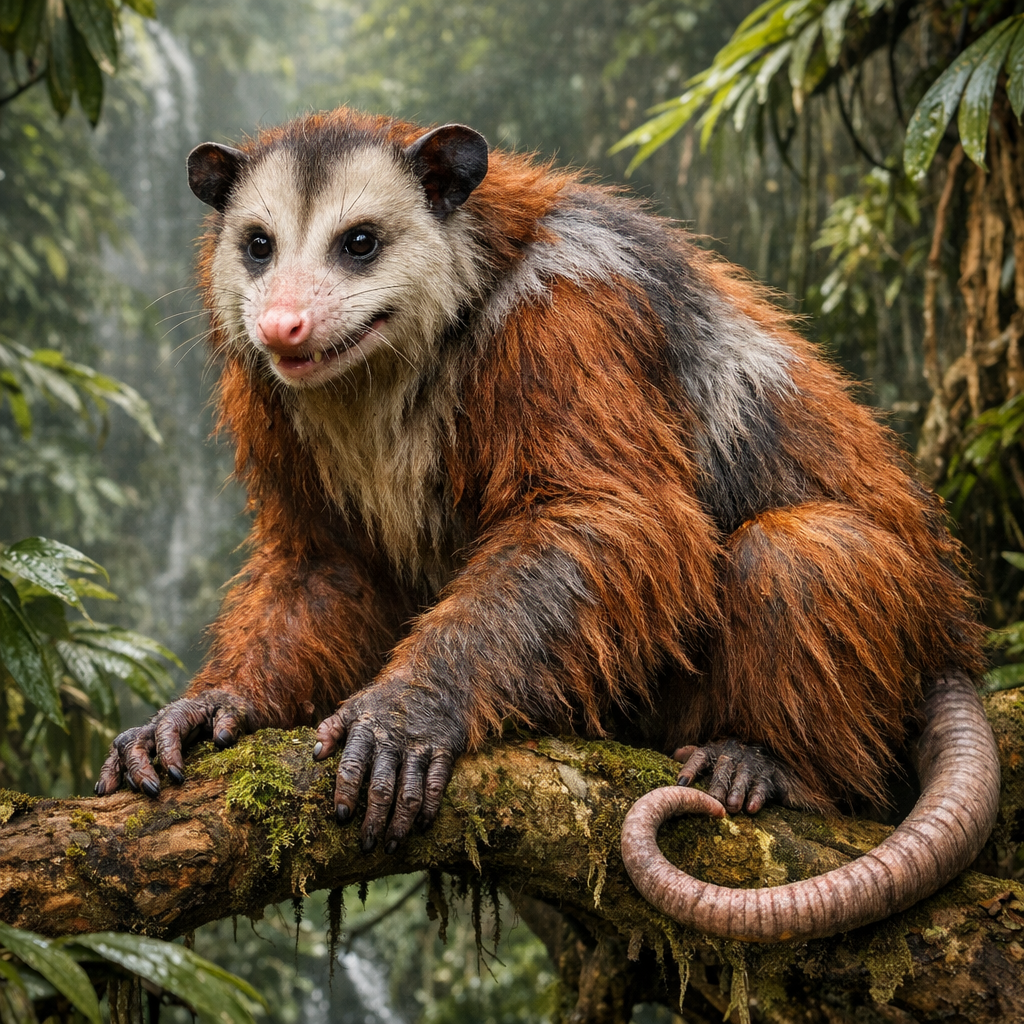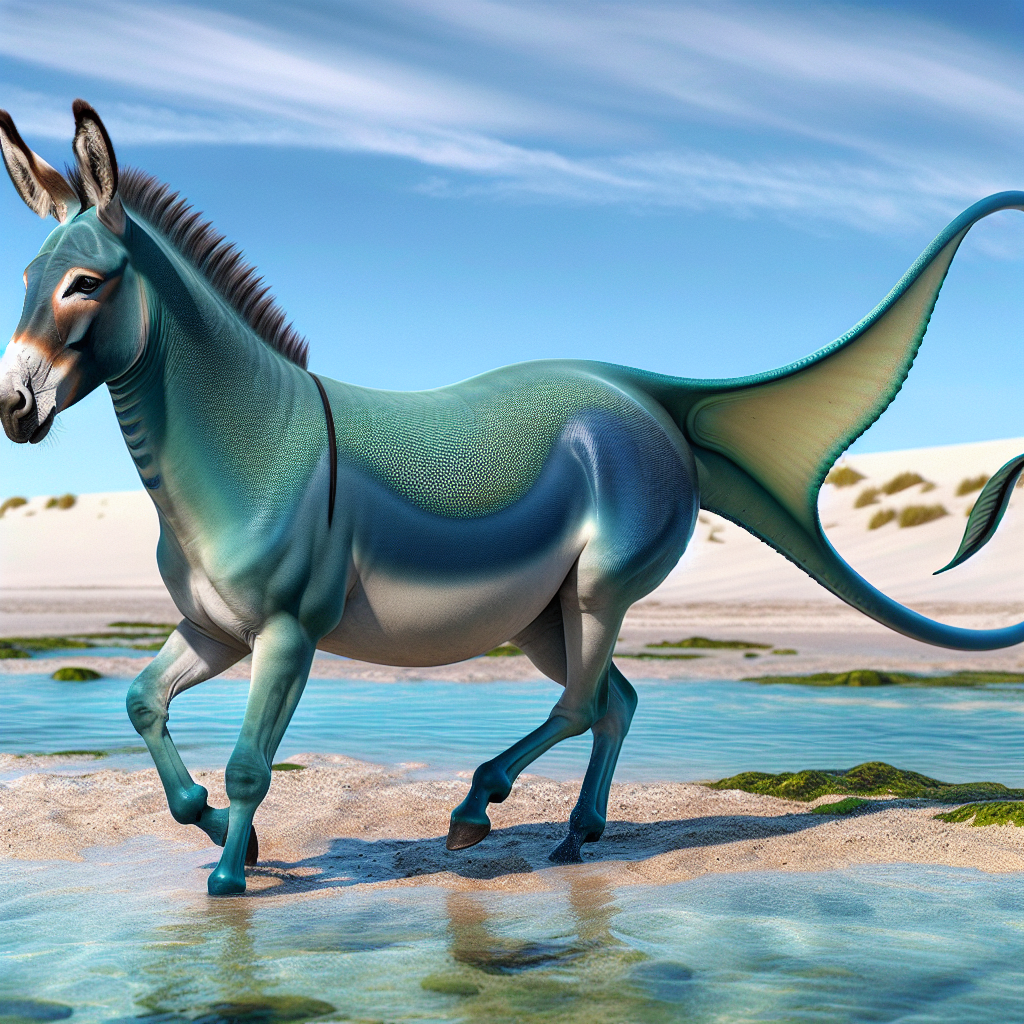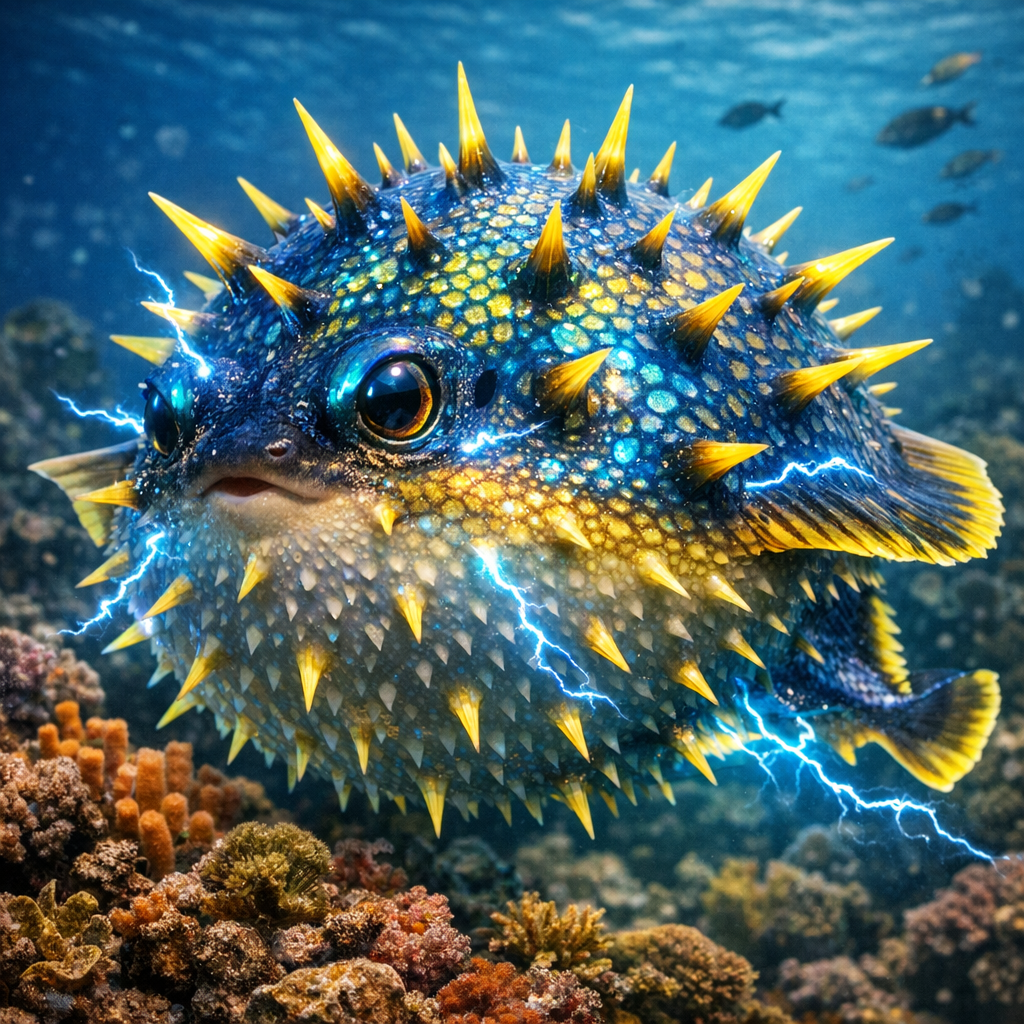
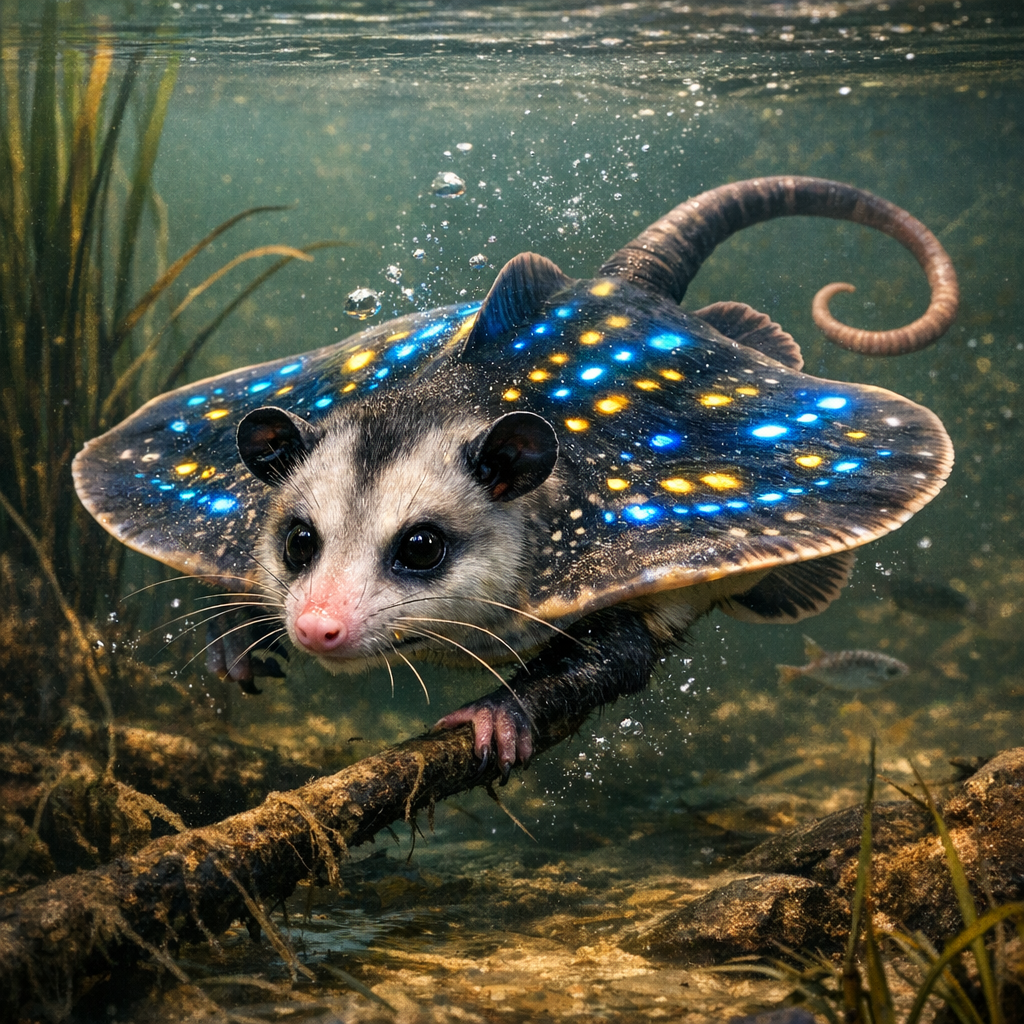
Electropossum
A hybrid of Opossum + Electric Ray
- Habitat
- The Electropossum thrives in brackish coastal marshes and estuaries, where freshwater meets saltwater. It tends to inhabit areas with dense vegetation and submerged structures, providing ample cover and foraging opportunities.
- Diet
- The Electropossum has an omnivorous diet, primarily feeding on crustaceans, small fish, and plant matter. Utilizing its electroreception abilities, it can detect the electrical signals of prey hidden in the sediment, allowing it to hunt effectively both day and night.
The story of Electropossum
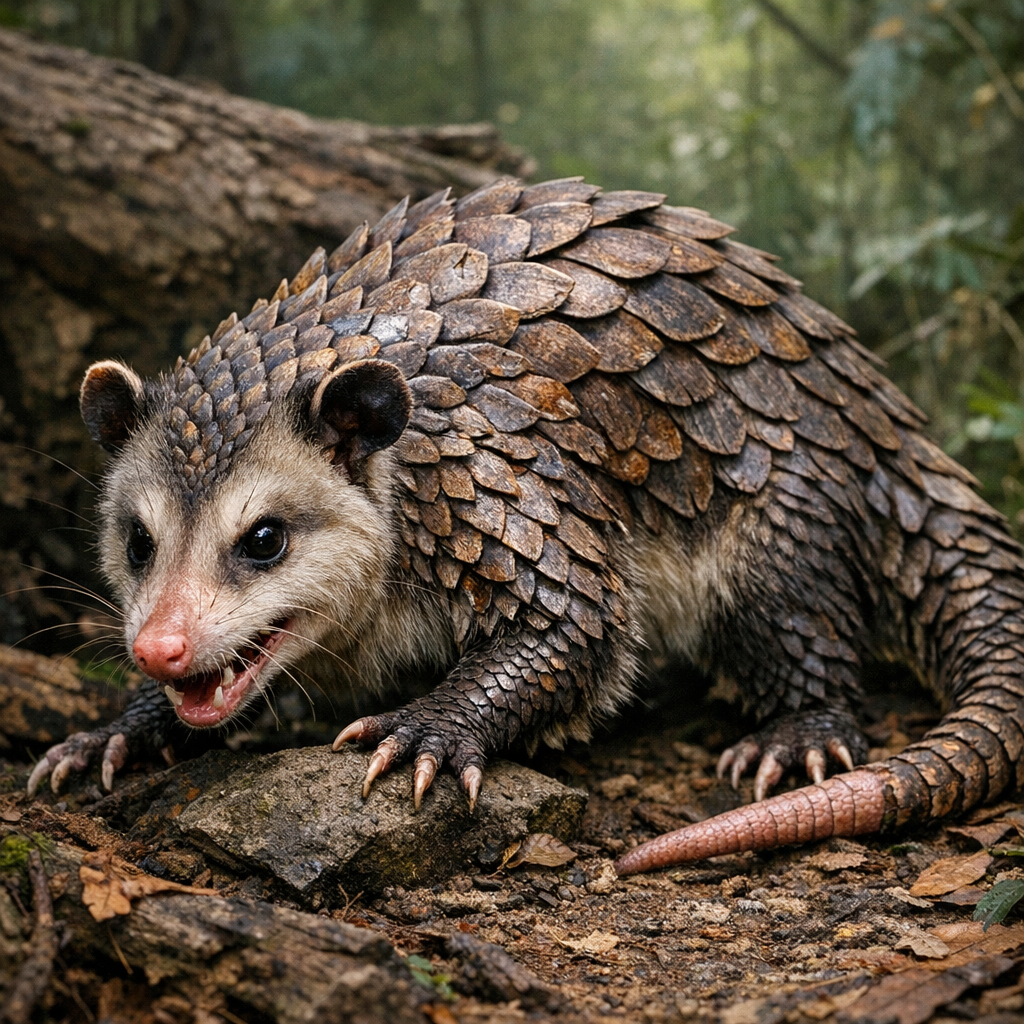
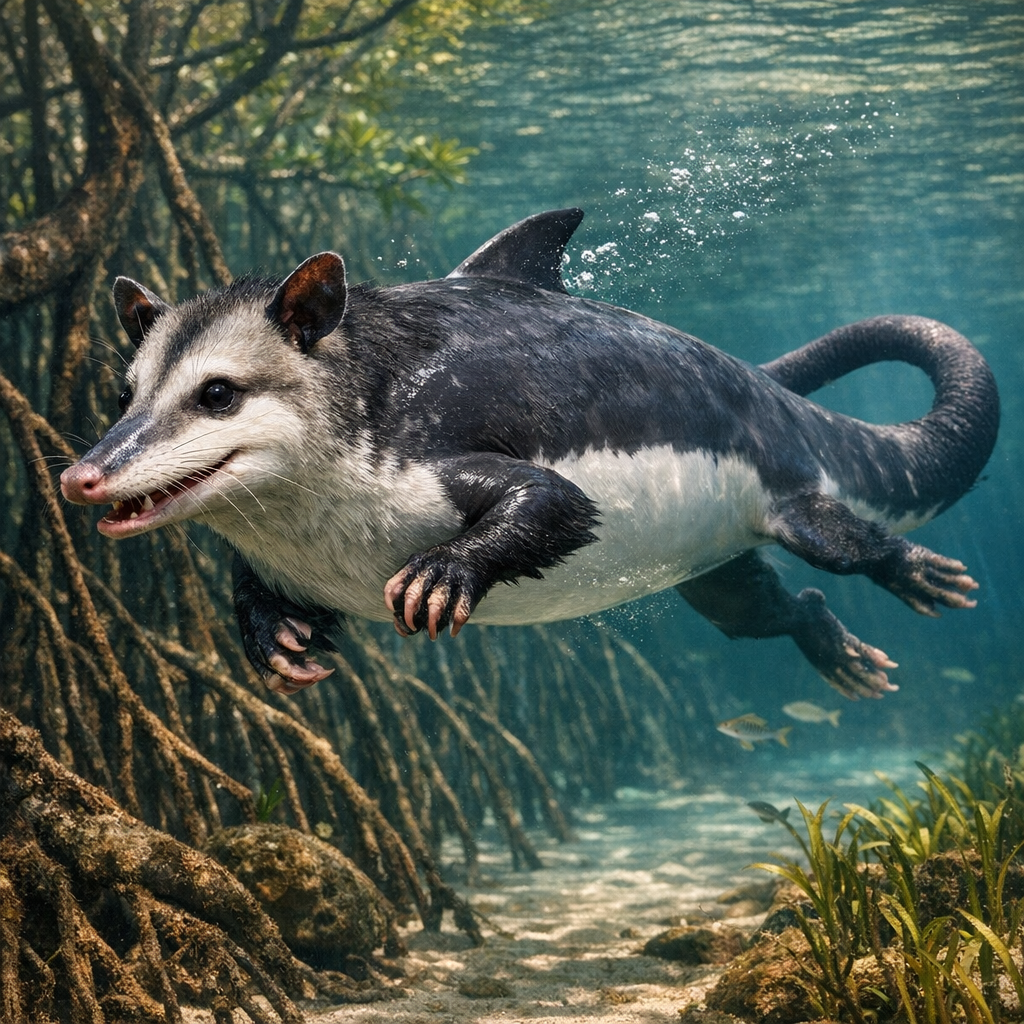
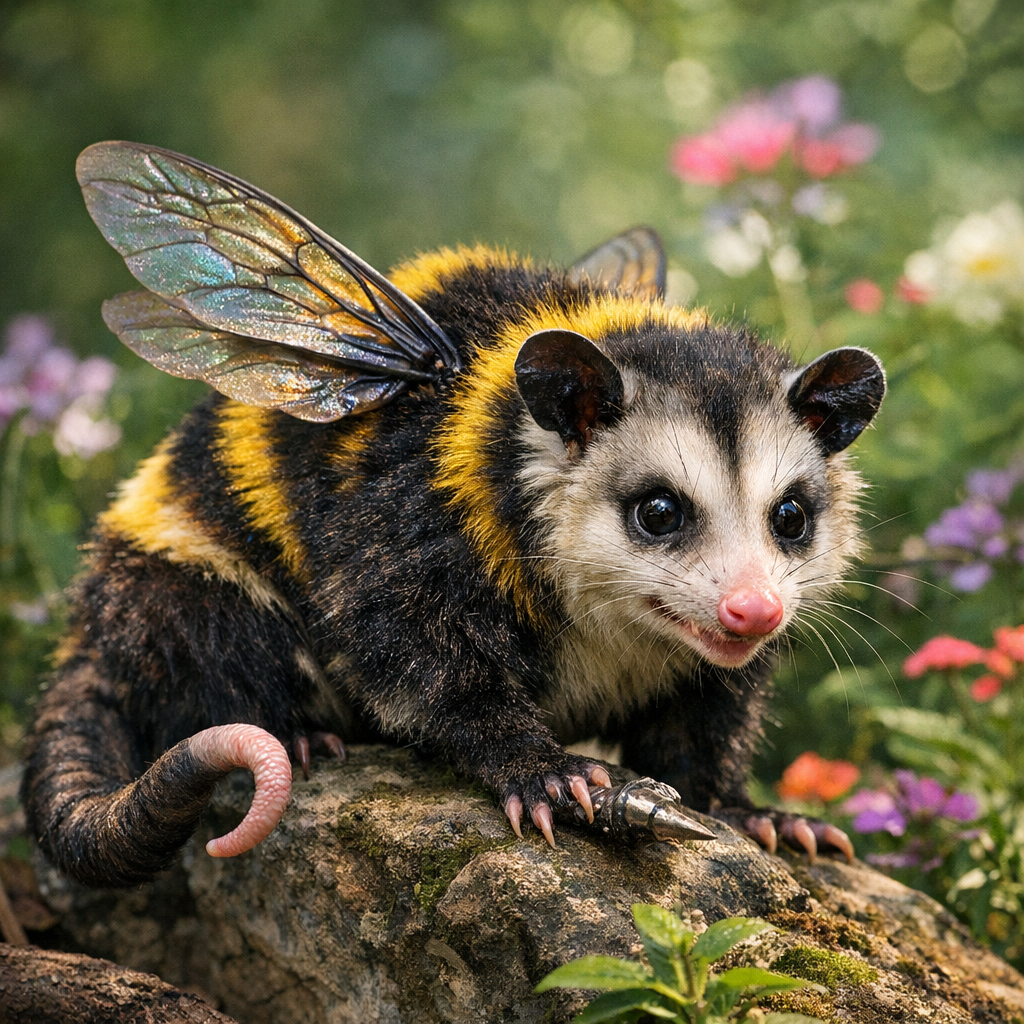
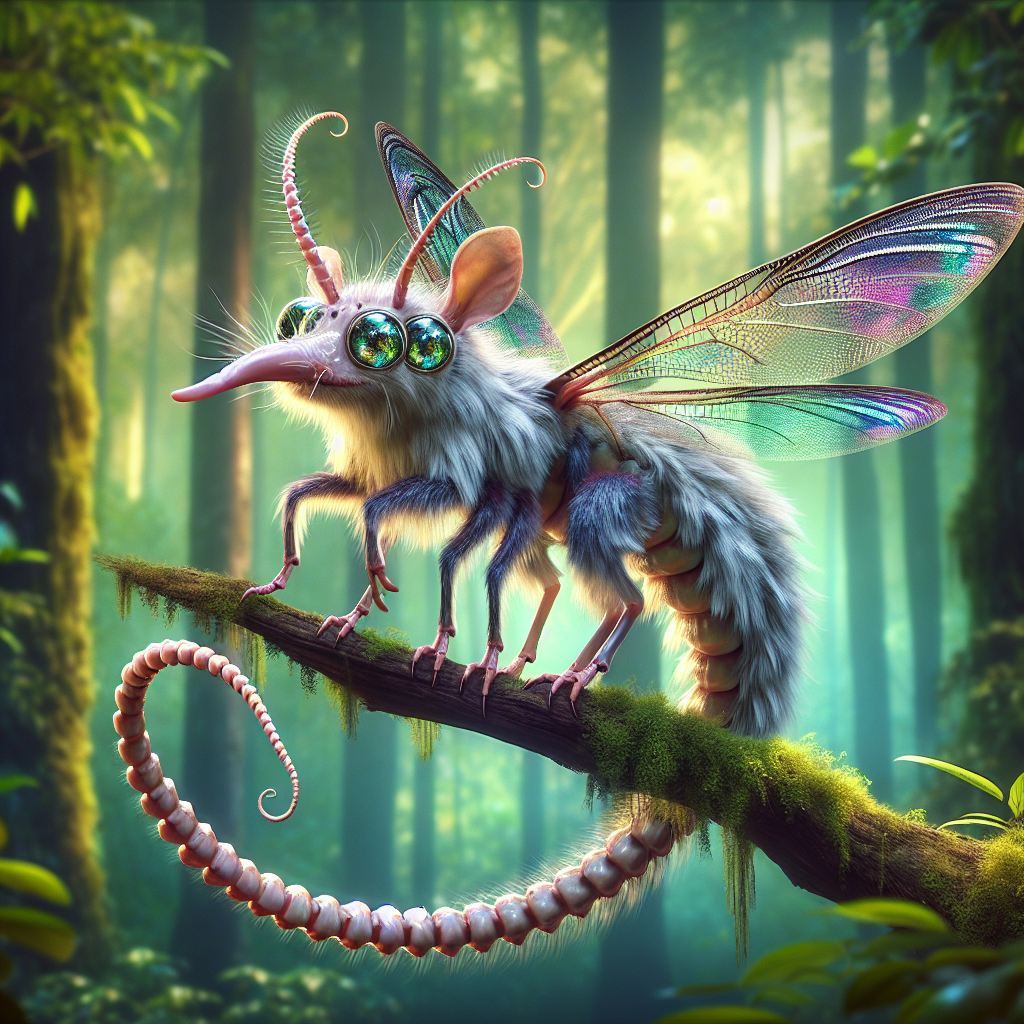
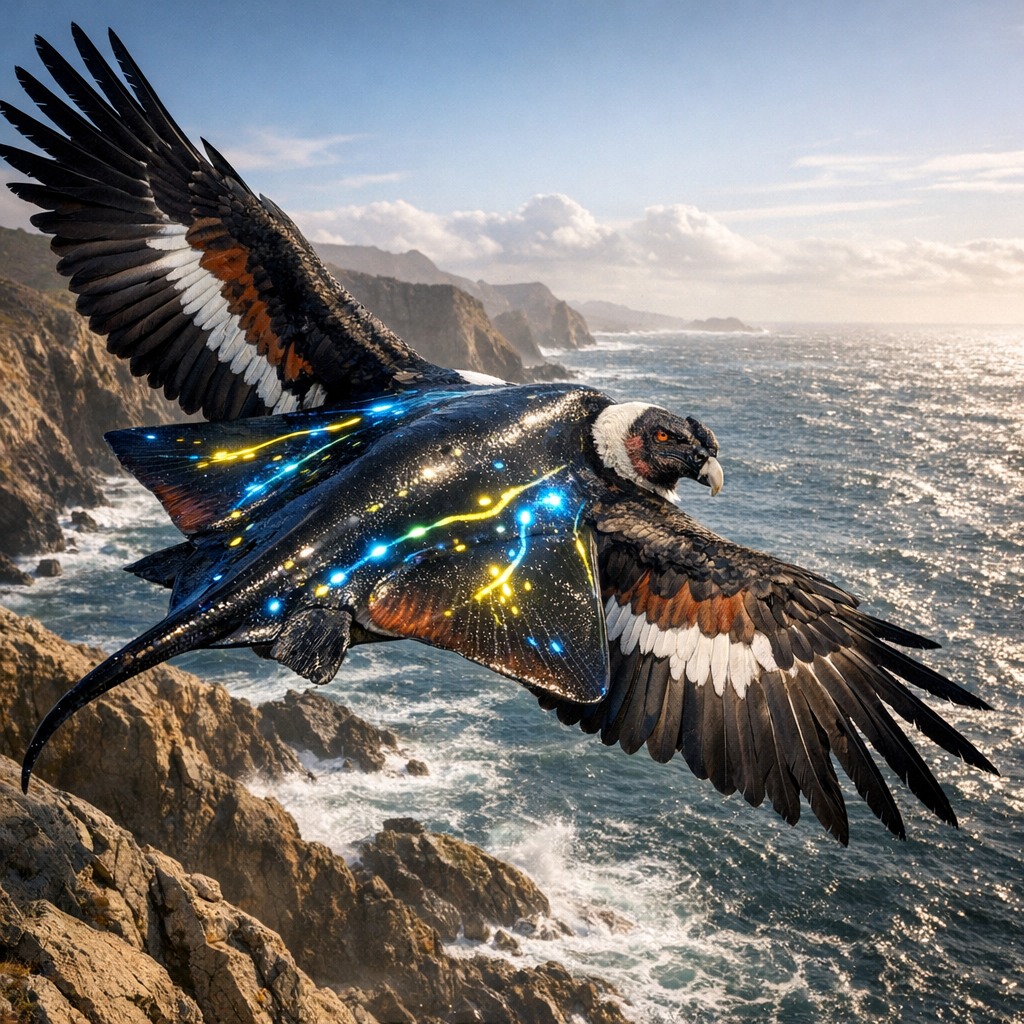
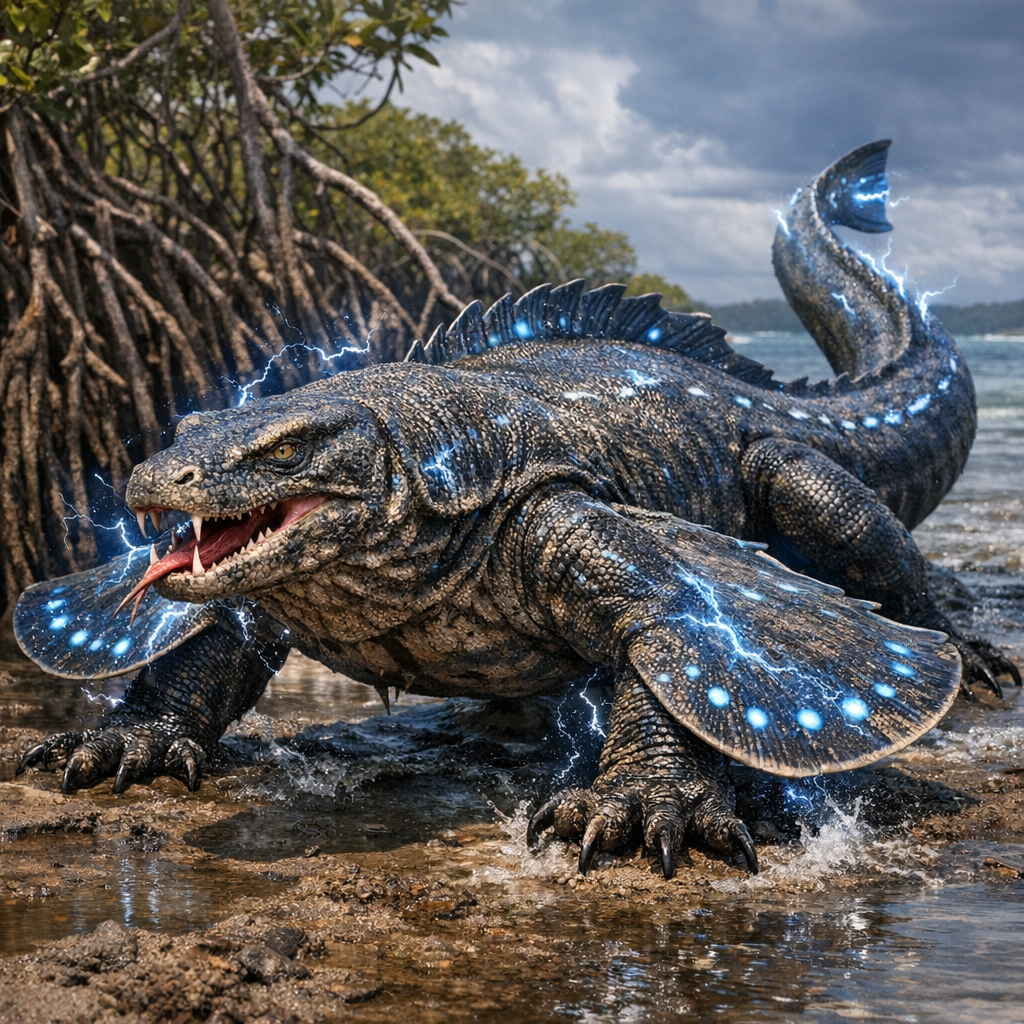
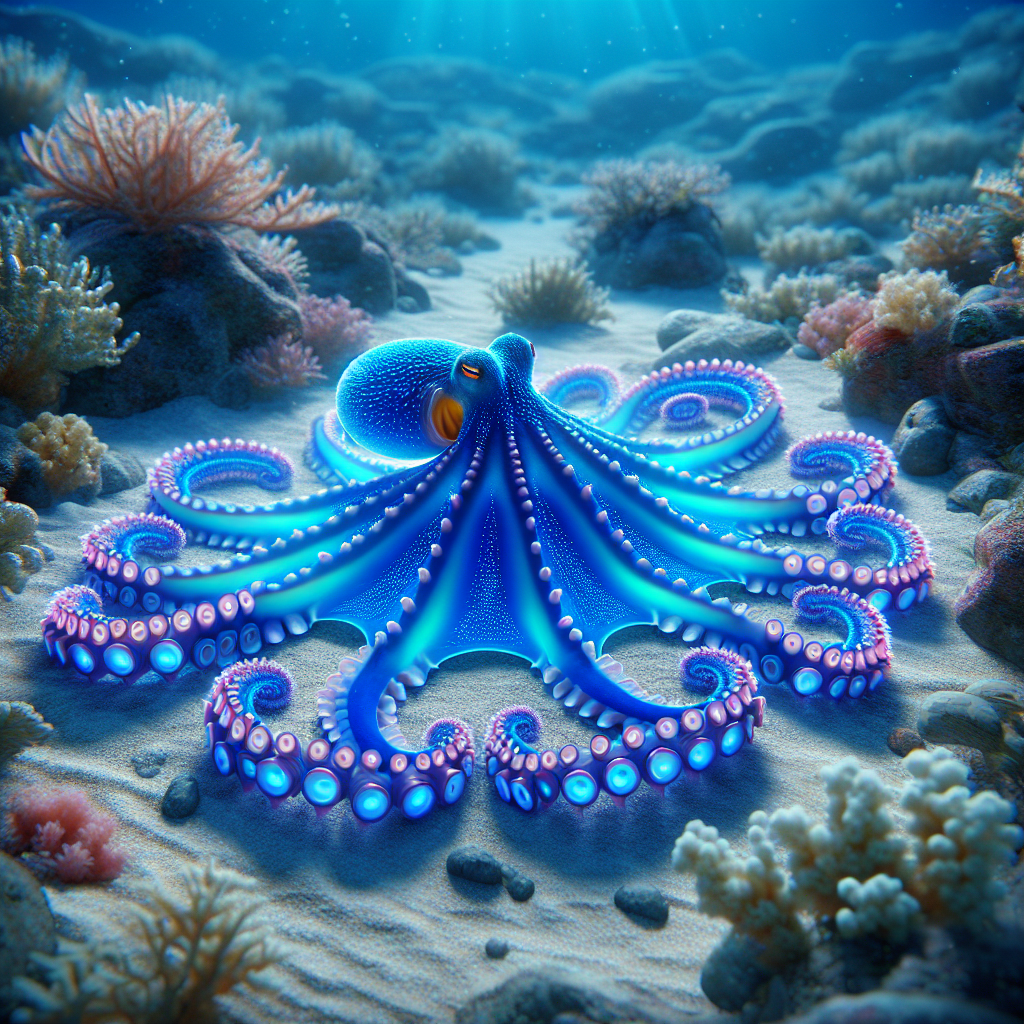
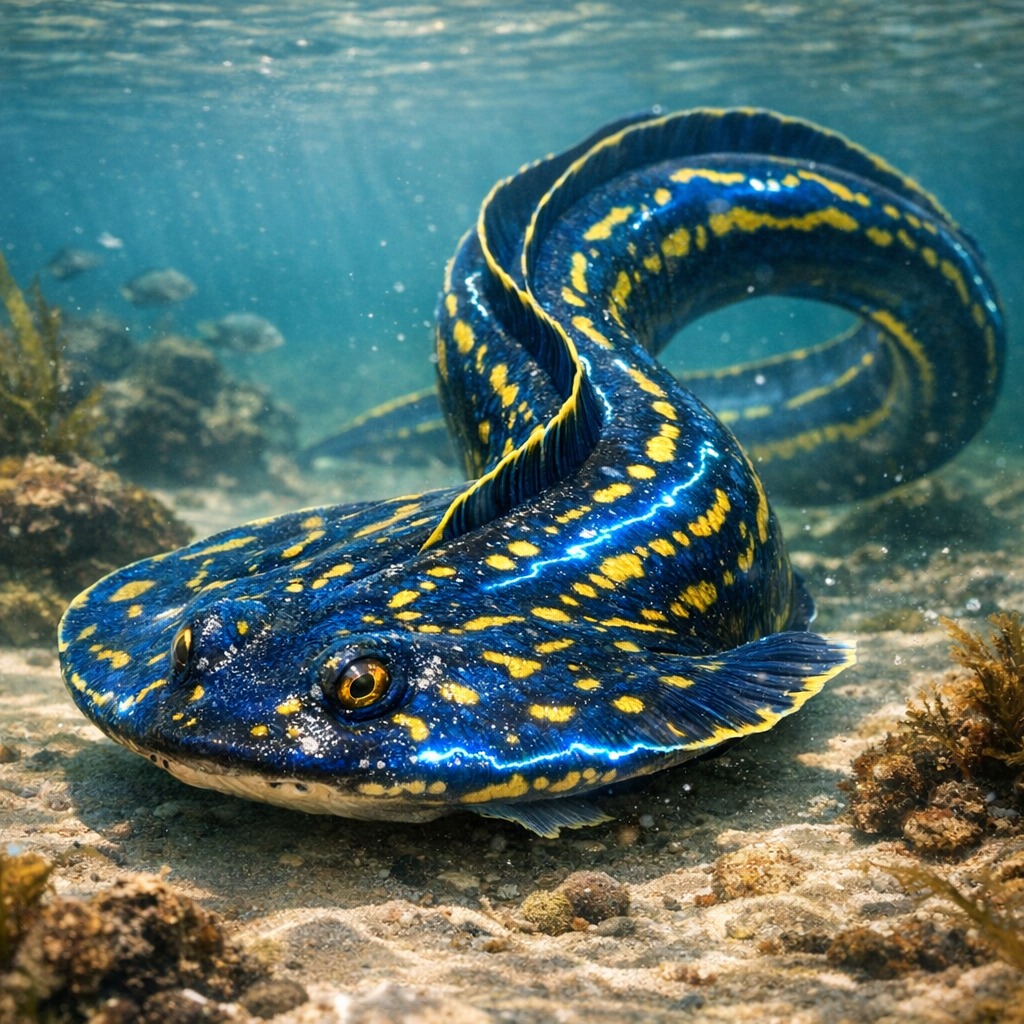
The Electropossum is a fascinating hybrid of the Virginia opossum and the electric ray, characterized by its flattened, disc-like body covered in smooth, electro-sensitive skin. Its large, expressive eyes are complemented by a pair of long, whisker-like appendages that enhance its sensory perception. The creature possesses a prehensile tail, akin to that of an opossum, which aids in navigation through its aquatic and terrestrial habitats. With a unique combination of bioluminescent patterns across its body, the Electropossum is capable of both camouflage and communication in the murky depths of its environment.
Special abilities
Electric Surge
Unleashes a powerful electric shock that stuns opponents within a short radius, causing temporary paralysis.
From the Electric Ray
Real-world basis: Electrogenesis, the ability to generate electric fields for navigation and predation.
Tail Whip
Delivers a swift, sweeping strike with its prehensile tail, capable of knocking down smaller foes.
From the Opossum
Real-world basis: Physical agility and strength derived from the opossum's muscular tail.
Electroshield
Creates a temporary barrier of electrical energy that absorbs incoming attacks and reduces damage taken.
From the Electric Ray
Real-world basis: Utilization of electric fields for defensive purposes.
Camouflage Cloak
Mimics the surrounding environment by altering its skin patterns, making it nearly invisible to predators.
From the Opossum
Real-world basis: Adaptive coloration, similar to the opossum's ability to blend into its surroundings.