Orangodragon
A hybrid of Komodo Dragon + Orangutan
- Habitat
- The Orangodragon thrives in the lowland rainforests and mangrove swamps of Southeast Asia, where it can easily navigate both the treetops and the forest floor. It prefers areas with ample vegetation for climbing and a nearby water source for hydration.
- Diet
- As an omnivore, the Orangodragon has a varied diet that includes fruits, leaves, insects, small mammals, and fish. It uses its keen sense of smell to locate food, often foraging in trees and on the ground.
The story of Orangodragon
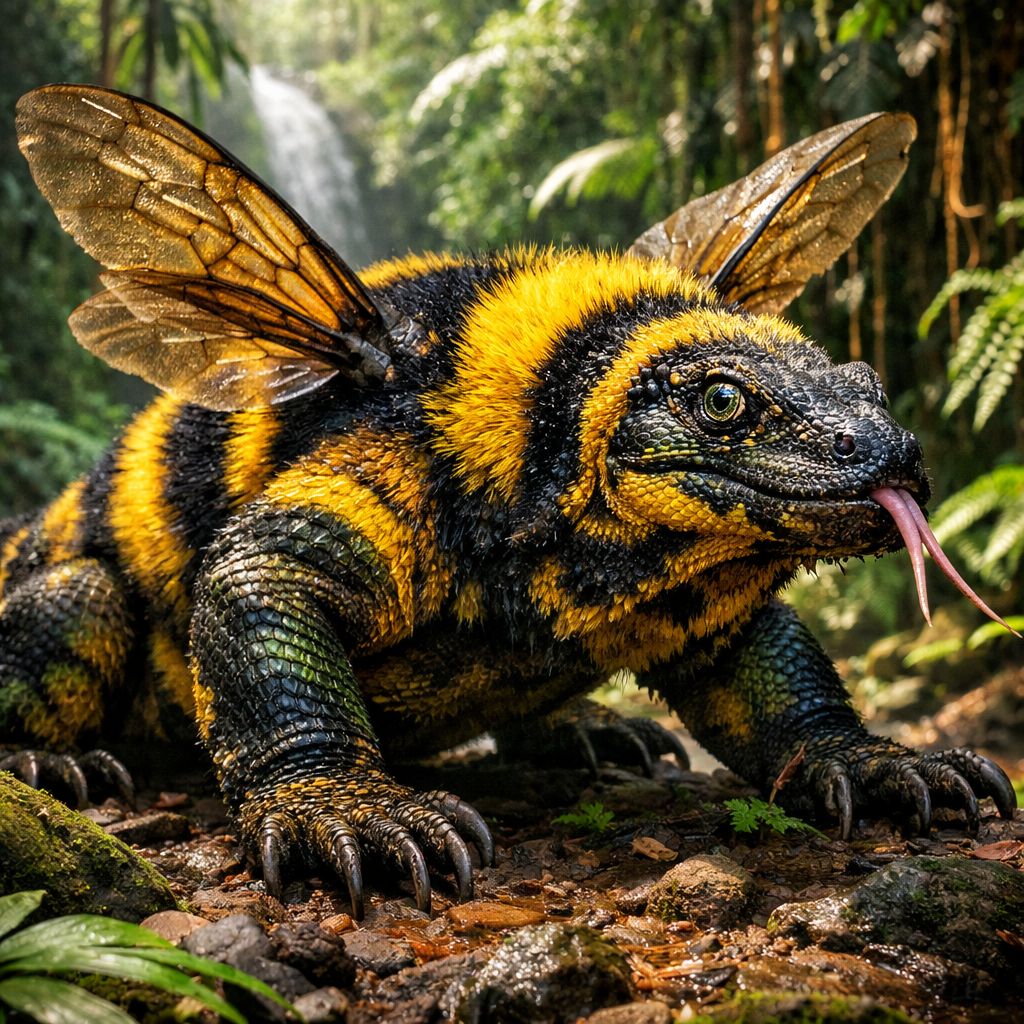
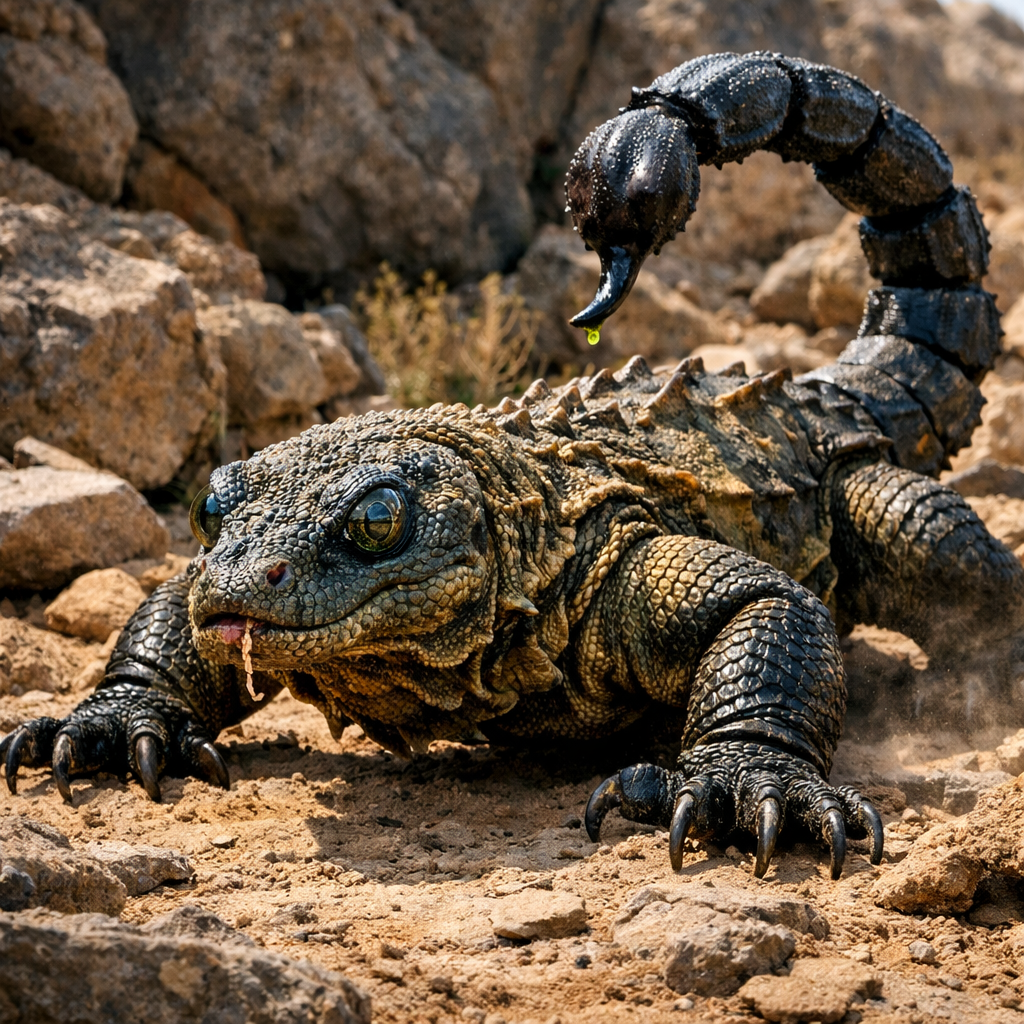
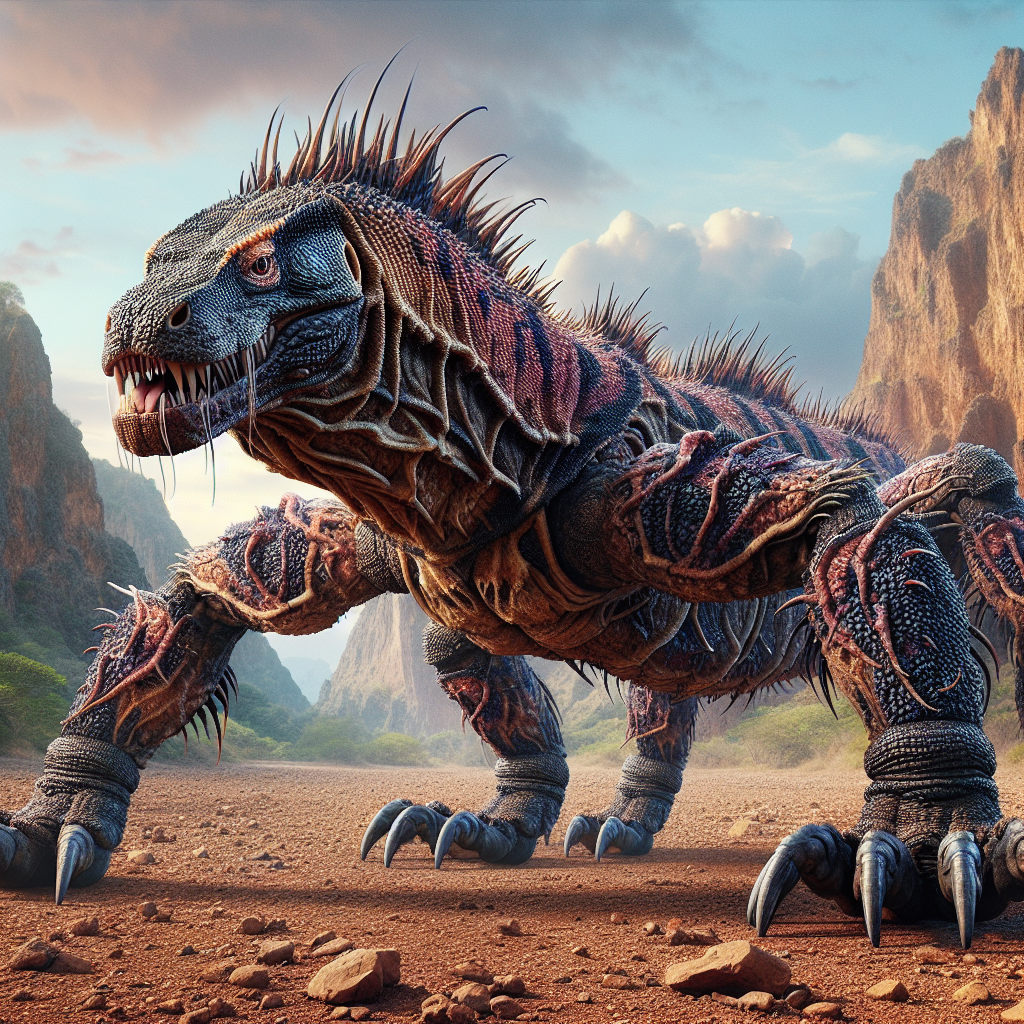
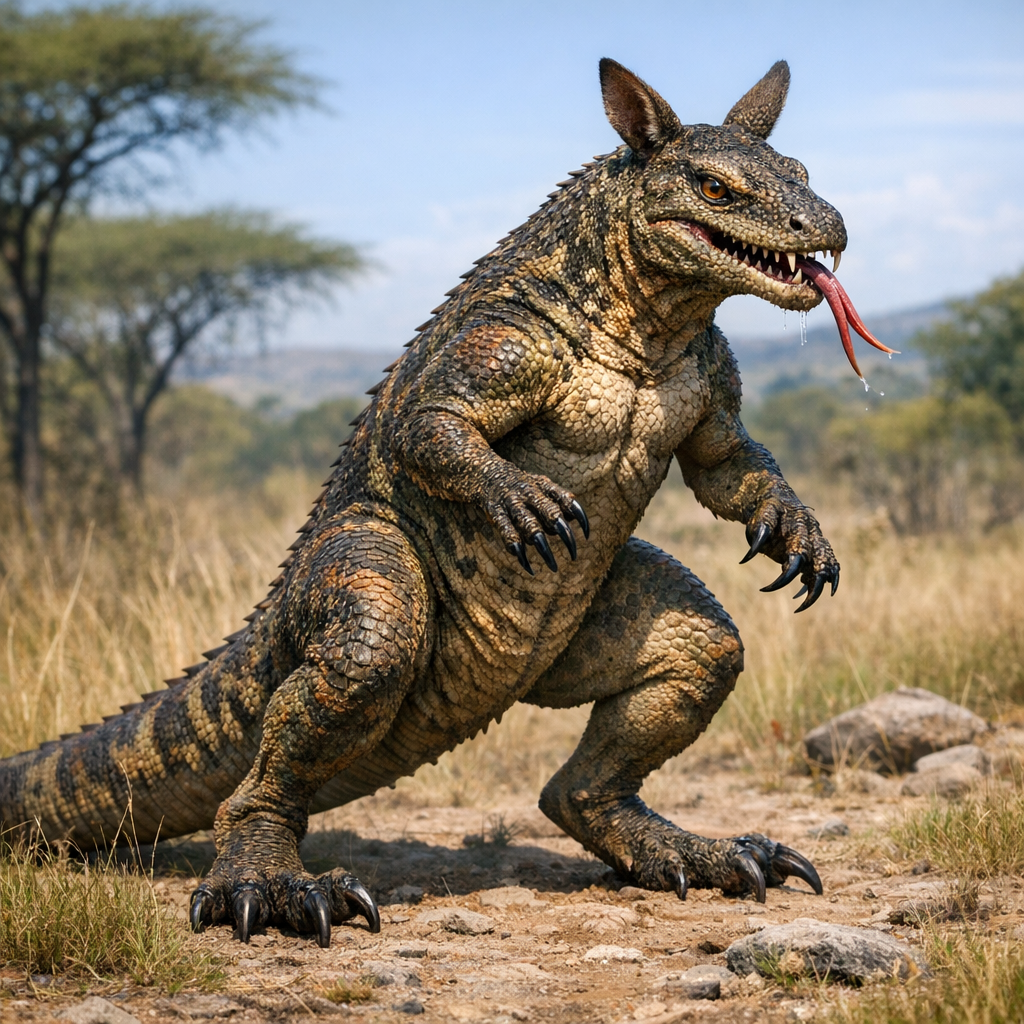
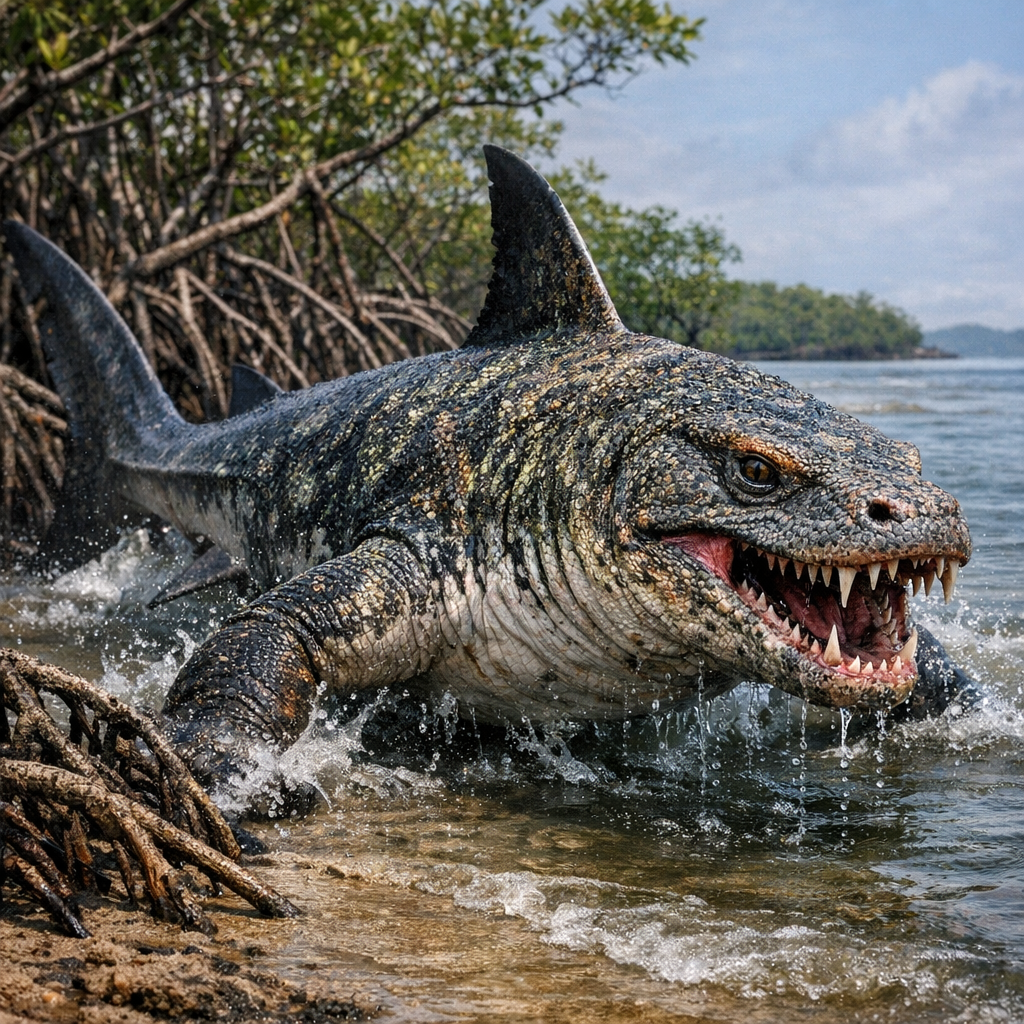
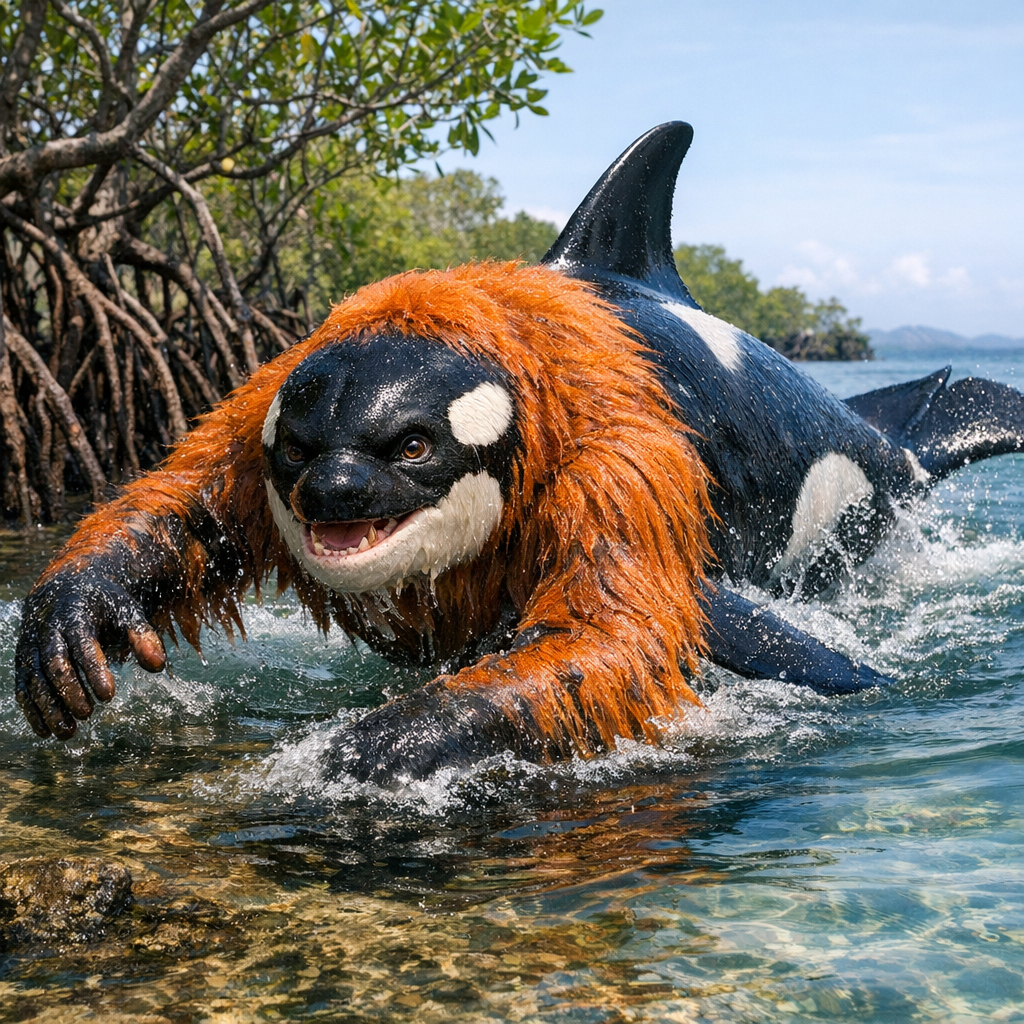
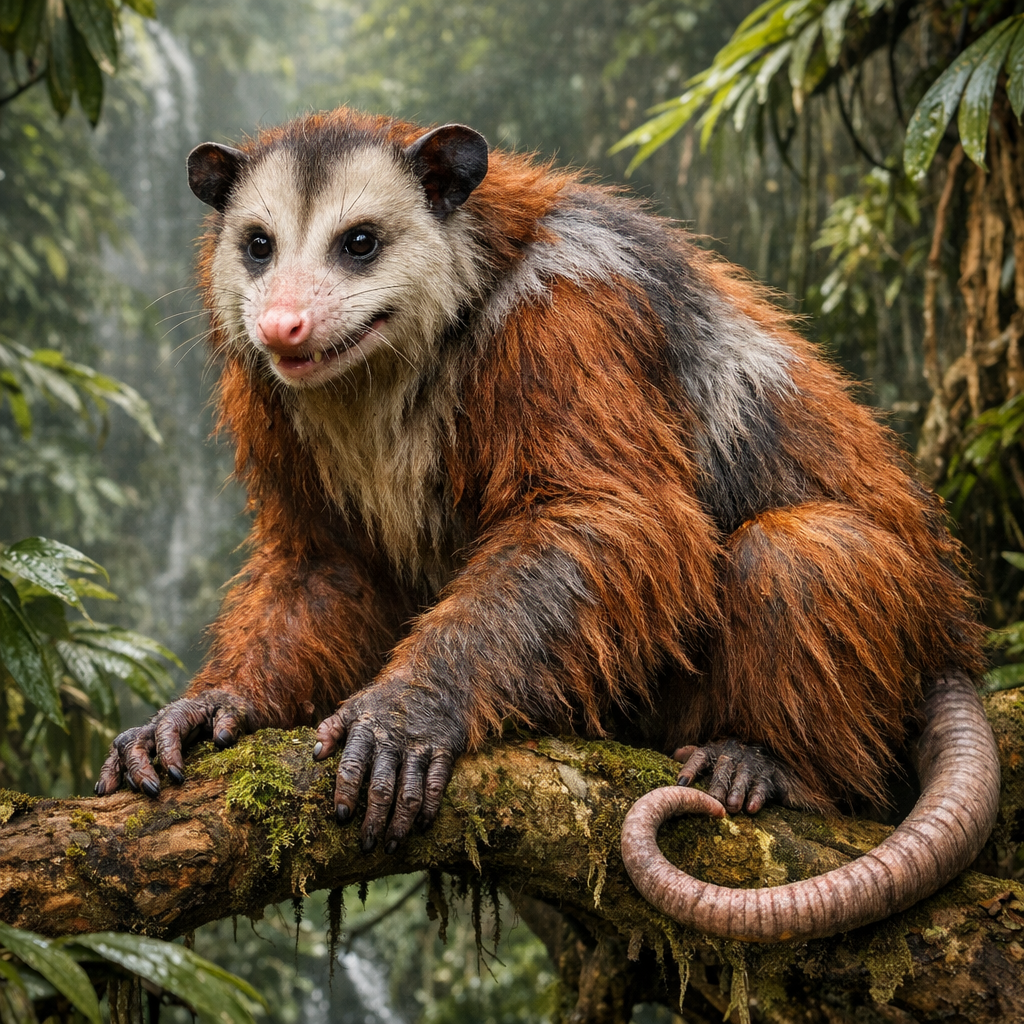
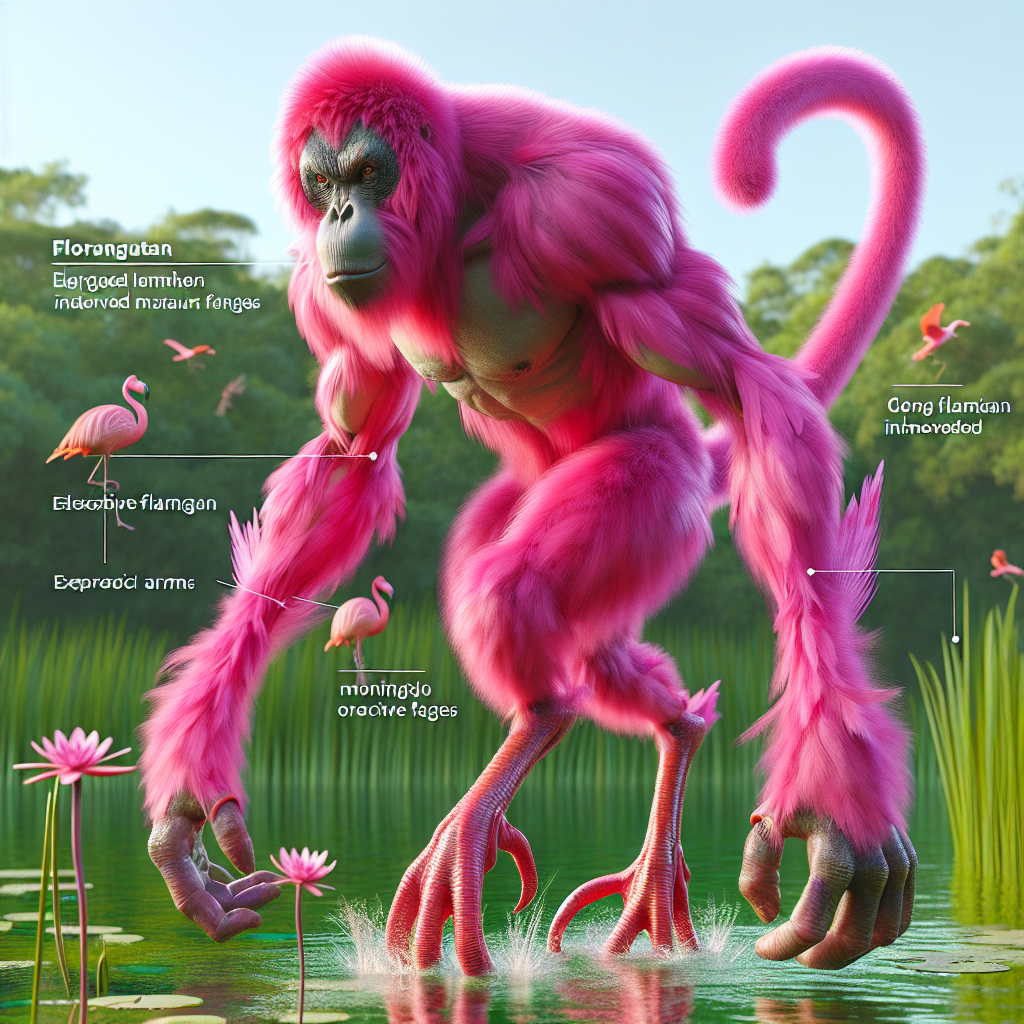
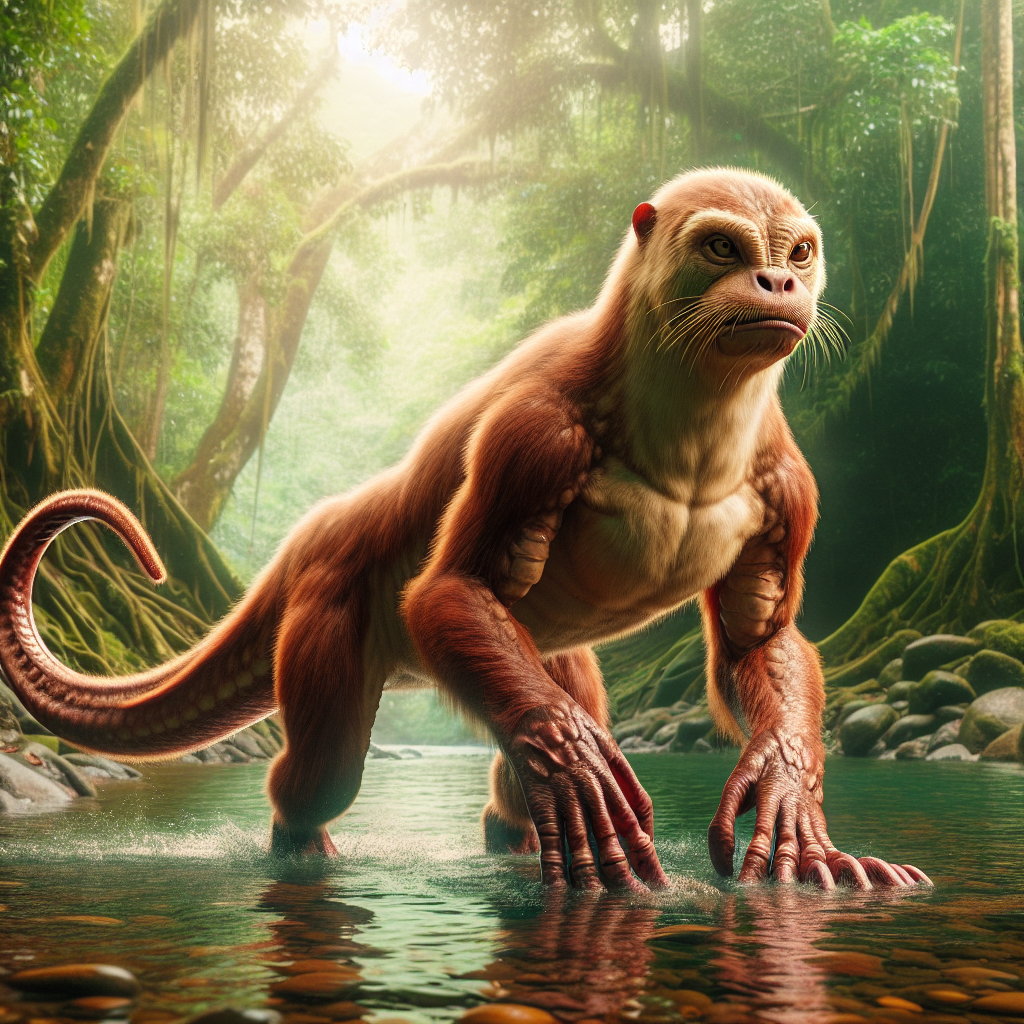
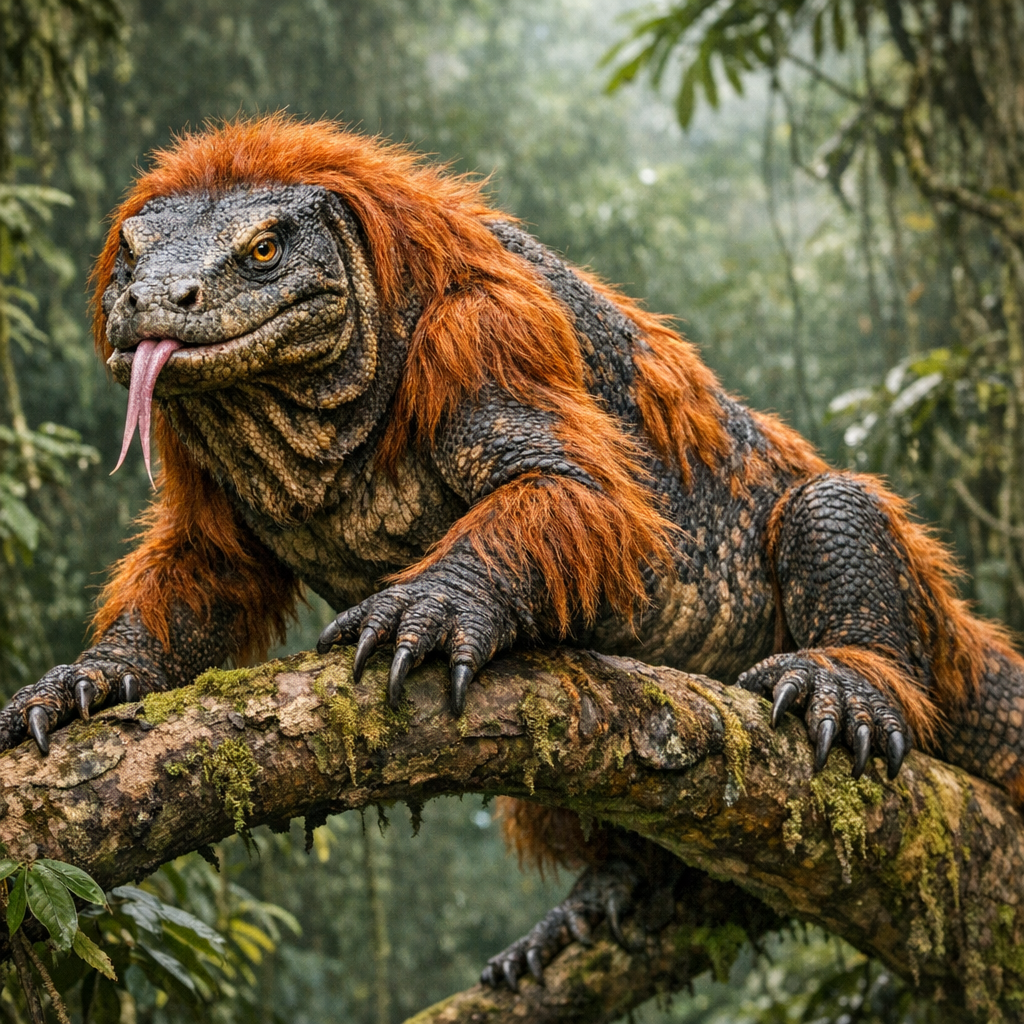
The Orangodragon is a remarkable hybrid of the Komodo Dragon (Varanus komodoensis) and the Bornean Orangutan (Pongo pygmaeus). This creature exhibits a robust, elongated body akin to the Komodo dragon, covered in tough, scaly skin interspersed with patches of orange-brown fur reminiscent of an orangutan. Its limbs are muscular, equipped with long, powerful claws for climbing and grasping. The Orangodragon has a broad, flat head with keen, intelligent eyes, and its long, flexible tongue is used both for tasting the air and for capturing prey. This creature stands approximately 5 feet tall at the shoulder and can reach a length of up to 8 feet, making it an imposing presence in its natural habitat.
Special abilities
Venomous Bite
The Orangodragon delivers a powerful bite that injects a mild venom, causing temporary paralysis in its prey.
From the Komodo Dragon
Real-world basis: The saliva of the Komodo dragon contains anticoagulants that prevent blood clotting, enhancing its predatory capabilities.
Claw Slash
Utilizing its sharp claws, the Orangodragon can deliver swift, slashing attacks to fend off threats or capture prey.
From the Orangutan
Real-world basis: Orangutans possess powerful arms and sharp nails, making them adept at climbing and defending themselves.
Camouflage
The Orangodragon can blend seamlessly into its surroundings, making it difficult for predators and prey to detect.
From the Komodo Dragon
Real-world basis: The coloration and texture of the Komodo dragon's skin provide natural camouflage in its environment.
Agile Escape
With impressive climbing skills and agility, the Orangodragon can quickly ascend trees or escape into dense foliage when threatened.
From the Orangutan
Real-world basis: The orangutan's exceptional arboreal skills allow for rapid movement through the treetops, enhancing its ability to evade danger.